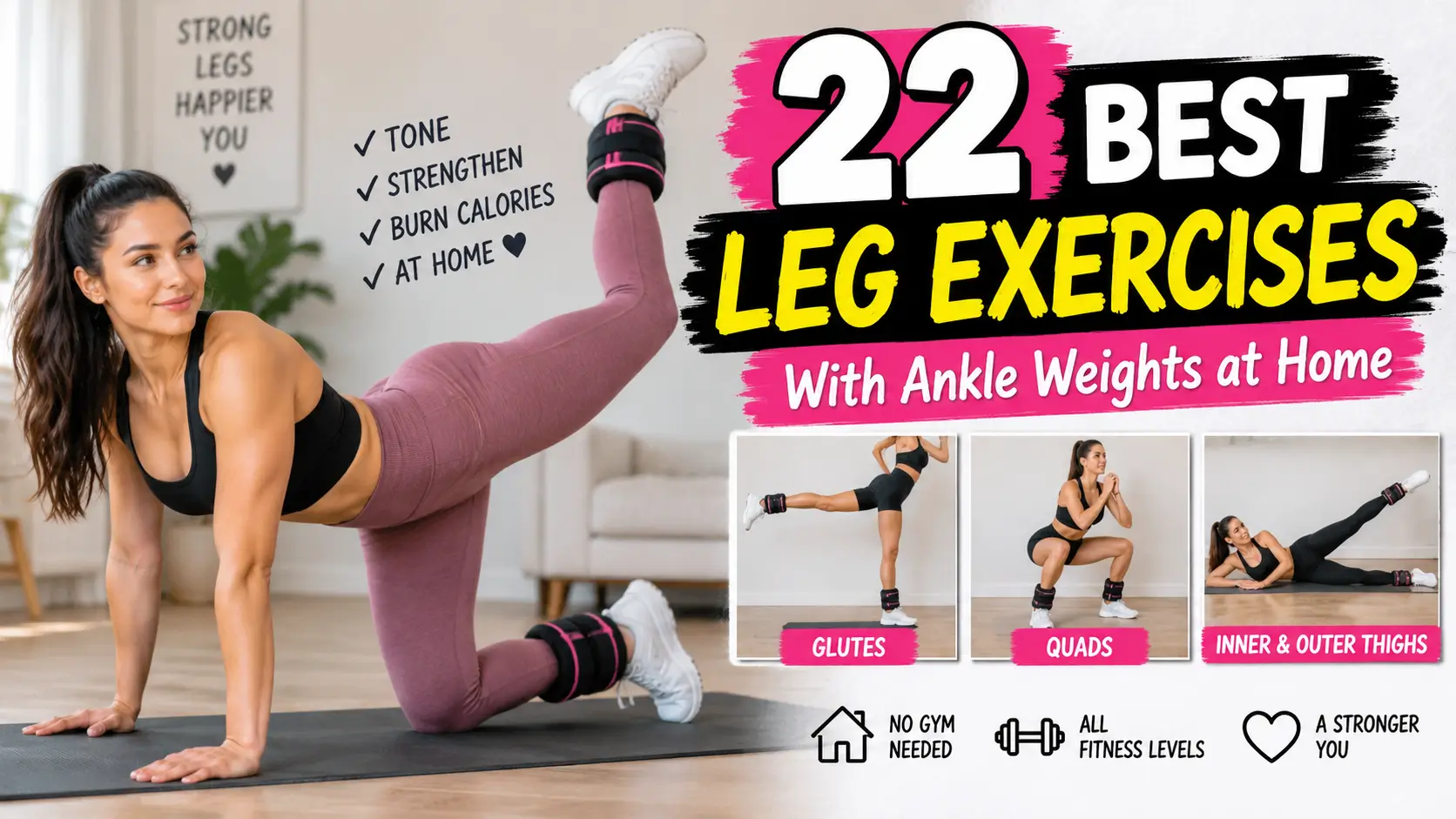
22 Best Leg Exercises With Ankle Weights at Home
If you’re looking for leg exercises with ankle weights that actually build strength without a trip to the gym, you’re in the right place. Ankle weights are one of the cheapest, simplest tools you can add to a home workout, and they work by adding resistance to the end of your limb, which makes your glutes, hamstrings, quads, and hip muscles work harder on every rep. You don’t need a squat rack or a stack of dumbbells — just a pair of ankle weights, a bit of floor space, and about 20 to 30 minutes.
This guide walks through 22 exercises you can do at home, plus the benefits, common mistakes, safety tips, and answers to the questions people ask most often before they strap on a pair.
Why Add Ankle Weights to Your Leg Workout
Ankle weights work on a simple principle: resistance training. When you attach weight to your ankle, your muscles have to generate more force to move your leg through the same range of motion. Over time, and combined with a full training program, progressive resistance like this is one of the basic ways the body builds strength.
read also: Best 28 Overnight Oats Recipes for Weight Loss
A few practical benefits people notice:
- More muscle activation in isolation moves. Exercises like leg lifts, kickbacks, and lateral raises are naturally low-load, so ankle weights help you feel the target muscle working instead of relying on momentum.
- Convenience. They’re light, cheap, and easy to store, which makes it easier to actually stick with a routine at home.
- Versatility. You can use them for glute and hip work, for balance and stability drills, and even for light cardio like marching or high knees.
- A stepping stone for beginners. If bodyweight leg exercises already feel easy but you’re not ready for heavier equipment, ankle weights are a manageable middle step.
Ankle weights are not a replacement for compound lifts like squats and deadlifts if your goal is to build significant strength or muscle size. They’re best thought of as an accessory tool — great for glute activation, hip stability, and finishing off a leg or glute session.
How to Choose and Use Ankle Weights Safely
Before jumping into the exercises, a few basics make a real difference:
- Start light. Most home ankle weights range from 1 to 5 lbs (0.5–2.5 kg) per leg. Beginners should start at the lower end and add weight only once the current load feels comfortable through a full range of motion.
- Check the fit. The weight should sit snugly above your ankle bone without sliding around or pinching. Loose weights can shift mid-set and throw off your balance.
- Warm up first. A few minutes of marching in place, bodyweight leg swings, or a brisk walk gets blood flow to the hips and knees before you add load.
- Prioritize form over speed. Ankle weights add momentum, and swinging the leg quickly can strain the hip or lower back. Slow, controlled movement recruits the target muscle far better than fast reps.
- Skip it if you have knee or hip pain. Ankle weights place extra torque on the knee and hip joints, particularly with straight-leg movements. If you have an existing joint issue, talk to a doctor or physical therapist first.
- Use a wall or chair for balance. Many of these moves are done standing on one leg, so having something nearby to hold onto is smart, especially for beginners.
The 22 Best Leg Exercises With Ankle Weights
Aim for 2–3 sets of 10–15 reps per side for most of these, resting 30–45 seconds between sets. You don’t need to do all 22 in one session — pick 6–8 and rotate through them across the week.
1. Standing Leg Lift (Front Raise)
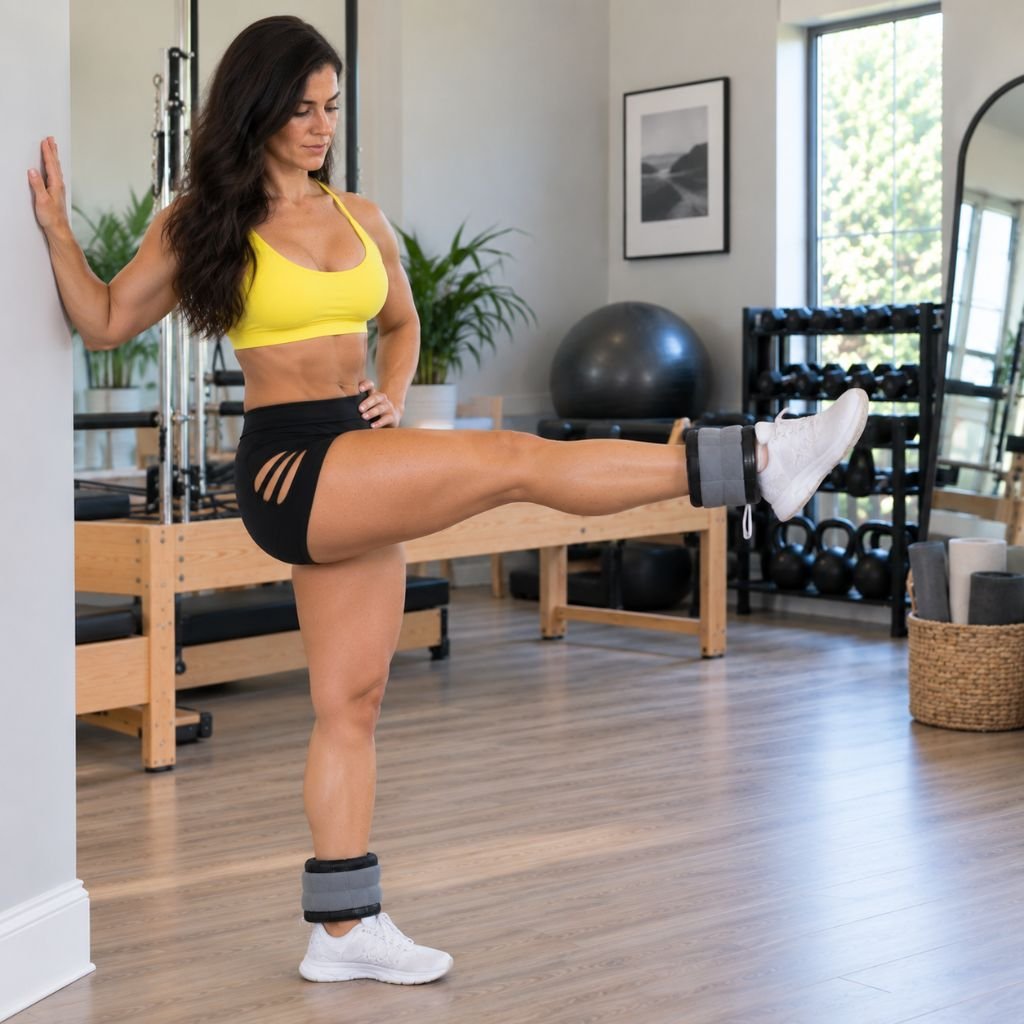
Stand tall holding a wall or chair for balance. Keeping your leg straight, lift it forward to about hip height, then lower with control. This targets the hip flexors and lower abs.
2. Standing Side Leg Lift
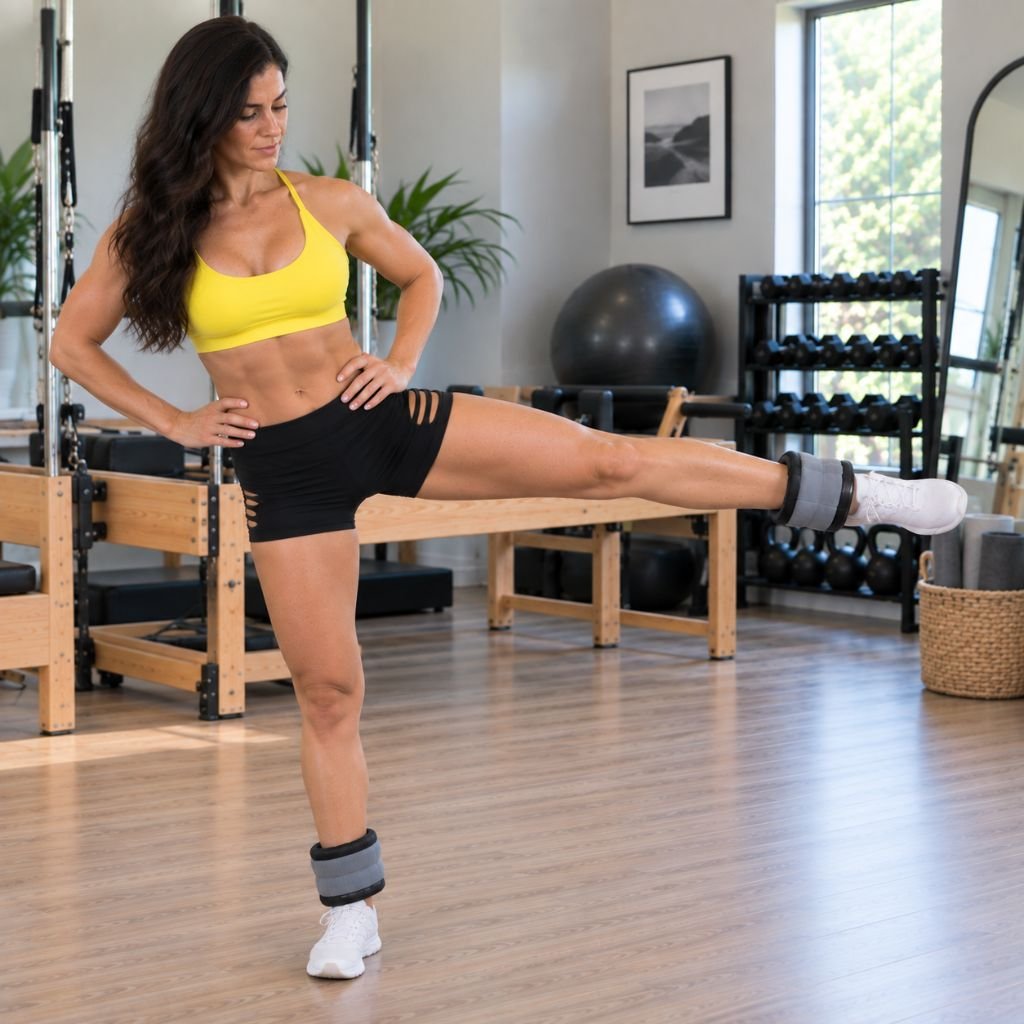
From standing, lift your leg straight out to the side without leaning your torso. This isolates the outer hip (glute medius), which is a key muscle for hip stability.
read also: Halloween Fitness Challenge: A Fun Way to Stay Active This October
3. Standing Back Leg Lift (Glute Kickback, Standing)
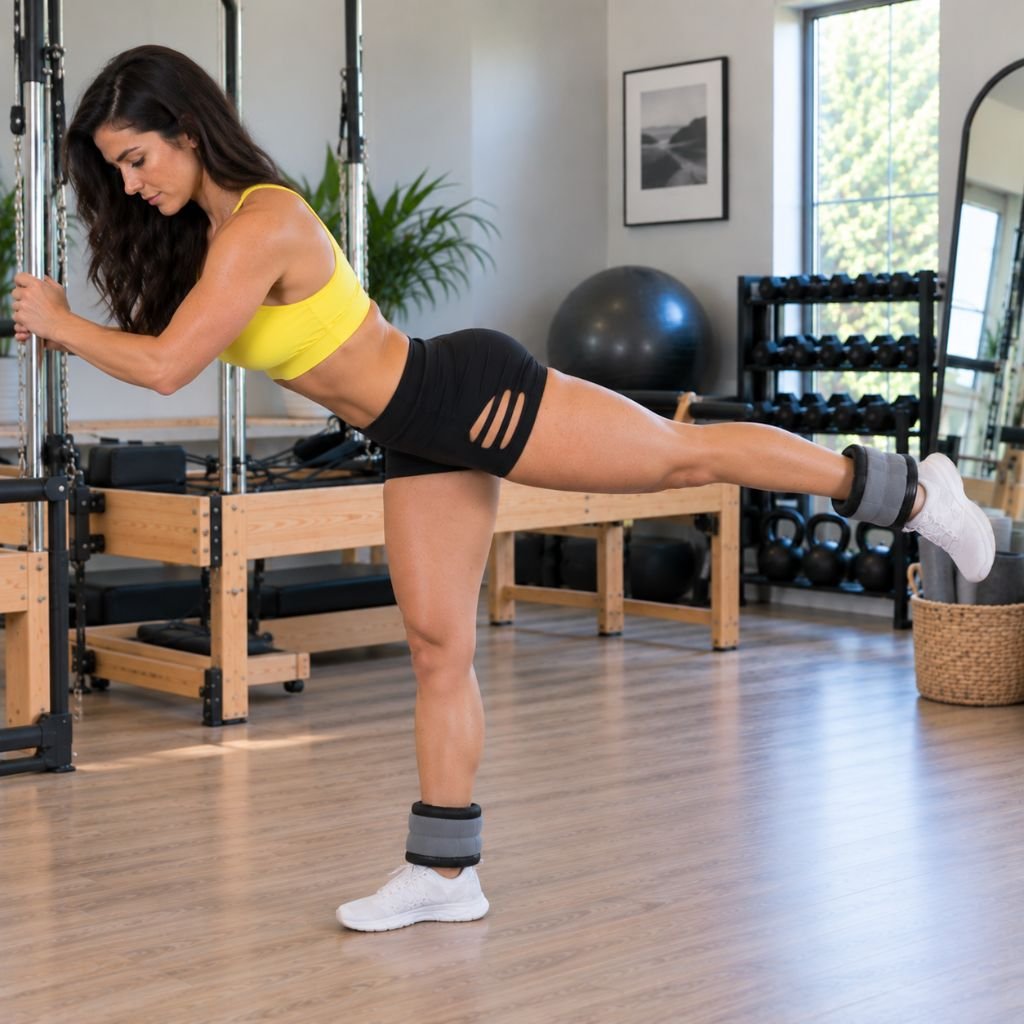
Hinge slightly forward at the hips and lift your leg straight back, squeezing the glute at the top. Keep the movement small and controlled rather than swinging high.
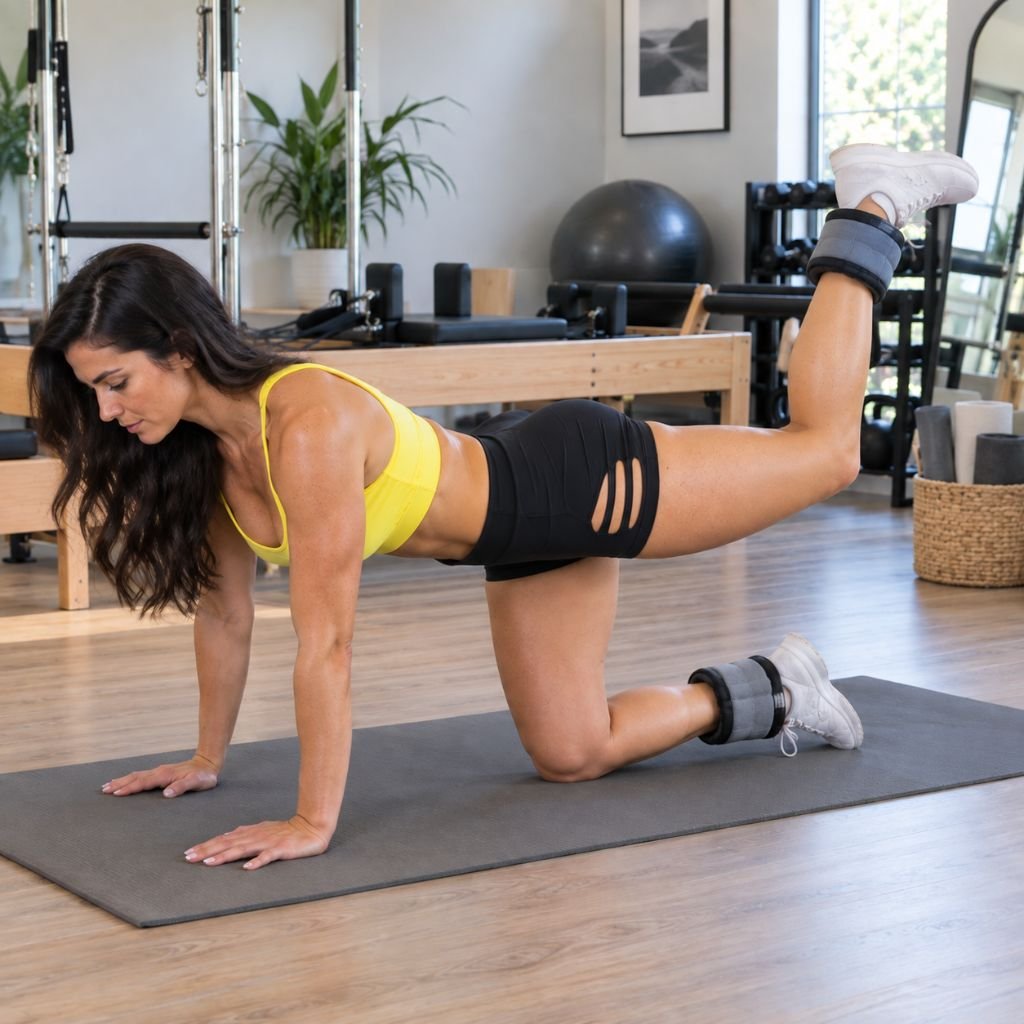
4. Quadruped Kickback (Donkey Kick)
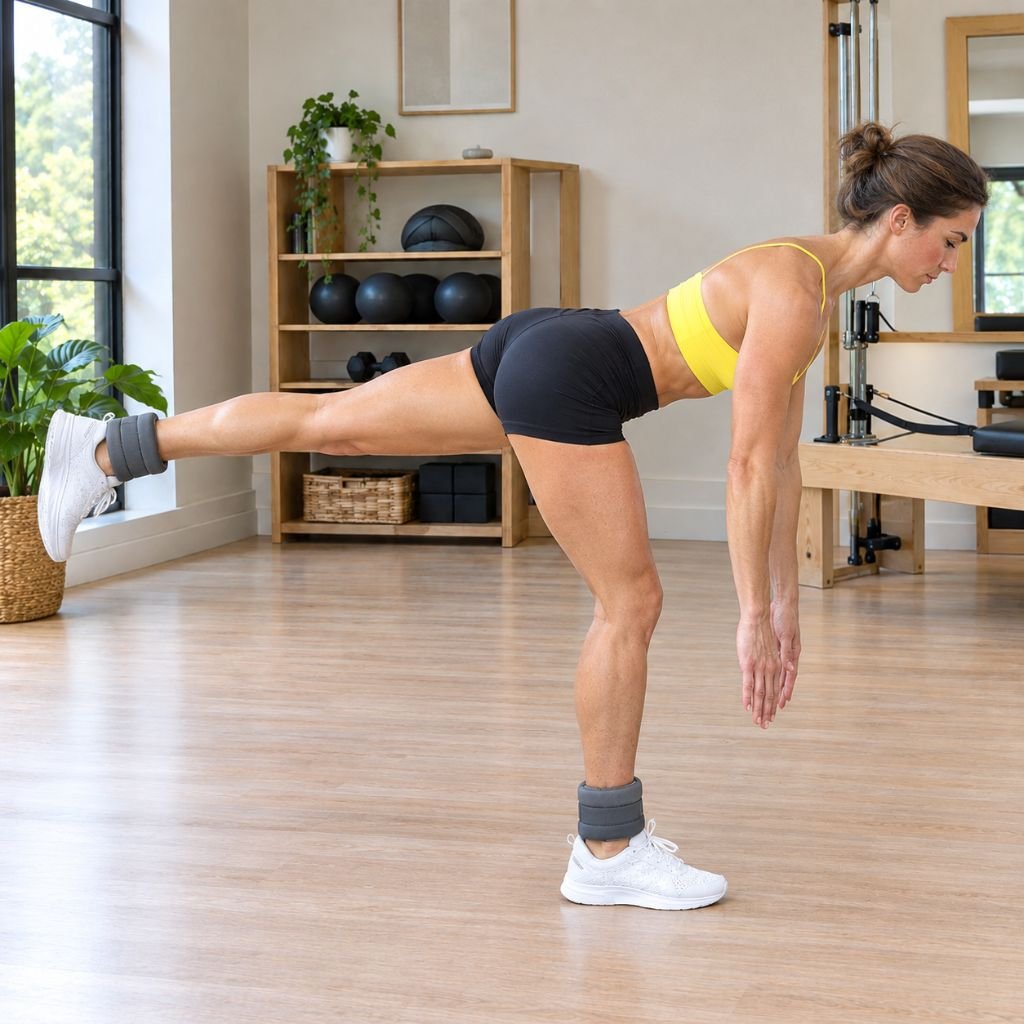
On hands and knees, keep your knee bent at 90 degrees and drive your heel toward the ceiling, squeezing the glute. This is one of the most effective moves for isolating the glute max.
5. Quadruped Straight-Leg Kickback
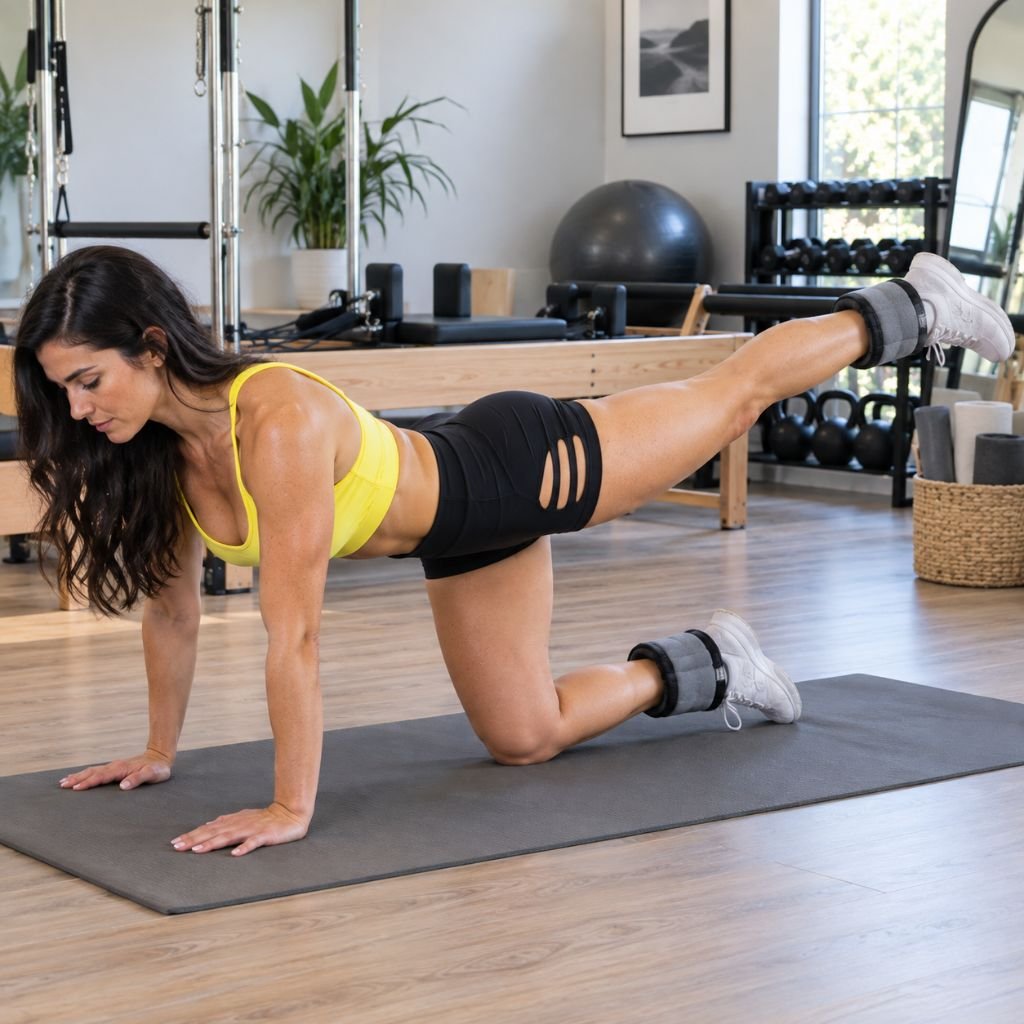
Similar setup to the donkey kick, but keep the leg straight as you lift it behind you. This shifts more work into the hamstring and glute together.
6. Fire Hydrant
On hands and knees, lift your bent leg out to the side, keeping your hips square to the floor. This targets the glute medius and helps with hip mobility.
7. Fire Hydrant Extension
Combine the fire hydrant with a kickback: lift the knee out to the side, then extend the leg straight back. It’s a bigger range of motion that challenges hip control.
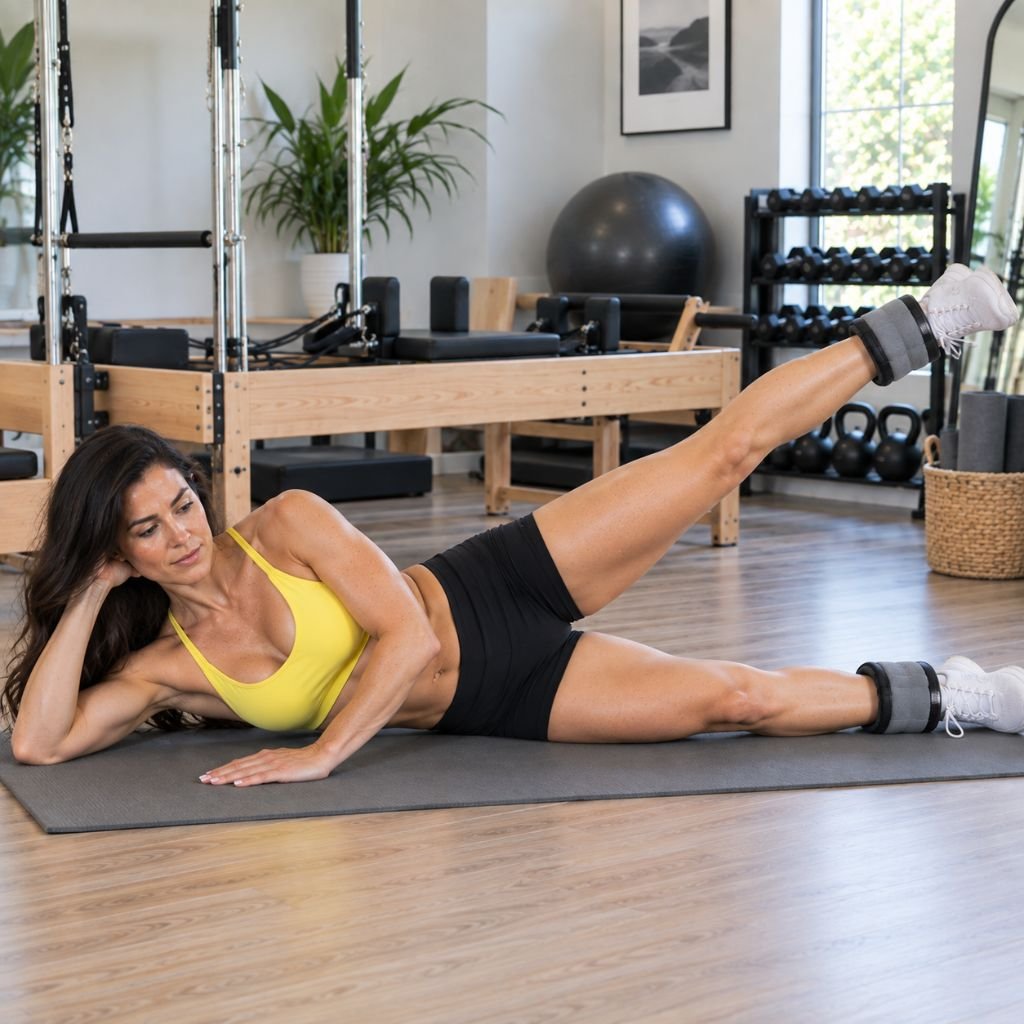
8. Lateral Leg Lift (Side-Lying)
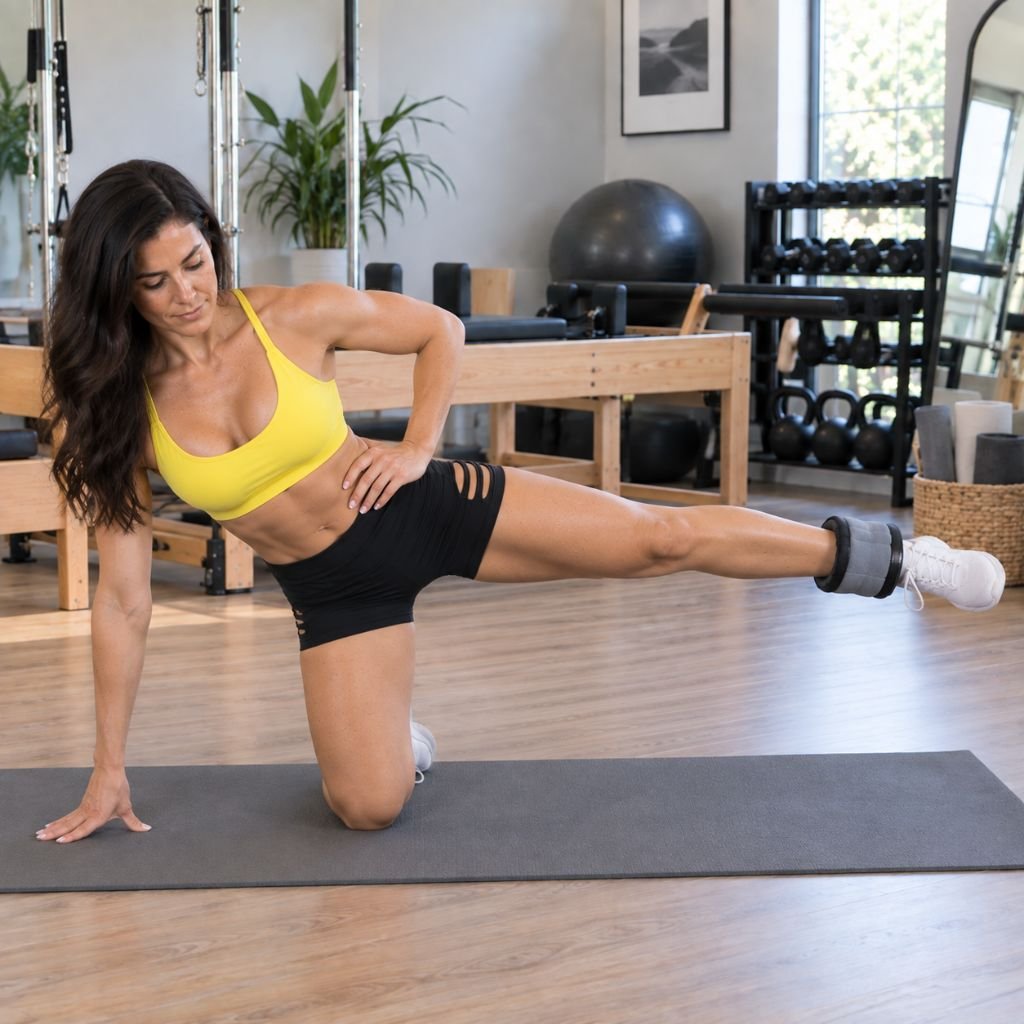
Lie on your side, stack your legs, and lift the top leg toward the ceiling without rotating your hip forward. This is a classic outer-glute isolation move, as shown in the kneeling and side-lying variations pictured above.
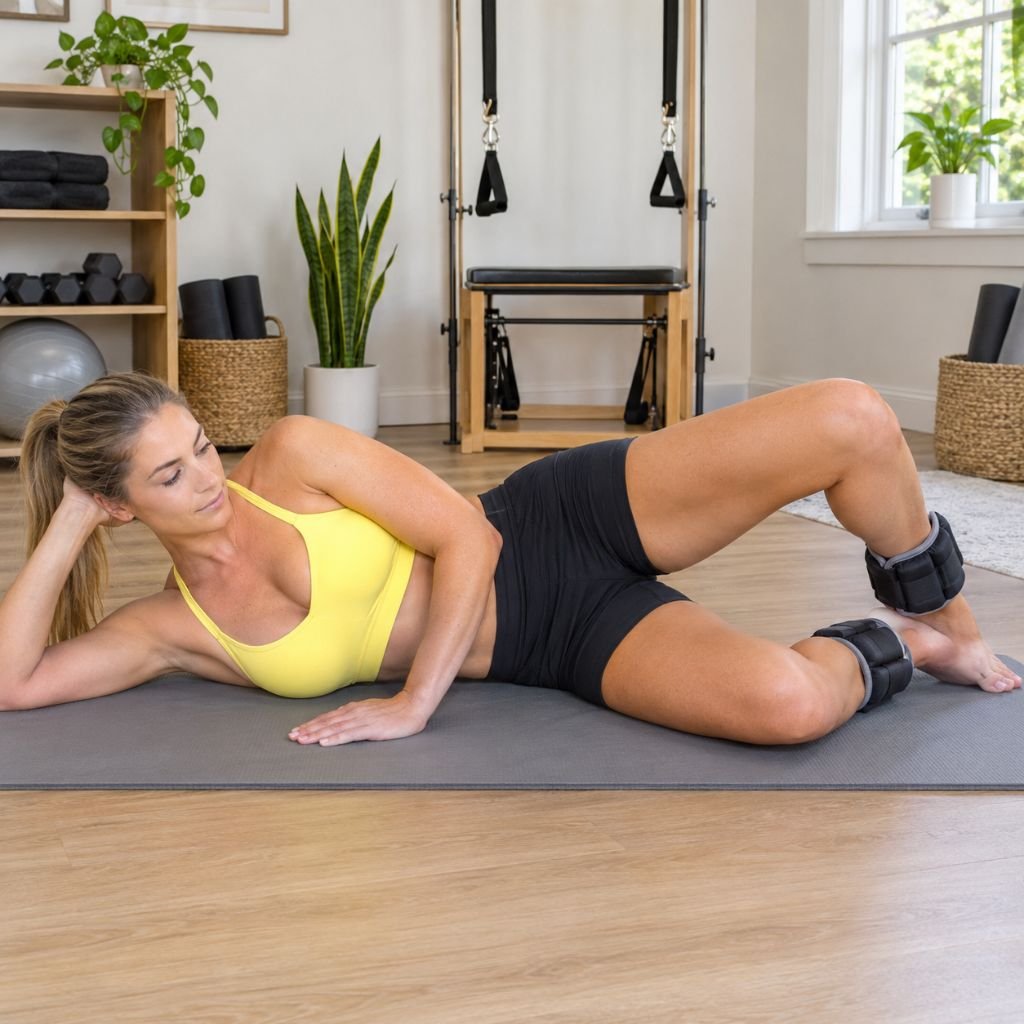
9. Side-Lying Leg Lift With Bent Knee (Clamshell)
Lie on your side with knees bent and stacked, feet together. Open your top knee like a clamshell while keeping your feet touching. Great for glute medius activation and often used in hip rehab programs.
10. Inner Thigh Lift (Side-Lying)
Lie on your side with your top leg bent and foot planted in front of your bottom leg. Lift the bottom (straight) leg toward the ceiling. This targets the inner thigh (adductors), a muscle group that’s easy to neglect.
11. Bird Dog With Ankle Weight
From hands and knees, extend one arm and the opposite leg at the same time, keeping your back flat. Adding ankle weight increases the core and glute demand of this stability exercise.
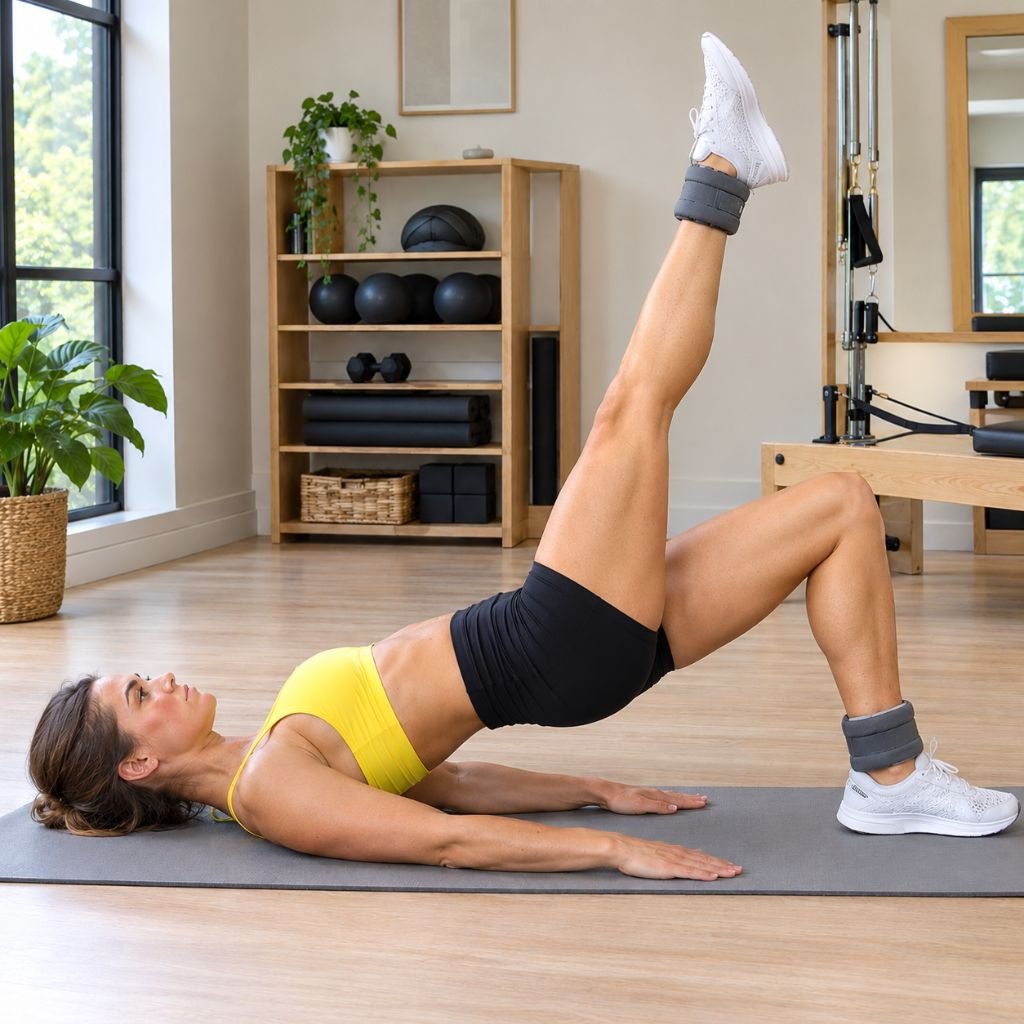
12. Glute Bridge With Leg Extension
Lie on your back, feet flat, and lift into a bridge. At the top, extend one leg straight out and hold briefly before bringing it back and lowering. This adds a single-leg glute and core challenge to a standard bridge.
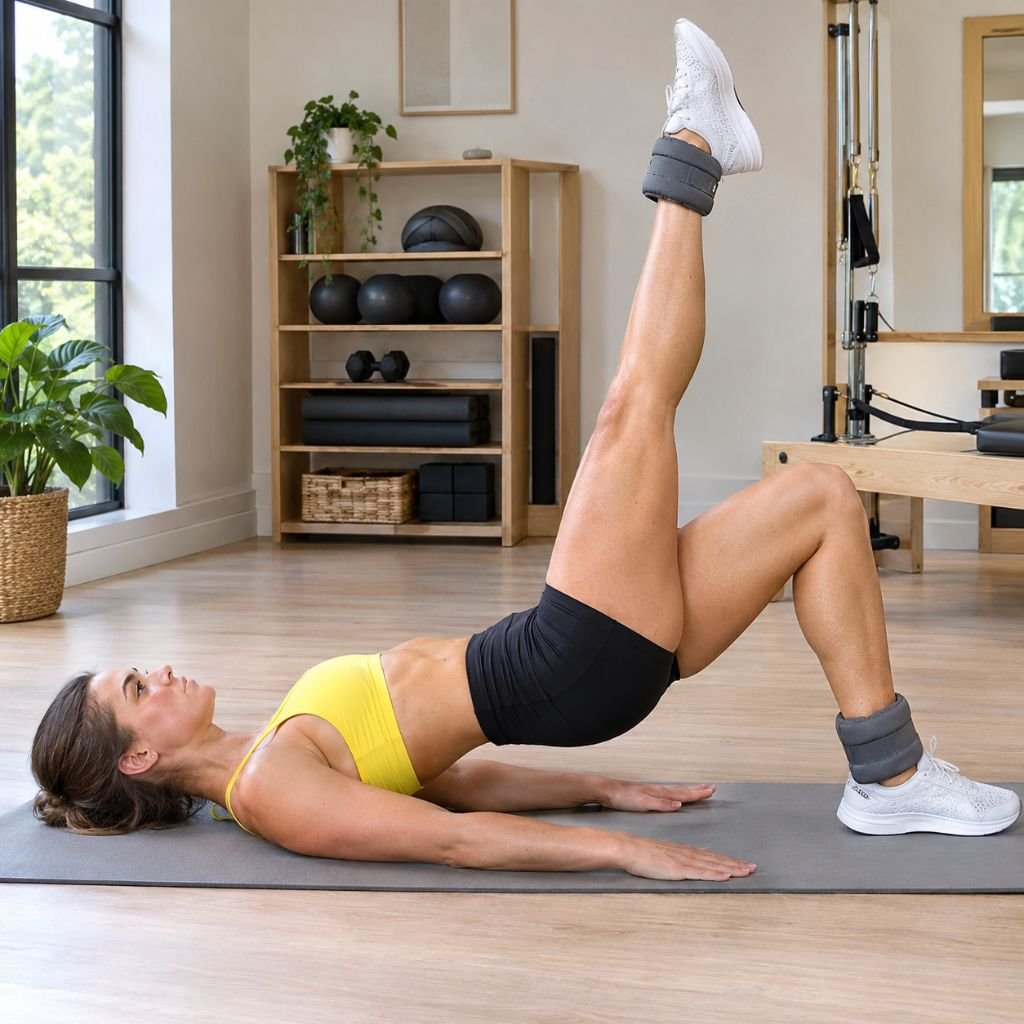
13. Single-Leg Glute Bridge
Bridge up on one leg with the other leg lifted or extended in the air. This is more advanced and puts more load through one glute and hamstring at a time.
14. Straight-Leg Deadlift Kick (Standing)
Hinge forward at the hips while lifting one leg straight back, forming a straight line from head to heel, like a single-leg deadlift without weights in the hands. It works the hamstrings, glutes, and lower back stabilizers.
15. Standing Hip Circles
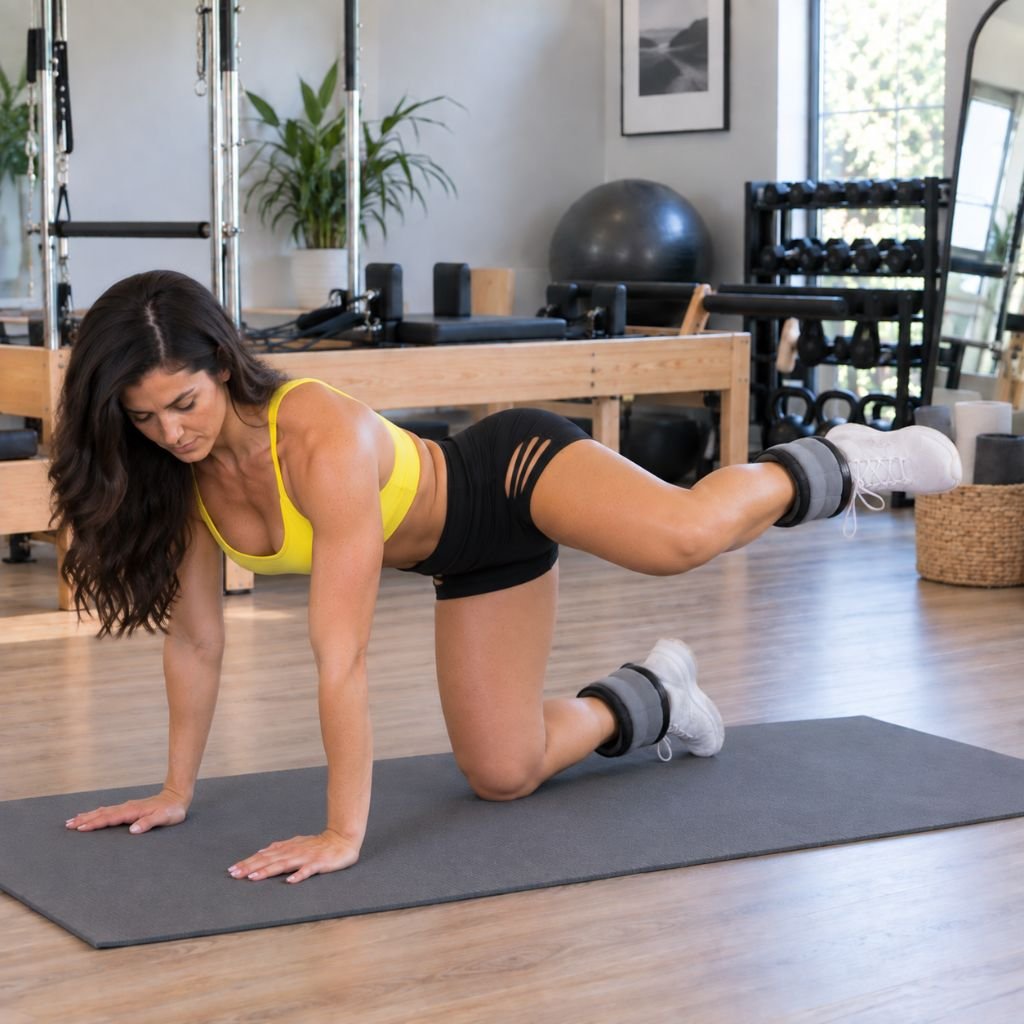
With ankle weights on, make slow, controlled circles with one leg while standing on the other. This builds hip mobility and challenges the stabilizing muscles of the standing leg.
16. Kneeling Side Leg Lift (Kneeling Side Glute Series)
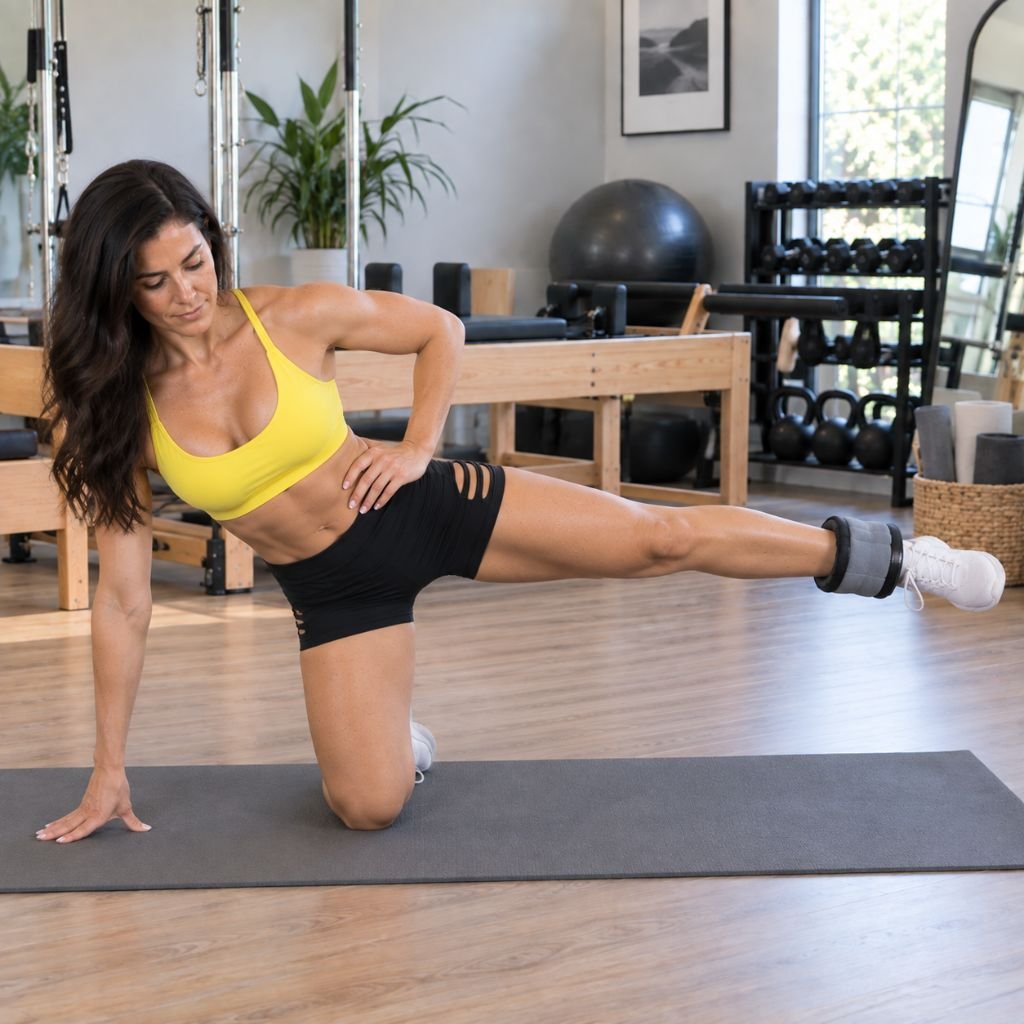
Kneel on one knee with the other leg extended out to the side, hand on the floor for support, and lift the extended leg up and down. This is the move pictured in the kneeling side-glute series and is excellent for targeting the outer glute with more range of motion than the side-lying version.
17. Leg Lift With Tricep Dip (Quadruped Combo)
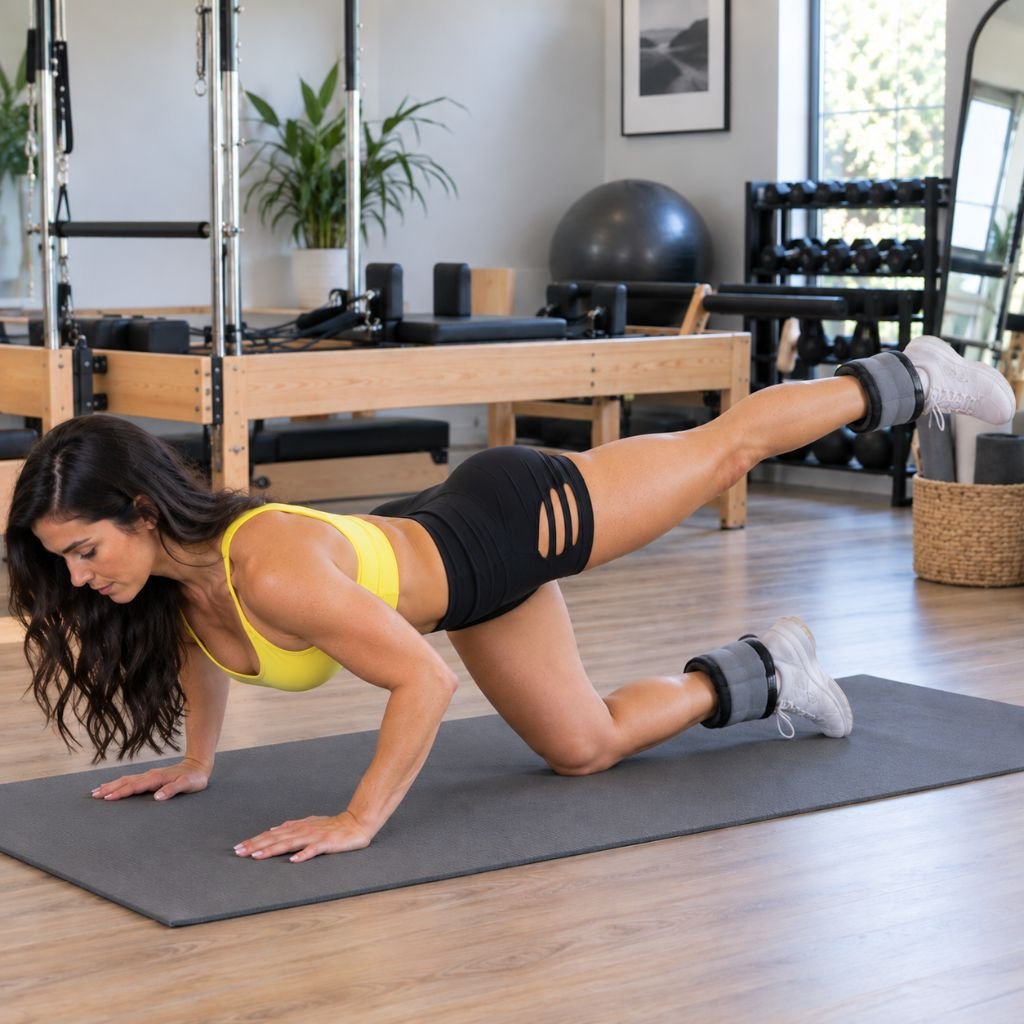
On hands and knees, extend one leg straight back while bending both arms into a shallow push-up or dip. This combines a glute and hamstring lift with upper-body work, as shown in the plank-position photo above.
18. Lateral Leg Lift in Plank (Plank Leg Raise)
Hold a forearm or high plank position and lift one leg out to the side without letting your hips rotate. This challenges the core and glutes together and requires solid shoulder and core stability.
19. Marching in Place
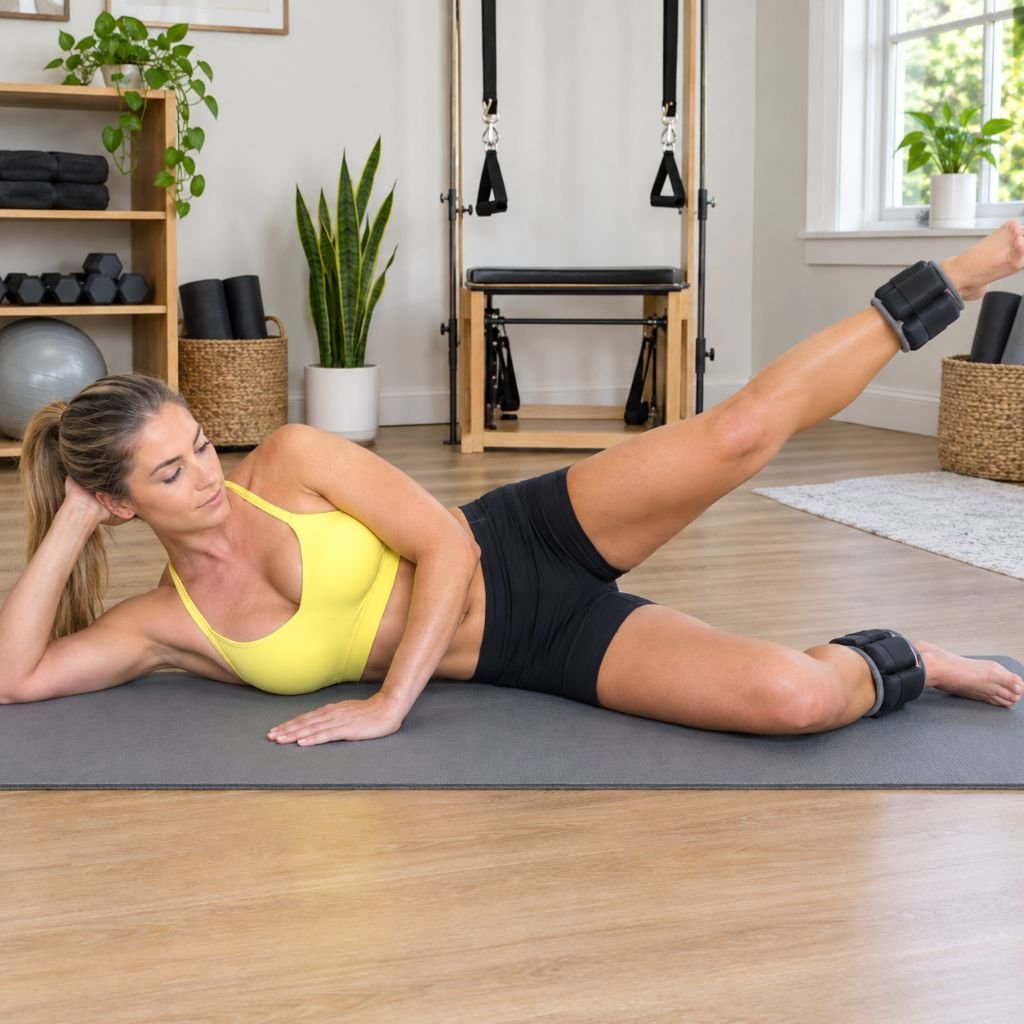
With ankle weights on, march in place by lifting your knees to hip height one at a time. This is a good low-impact way to add light cardio and hip flexor work to a warm-up or cool-down.
20. Standing Hamstring Curl
Standing and holding onto support, bend one knee to bring your heel toward your glutes, then lower with control. This isolates the hamstrings, which are harder to target directly without a machine.
21. Seated Leg Extension
Sitting in a sturdy chair, extend one leg straight out until it’s parallel to the floor, then lower slowly. This targets the quadriceps and is a good low-impact option for those easing into ankle weight training.
22. Standing Knee Raise (High Knee Hold)
Stand tall and lift one knee up toward your chest, hold for 1–2 seconds, then lower with control. This works the hip flexors and core stability while also testing single-leg balance.
How to Structure a Home Ankle Weight Leg Workout
A simple way to use this list is to build a circuit:
- Warm-up (5 minutes): marching in place, bodyweight leg swings, hip circles
- Main circuit (20 minutes): pick 6–8 exercises above, covering glutes, hamstrings, quads, and inner/outer hips, and do 2–3 sets of 10–15 reps per side
- Cool-down (5 minutes): gentle stretching for hip flexors, hamstrings, and glutes
Rotate which exercises you pick every session so you’re not always hitting the same muscles the same way, and increase the ankle weight only once your current weight feels genuinely easy with good form.
Common Mistakes to Avoid
- Swinging the leg instead of controlling it. Momentum takes the work away from the target muscle. Slow down, especially on the way down.
- Using too much weight too soon. Heavier ankle weights increase joint torque fast. If your knee or hip starts to ache, that’s a sign to drop the weight, not push through.
- Letting the hips rotate. On side leg lifts and kickbacks, it’s tempting to rotate your hips or lean back to lift the leg higher. This reduces the work on the target muscle. Keep hips square and prioritize a smaller, controlled range over a bigger sloppy one.
- Skipping the warm-up. Cold hip and knee joints with sudden resistance is a common way people end up sore or achy the next day.
- Only training one plane of movement. Doing only forward and backward leg lifts leaves the inner and outer hip underworked. Mix in side-lying and lateral moves like the clamshell and fire hydrant.
- Wearing weights too loose. A weight that slides down toward your foot changes the leverage and can be uncomfortable or thrown off mid-set.
Who Should Be Cautious With Ankle Weights
Ankle weights add extra load right at the end of a long lever (your leg), which increases stress on the hip and knee joints more than holding the same weight closer to your body. People with existing knee pain, hip impingement, sciatica, or balance issues should check with a doctor or physical therapist before adding them to a routine. Pregnant individuals should also get guidance from their provider, since balance and joint laxity can change during pregnancy.
Frequently Asked Questions
How heavy should ankle weights be for beginners? Most beginners do well starting around 1–2 lbs per ankle and increasing gradually as the exercises start to feel easy with good form. There’s no universal “right” weight — it depends on your current strength and how each exercise feels.
How often can I do ankle weight leg workouts? Two to four times a week is a reasonable range for most people, with at least one rest day between sessions that hit the same muscle groups, so the muscles have time to recover.
Can ankle weights help tone or shape the glutes? Ankle weights can help you build strength and muscle activation in the glutes through consistent training, which over time can change how the area looks and feels. “Toning” isn’t a separate physiological process from building muscle and reducing body fat — it’s simply the visible result of those two things happening together.
Are ankle weights bad for your knees? Used with light weight and controlled form, ankle weights are generally fine for healthy knees. They can aggravate existing knee issues because they increase the load at the end of the leg lever, so anyone with knee pain should get individual guidance before using them.
Can I wear ankle weights while walking or doing cardio? Some people do, but many trainers and physical therapists caution against it because it can alter your natural gait and place repetitive extra stress on the ankles, knees, and hips over time. Using them for targeted strength exercises, as in this list, is generally considered a safer application than wearing them for extended walks or runs.
Do ankle weights build muscle the same way as heavier resistance training? They can contribute to strength and muscle activation, especially for smaller stabilizing muscles like the glute medius that are hard to isolate otherwise. For building significant overall leg strength and size, heavier compound exercises like squats, lunges, and deadlifts are generally considered more effective, with ankle weight exercises working well as a complement to that kind of training.
How long before I notice results? This varies by person and depends on consistency, diet, and overall activity level, so it’s not possible to give a specific timeline. Sticking with a structured routine over several weeks, combined with adequate protein and recovery, is what drives visible change over time