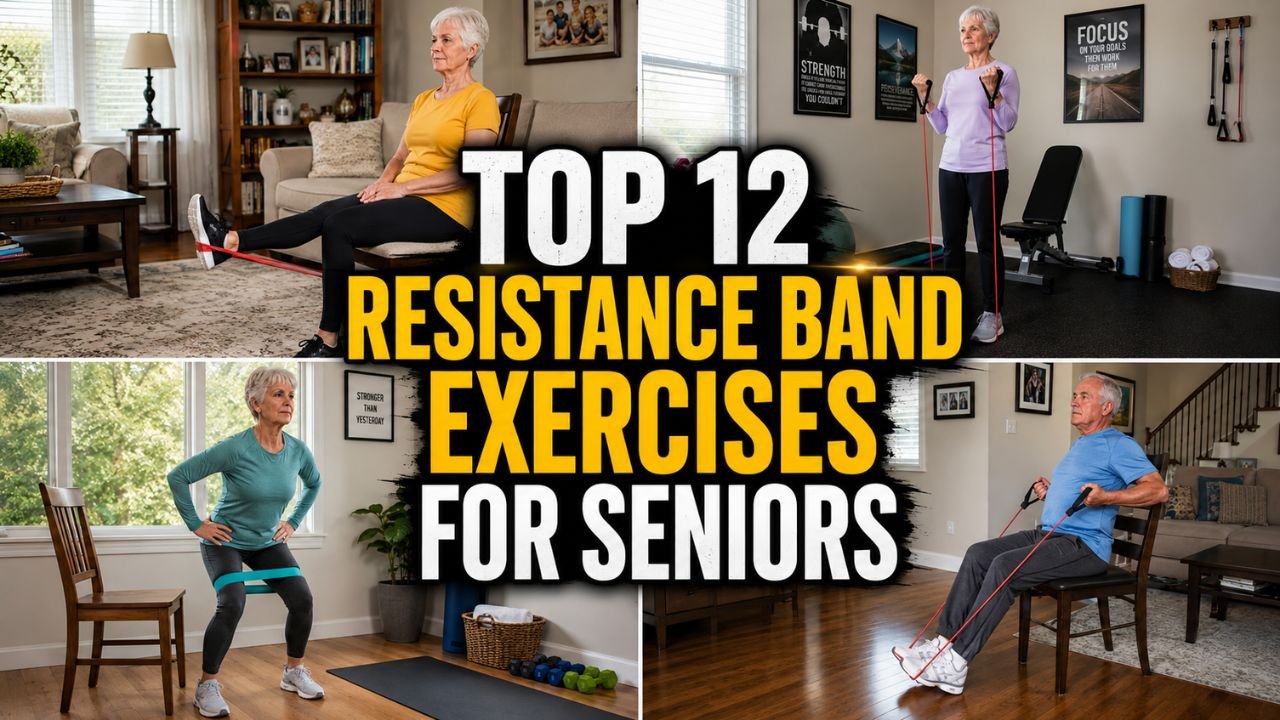
Top 12 Resistance Band Exercises for Seniors: A Complete, Research-Backed Guide
Getting older doesn’t mean giving up strength. In fact, staying strong is one of the most important things a senior can do to stay independent to carry groceries, climb stairs, get up from a chair without help, and avoid falls. Resistance bands are one of the safest, cheapest, and most joint-friendly ways to build that strength at home, without a gym membership or heavy weights.
This guide covers why resistance training matters as we age, how to do it safely, and a step-by-step breakdown of the 12 best resistance band exercises for seniors the same movements physical therapists and fitness trainers commonly recommend for older adults.
Why This Angle Works Best for This Topic
For a topic like this, the most genuine and trustworthy angle is “functional fitness for independence” not bodybuilding, not extreme fitness. Seniors searching this topic usually want to know:
- Will this help me avoid falls?
- Will this help with everyday tasks (standing up, walking, lifting)?
- Is it safe for my joints, arthritis, or balance issues?
- How do I start without hurting myself?
So the article should focus on safety first, function second, strength third this builds trust and matches what people are actually searching for, rather than a generic “workout list” angle.
Why Resistance Bands Are Ideal for Older Adults
Resistance bands work differently from free weights. Instead of relying on gravity, they create constant tension throughout the entire range of motion which means muscles stay engaged from start to finish of every rep, without sudden jolts on the joints.
| Benefit | Why It Matters for Seniors |
|---|---|
| Low impact on joints | Reduces strain on knees, hips, and shoulders compared to free weights |
| Builds functional strength | Helps with standing up, climbing stairs, carrying items |
| Improves balance & coordination | Lowers fall risk, a leading cause of injury in older adults |
| Slows muscle loss (sarcopenia) | Regular resistance work helps preserve muscle mass lost with age |
| Supports bone density | Weight-bearing resistance work is linked to stronger bones |
| Affordable & portable | Bands cost very little and can be used anywhere, including while traveling |
| Adjustable intensity | Lighter or heavier bands make it easy to progress gradually |
Research on older adults has generally found that consistent resistance band training over several weeks can improve strength, mobility, and confidence in daily movement — with added benefits for mood and social engagement when done in group settings.
Safety Guidelines Before You Start
- Get medical clearance first if you have uncontrolled blood pressure, recent surgery, severe osteoporosis, heart conditions, or significant balance problems.
- Start with a light band (often yellow or red) and increase resistance gradually.
- Warm up for 5 minutes with gentle movement before starting.
- Inspect the band for cracks or wear before each use — a snapped band can cause injury.
- Anchor bands securely — a sturdy chair, closed door, or heavy furniture leg, never anything that can slide or tip.
- Move slowly and with control — jerky movements reduce effectiveness and increase injury risk.
- Sit when needed — most of these exercises have a seated version, ideal if balance is a concern.
- Stop immediately if you feel sharp pain, dizziness, or shortness of breath.
The Top 12 Resistance Band Exercises for Seniors
1. Seated Chest Press
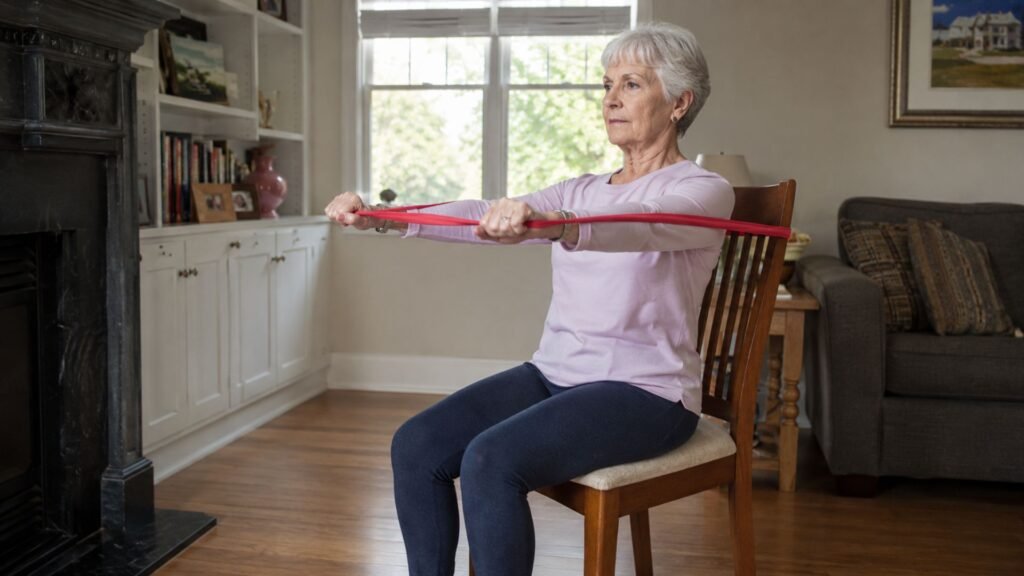
Loop the band around the back of a sturdy chair. Hold one end in each hand at chest height, elbows bent. Press your arms forward until they’re extended, then return slowly. Works: chest, shoulders, triceps. Helps with: pushing doors, pushing a shopping cart, getting up from a chair.
2. Seated Row
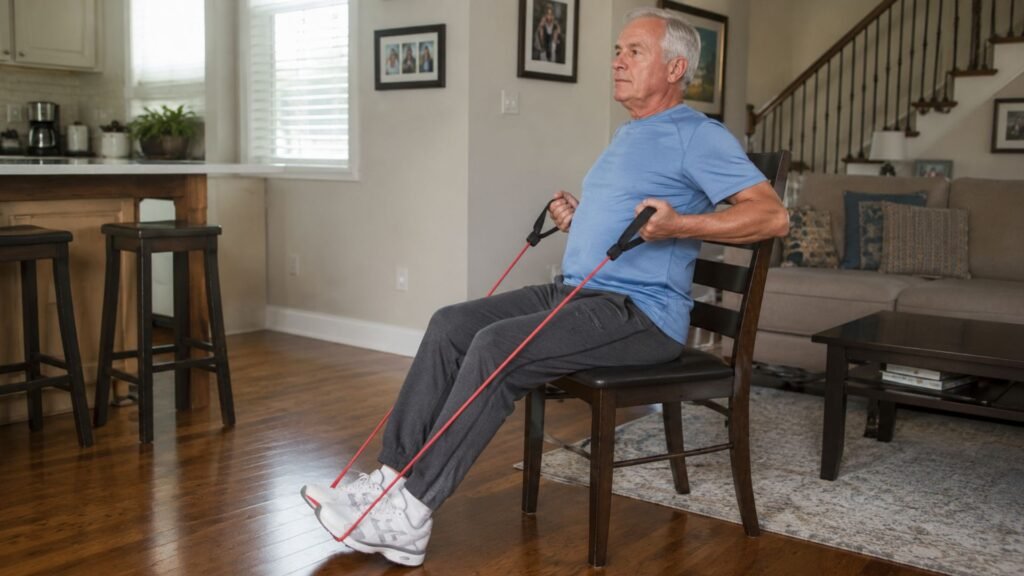
Loop the band around your feet while seated, holding an end in each hand with arms extended. Pull your elbows back, squeezing your shoulder blades together, then release slowly. Works: upper back, shoulders, biceps. Helps with: posture, pulling movements like opening doors.
3. Bicep Curl
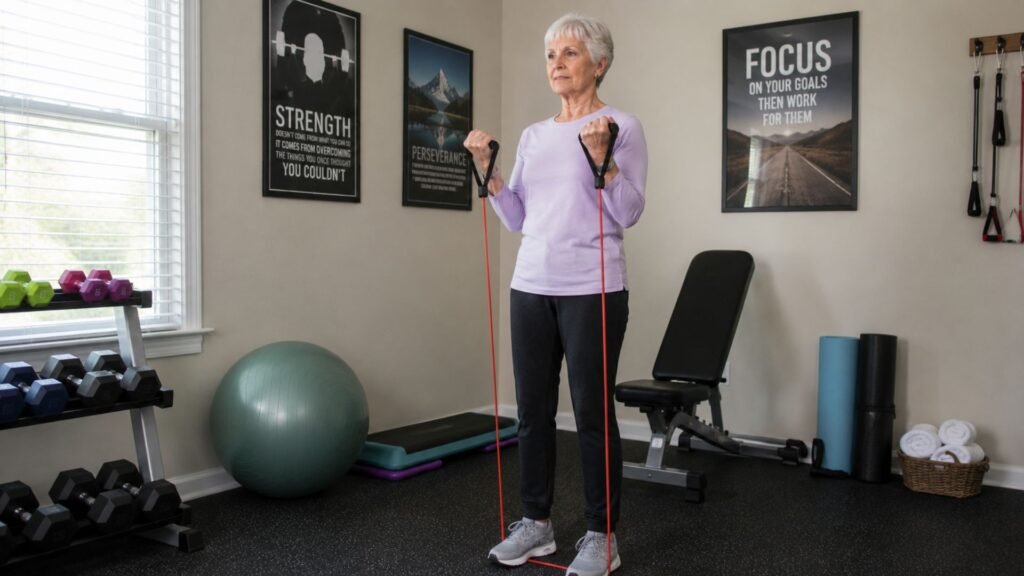
Stand or sit with the band under your feet, palms facing up. Curl your hands toward your shoulders, keeping elbows tucked in, then lower slowly. Works: biceps. Helps with: carrying groceries, lifting objects.
4. Overhead Shoulder Press
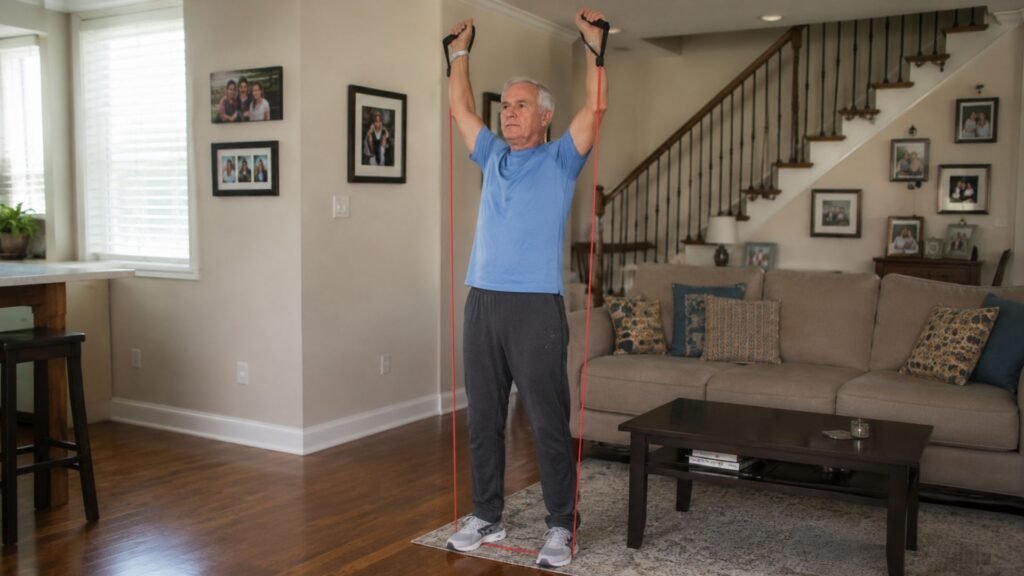
Sit or stand on the middle of the band, holding the ends at shoulder height. Press your arms straight overhead, then lower with control. Works: shoulders, upper arms. Helps with: reaching into cabinets, dressing.
5. Standing Band Squat
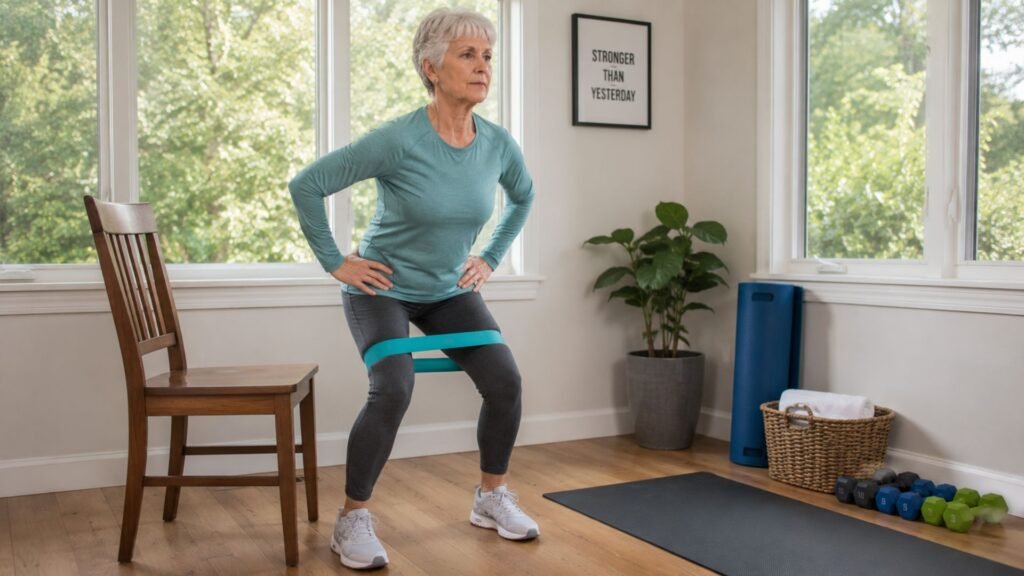
Place a loop band just above your knees, feet hip-width apart. Push your hips back and bend your knees into a shallow squat, keeping knees from caving in, then press through your heels to stand. Works: quadriceps, glutes, hips. Helps with: standing up from a chair, climbing stairs.
6. Hip Abduction (Standing or Seated)
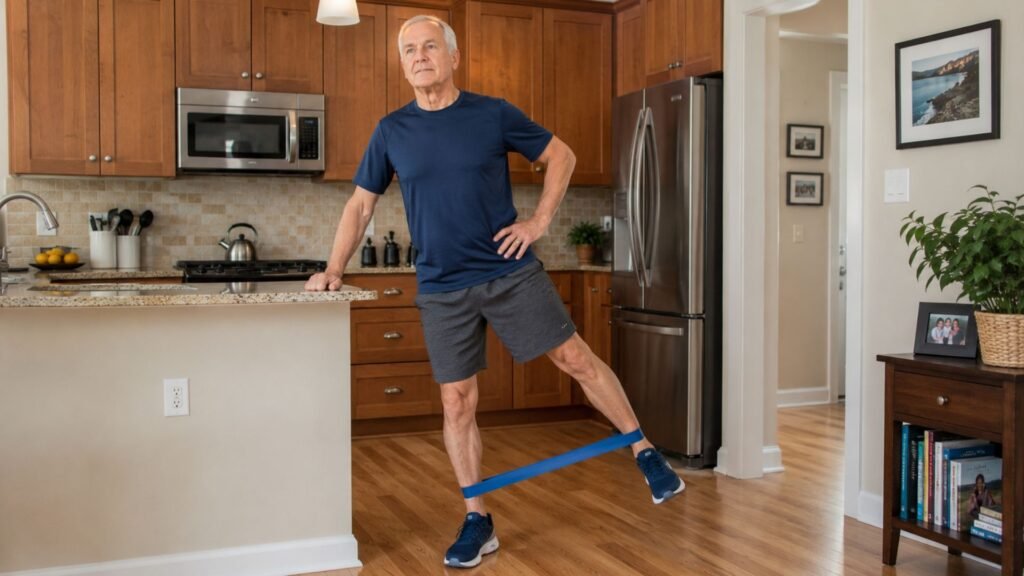
With a loop band around your ankles or lower thighs, hold onto a stable surface and press one leg outward against the band, then return slowly. Works: outer hips and glutes. Helps with: balance and stability while walking.
7. Seated Leg Extension
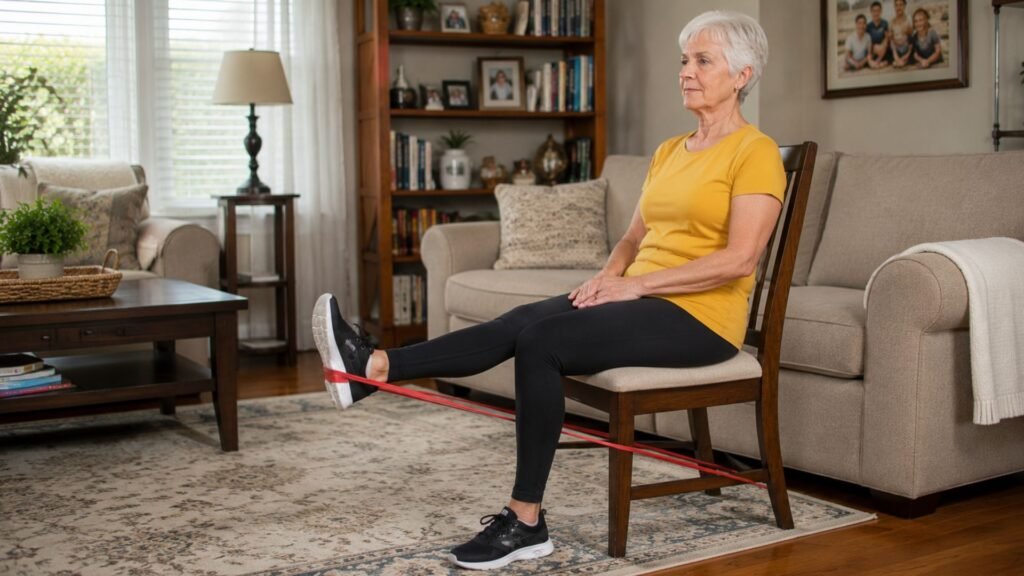
Sit on a chair with the band anchored under the chair leg and looped around one ankle. Extend that leg forward until straight, then lower slowly. Works: quadriceps. Helps with: standing, walking, getting in and out of a car.
8. Standing Hip Extension
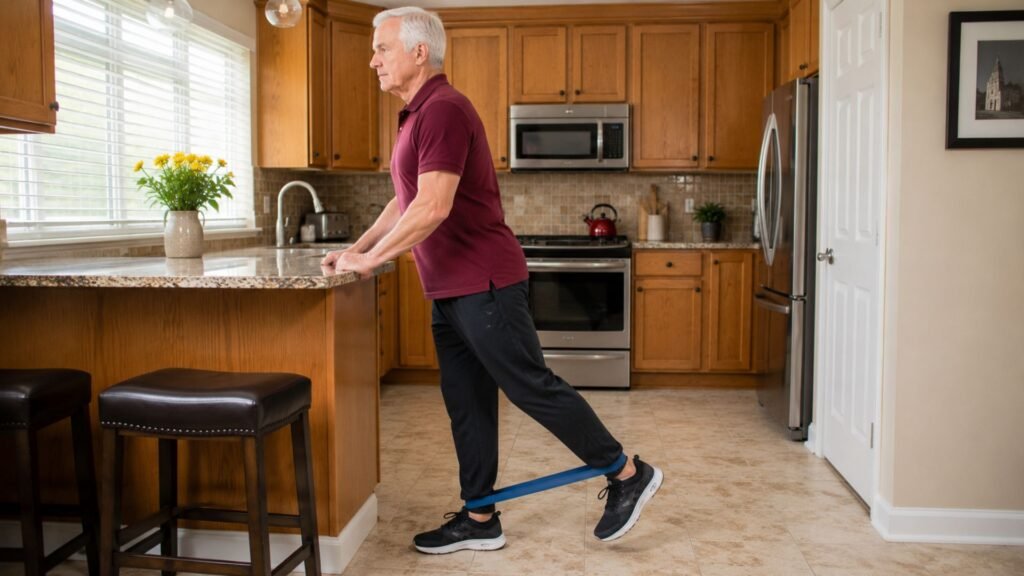
With a band looped around your ankles, hold onto a counter or chair for balance and press one leg straight back, keeping your torso upright, then return. Works: glutes, lower back. Helps with: walking, climbing stairs, balance.
9. Band Pull-Apart
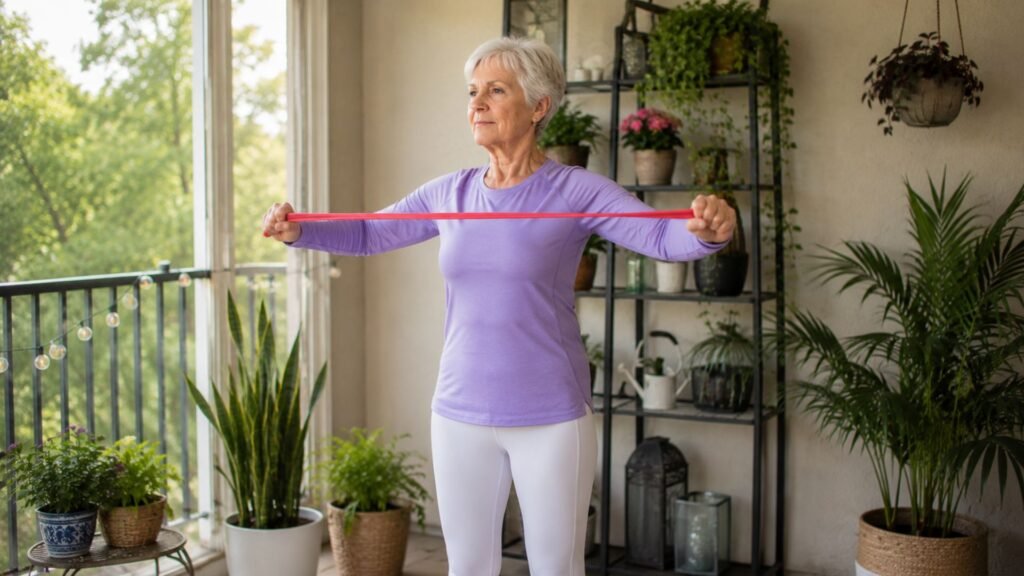
Hold the band with both hands at chest height, arms straight. Pull the band apart by squeezing your shoulder blades together, then return slowly. Works: upper back, rear shoulders. Helps with: posture and reducing shoulder slouching.
10. Tricep Extension
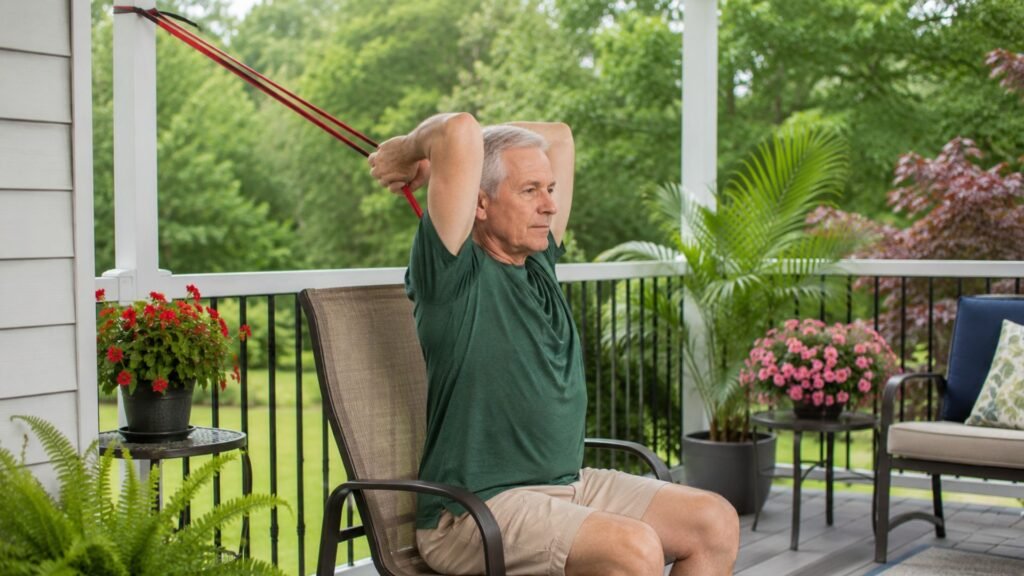
Anchor the band overhead or behind you. Hold the ends with elbows bent, then extend your arms until straight, keeping elbows close to your body. Works: triceps. Helps with: pushing up from a bed or chair.
11. Seated Torso Twist
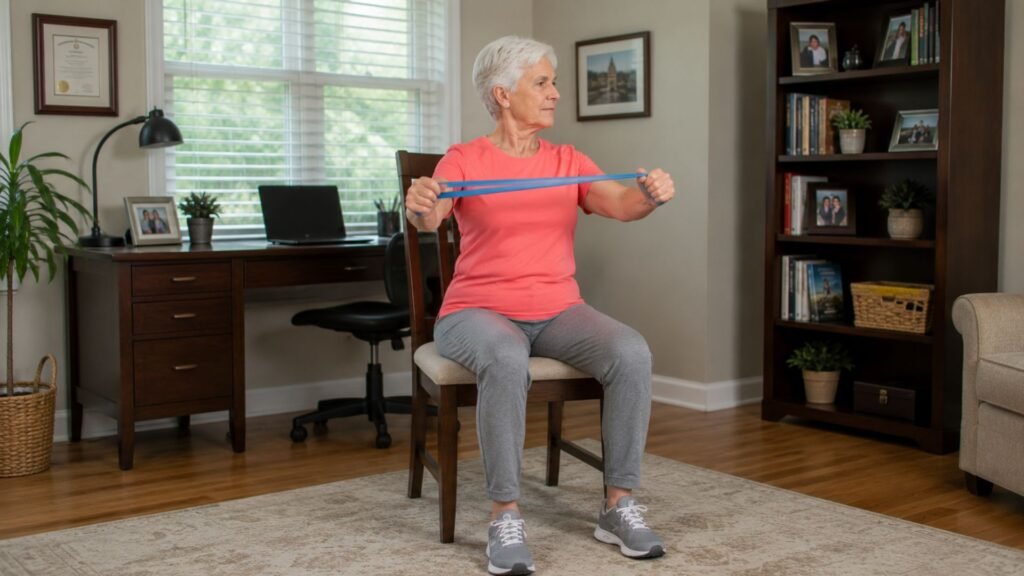
Sit tall holding the band at chest height with arms extended. Rotate your torso to one side, return to center, then repeat on the other side. Works: core, obliques. Helps with: twisting motions like reaching into the back seat of a car.
12. Pallof Press (Core Stability)
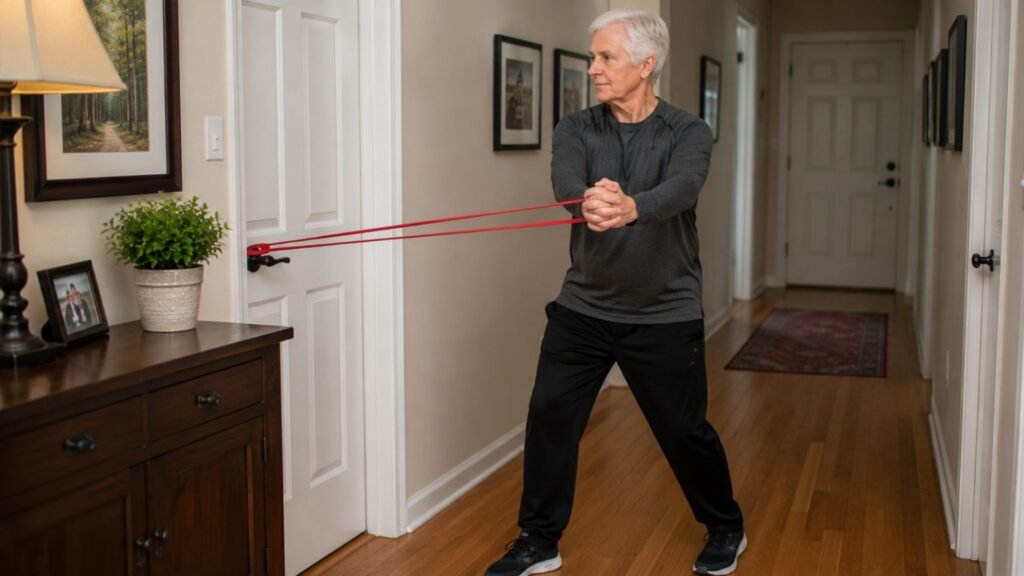
Anchor the band at chest height to your side. Hold it with both hands at your chest and press it straight out in front of you, resisting the urge to rotate, then return. Works: deep core and obliques. Helps with: balance, fall prevention, everyday stability.
Sample Weekly Routine
| Day | Focus | Exercises |
|---|---|---|
| Monday | Upper body | Chest Press, Seated Row, Bicep Curl, Band Pull-Apart |
| Wednesday | Lower body | Standing Squat, Hip Abduction, Leg Extension, Hip Extension |
| Friday | Full body + core | Shoulder Press, Tricep Extension, Seated Torso Twist, Pallof Press |
Start with 8–10 repetitions per exercise for 1–2 sets. As strength builds over a few weeks, progress to 12–15 reps and 2–3 sets, or move to a slightly stronger band.
Frequently Asked Questions
Is this safe for seniors with arthritis? Yes, generally. Bands are gentle on joints, but use light resistance and avoid any range of motion that causes pain.
How soon will I see results? Many people notice improved ease of movement and confidence within a few weeks of consistent practice, with more measurable strength gains typically building over 8–12 weeks.
Can this replace weight training entirely? For most seniors, yes — resistance bands can provide enough progressive resistance to build meaningful strength without needing free weights or machines.
Do I need special bands designed for seniors? No. A basic set of loop bands and a long flat or tube band with light-to-medium resistance is enough to start.
Final Thoughts
The real value of resistance band training for seniors isn’t about looking fit — it’s about staying independent. Every exercise on this list connects directly to something people do every day: standing up, reaching, carrying, walking, and staying steady on their feet. Done consistently, just two to three short sessions a week can make daily life noticeably easier and safer.
disclaimer: This article is for general informational purposes and is not a substitute for medical advice. Please consult a doctor or physical therapist before starting any new exercise program, especially if you have existing health conditions.