Full Body Dumbbell Workout at Home: A Complete, Research-Backed Guide
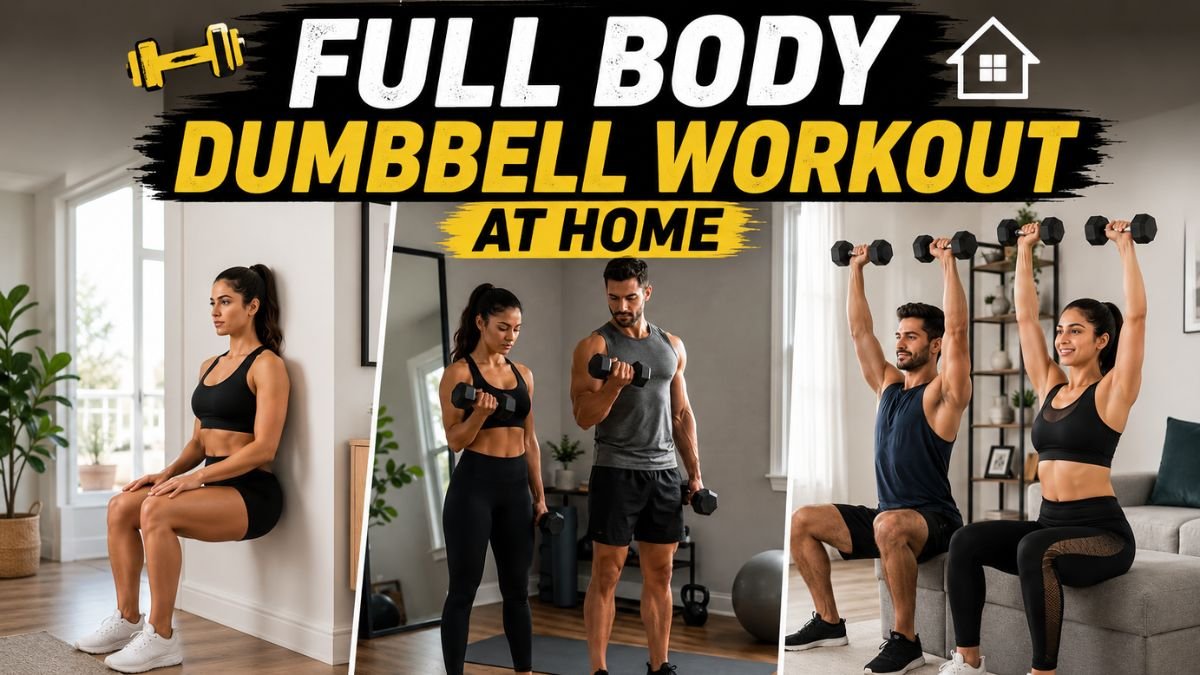
You don’t need a gym membership or a room full of machines to build real strength. A single pair of dumbbells, used correctly, can train every major muscle group in your body — legs, back, chest, shoulders, arms, and core — right from your living room. This guide takes a practical, evidence-informed angle: instead of just listing exercises, it explains why dumbbells work so well for full-body training, breaks down a complete exercise set with correct form, and gives you a structured weekly plan you can actually follow.
Why Dumbbells Are Ideal for Full-Body Training
Dumbbells are considered one of the most efficient tools for home strength training because they force each side of your body to work independently. This unilateral loading helps correct muscle imbalances that barbells and machines often hide, since one arm can’t compensate for a weaker one. Dumbbells also demand more engagement from stabilizer muscles, which builds functional strength that carries over into everyday movements like lifting, carrying, and reaching.
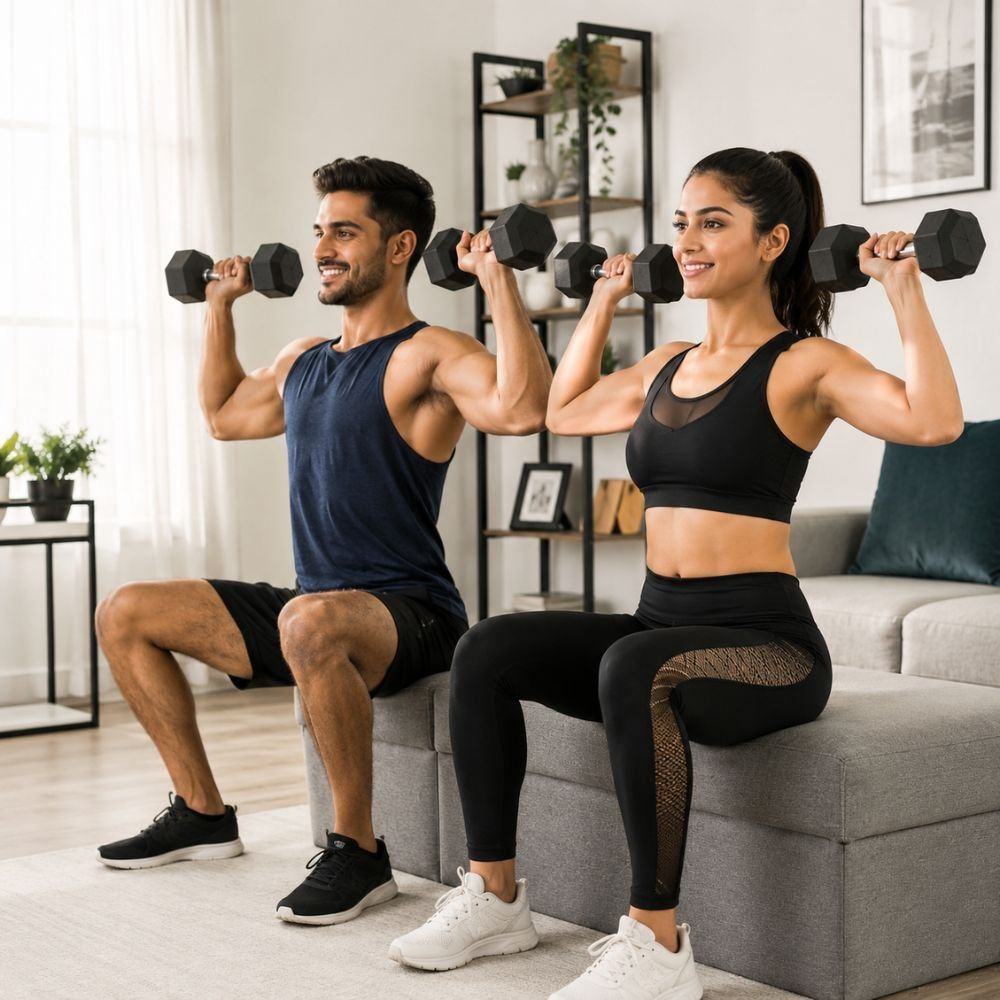
Compared to resistance bands, dumbbells provide constant resistance throughout the entire range of motion, which leads to more consistent muscle engagement. And unlike bodyweight-only training, dumbbells let you progressively overload — gradually increasing the weight as you get stronger, which is one of the most reliable ways to keep building muscle and strength over time.
Health authorities such as the American Heart Association recommend strength training at least twice a week, and a well-programmed full-body dumbbell routine is one of the simplest ways to meet that guideline without leaving home.
Choosing Your Weight and Reps by Goal
| Goal | Weight | Reps per Set | Sets |
|---|---|---|---|
| Endurance / Toning | Light | 10–15 | 2–3 |
| Muscle Growth (Hypertrophy) | Moderate | 8–12 | 3–5 |
| Strength | Heavy | 2–6 | 3–5 |
A simple way to pick the right weight: choose a load where the last 1–2 reps of a set feel genuinely difficult, but your form doesn’t break down. If you finish a set feeling like you could easily do five more reps, it’s time to go heavier.

The Complete Full-Body Dumbbell Exercise List
This routine is built around compound movements — exercises that work multiple joints and muscle groups at once — combined with a few isolation moves for balanced development. Together, they cover legs, back, chest, shoulders, arms, and core.
| # | Exercise | Primary Muscles | Reps (Beginner) |
|---|---|---|---|
| 1 | Goblet Squat | Quads, Glutes, Hamstrings | 8–12 |
| 2 | Dumbbell Deadlift | Back, Glutes, Hamstrings | 8–10 |
| 3 | Dumbbell Lunge | Quads, Glutes | 8–10 per leg |
| 4 | Dumbbell Bench/Floor Press | Chest, Triceps | 8–12 |
| 5 | Bent-Over Row | Back, Lats | 10–12 |
| 6 | Overhead Shoulder Press | Shoulders | 8–10 |
| 7 | Bicep Curl | Biceps | 10–12 |
| 8 | Triceps Kickback | Triceps | 10–12 |
| 9 | Russian Twist | Obliques, Core | 10–12 per side |
| 10 | Dumbbell Crunch | Rectus Abdominis | 12–15 |
1. Goblet Squat
Hold one dumbbell vertically against your chest with both hands. Keeping your chest up and back straight, lower into a squat until your thighs are roughly parallel to the floor, then drive through your heels to stand back up. This move builds the foundation of lower-body strength and also teaches good squat mechanics for future progressions.
2. Dumbbell Deadlift
Stand with a dumbbell in each hand, palms facing your body. Hinge at your hips and knees, lowering the weights toward the floor while keeping your back flat — don’t round your spine. Push your hips forward to return to standing. This is widely regarded as one of the most complete full-body movements, since it builds strength through the entire posterior chain: back, glutes, and hamstrings.
3. Dumbbell Lunge
Holding a dumbbell in each hand at your sides, step forward into a lunge, lowering your back knee toward the floor while keeping your front knee stacked over your ankle. Push through your front heel to return to standing. Lunges mimic natural movement patterns like walking and climbing stairs, making them highly functional.
4. Dumbbell Bench/Floor Press
If you have a bench, lie face-up and press the dumbbells from chest level to full arm extension. No bench? Lie on the floor instead — your elbows will simply touch the ground at the bottom of each rep. This press builds the chest while also engaging the triceps and shoulders.
5. Bent-Over Row
Hinge forward at the hips with a flat back, letting the dumbbells hang below your shoulders. Pull the weights up toward your hips, squeezing your shoulder blades together at the top, then lower with control. This strengthens the upper and mid-back and is especially useful for counteracting the effects of long hours spent sitting.
6. Overhead Shoulder Press
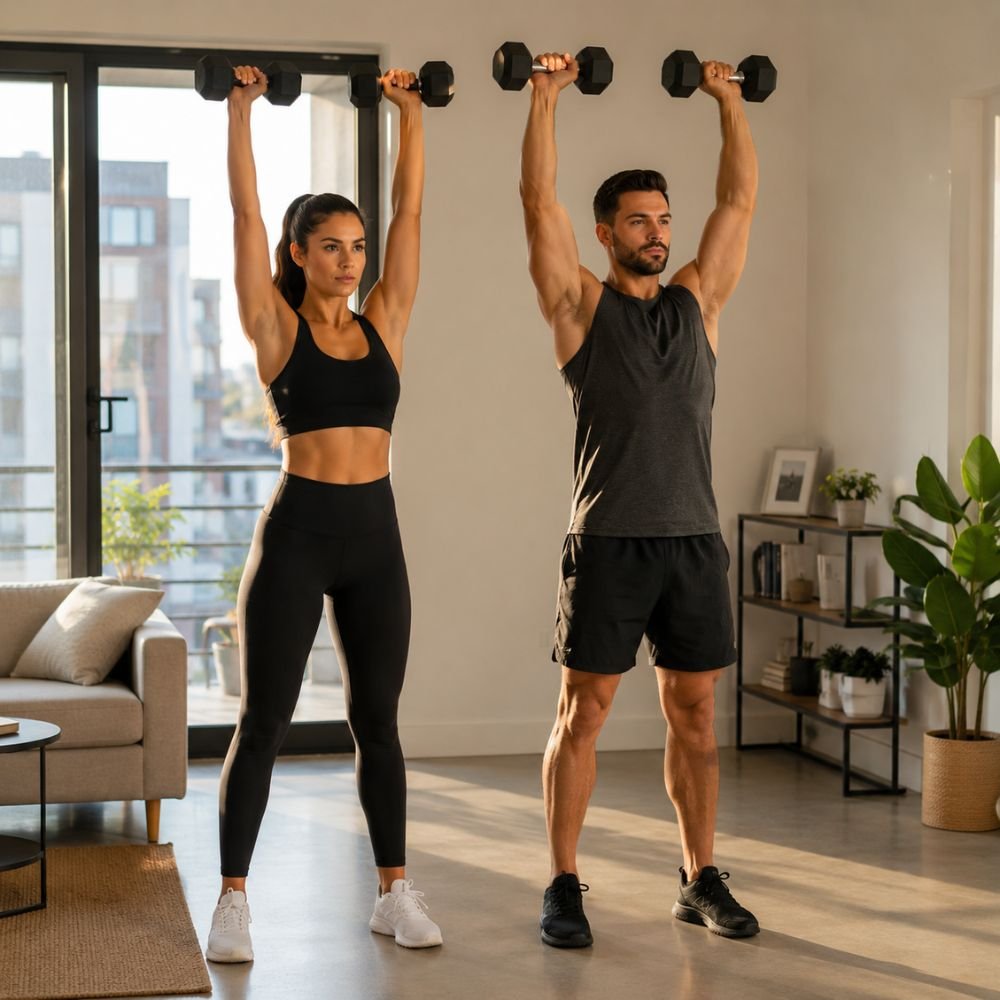
Standing or seated, hold the dumbbells at shoulder height with palms facing forward. Press the weights straight overhead until your arms are fully extended, then lower slowly. This targets all three heads of the deltoid muscle and also engages your core for stability.
7. Bicep Curl
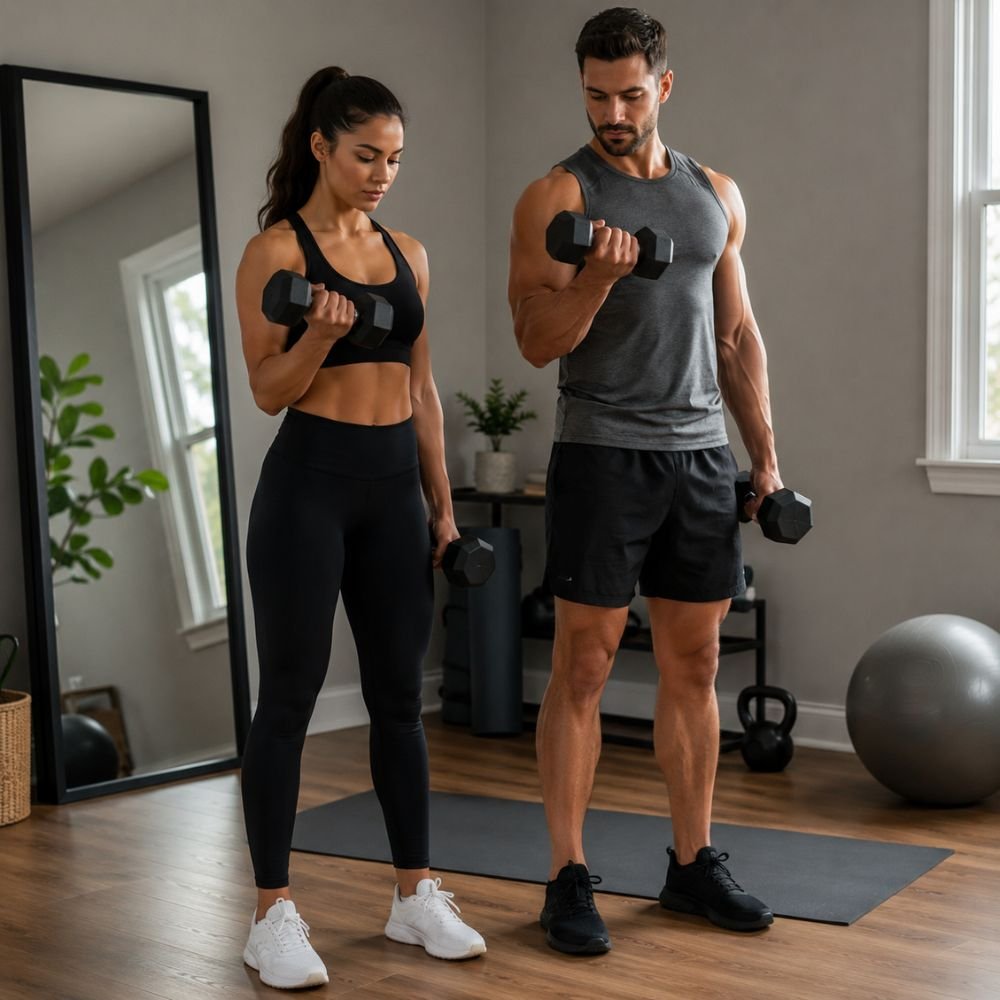
Stand tall with a dumbbell in each hand, palms facing forward, elbows tucked at your sides. Curl the weights up toward your shoulders, squeeze at the top, then lower with control. Keeping your torso still and avoiding momentum ensures the biceps do the actual work.
8. Triceps Kickback
Hinge forward at the hips with your upper arms held close to your body. Extend your elbows to straighten your arms fully behind you, pause to squeeze the triceps, then return under control. Because this move relies on strict positioning, lighter weights are usually more effective than heavy ones.
9. Russian Twist
Sit with your knees bent, lean back slightly to about a 45-degree angle, and hold one dumbbell with both hands at chest level. Rotate your torso from side to side, tapping the dumbbell near each hip. This works the obliques while your deeper core muscles stabilize your spine throughout the movement.
10. Dumbbell Crunch
Lie on your back with knees bent and feet flat on the floor. Hold a dumbbell above your chest with both hands, then curl your shoulders off the ground using your abs, and lower back down with control. Adding light resistance to a standard crunch increases the challenge without needing extra equipment.
Sample Weekly Full-Body Plan
Since this is a full-body routine, spacing your sessions out with rest days in between allows your muscles to recover and grow.
| Day | Focus |
|---|---|
| Monday | Full Body (all 10 exercises, 2–3 sets each) |
| Tuesday | Rest or light walk |
| Wednesday | Full Body (repeat, slightly heavier if possible) |
| Thursday | Rest |
| Friday | Full Body (focus on form and controlled tempo) |
| Saturday/Sunday | Rest or light activity |
Beginners typically get excellent results training the full body two to three times a week. As you get stronger, you can add a fourth session, increase the weight, or add extra sets — but always keep at least one rest day between sessions to allow recovery.
Safety and Form Tips
- Always warm up for 5–10 minutes before lifting — light cardio and dynamic stretching prime your joints and muscles.
- Prioritize form over weight. Poor form increases injury risk and reduces the effectiveness of the exercise.
- Move with control, especially during the lowering (eccentric) phase of each rep — this is where a lot of the muscle-building benefit happens.
- Avoid training the same muscle groups on consecutive days; recovery is when muscles actually grow stronger.
- If you feel joint pain or sharp discomfort, stop the exercise immediately and consult a doctor or certified trainer if needed.
Conclusion
A complete, effective full-body workout doesn’t require a gym — just a pair of dumbbells, some floor space, and consistency. By combining compound lower-body movements like squats, lunges, and deadlifts with upper-body presses, rows, and curls, plus a couple of core exercises, you can train your entire body in one session, two to three times a week. Progress comes not from lifting the heaviest weight possible, but from steady, controlled improvement over time.
Disclaimer: This article is intended for general fitness information purposes. Before starting any new workout routine, especially if you have an existing health condition, please consult your doctor or a certified trainer.