Top 10 Easy Workout Routine for Overweight Beginners No Equipment
Starting a fitness routine when you’re carrying extra weight can feel intimidating, especially if gyms, machines, and complicated programs make you want to close the app before you’ve even started. The good news is that a top 10 easy workout routine for overweight beginners no equipment approach can be just as effective for building strength, improving mobility, and boosting stamina as anything you’d find in a gym. All you really need is a bit of floor space, comfortable clothes, and a willingness to start small. These movements are chosen specifically because they’re low-impact, joint-friendly, and scalable, meaning you can make them easier or harder as your fitness improves.
This isn’t about pushing yourself into exhaustion on day one. It’s about building a sustainable habit with exercises that respect where your body is right now while still challenging it enough to create real progress over time.
Top 10 Easy Workout Routine for Overweight Beginners No Equipment
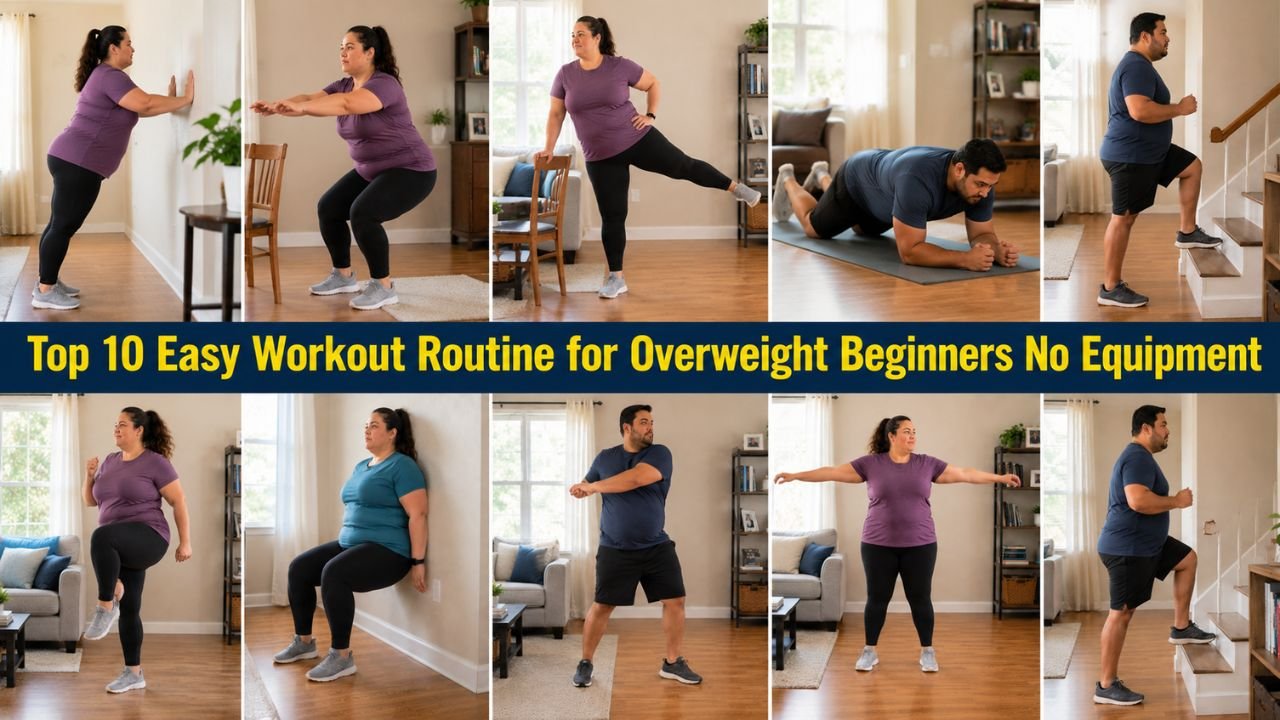
1. Marching in Place
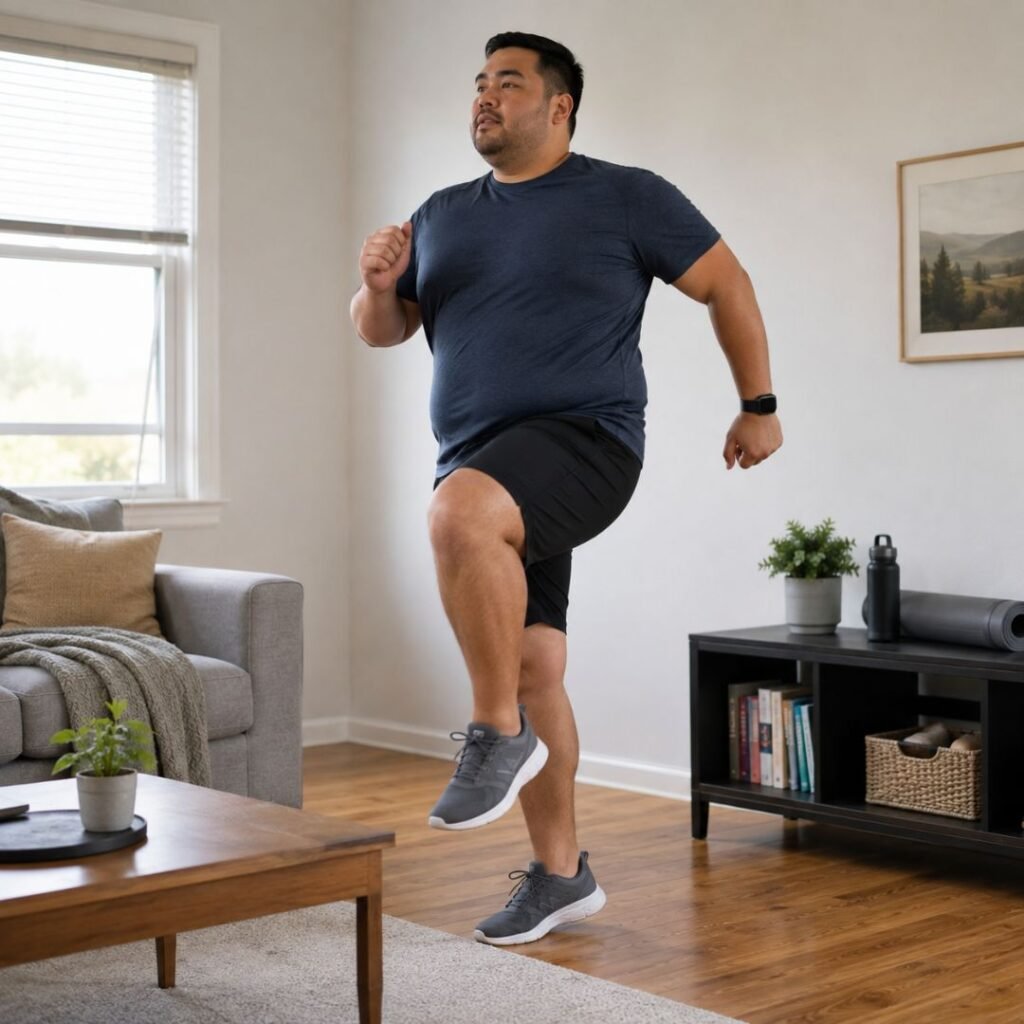
This might sound too simple to matter, but marching in place is a genuinely useful warm-up and standalone cardio option for beginners. Lift your knees to a comfortable height, swing your arms naturally, and keep a steady rhythm for 2 to 3 minutes. It gets your heart rate up without any impact on your knees or hips, which makes it a smart starting point before moving into other exercises.
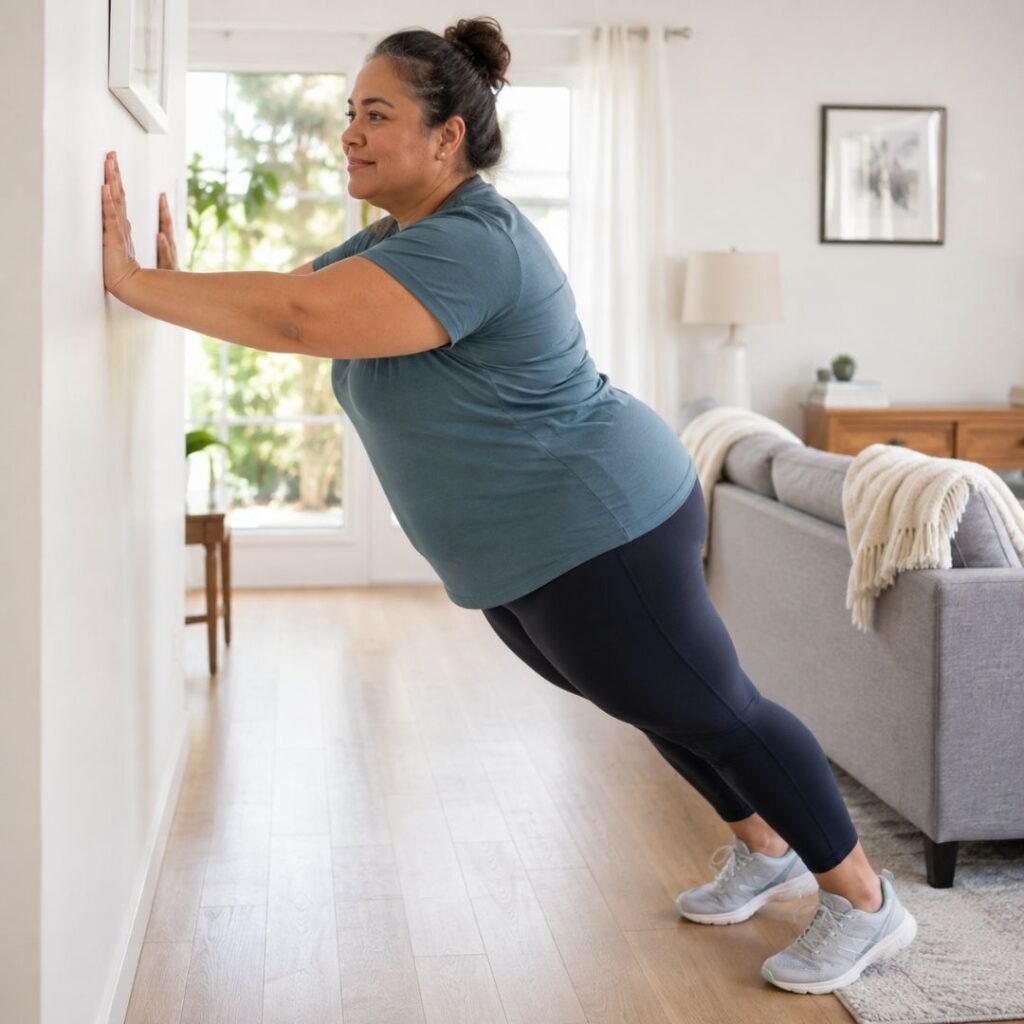
2. Wall Push-Ups
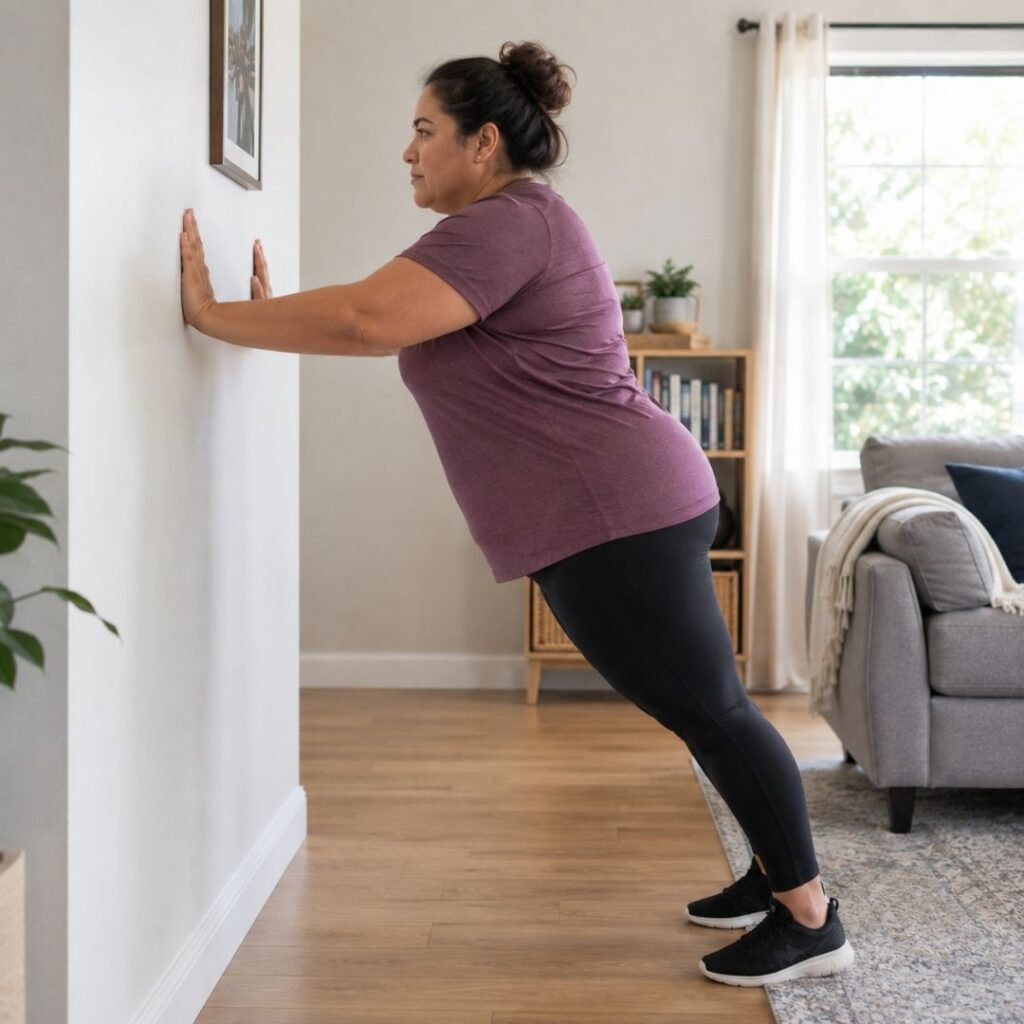
Traditional push-ups can be tough on the wrists and shoulders when you’re just starting out, so wall push-ups are a gentler entry point. Stand an arm’s length from a wall, place your palms flat against it at shoulder height, and bend your elbows to bring your chest toward the wall before pushing back. This builds upper body strength gradually and can be progressed later to countertop or floor push-ups.
3. Seated Chair Squats
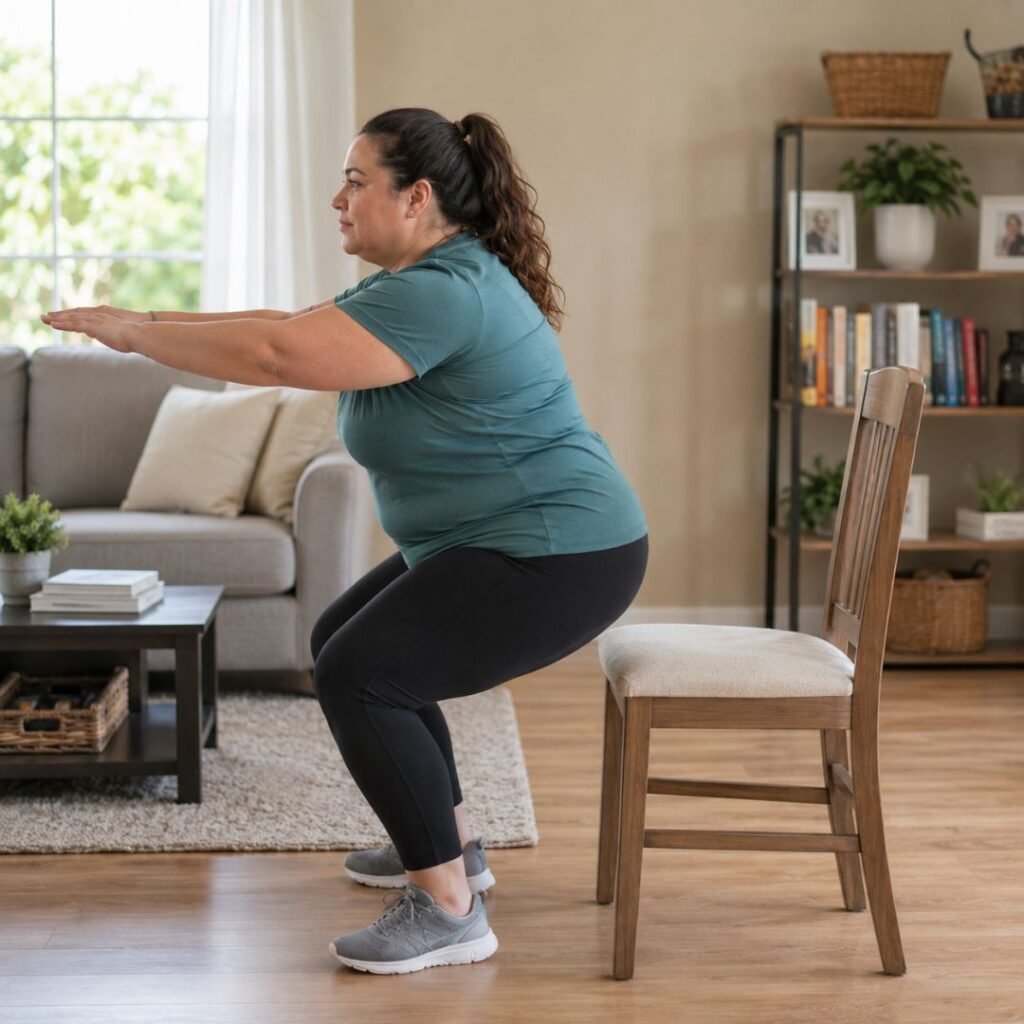
Using a sturdy chair, lower yourself down slowly until you’re just about to sit, then stand back up. This teaches proper squat mechanics without the fear of losing balance, and it strengthens the legs and glutes, which are some of the biggest muscle groups in the body. As confidence builds, you can reduce how much you rely on the chair for support.
read also: Top 12 Essential Gym Equipment for Home
4. Standing Side Leg Raises
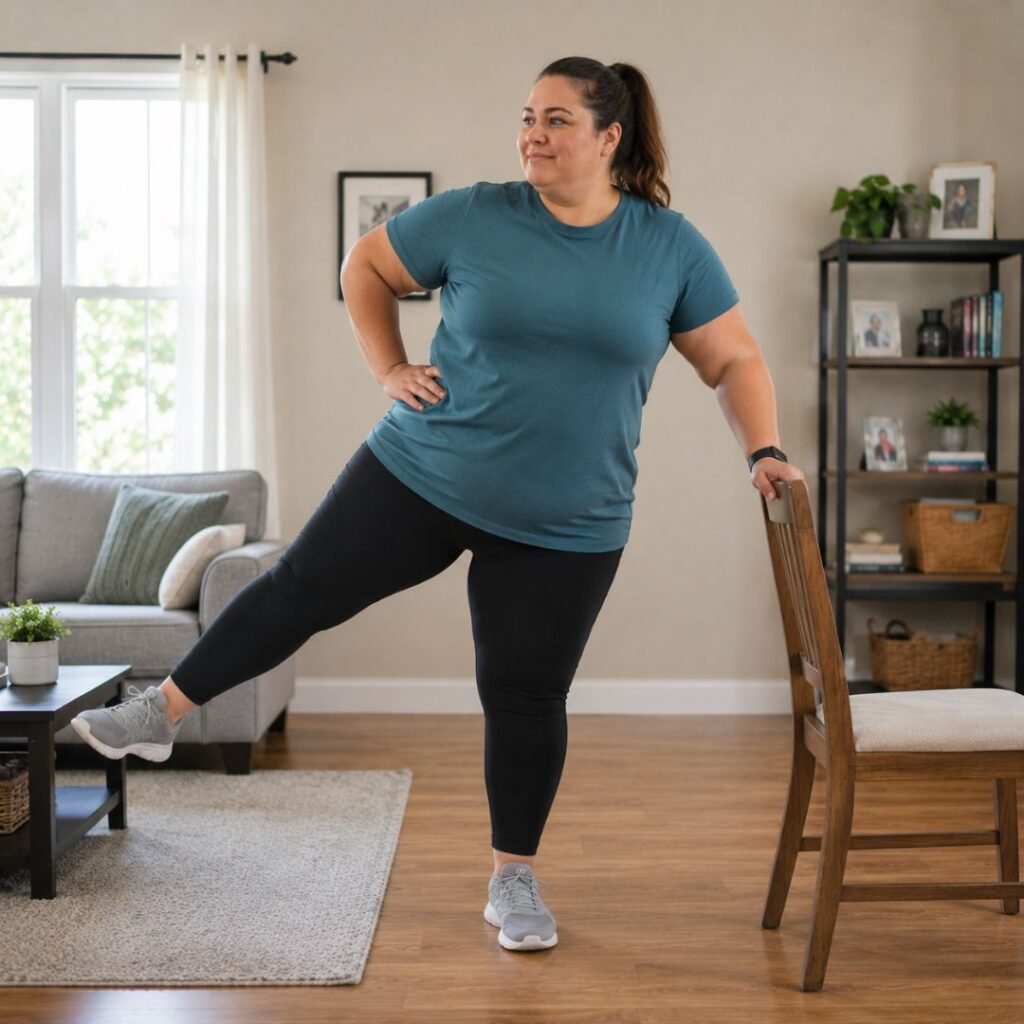
Holding onto a wall or chair for balance, lift one leg out to the side, hold briefly, and lower it back down. This works the hip muscles, which play a big role in stability and can help reduce strain on the knees during walking or other daily movement.
5. Modified Plank
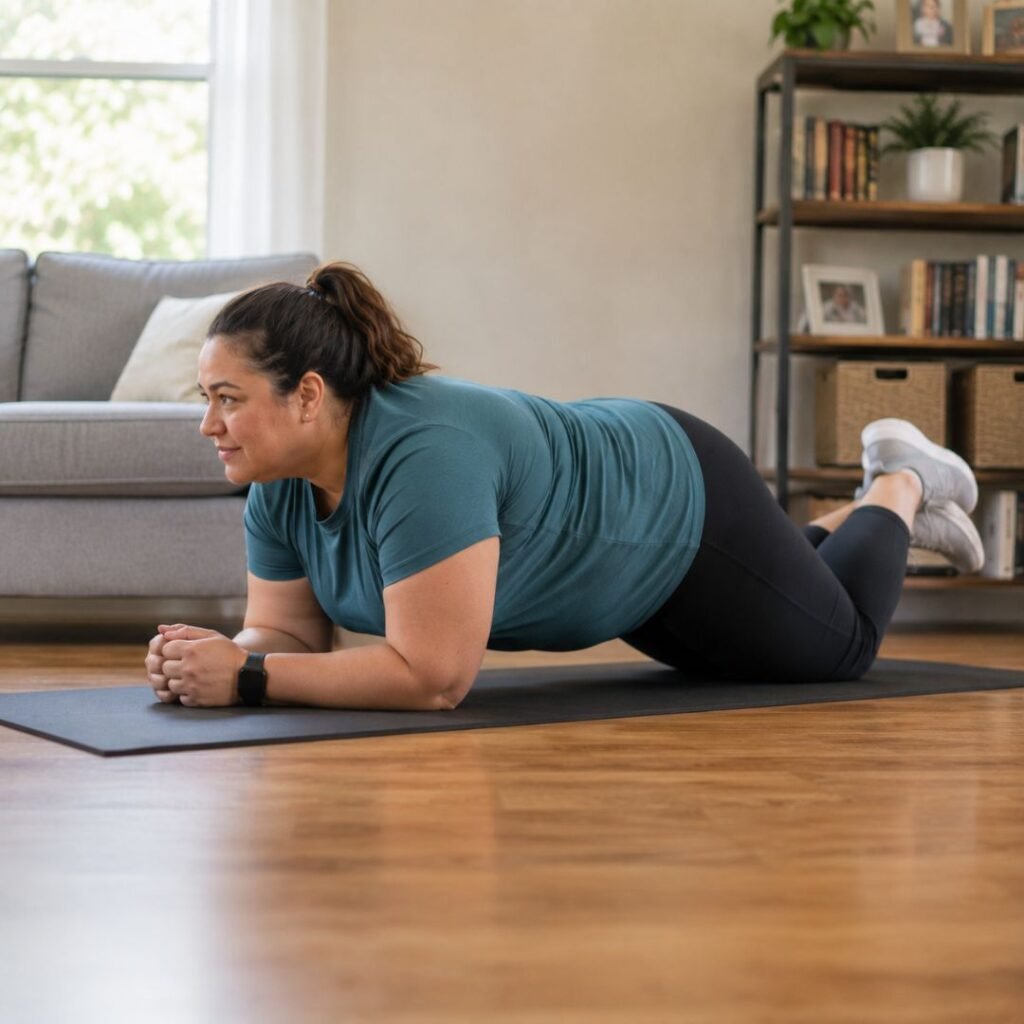
Rather than a full plank on your toes, try holding the position on your knees instead, keeping your body in a straight line from your knees to your shoulders. This builds core strength, which supports better posture and reduces lower back strain, without putting excessive pressure on the wrists or spine.
6. Step-Ups Using a Low Step or Stair
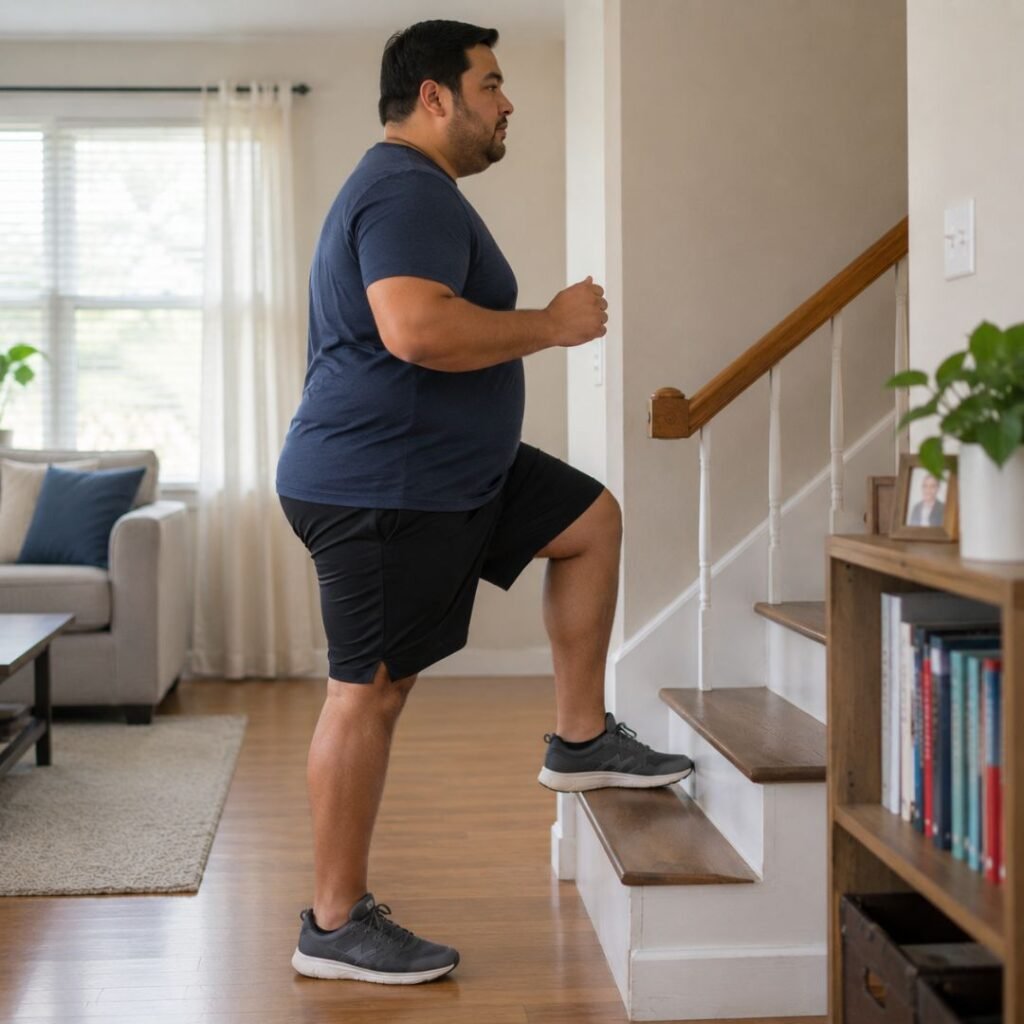
Using a low, stable step or the bottom stair of your home, step up with one foot, bring the other foot to meet it, then step back down. This works the legs and glutes while also improving balance and coordination, both of which matter more than people realize when starting a fitness routine later in life or after a period of inactivity.
7. Standing Knee Lifts
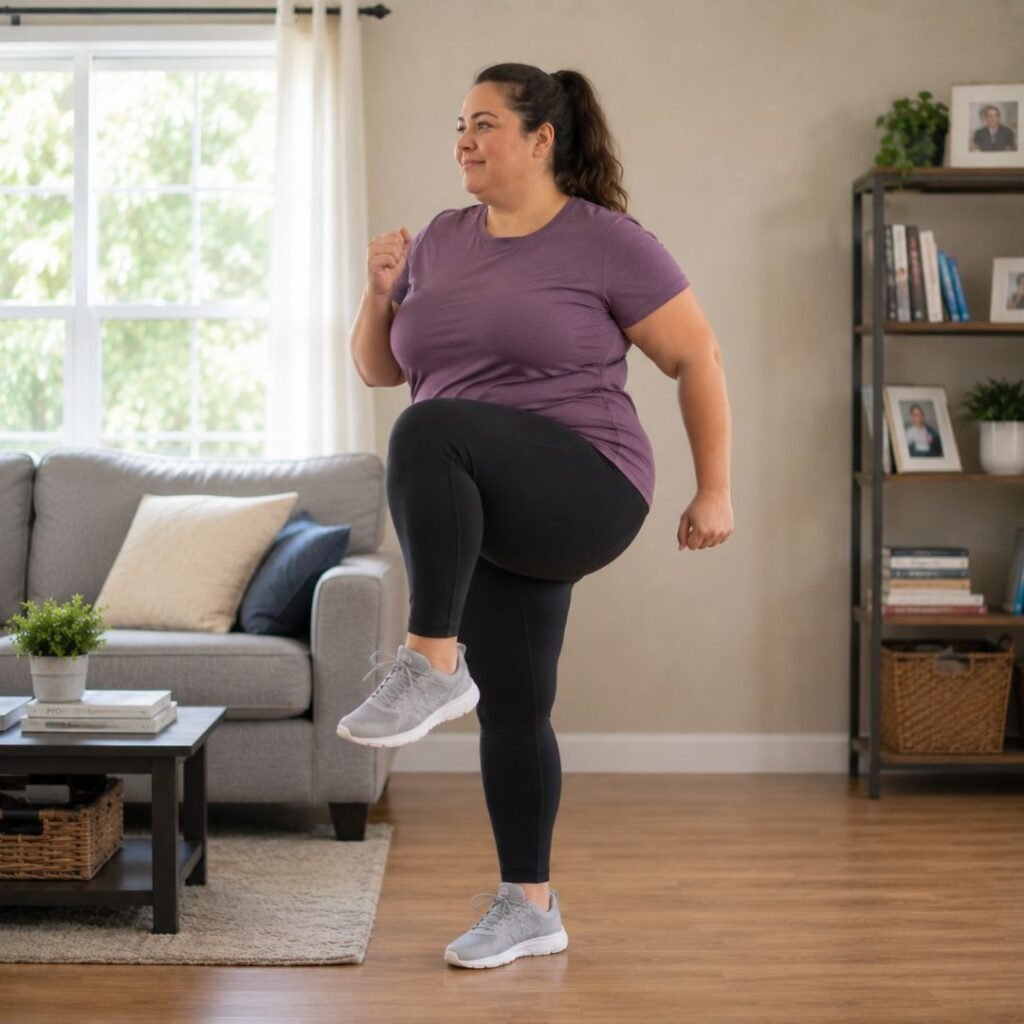
Stand tall and lift one knee toward your chest, alternating sides at a controlled pace. This is a good low-impact cardio option that also engages the core and hip flexors, and it can be sped up or slowed down depending on your energy level that day.
read also: Best 15 Casual Gym Outfit Ideas for Women
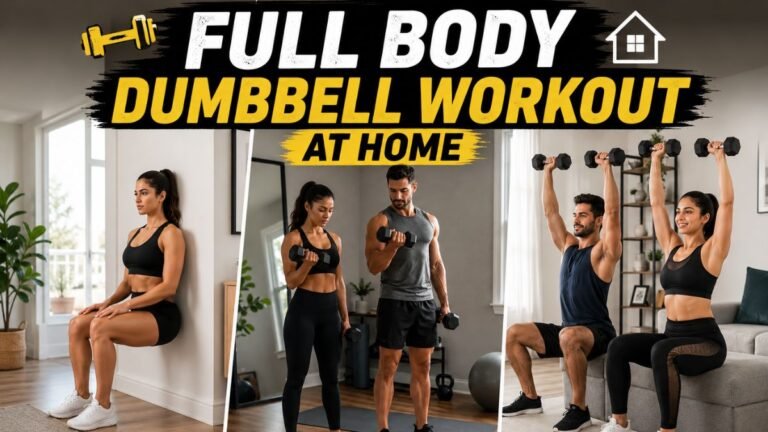
8. Wall Sit
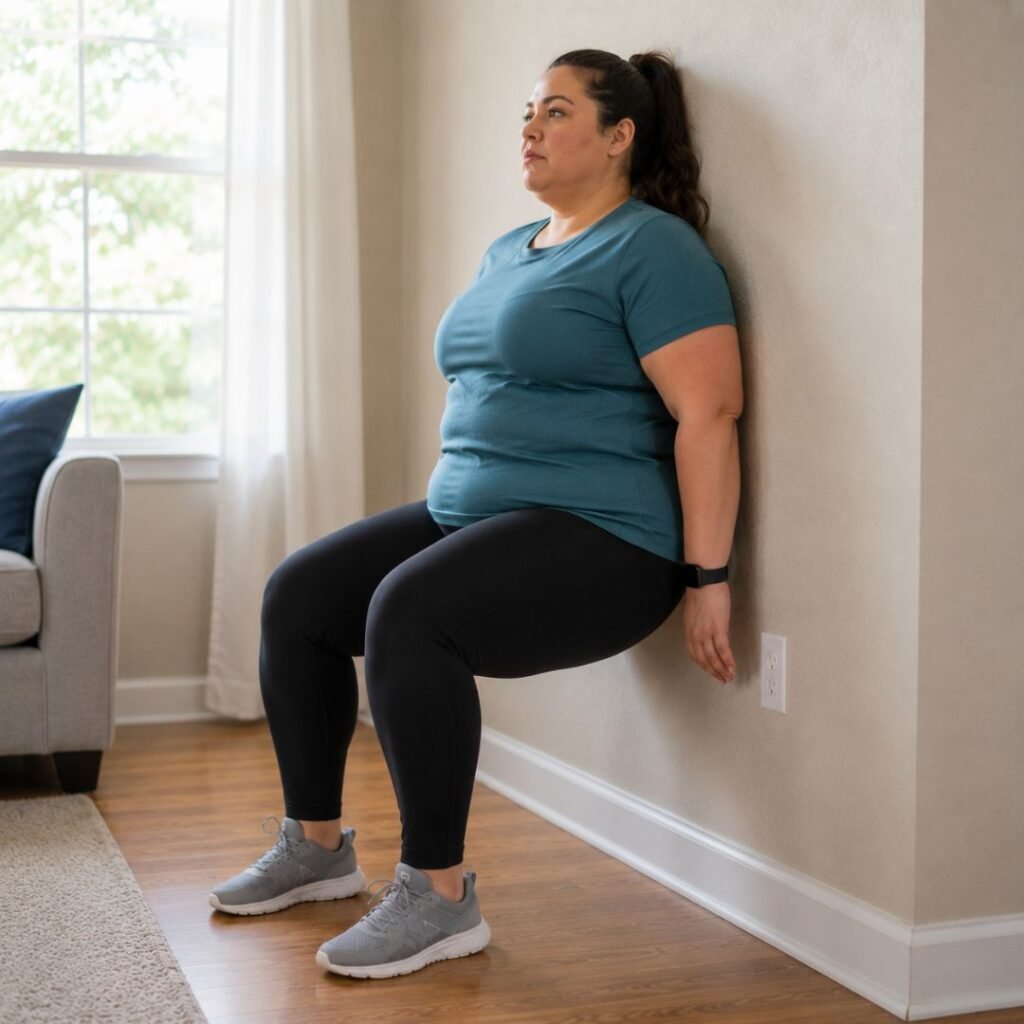
Lean your back against a wall and slide down until your knees are bent at a comfortable angle, then hold the position. Even a 15 to 20 second hold builds real strength in the thighs and glutes, and you can extend the time as your endurance improves.
9. Standing Torso Twists
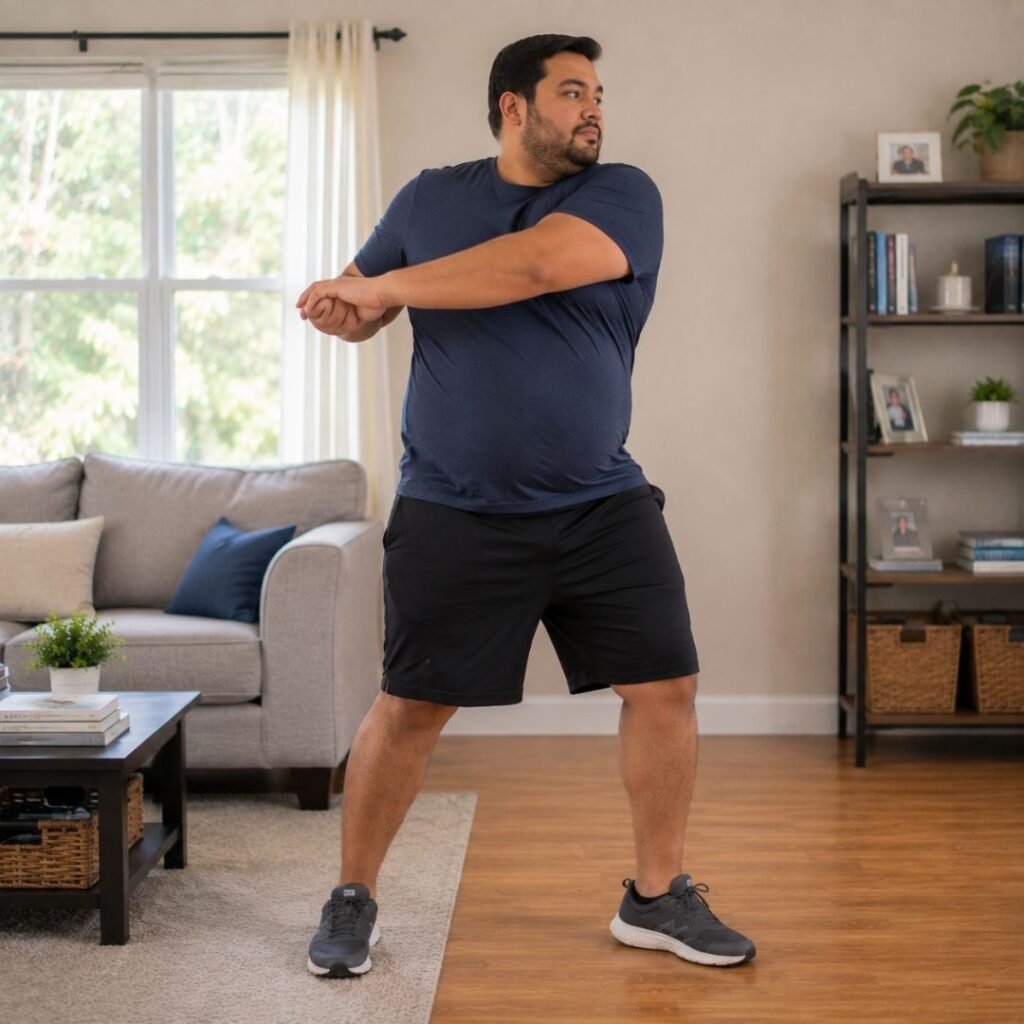
With your feet shoulder-width apart and knees slightly bent, gently rotate your upper body from side to side, letting your arms swing naturally. This loosens up the spine and obliques and works well as either a warm-up or a light active-recovery movement between more demanding exercises.
10. Seated or Standing Arm Circles
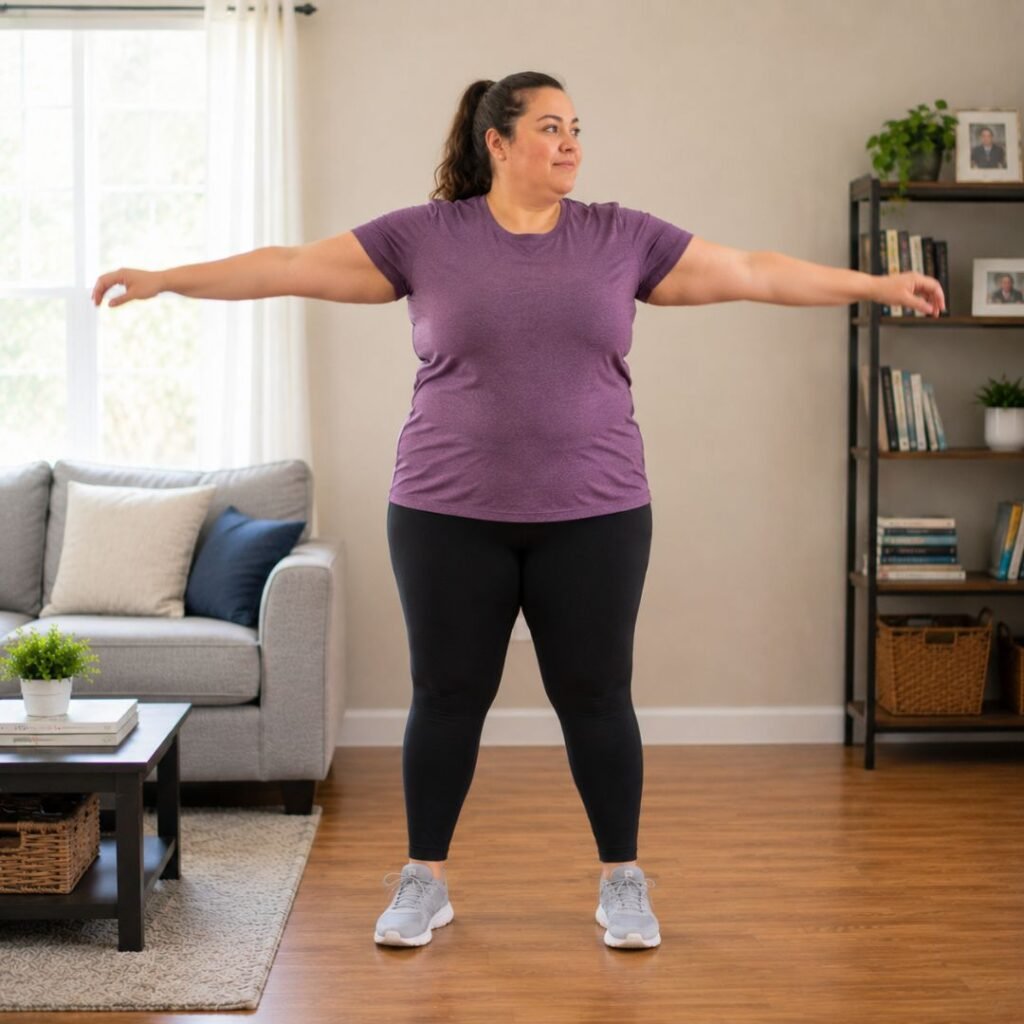
Extend your arms out to the sides and make small circles, gradually increasing the size before reversing direction. This is an easy way to improve shoulder mobility and circulation, and it’s gentle enough to do even on days when you’re easing back into a routine after time off.
How to Put This Routine Together
A simple approach is to pick 5 to 6 of these exercises and do them in a circuit, spending 30 to 45 seconds on each with a short rest in between. Repeat the circuit two or three times, depending on your energy and how your body feels. Doing this three to four times a week, with rest days in between, gives your body time to adapt and recover.
Benefits of a No-Equipment Beginner Routine
- Accessibility. You can do these exercises at home, which removes common barriers like gym intimidation, cost, or travel time.
- Joint-friendly movement. Low-impact exercises reduce stress on the knees, hips, and lower back, which matters if joint discomfort has been a barrier to exercise in the past.
- Gradual progression. Every movement here has a natural way to get harder over time, so the same routine can grow with you.
- Improved daily function. Building strength and balance through these basic movements can make everyday tasks like climbing stairs or getting up from a chair noticeably easier.
Common Mistakes to Avoid
- Trying to do too much too soon. Jumping into long, intense sessions in week one often leads to burnout or injury. Starting with shorter sessions and building up gradually tends to stick better long term.
- Skipping warm-ups. Even light movements like marching in place or arm circles help prepare your joints and muscles before more demanding exercises.
- Ignoring form for the sake of speed. Doing an exercise correctly and slowly is more valuable than rushing through reps with poor technique.
- Comparing your pace to someone else’s. Progress looks different for everyone, and comparing yourself to fitness content online can be discouraging rather than motivating.
Precautions Before You Start
If you have existing joint issues, heart conditions, or haven’t exercised in a long time, it’s worth checking in with a doctor before starting any new routine, even a low-impact one like this. Pay attention to how your body responds during and after exercise — some muscle soreness is normal, but sharp pain, dizziness, or shortness of breath beyond what feels manageable are signs to stop and reassess. Staying hydrated and wearing supportive shoes, even for indoor workouts, can also make a noticeable difference in comfort and safety.
Frequently Asked Questions
How often should beginners do this routine?
Three to four times a week is a reasonable starting point, with rest or light activity days in between to allow recovery.
Will this routine help with weight loss?
Consistent movement combined with an overall healthy eating pattern supports weight management, but exercise alone isn’t usually enough without attention to diet as well.
Do I need to do all 10 exercises every session?
No. Picking 5 to 6 exercises per session and rotating them across the week is a practical way to build variety without overwhelming yourself.
How long before I notice a difference?
Many people notice improvements in energy and stamina within a few weeks, though visible physical changes typically take longer and vary from person to person.
Is it normal to feel sore after these exercises?
Mild soreness, especially when starting a new routine, is common and usually fades within a couple of days. Persistent or sharp pain is different and should be checked by a professional.