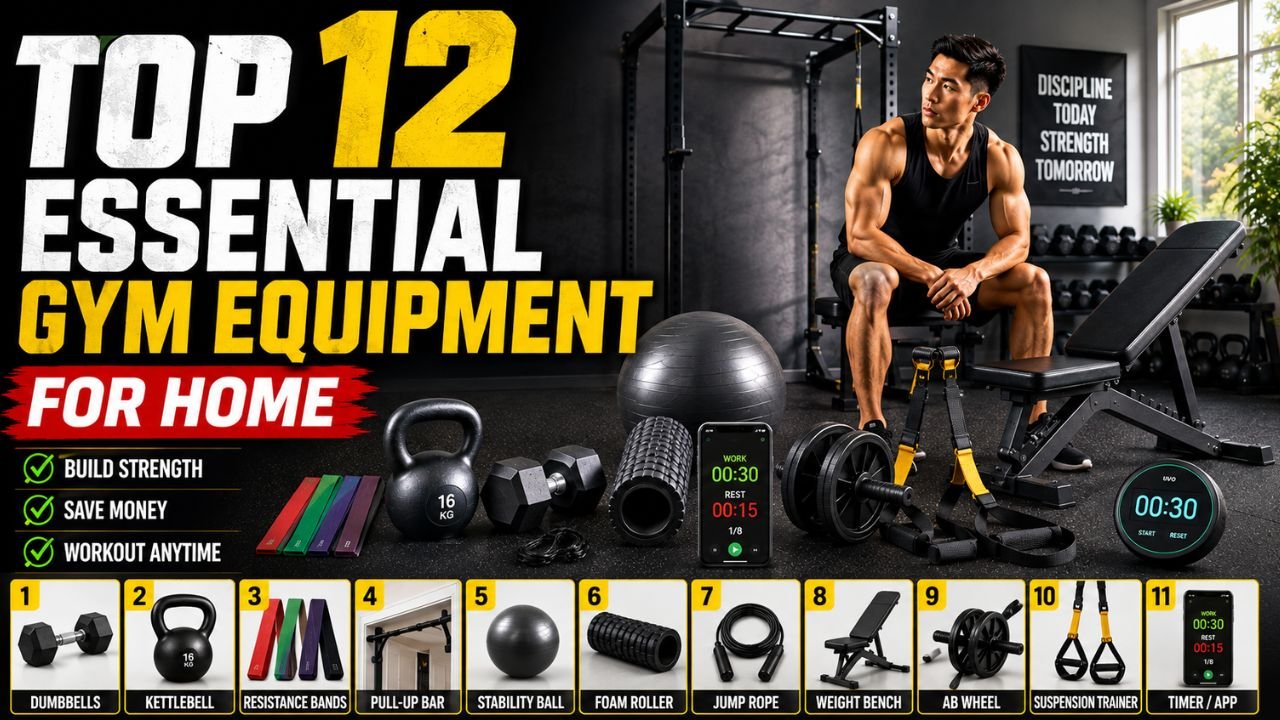
Top 12 Essential Gym Equipment for Home
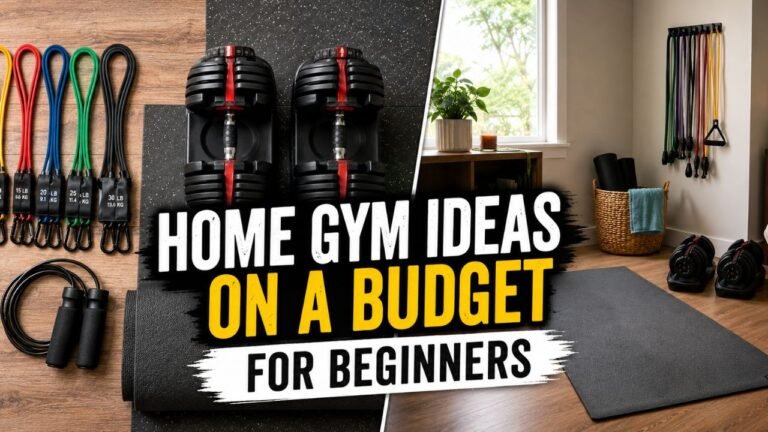
Building a home gym can feel overwhelming when you start scrolling through fitness equipment sites, but the truth is you don’t need a warehouse full of machines to train effectively. The essential gym equipment for home comes down to a handful of versatile tools that cover strength, cardio, and mobility without eating up your entire budget or living room.
This list walks through twelve pieces worth prioritizing, in roughly the order most people find useful, along with practical notes on choosing, using, and maintaining each one.
1. Adjustable Dumbbells
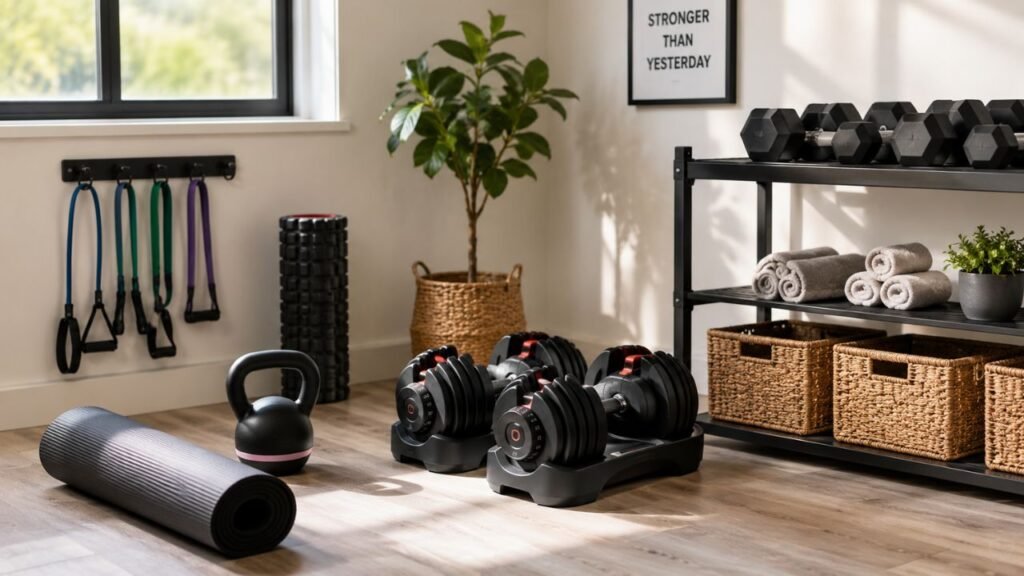
Adjustable dumbbells are usually the first purchase that makes the biggest difference in a home gym. A single pair with a selectable weight range replaces what would otherwise be an entire rack of fixed dumbbells, saving both space and money over time.
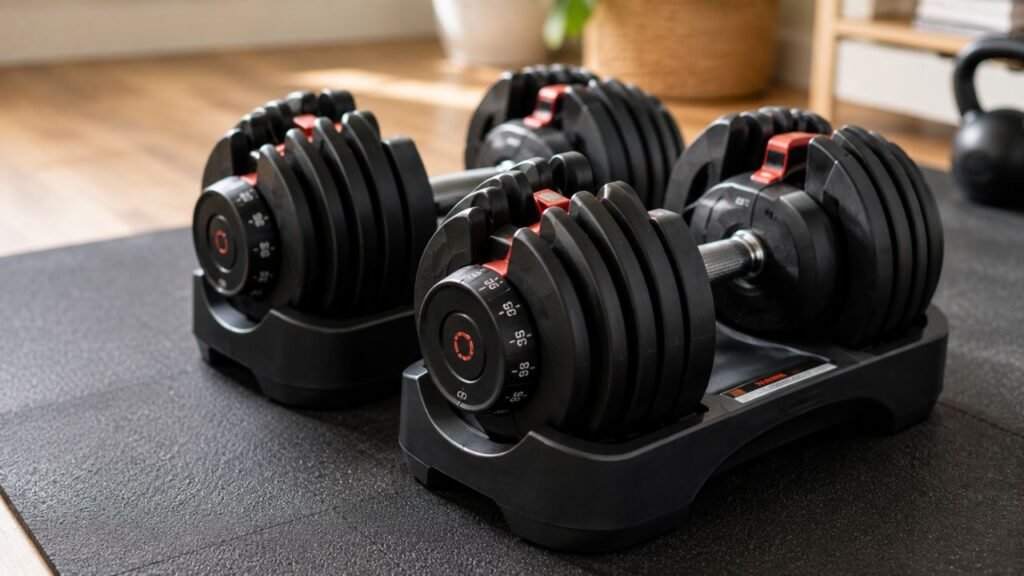
Why it matters: They allow progressive overload gradually increasing resistance as you get stronger which is one of the primary drivers of strength gains.
Tip: Look for a weight range that covers both your lighter exercises (like lateral raises) and heavier ones (like rows or lunges), since buying two sets defeats the space-saving purpose.
Precaution: Check the locking mechanism carefully before every use. A dial or pin that isn’t fully secured can cause weight plates to shift or drop during a lift.
read also: Kettlebell Workouts for Female Beginners Over 50: A Complete, Research-Backed Guide
2. Resistance Bands
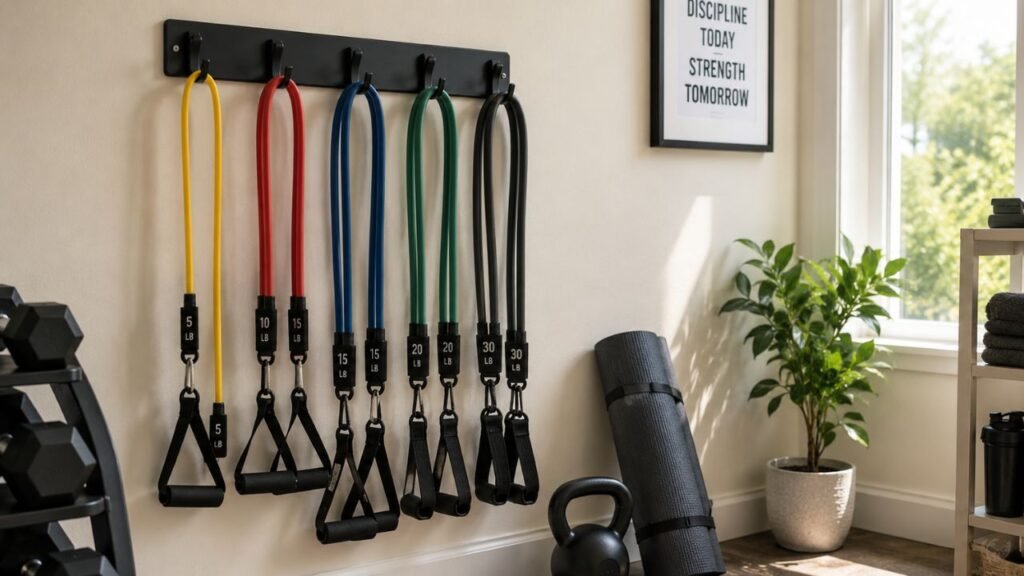
Resistance bands are inexpensive, take up almost no storage space, and offer a surprisingly wide range of training options, from warm-up activation work to full resistance training for smaller muscle groups.
Why it matters: Bands provide variable resistance, meaning the tension increases as the band stretches, which challenges muscles differently than constant-weight tools like dumbbells.
Tip: Buy a set with multiple resistance levels rather than a single band, so you can match the tension to the specific exercise and muscle group.
Precaution: Inspect bands regularly for small cracks or thinning, particularly around the areas that stretch the most. A snapped band under tension can cause injury.
3. Yoga Mat
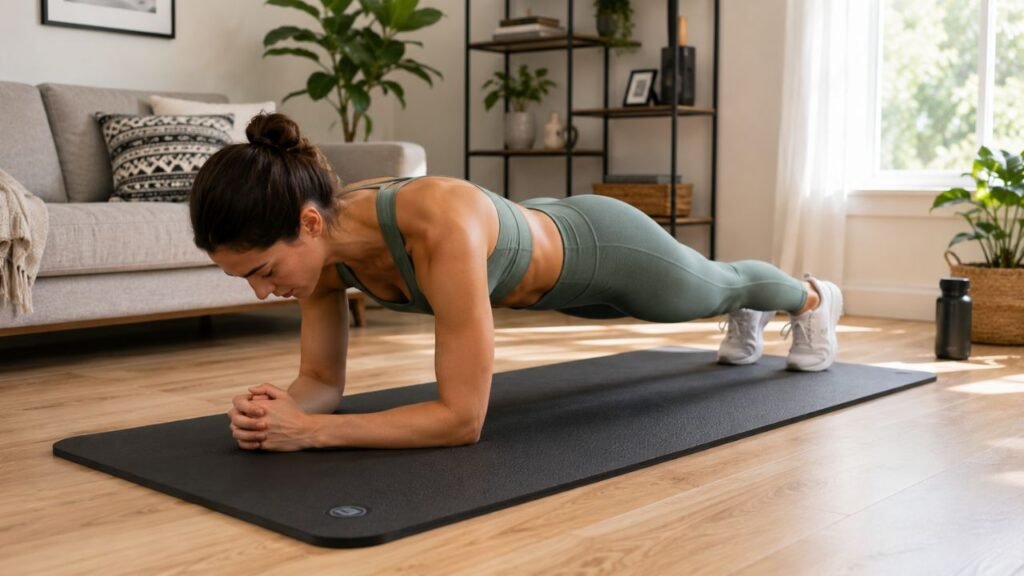
A dependable yoga mat is one of the most underrated pieces of home gym equipment. It provides cushioning for floor exercises, a defined workout space, and better grip than a bare floor for movements like planks or push-ups.
Why it matters: Cushioning reduces joint stress during floor-based exercises, particularly for kneeling or lying movements that put direct pressure on bony areas like knees and elbows.
Tip: Thickness matters based on use a thinner mat (around 3-4mm) offers more stability for standing balance work, while a slightly thicker mat is more comfortable for floor-based strength exercises.
read also: Top 15 Leg Exercises for Women with Weights: A Complete, Research-Backed Guide
4. Kettlebell
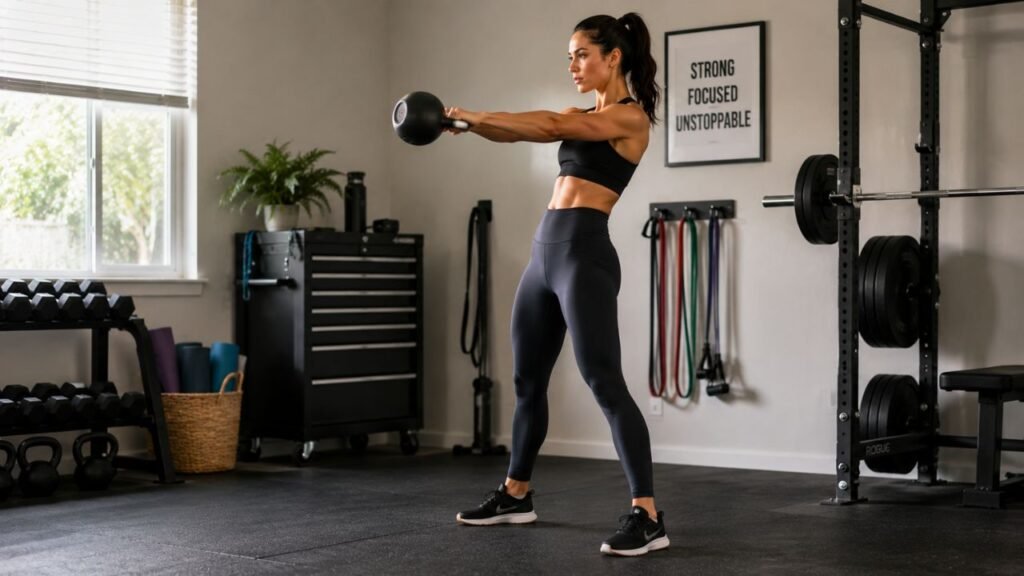
A kettlebell’s off-center weight distribution makes it useful for dynamic, full-body movements that a standard dumbbell doesn’t replicate as well, particularly swinging and ballistic exercises.
Why it matters: Kettlebell training often combines strength and cardiovascular elements in the same movement, since exercises like swings elevate heart rate while also working the posterior chain.
Tip: Start with a single kettlebell in a moderate weight rather than buying multiple sizes right away. Many exercises, like goblet squats and swings, can be scaled by adjusting reps and tempo before you need a heavier bell.
Precaution: Kettlebell exercises like swings rely heavily on hip hinge technique. Learning proper form, ideally by watching instructional demonstrations or working with a trainer initially, reduces the risk of lower back strain.
5. Pull-Up Bar
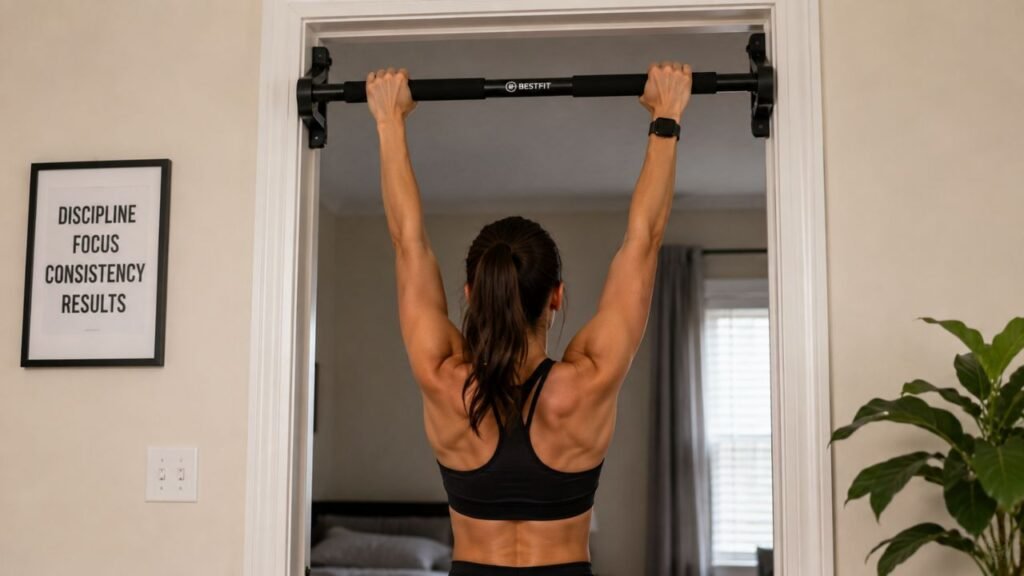
A doorway or wall-mounted pull-up bar adds upper-body pulling exercises to a home routine, which is a movement pattern that’s otherwise hard to replicate without equipment.
Why it matters: Pulling exercises like pull-ups and hanging leg raises work the back, biceps, and core in ways that pushing-focused bodyweight exercises (like push-ups) don’t cover.
Tip: If you’re not yet able to do a full pull-up, the bar is still useful for dead hangs, which help build grip strength and shoulder mobility.
Precaution: Doorway bars rely on the door frame’s structural strength. Check the weight rating and make sure the frame is solid wood or properly reinforced before relying on it for full-body-weight movements.
6. Stability Ball
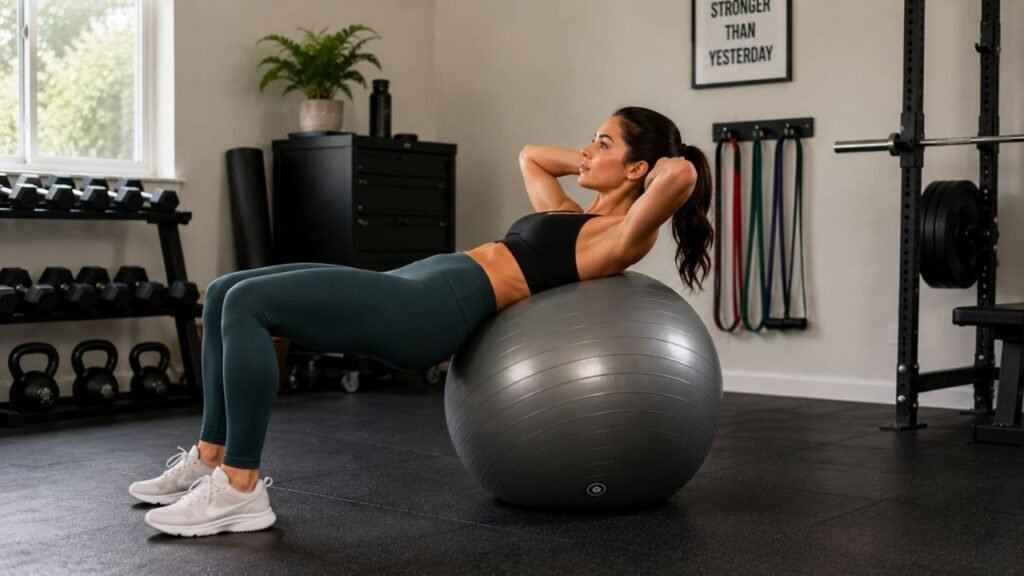
A stability ball (also called a Swiss ball or exercise ball) is a versatile, low-cost tool for core work, balance training, and as an alternative seat for stretching exercises.
Why it matters: The unstable surface engages stabilizing muscles more than exercises performed on a solid, flat surface, which can add a useful challenge to standard core exercises.
Tip: Choose a ball size based on your height — when seated on it, your knees should form roughly a 90-degree angle with your feet flat on the floor.
Precaution: Make sure the ball is fully inflated to the manufacturer’s recommended firmness. An underinflated ball is less stable and can increase the risk of losing balance during exercises.
7. Foam Roller
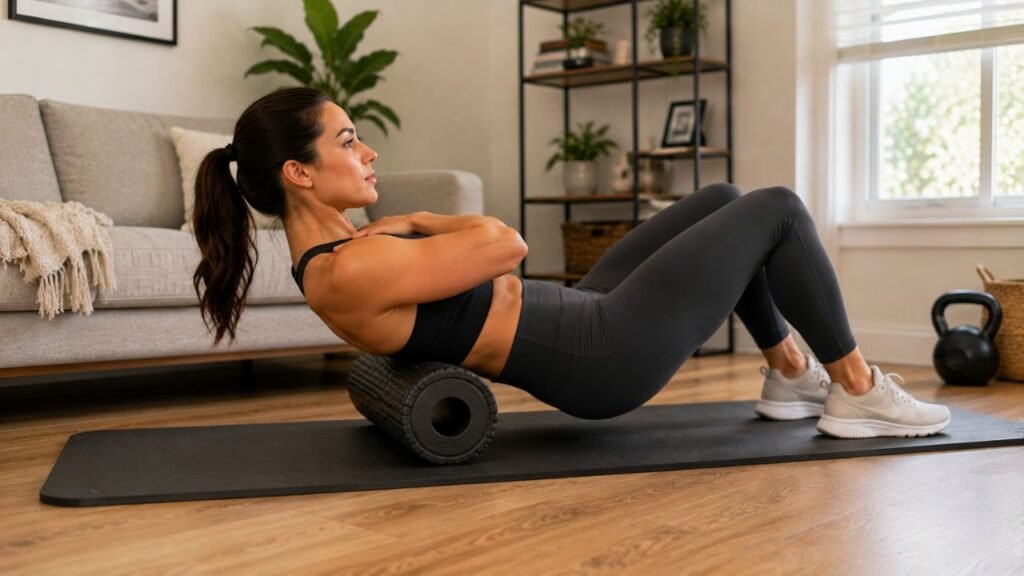
Foam rollers are widely used for self-myofascial release, a technique that involves applying pressure to muscles to help with tightness and recovery after training.
Why it matters: Regular use can help with mobility and may reduce the feeling of muscle tightness after intense training sessions, making it a useful recovery tool alongside stretching.
Tip: Roll slowly over larger muscle groups like the quads, hamstrings, and upper back, pausing briefly on tighter spots rather than rolling quickly back and forth.
Precaution: Avoid rolling directly over joints or bony areas, and skip rolling over any area that’s acutely injured or inflamed.
8. Jump Rope
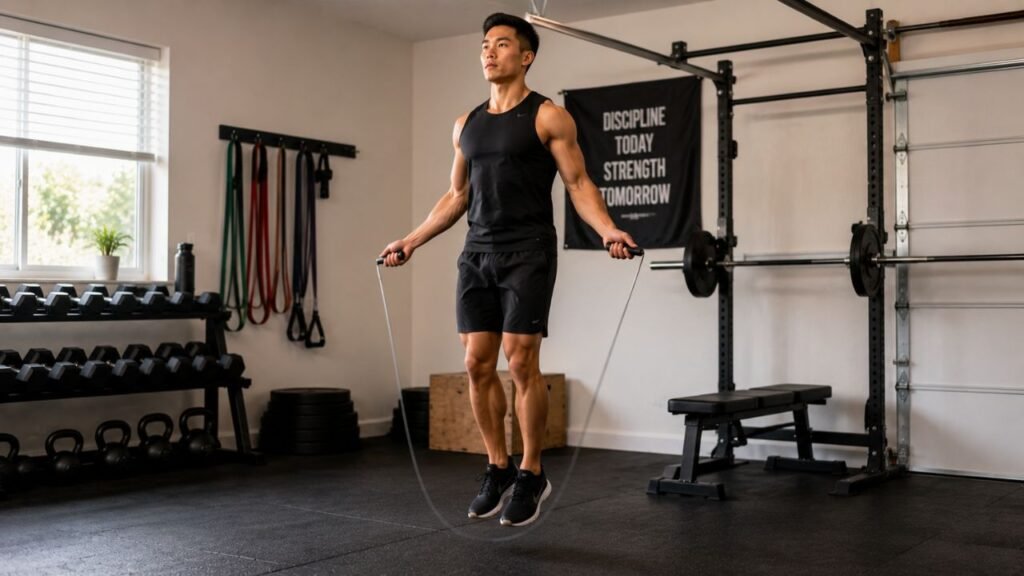
A jump rope is one of the most efficient cardio tools available for a home gym, requiring minimal space and offering a genuinely demanding workout in short bursts.
Why it matters: Jump rope training builds cardiovascular endurance and coordination, and it’s easy to scale in intensity just by adjusting speed or adding interval structure.
Tip: Make sure you have enough ceiling clearance and a flat, even surface. A rubber gym mat or outdoor pavement works better than carpet, which can catch the rope.
Precaution: Jumping rope is a repetitive, higher-impact activity. Supportive footwear helps reduce strain on the ankles and knees, especially during longer sessions.
9. Weight Bench
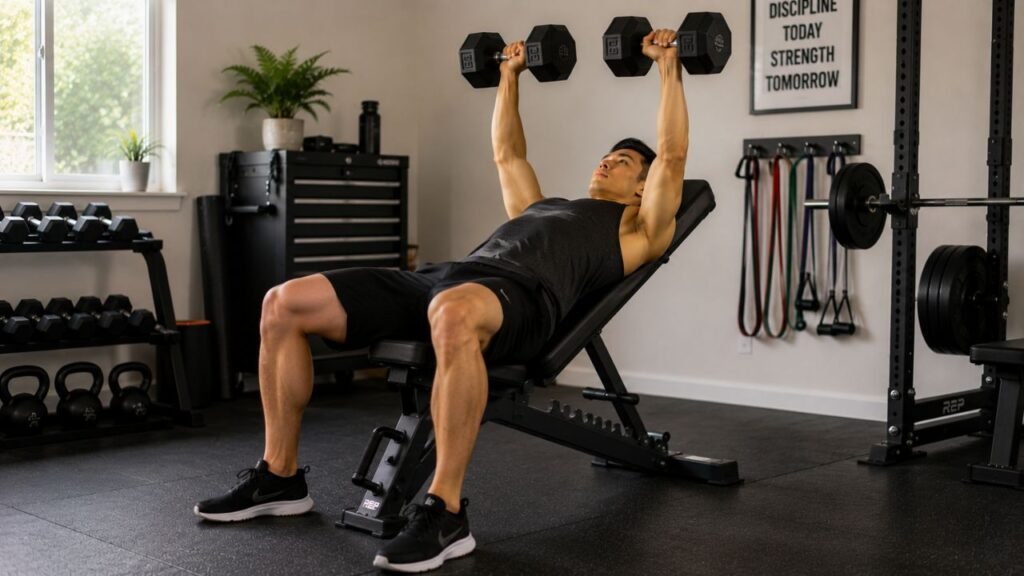
A flat or adjustable weight bench expands what you can do with dumbbells and resistance bands significantly, opening up exercises like bench presses, step-ups, and incline work that aren’t possible on the floor alone.
Why it matters: An adjustable bench in particular lets you target different areas of a muscle group — incline positions shift emphasis in chest and shoulder exercises compared to a flat position.
Tip: If space is limited, look for a folding bench that can be stored upright or under a bed when not in use.
Precaution: Check the bench’s weight capacity, including your body weight plus any dumbbells or added resistance, before performing pressing movements.
10. Ab Wheel
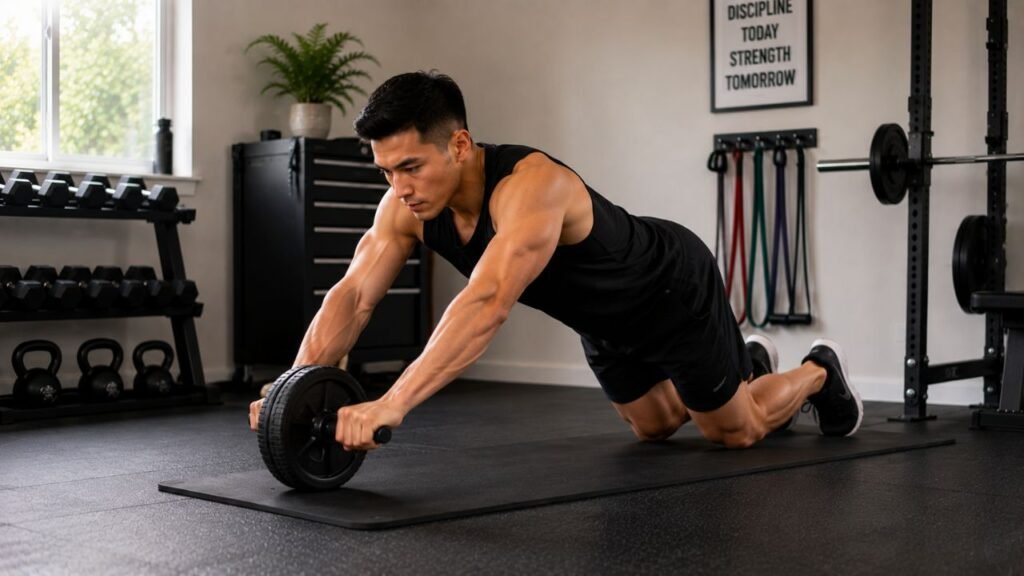
An ab wheel is a simple, compact tool that targets core strength through a rolling extension movement, which is more challenging than it looks for most beginners.
Why it matters: The rollout movement requires significant core stability to control, engaging the abdominals, obliques, and to some extent the shoulders and lower back.
Tip: Start with rollouts from the knees rather than a standing position, and only progress to more advanced variations once you can control the movement through a full range without your lower back sagging.
Precaution: This exercise places real demand on the lower back and shoulders. If you feel strain rather than muscle engagement, shorten your range of motion or pause the exercise.
11. Suspension Trainer
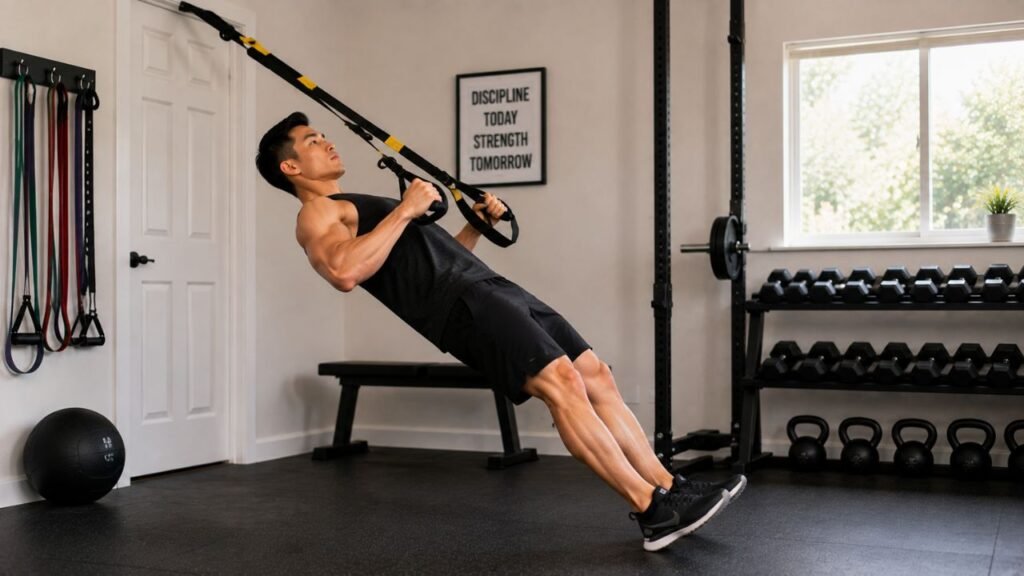
Suspension trainers, which use adjustable straps anchored to a door, wall, or ceiling point, allow bodyweight training with adjustable difficulty based on body angle.
Why it matters: Changing your body angle relative to the anchor point changes the resistance for exercises like rows and presses, making it easy to scale difficulty without adding external weight.
Tip: A more horizontal body position increases difficulty, while a more upright position makes the same exercise easier — useful for adjusting workouts as you get stronger.
Precaution: Confirm the anchor point can support your body weight and the forces generated during dynamic movement. Manufacturer guidelines typically specify what qualifies as a secure anchor.
12. Interval Timer or Fitness App
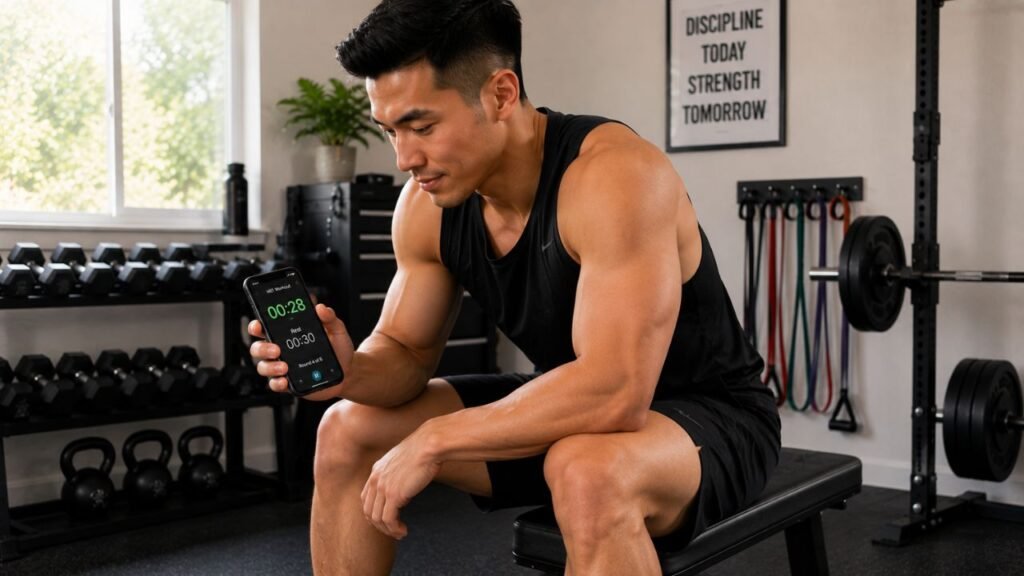
While not physical equipment in the traditional sense, a reliable interval timer (whether a standalone device or a phone app) is genuinely useful for structuring home workouts, particularly circuit training or HIIT sessions.
Why it matters: Structured work-to-rest intervals help maintain workout intensity and consistency, rather than guessing at timing or losing track of rest periods.
Tip: Look for a timer with audio cues, so you don’t need to keep glancing at a screen mid-set to know when an interval starts or ends.
Benefits of Building a Home Gym
- Convenience and consistency. Removing the commute to a gym can make it easier to maintain a regular training routine, particularly on busy weeks.
- Cost savings over time. While the upfront investment in equipment adds up, it can be more economical than an ongoing gym membership over several years, depending on your local pricing.
- Privacy and comfort. Some people train more confidently and consistently in a private space, without concerns about equipment availability or being watched.
Common Mistakes to Avoid
- Buying too much too soon. It’s tempting to purchase a wide range of equipment upfront, but starting with a few versatile pieces (dumbbells, a mat, a resistance band set) lets you build a routine before expanding.
- Skipping proper flooring. Dropping weights or performing high-impact movements directly on hard flooring can damage both the floor and the equipment. Rubber gym tiles are a worthwhile investment.
- Ignoring equipment maintenance. Bands degrade, bench upholstery wears down, and adjustable dumbbell mechanisms can loosen over time. Regular inspection prevents equipment failure during use.
- Underestimating space needs. Some exercises, like kettlebell swings or jump rope, need more clearance than people initially plan for. Measure your available space with actual movement in mind, not just where the equipment will sit in storage.
- Neglecting proper form because no one’s watching. Training alone removes the accountability of a trainer or gym environment, which makes it easy to develop poor habits. Recording yourself occasionally or reviewing form guides can help catch issues early.
Frequently Asked Questions
What’s the minimum equipment needed to start a home gym?
A pair of adjustable dumbbells, a set of resistance bands, and a yoga mat cover a wide range of strength and mobility training on their own, making them a practical starting point before expanding further.
Is home gym equipment worth it if I have limited space?
Yes, many of the items on this list — resistance bands, a jump rope, an ab wheel — take up minimal space and store easily. Foldable options exist for larger equipment like benches as well.
How much should I expect to spend on essential home gym equipment?
Costs vary significantly by brand and quality, but a functional starter setup covering the first few items on this list is generally more affordable than several months of a typical gym membership, though exact pricing depends on your region and equipment choices.
Do I need a weight bench if I’m just starting out?
Not immediately. Many effective exercises can be done on the floor or standing. A bench becomes more valuable as your routine grows to include pressing and incline variations.
How often should I replace resistance bands?
There’s no fixed timeline, since it depends on frequency of use and storage conditions. Inspect bands regularly for visible wear, thinning, or small tears, and replace them as soon as you notice damage rather than waiting for a scheduled interval.
You don’t need to fill an entire room to build an effective home gym. Start with a few adaptable pieces, learn to use them well, and add equipment as your training goals become clearer. The most valuable piece of equipment is ultimately the one you’ll actually use consistently.