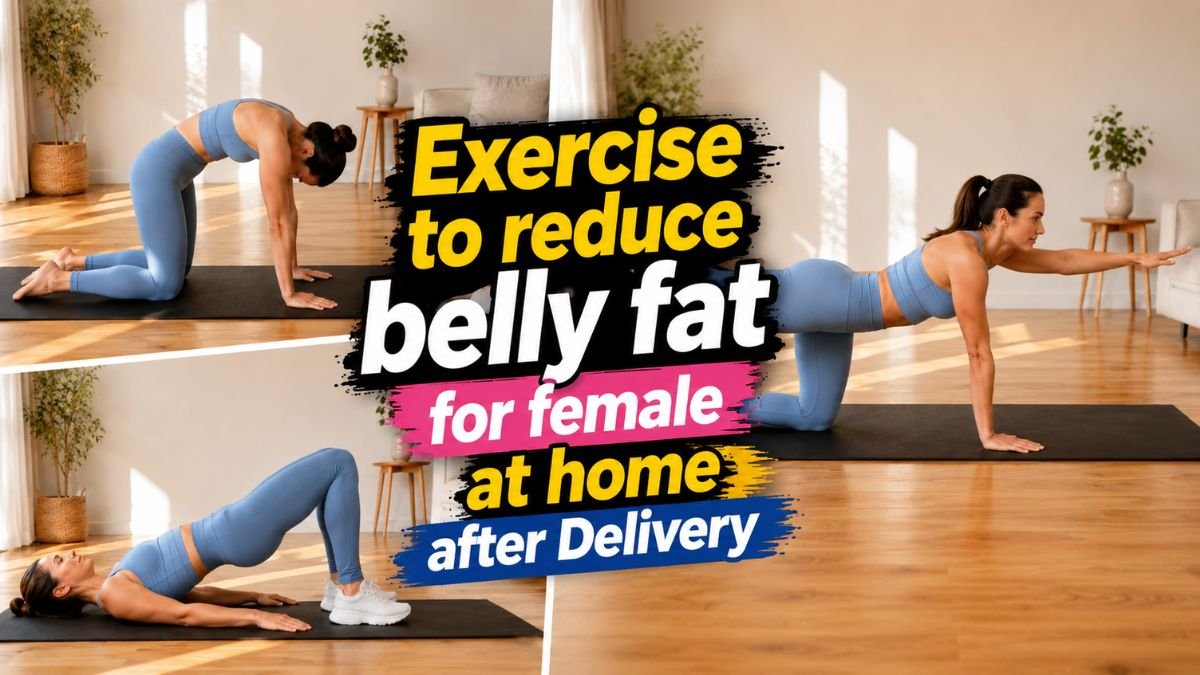
best 10 Exercise to reduce belly fat for female at home after Delivery
After delivery, many women notice increased belly fat due to hormonal changes, stretched abdominal muscles, and fat storage that naturally occurs during pregnancy to support the baby’s growth. This is completely normal, and it takes time for the body to gradually return to its pre-pregnancy shape. Exercising at home is especially beneficial for new mothers, as it allows them to work out at their own pace, save time, and avoid the hassle of gym visits while caring for a newborn. In this article, we’ll cover safe and effective postpartum exercises to help reduce belly fat, along with tips on when to start and how to stay consistent — always keeping your body’s recovery and safety as the top priority.
Can You Reduce Belly Fat After Delivery?
- The postpartum recovery process takes time, as your uterus, abdominal muscles, and skin gradually shrink back over several weeks to months after delivery.
- It’s important to set realistic expectations — belly fat won’t disappear overnight, and results vary based on delivery type, body composition, and lifestyle factors.
- Consistency is key: staying regular with light exercise, proper nutrition, and patience will yield better, safer results than trying to rush the process.
When Is It Safe to Start Exercising After Delivery?
- After normal delivery: Most women can begin light exercises, like walking or gentle stretching, around 4–6 weeks postpartum, depending on how their body feels.
- After C-section: Recovery takes longer, so it’s generally recommended to wait 6–8 weeks before starting any exercise, as the incision needs proper time to heal.
- Why doctor’s permission matters: Every woman’s recovery is different, so a doctor’s clearance ensures your body is truly ready, helping you avoid complications or injury.
Benefits of Postpartum Exercise
- Belly fat reduction
- Strong core muscles
- Better posture
- More energy
- Improved mood
- Faster recovery
Things to Do Before Starting
- Warm-up
- Comfortable workout clothes
- Drink enough water
- Listen to your body
- Stop if you feel pain
15–20 Minute Home Workout Routine
- 5-minute warm-up
- 10–15 minutes of beginner exercises
- 5-minute stretching and cool-down
read more: 10 Best Glute Workout at Home for Beginners Female (No Equipment Needed)
1. Pelvic Tilts
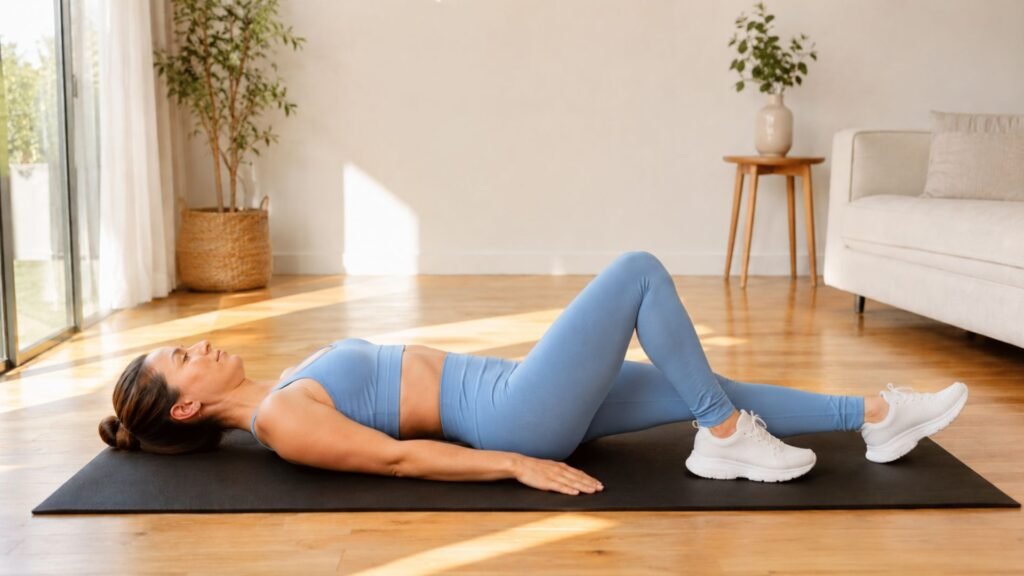
What It Is
Pelvic Tilts are a gentle core-strengthening exercise that helps activate the deep abdominal and pelvic muscles. They are especially useful after pregnancy to improve core stability and support the lower back.
How to Do It
Lie comfortably on a yoga mat with your knees bent and your feet flat on the floor. Keep your arms relaxed by your sides. Slowly tighten your abdominal muscles and gently tilt your pelvis upward, pressing your lower back into the mat. Hold for a moment, then return to the starting position with control. Repeat the movement without rushing.
Recommended Reps
- Beginners: 10–12 repetitions
- Sets: 2–3
- Frequency: 3–5 days per week
Key Benefits
- Strengthens the deep core muscles
- Supports postpartum recovery
- Helps reduce lower back discomfort
- Improves pelvic stability and posture
- Encourages better body awareness and movement control
2. Deep Belly Breathing
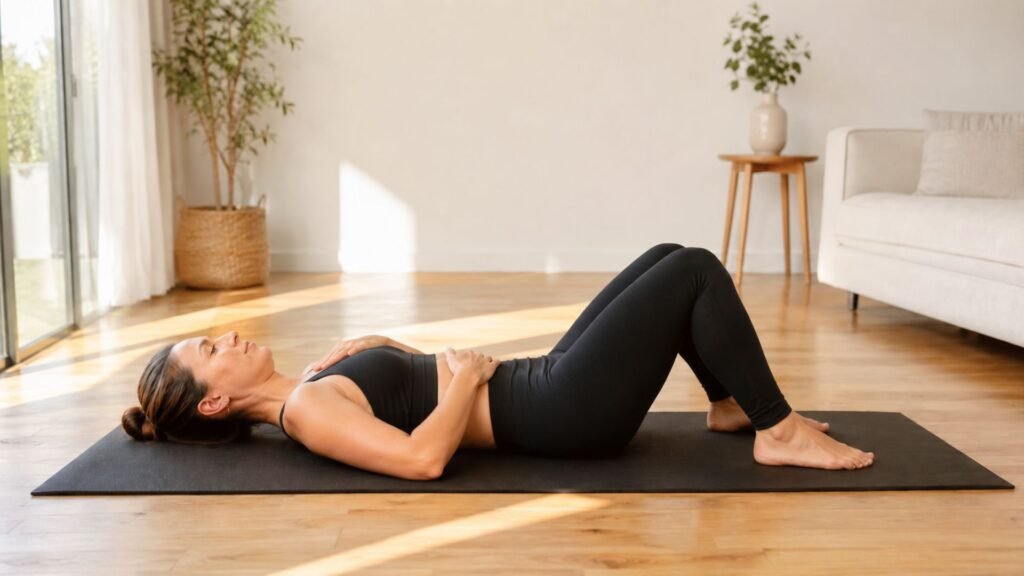
What It Is
Deep Belly Breathing is a gentle breathing exercise that encourages full diaphragmatic breathing. It helps activate the core muscles, promotes relaxation, and supports recovery after childbirth.
How to Do It
Lie on your back with your knees bent and your feet flat on the floor. Place one hand on your chest and the other on your abdomen. Inhale slowly through your nose, allowing your belly to rise while keeping your chest as still as possible. Exhale gently through your mouth, letting your abdomen relax. Continue with slow, steady breaths.
Recommended Duration
- Time: 5–10 minutes
- Breathing: 8–12 slow, controlled breaths per minute
- Frequency: Every day for the best results
Key Benefits
- Strengthens the diaphragm and deep core muscles
- Promotes relaxation and reduces stress
- Supports postpartum abdominal recovery
- Improves oxygen flow throughout the body
- Encourages better posture and breathing patterns
3. Brisk Indoor Walking
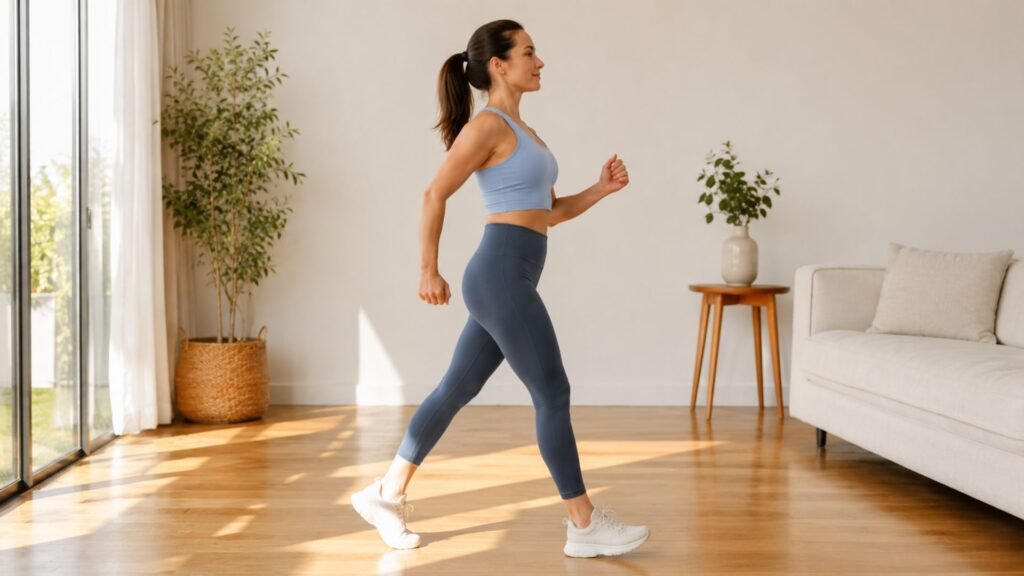
What It Is
Brisk indoor walking is a simple, low-impact cardio exercise that helps improve overall fitness while being gentle on the joints. It is an excellent option for postpartum women who want to gradually rebuild strength and increase daily activity.
How to Do It
Stand tall with your shoulders relaxed and your core lightly engaged. Walk at a comfortable but steady pace, swinging your arms naturally. Take smooth, even steps and keep your gaze forward. Breathe normally and maintain a consistent rhythm throughout the session.
Recommended Time
- Duration: 20–30 minutes
- Pace: Moderate to brisk
- Frequency: 4–5 days per week
Key Benefits
- Burns calories and supports healthy weight loss
- Improves heart and lung health
- Strengthens the legs and core muscles
- Increases energy and endurance
- Boosts mood and reduces stress
- Safe and easy to perform at home during postpartum recovery
4. Glute Bridge
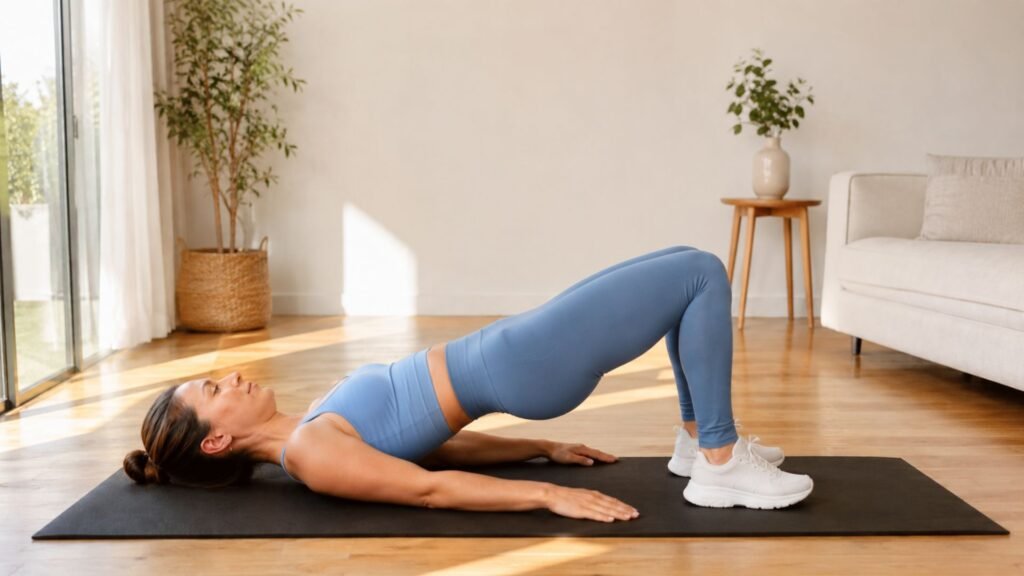
What It Is
The Glute Bridge is a beginner-friendly exercise that strengthens the glutes, core, and hips. It is often recommended during postpartum recovery because it helps rebuild lower-body strength without placing excessive pressure on the abdominal muscles.
How to Do It
Lie on your back with your knees bent and your feet flat on the floor, keeping them hip-width apart. Rest your arms by your sides. Tighten your core and press through your heels to lift your hips until your body forms a straight line from your shoulders to your knees. Squeeze your glutes at the top, then slowly lower your hips back to the starting position.
Recommended Reps
- Repetitions: 10–15
- Sets: 2–3
- Frequency: 3–4 times per week
Key Benefits
- Strengthens the glutes and hamstrings
- Activates the deep core muscles
- Supports pelvic stability after pregnancy
- Helps reduce lower back discomfort
- Improves hip mobility and posture
- Builds a stronger foundation for daily activitie
5. Heel Slides
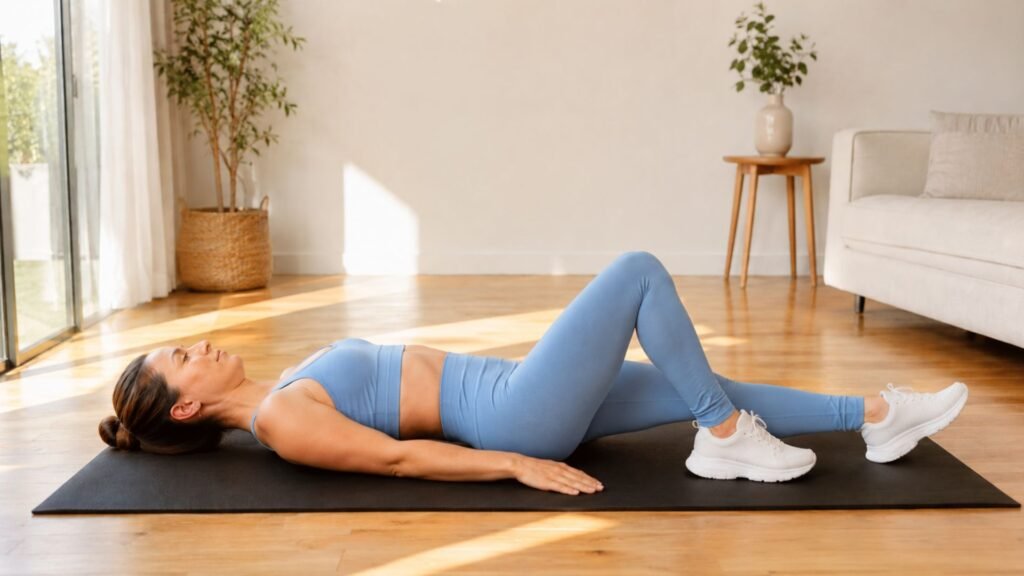
What It Is
Heel Slides are a gentle rehabilitation exercise that helps strengthen the deep abdominal muscles while improving hip and knee mobility. This movement is commonly included in postpartum fitness routines because it supports core recovery without placing excessive strain on the body.
How to Do It
Lie comfortably on your back with your knees bent and your feet flat on the floor. Engage your core by gently drawing your belly button toward your spine. Slowly slide one heel forward until your leg is almost straight, keeping your pelvis stable. Return the heel to the starting position and repeat with the opposite leg using slow, controlled movements.
Recommended Reps
- Repetitions: 10–12 per leg
- Sets: 2–3
- Frequency: 3–5 times per week
Key Benefits
- Activates the deep core muscles
- Improves hip and knee flexibility
- Supports postpartum abdominal recovery
- Enhances pelvic stability and control
- Reduces the risk of lower back discomfort
- Builds a strong foundation for more advanced exercises
6. Bird Dog
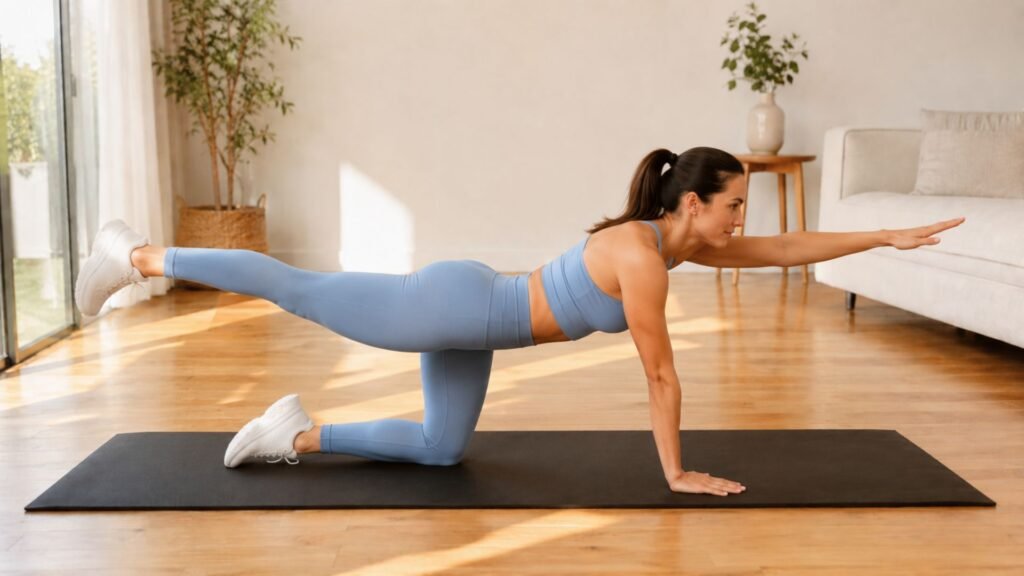
What It Is
The Bird Dog is a low-impact stability exercise that strengthens the core, back, and glute muscles. It is an excellent choice for postpartum fitness because it improves balance, coordination, and spinal support while encouraging proper body alignment.
How to Do It
Begin on your hands and knees with your wrists directly under your shoulders and your knees under your hips. Tighten your core and keep your back flat. Slowly extend your right arm forward and your left leg backward until both are in a straight line with your body. Hold briefly, then return to the starting position and repeat on the opposite side.
Recommended Reps
- Repetitions: 8–12 per side
- Sets: 2–3
- Frequency: 3–4 times per week
Key Benefits
- Strengthens the core, glutes, and lower back
- Improves balance and body coordination
- Enhances spinal stability and posture
- Supports safe postpartum recovery
- Reduces the risk of lower back pain
- Increases overall functional strength for everyday movements
7. Cat-Cow Stretch
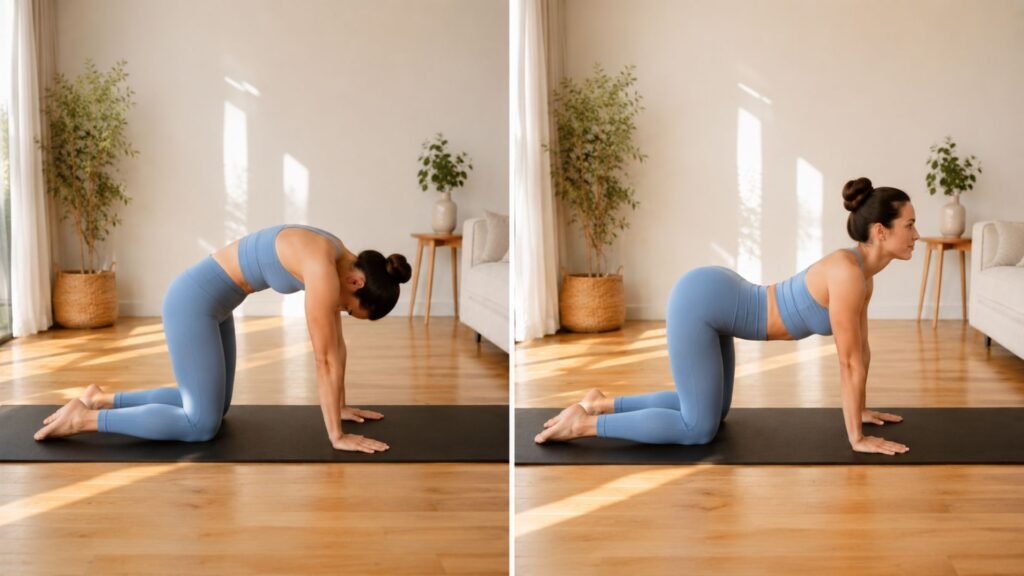
What It Is
The Cat-Cow Stretch is a gentle mobility exercise that improves spinal flexibility and relieves tension in the back and neck. It is a safe and effective movement for postpartum recovery, helping restore mobility while activating the core muscles.
How to Do It
Start on your hands and knees with your wrists under your shoulders and your knees beneath your hips. As you inhale, gently arch your back, lift your chest, and look slightly upward to move into the Cow position. As you exhale, round your spine toward the ceiling, tuck your chin, and draw your belly inward to move into the Cat position. Continue alternating between both positions with slow, controlled breathing.
Recommended Reps
- Repetitions: 10–15 cycles
- Sets: 2–3
- Frequency: Daily or 3–5 times per week
Key Benefits
- Improves spinal mobility and flexibility
- Relieves stiffness in the back and neck
- Activates the deep core muscles
- Supports healthy posture and body alignment
- Reduces muscle tension and stress
- Promotes gentle postpartum recovery
8. Modified Plank
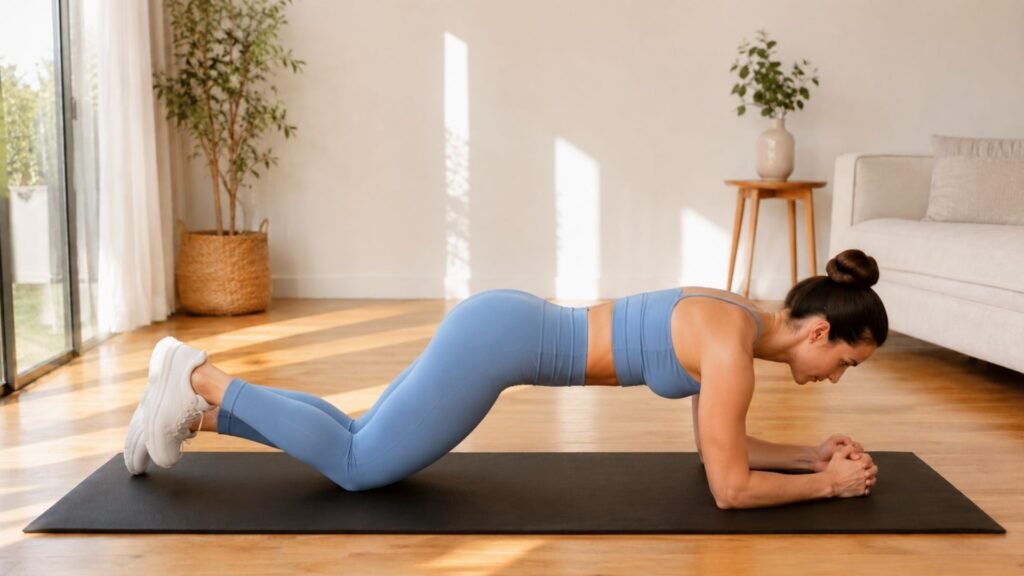
What It Is
The Modified Plank is a beginner-friendly core exercise that strengthens the abdominal muscles, shoulders, and lower back while reducing pressure on the body. It is a great option for postpartum women who are rebuilding core strength safely.
How to Do It
Start by placing your forearms on the yoga mat with your elbows directly beneath your shoulders. Keep your knees on the floor and extend your body in a straight line from your shoulders to your knees. Tighten your core, avoid letting your hips sag or lift too high, and breathe steadily while holding the position.
Recommended Time
- Hold: 15–30 seconds
- Sets: 2–3
- Frequency: 3–4 times per week
Key Benefits
- Strengthens the deep abdominal muscles
- Improves shoulder and upper-body stability
- Supports proper posture and spinal alignment
- Builds core endurance with low impact
- Helps reduce lower back strain
- Prepares the body for more advanced core exercises
9. Standing Side Bends
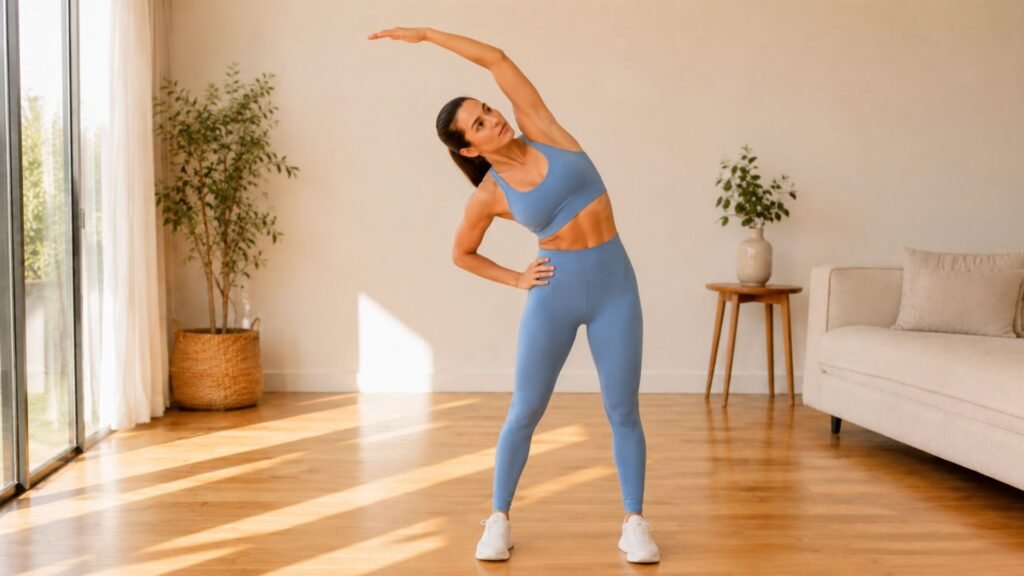
What It Is
Standing Side Bends are a simple stretching exercise that targets the oblique muscles along the sides of the waist. This movement helps improve flexibility, core stability, and overall posture, making it a gentle option for postpartum fitness.
How to Do It
Stand with your feet shoulder-width apart and keep your core lightly engaged. Raise one arm overhead while placing the opposite hand on your hip. Slowly bend your upper body to one side without leaning forward or backward. Hold the stretch briefly, return to the center, and repeat on the opposite side using smooth, controlled movements.
Recommended Reps
- Repetitions: 10–12 per side
- Sets: 2–3
- Frequency: 3–5 times per week
Key Benefits
- Stretches and strengthens the oblique muscles
- Improves flexibility through the waist and spine
- Supports better posture and body alignment
- Enhances core stability and balance
- Helps relieve stiffness in the lower back
- Promotes safe and gradual postpartum recovery
10. Kegel Exercises
What It Is
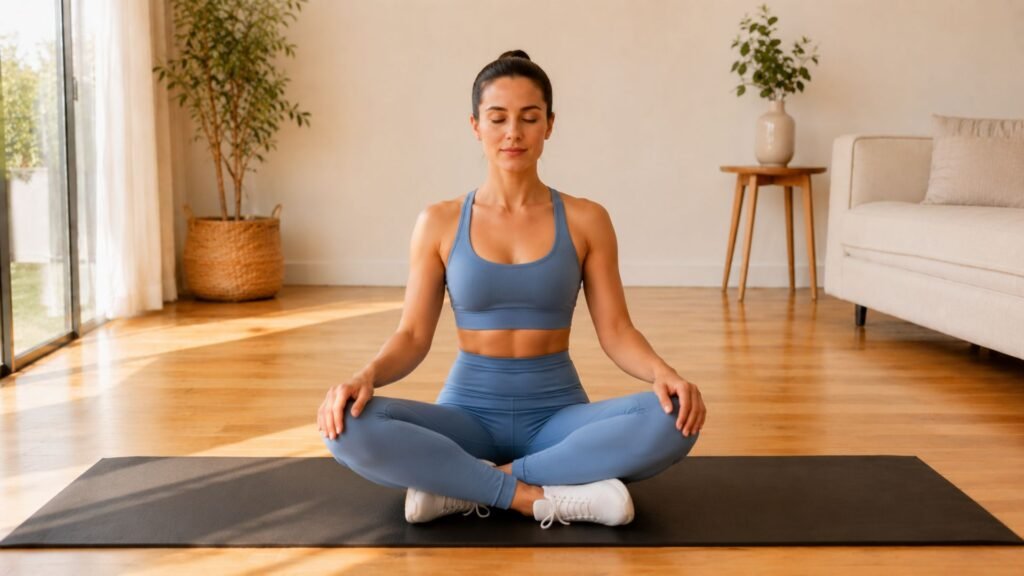
Kegel Exercises are simple pelvic floor exercises that strengthen the muscles supporting the bladder, uterus, and bowel. They are highly recommended after childbirth to improve pelvic floor function and aid postpartum recovery.
How to Do It
Sit comfortably with your back straight and your shoulders relaxed. Breathe normally and gently contract your pelvic floor muscles, as if you are trying to stop the flow of urine. Hold the contraction for a few seconds without tightening your abdomen, thighs, or buttocks. Slowly relax the muscles and repeat the movement with steady, controlled breathing.
Recommended Reps
- Repetitions: 10–15 contractions
- Sets: 2–3
- Frequency: Every day
Key Benefits
- Strengthens the pelvic floor muscles
- Supports bladder control after pregnancy
- Improves core stability and pelvic support
- Promotes faster postpartum recovery
- Enhances muscle awareness and control
- Can be performed almost anywhere without equipment
Weekly Workout Plan
Week 1
- Gentle breathing and walking
Week 2
- Core activation exercises
Week 3
- Strength and mobility
Week 4
- Full-body low-impact workouts
Diet Tips for Losing Belly Fat After Delivery
- Eat protein-rich foods
- Stay hydrated
- Include fruits and vegetables
- Choose whole grains
- Avoid sugary drinks and processed foods
Foods to Eat
- Eggs
- Oats
- Greek yogurt
- Lentils
- Leafy vegetables
- Fruits
- Nuts and seeds
- Brown rice
Foods to Avoid
- Sugary snacks
- Soft drinks
- Fried foods
- Refined flour products
- Highly processed foods
Common Mistakes to Avoid
- Exercising too soon
- Skipping warm-up
- Overtraining
- Crash dieting
- Ignoring rest and sleep
Tips for Faster Recovery and Fat Loss
- Be patient
- Exercise regularly
- Get enough sleep
- Stay hydrated
- Track your progress
Final Thoughts
Focus on safe, gradual progress rather than rushing your postpartum fitness journey. Building a routine around regular exercise and a healthy, balanced diet will help you see steady, lasting results over time. Remember, every woman’s recovery is different — listen to your body’s signals, rest when needed, and don’t hesitate to consult your doctor if something doesn’t feel right. With patience and consistency, you’ll safely regain your strength and confidence, one step at a time.
Frequently Asked Questions (FAQs)
How soon can I exercise after delivery?
Most women can start light exercises around 4–6 weeks after normal delivery, or 6–8 weeks after a C-section, with doctor’s approval.
Which exercise is best for postpartum belly fat?
Pelvic tilts, gentle core exercises, and walking are great starting points, gradually progressing to planks and modified crunches as strength improves.
Can I lose belly fat without going to the gym?
Yes, home-based exercises combined with a healthy diet can effectively help reduce belly fat without needing a gym.
Is walking enough after delivery?
Walking is a great low-impact start, but combining it with core-strengthening exercises will give better and faster results over time.
How long does postpartum belly fat take to reduce?
It typically takes several months to a year, depending on factors like diet, exercise consistency, and individual body recovery.
Note: These are general fitness guidelines, not medical advice — new mothers should always consult their doctor before starting any postpartum workout routine, since recovery varies for each individual.