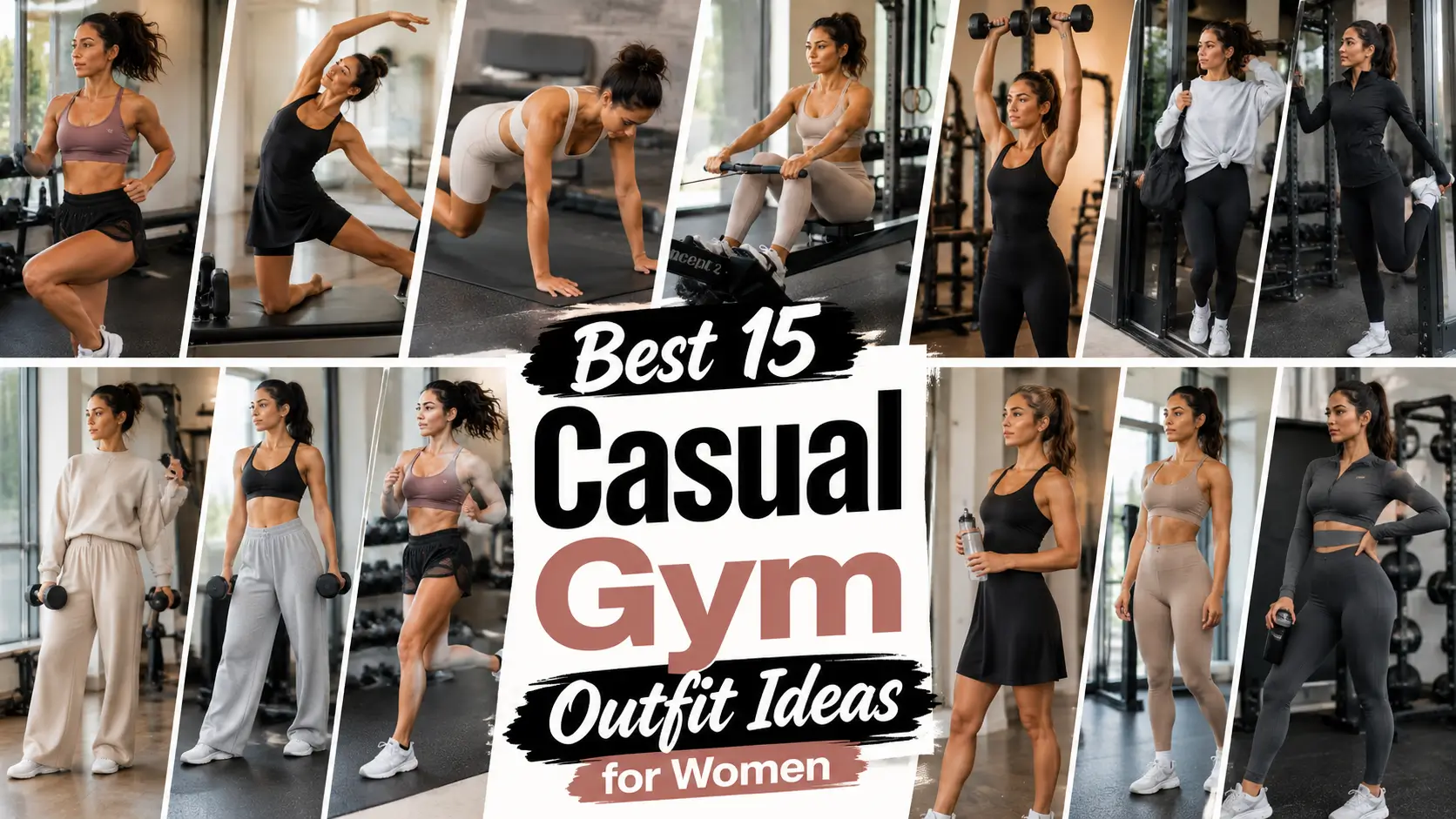
Best 15 Casual Gym Outfit Ideas for Women
Casual Gym Outfit Ideas for Women: Finding the right balance between comfort and style at the gym isn’t always easy, which is why so many women search for casual gym outfit ideas for women that actually work for real workouts, not just photos. The good news is that casual doesn’t mean careless. A well-thought-out gym outfit can move with you, keep you comfortable through a sweaty session, and still look put together on the walk in and out of the building.
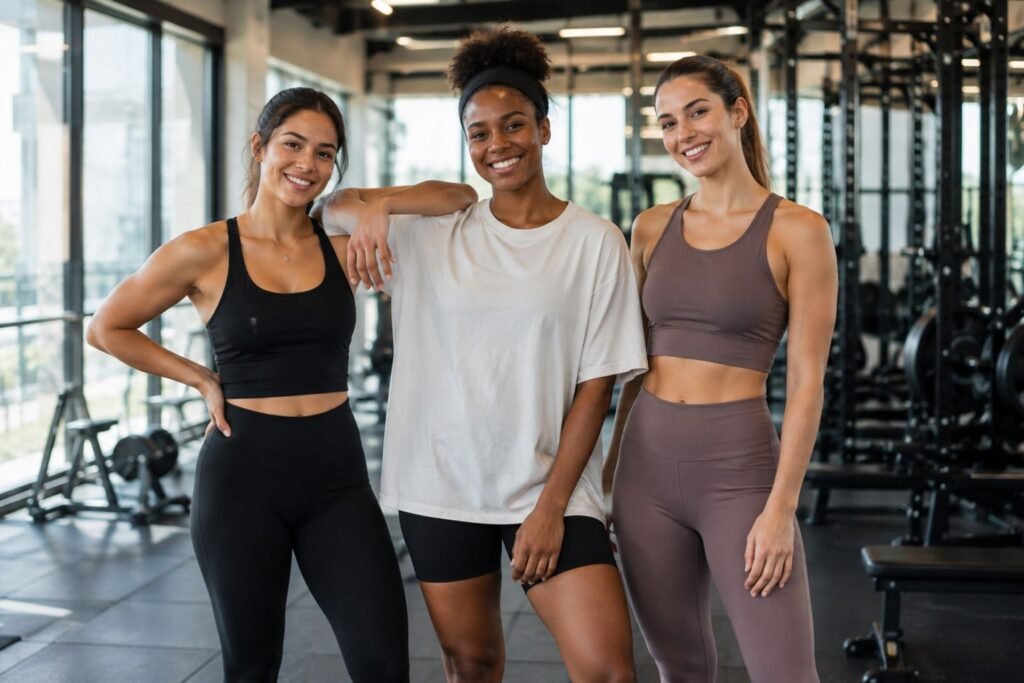
This list focuses on practical, wearable combinations, with notes on why each one works and what to watch out for depending on your workout type.
1. Leggings and a Fitted Tank Top
This combination is a gym staple for a reason. Leggings offer four-way stretch that moves with squats, lunges, and floor work, while a fitted tank keeps fabric from getting in the way during overhead movements.
Why it works: Minimal bunching, good range of motion, and it transitions easily from strength training to a treadmill session.
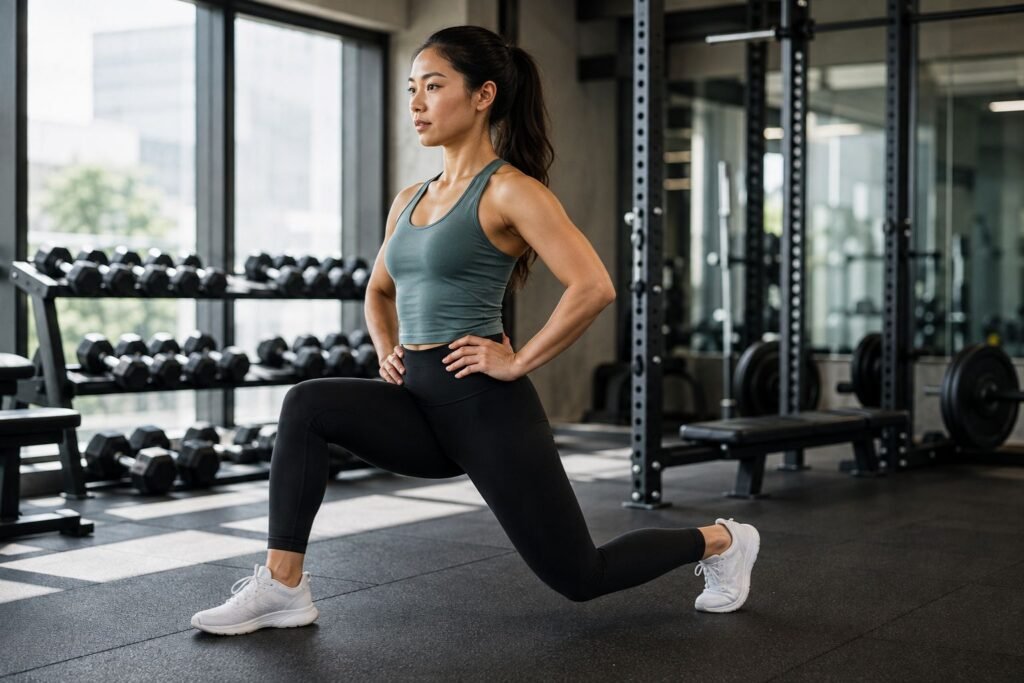
Tip: Look for leggings with a wide waistband that sits comfortably without rolling down during movement.
read also: How to Build Lean Muscle for Females: Complete Beginner Guide
2. Bike Shorts and an Oversized T-Shirt
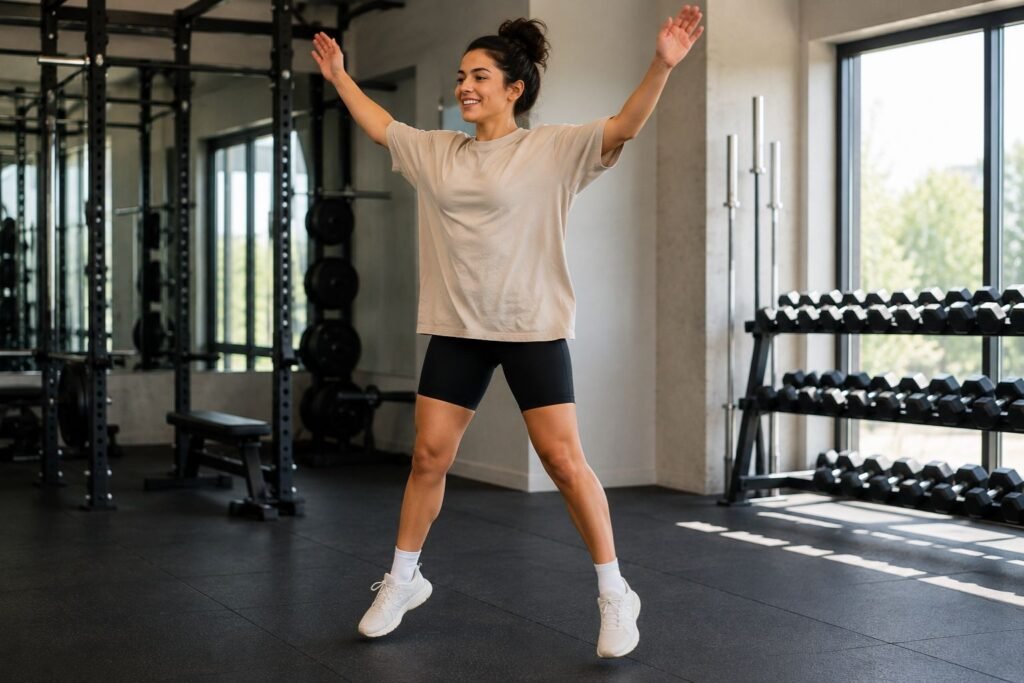
Bike shorts have become a genuine favorite for good reason — they offer the coverage and support of leggings without the heat buildup on warmer days. Paired with a loose, breathable tee, this look is relaxed but still functional.
Why it works: The oversized top adds breathability, while the fitted shorts underneath keep everything secure during high-movement exercises like burpees or jumping jacks.
Precaution: Make sure the shirt isn’t so loose that it interferes with barbell work or pull-up bars, where excess fabric can get caught.
3. High-Waisted Joggers and a Sports Bra
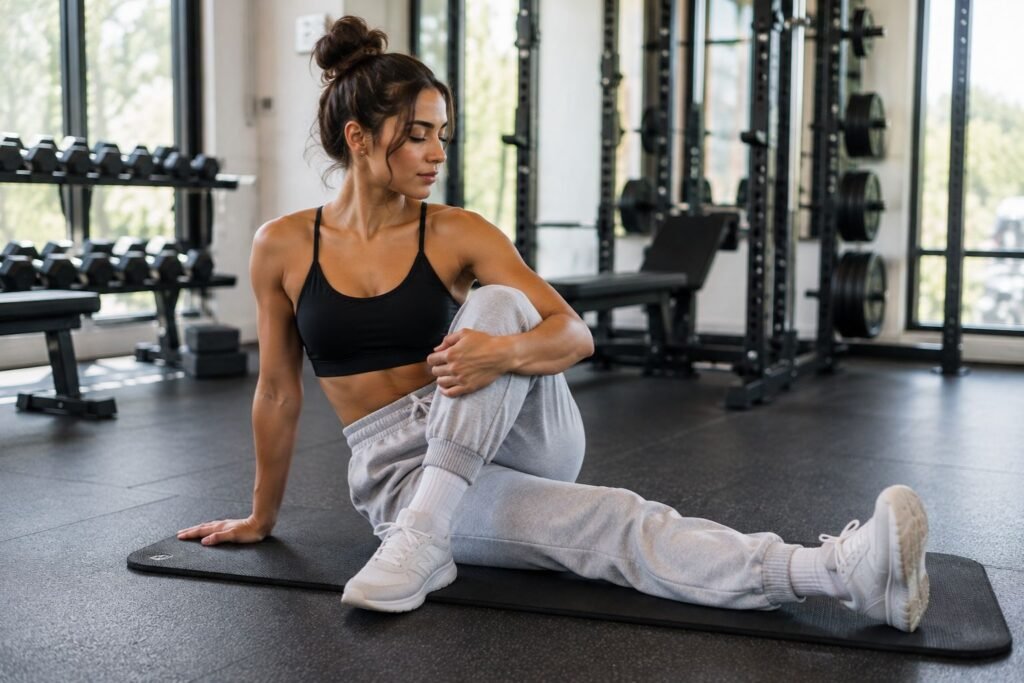
Joggers with a tapered ankle and a supportive sports bra make a comfortable, low-fuss outfit for lower-intensity training days, like mobility work or light cardio.
Why it works: The relaxed fit through the leg allows airflow, and the high waistband offers coverage during floor exercises like bridges or core work.
Tip: Choose joggers with a drawstring waist so you can adjust the fit without it loosening mid-workout.
4. Matching Two-Piece Sets
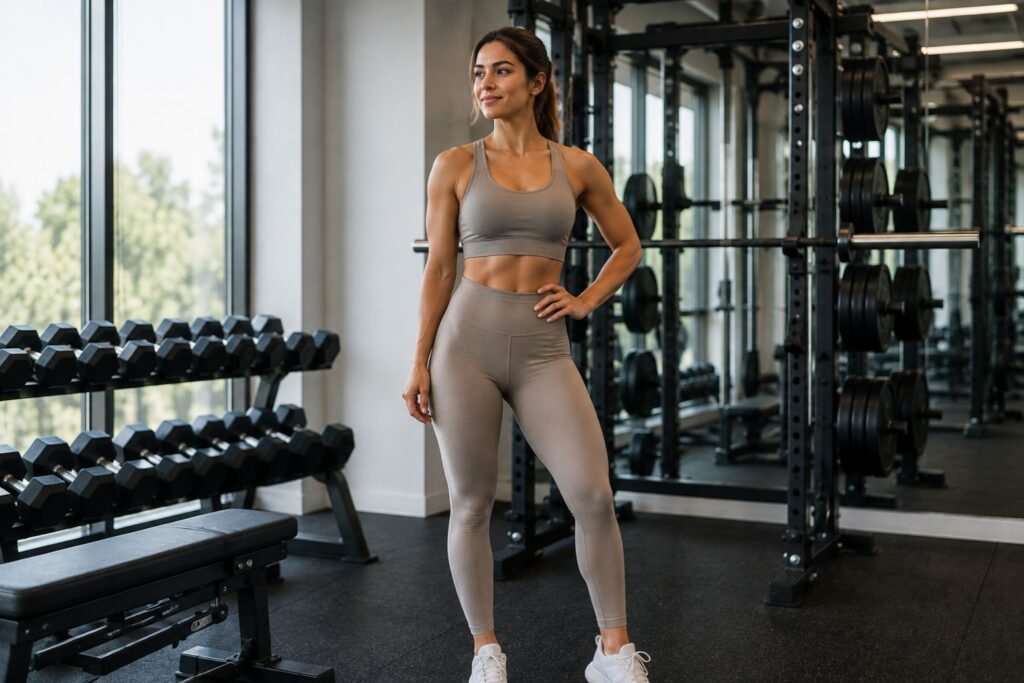
Coordinated sets — a sports bra and leggings or shorts in the same fabric and color — have become popular partly because they simplify getting dressed, but they also tend to be designed to move well together.
Why it works: Matching sets are usually cut from the same technical fabric, which means consistent stretch and moisture-wicking performance across the whole outfit.
Precaution: Not every set offers the same support level in the top. Check the sports bra’s support rating if you’re doing higher-impact training like running or jump rope.
5. Compression Shorts Under Looser Bottoms
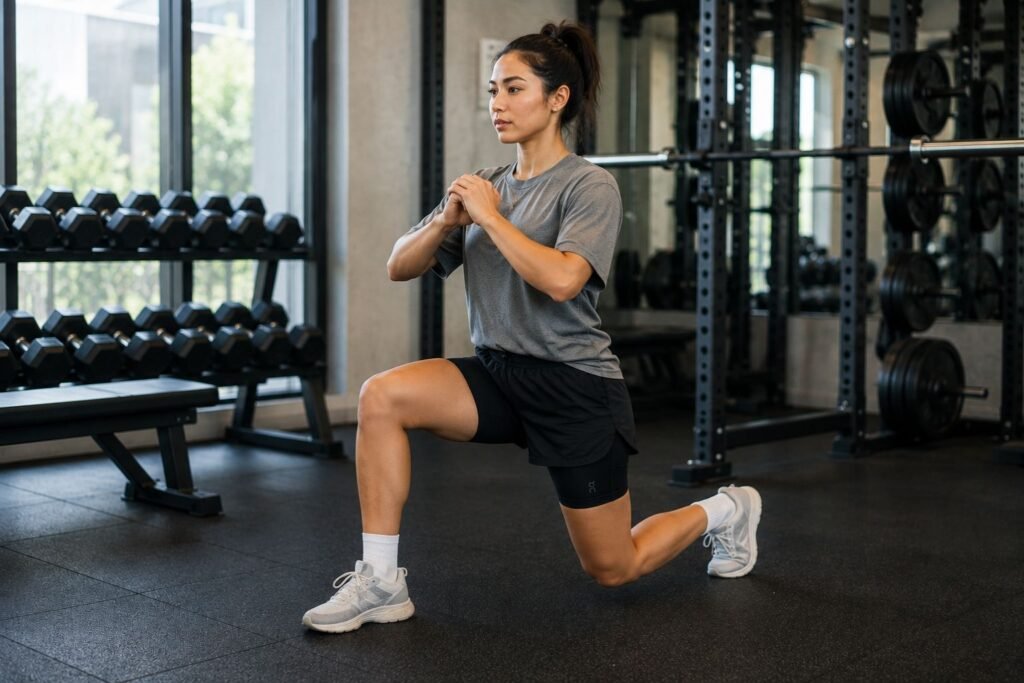
Layering compression shorts under a pair of relaxed athletic shorts is a practical option, especially for lower-body training days that involve a lot of hip movement.
Why it works: The compression layer keeps everything secure, while the outer layer adds coverage and a more casual look.
Tip: This layering also helps regulate temperature better in air-conditioned gyms, since you can remove the outer shorts if you get too warm.
read also: 20 Healthy Air Fryer Recipes for Weight Loss
6. Cropped Hoodie and Biker Shorts
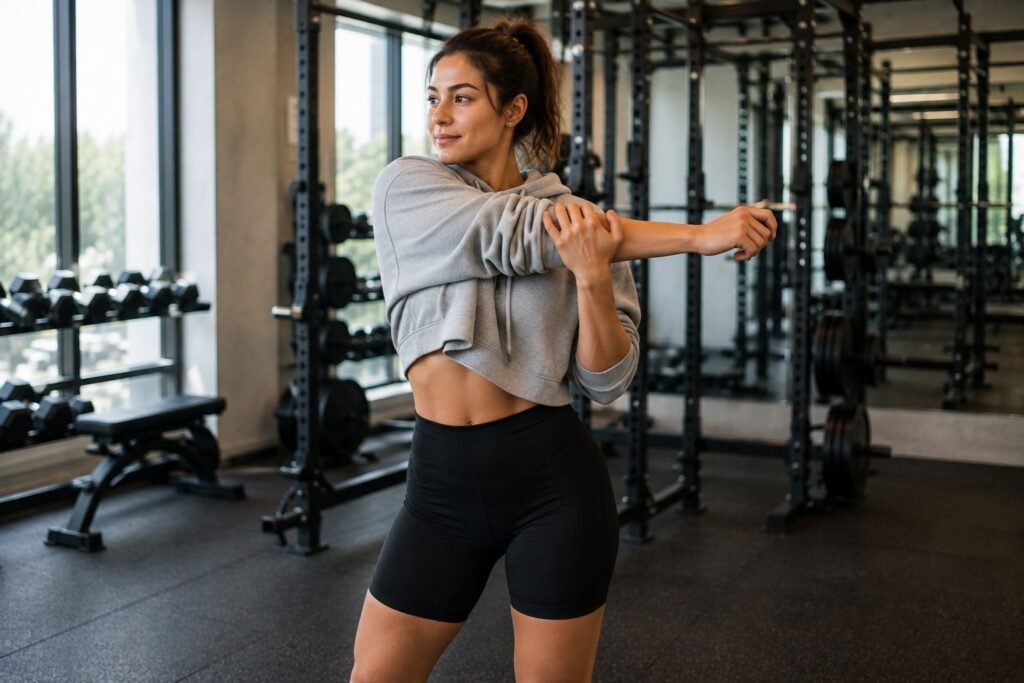
For cooler mornings or evening sessions, a cropped hoodie over biker shorts strikes a nice balance between casual streetwear and functional gym wear.
Why it works: You can push up the sleeves or remove the hoodie entirely as you warm up, without needing to change your entire outfit.
Precaution: Avoid hoodies with heavy drawstrings or metal zipper pulls if you’re doing exercises that involve lying on a bench or floor, since they can dig into your skin.
7. Wide-Leg Sweatpants and a Sports Bra
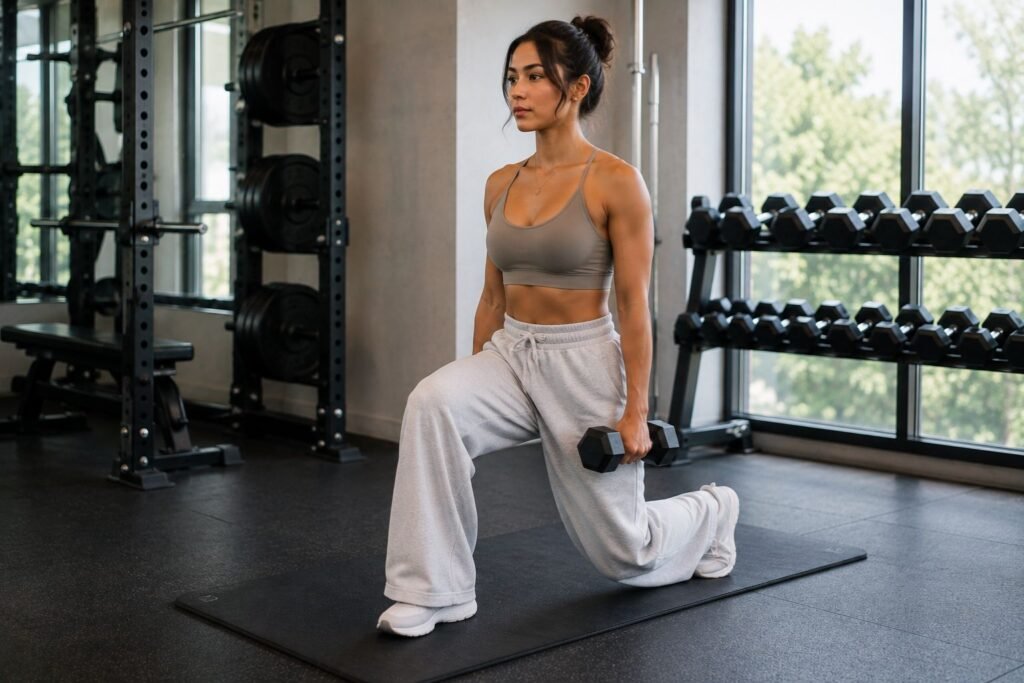
Wide-leg sweatpants have made their way from loungewear into gym settings, and they work surprisingly well for warm-ups, stretching, and lower-intensity strength days.
Why it works: The relaxed fit doesn’t restrict movement, and the loose leg opening allows better airflow than fitted joggers.
Precaution: Wide-leg pants aren’t ideal for exercises involving machines with moving parts, like cable stations or leg presses, where loose fabric could get caught. Save this look for free-weight or mat-based sessions.
8. Tennis Skirt with Built-In Shorts
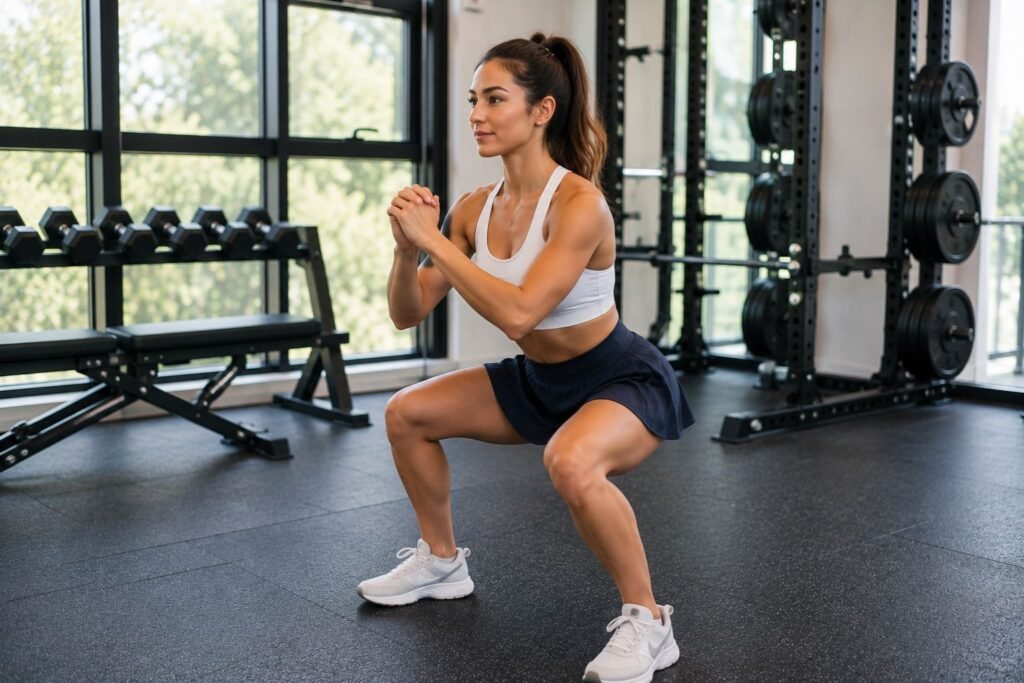
Athletic skirts with built-in compression shorts have crossed over from tennis and golf into general gym wear, offering coverage and support in one piece.
Why it works: The built-in shorts layer keeps everything secure during squats or lunges, while the skirt adds a bit of visual variety to a workout wardrobe.
Tip: These work best for lower-impact training. For heavy lifting days, a more traditional legging may offer better thigh coverage against gym equipment.
9. Racerback Tank and Basic Leggings
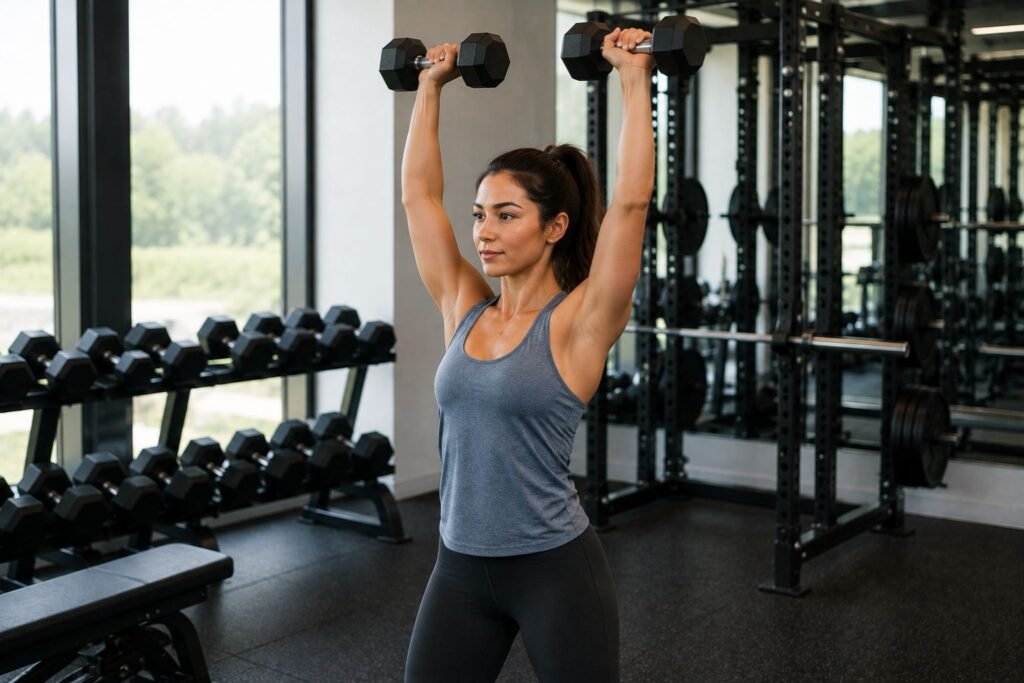
A simple racerback tank paired with solid-color leggings is a dependable, no-fuss option that works for almost any type of training.
Why it works: The racerback cut keeps straps from slipping off your shoulders during overhead presses or pull-ups, which is a common annoyance with regular tank straps.
Tip: Choose a tank with a built-in shelf bra for low-impact days when you want a bit of extra support without wearing a separate sports bra.
10. Cropped Tank and High-Waisted Shorts
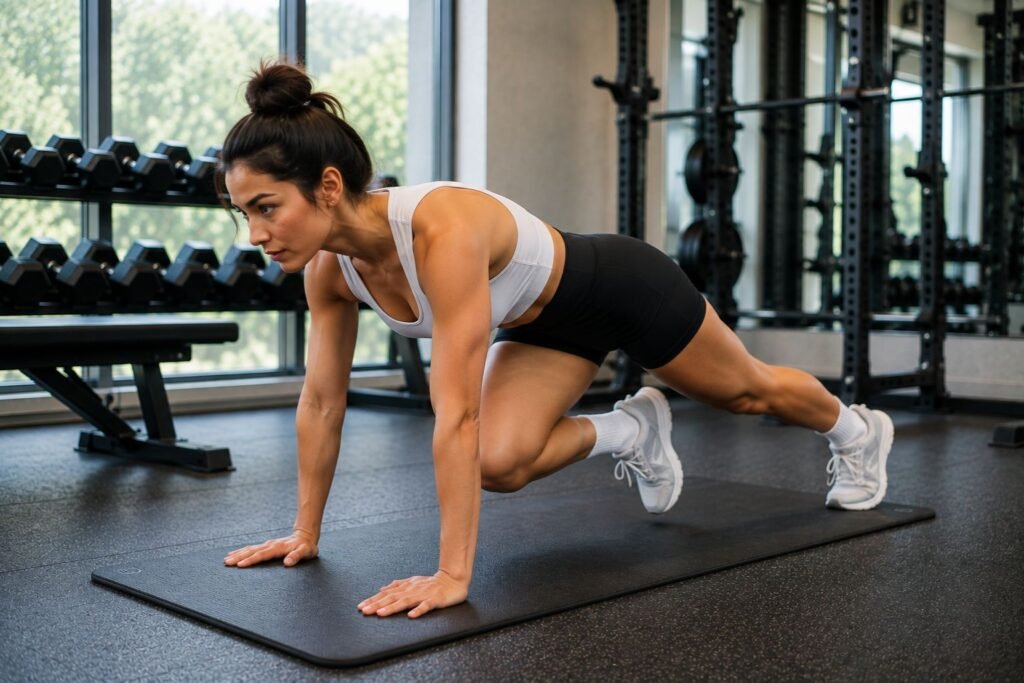
This pairing gives a bit more midriff coverage variation than a full crop top, while still keeping things breathable for higher-intensity cardio sessions.
Why it works: High-waisted shorts stay in place during dynamic movements, and the cropped tank reduces excess fabric that could get in the way during core exercises.
Precaution: If you’re self-conscious about midriff exposure, look for a slightly longer cropped style that still shows some waistband without fully exposing the stomach.
11. Athletic Dress with Built-In Shorts
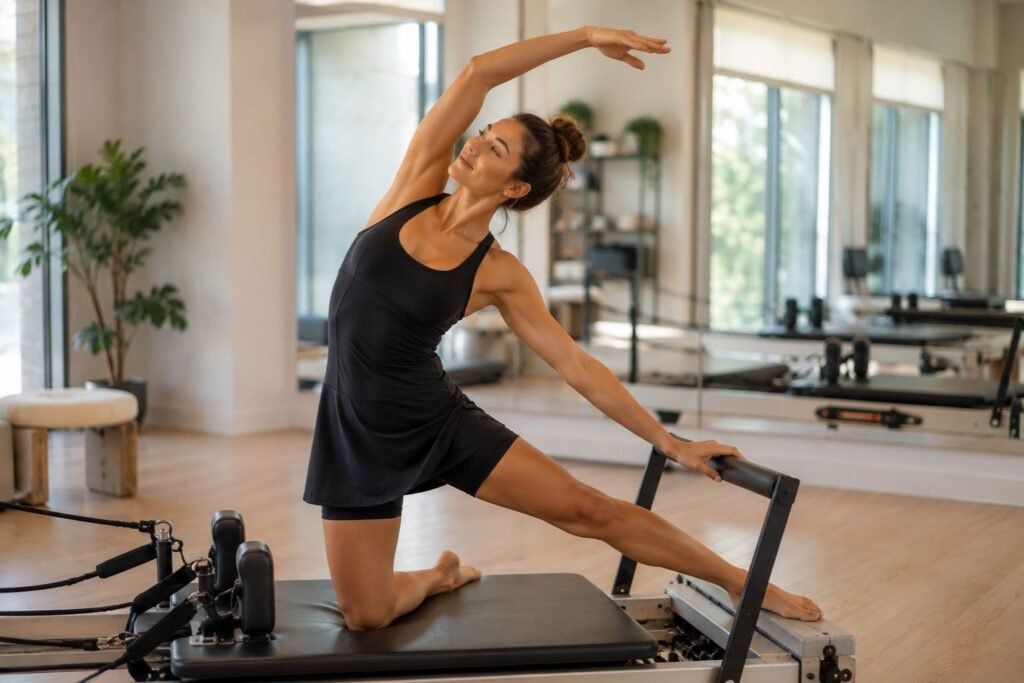
Athletic dresses have grown in popularity for lower-intensity gym sessions like Pilates, yoga, or light circuit training, thanks to built-in compression shorts underneath.
Why it works: They offer a different silhouette from typical gym wear while still functioning like a two-piece set underneath.
Precaution: These are less practical for heavy lifting or floor work where a fitted bottom offers more stability and less fabric movement.
12. Fleece-Lined Leggings and a Zip-Up Jacket
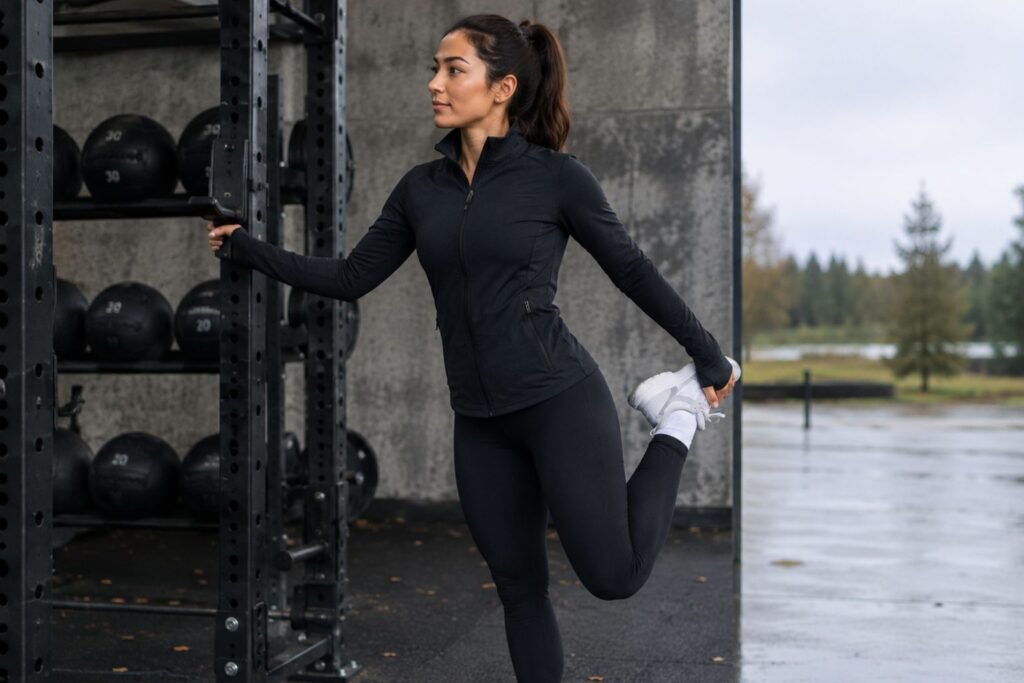
For colder months or outdoor training, fleece-lined leggings paired with a zip-up jacket provide warmth without sacrificing mobility.
Why it works: The fleece lining traps heat during warm-up, and the zip-up can be removed as your body temperature rises.
Tip: Choose a jacket with underarm ventilation panels if you tend to overheat quickly once your workout gets going.
13. Bralette and Mesh Shorts
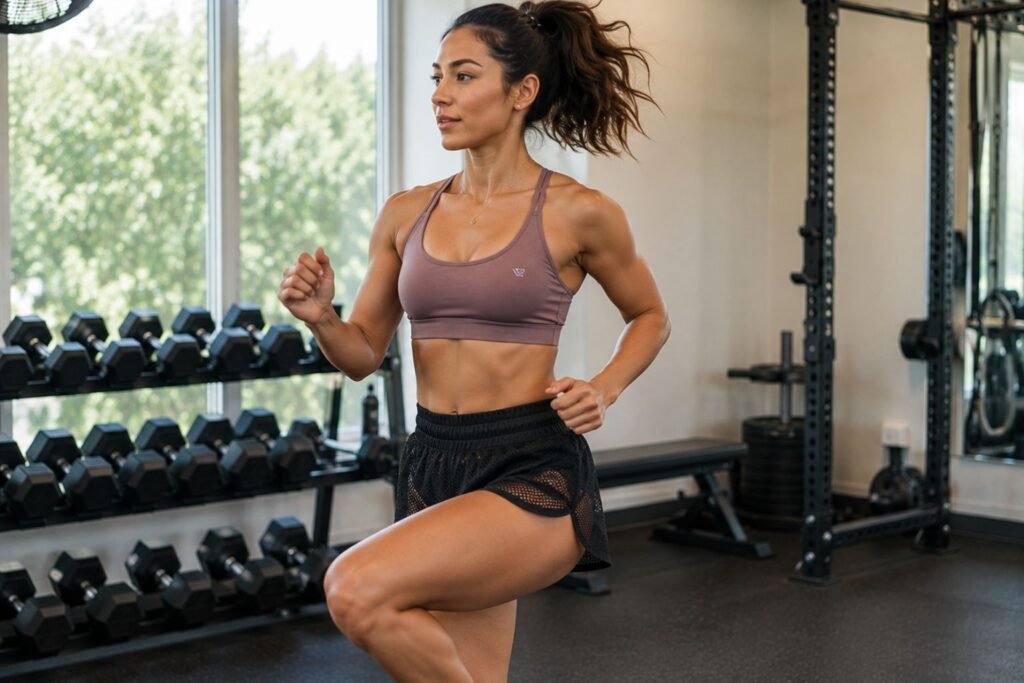
Mesh shorts paired with a supportive bralette offer excellent breathability, making this combination well-suited to hot climates or high-intensity interval training.
Why it works: Mesh fabric allows airflow that solid fabrics can’t match, which helps with temperature regulation during intense cardio.
Precaution: Mesh shorts typically come with a built-in liner, but double-check this before wearing them for floor exercises, since some styles are cut looser than others.
14. Oversized Sweatshirt and Fitted Leggings
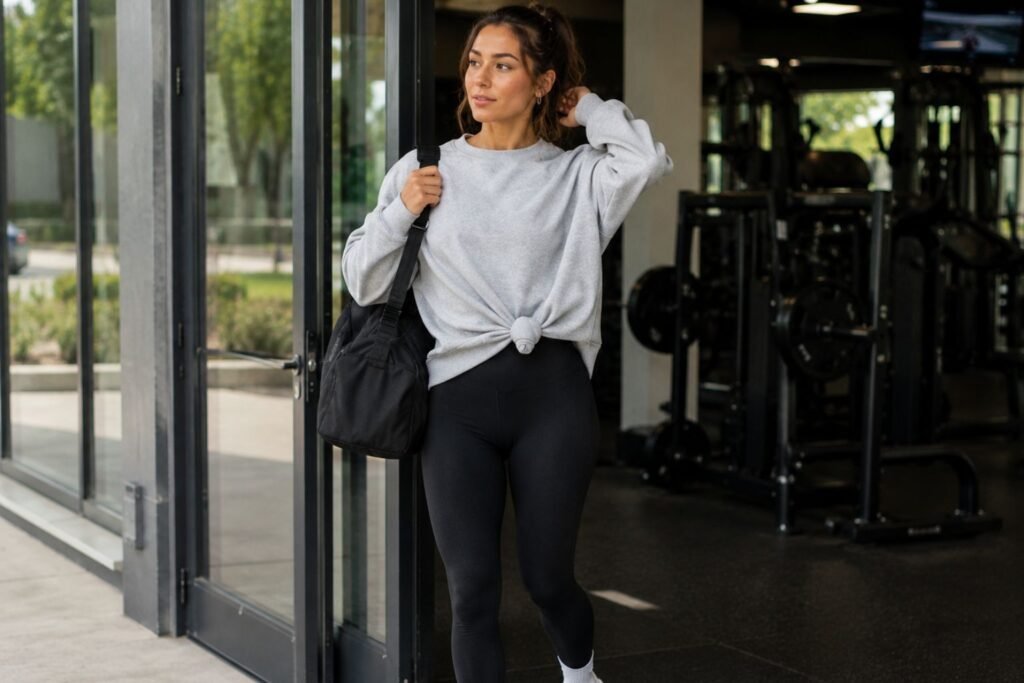
Pairing an oversized sweatshirt with fitted leggings is a classic combination for warm-up periods, cooldowns, or lower-intensity gym days.
Why it works: The fitted bottom half ensures functional movement, while the loose top adds comfort and warmth for the parts of your session that don’t require as much mobility.
Tip: Roll or tie the sweatshirt at the waist once you’re mid-workout and starting to warm up, so it doesn’t interfere with core or upper-body exercises.
15. Seamless Set in a Neutral Tone
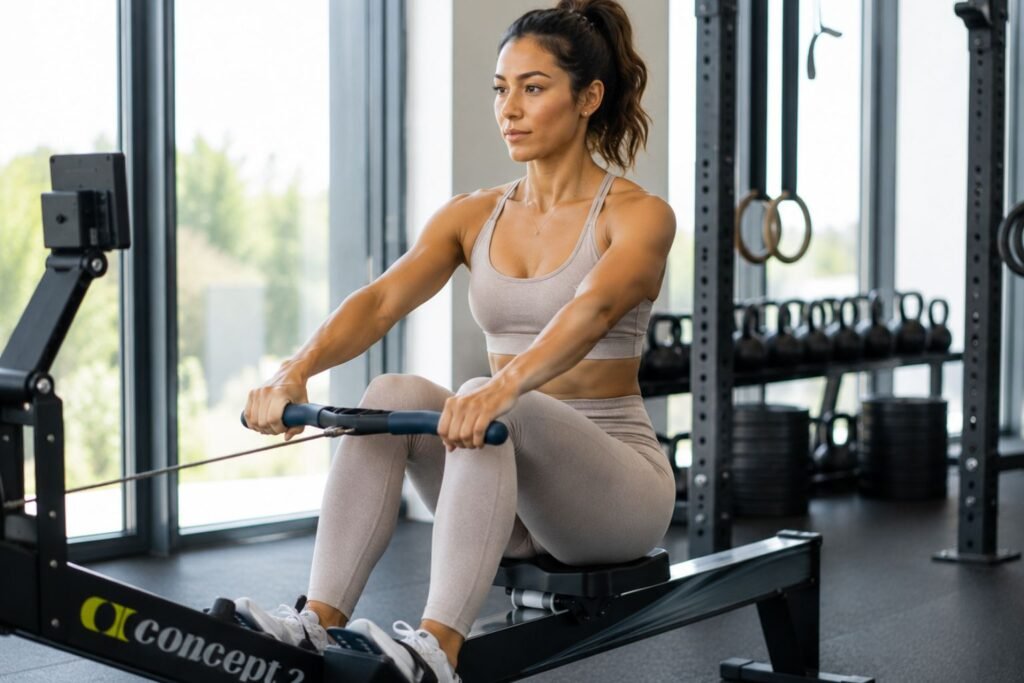
Seamless activewear sets, usually made from a stretchy knit fabric without visible stitching, have become popular for their second-skin fit and reduced chafing risk.
Why it works: The lack of seams reduces friction points, which matters during repetitive movements like rowing or long cardio sessions.
Tip: Neutral tones (black, taupe, olive) tend to show less sweat visibility than lighter colors, which some people prefer for confidence during longer sessions.
Common Mistakes to Avoid
- Prioritizing looks over function. An outfit that looks great in photos but restricts your squat depth or rides up during movement isn’t doing its job.
- Wearing the wrong support level. Sports bras aren’t one-size-fits-all in terms of support. High-impact activities like running need more structured support than yoga or strength training.
- Ignoring fabric breathability. Cotton retains moisture and can feel heavy once you start sweating. Look for moisture-wicking synthetic blends for higher-intensity sessions.
- Choosing loose fabric near machines. Baggy sleeves, drawstrings, or wide-leg pants can be a genuine safety hazard around cable machines, weight stacks, or spinning bike pedals.
- Skipping a trial workout in new gear. Fit and comfort can look fine in a mirror but reveal issues (chafing, slipping straps, sheerness when stretched) only once you’re actually moving.
Frequently Asked Questions
What fabric is best for gym outfits? Moisture-wicking synthetic blends like polyester-spandex or nylon-spandex are generally preferred for workouts because they pull sweat away from the skin and dry faster than cotton.
Do I need different outfits for different workout types? Not strictly, but it helps. High-impact activities like running or HIIT benefit from more supportive, fitted pieces, while lower-intensity sessions like yoga or mobility work allow more flexibility in fit and fabric choice.
How do I know if leggings are too sheer? Do a simple stretch test before buying: bend over or do a squat in the fitting room. If the fabric becomes see-through under stretch, it’s not a good choice for gym wear.
Are matching sets worth buying? They’re a convenient option since they take the guesswork out of pairing pieces, but the individual pieces aren’t inherently better performing than separates. What matters more is the fabric quality and support level of each piece.
Is it okay to wear looser clothing at the gym? Yes, as long as it doesn’t interfere with your movement or pose a safety risk around equipment. Looser clothing can be more comfortable for warm-ups, stretching, and lower-intensity work.
The best gym outfit isn’t necessarily the trendiest one — it’s the one that lets you move confidently through your workout without constant adjusting. Once you find a few combinations that fit your body and your training style, getting dressed for the gym stops being a decision and starts being second nature.