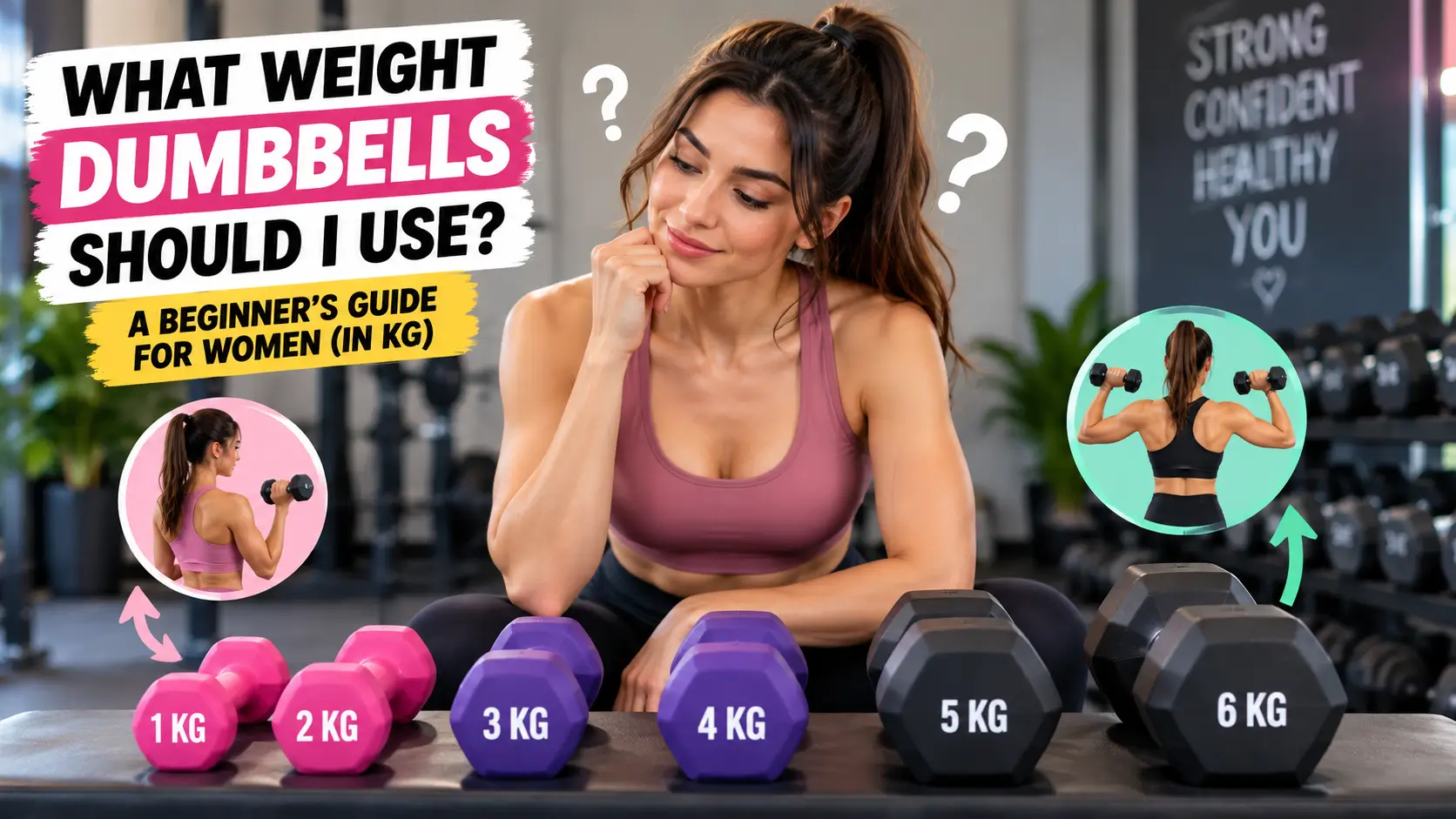
What Weight Dumbbells Should I Use? A Beginner’s Guide for Women (in KG)
Standing in front of a dumbbell rack can be oddly stressful. Too light, and you feel like you’re wasting your time. Too heavy, and you risk hurting yourself or wrecking your form. So what weight dumbbells should you actually use as a woman just starting out?
Here’s the honest answer: there’s no single “correct” kg number that applies to every woman. Your ideal starting weight depends on your current strength, the exercise you’re doing, and your goals. But there is a reliable, evidence-based method for figuring it out and that’s what this guide walks you through.
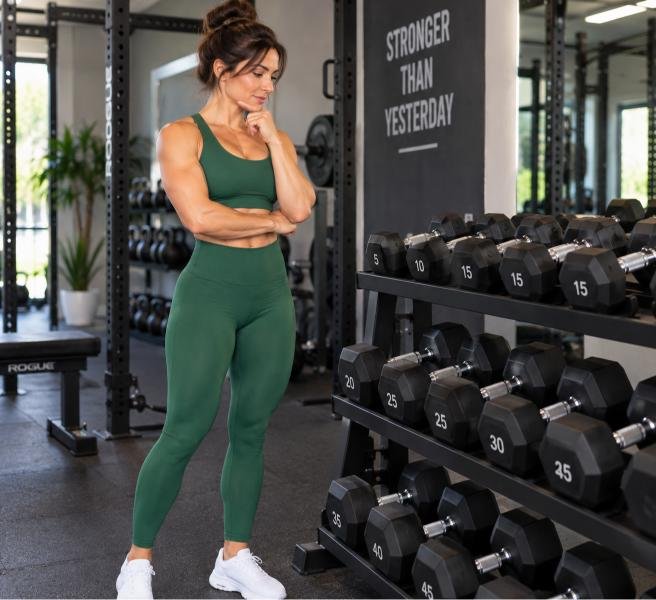
Why There’s No Fixed Number
No major health authority including the CDC, NIH, or the HHS Physical Activity Guidelines for Americans publishes a specific “use this many kg” recommendation for women. That’s because strength varies enormously based on factors like training history, body weight, age, and which muscle group you’re working.
What these organizations do agree on is the bigger picture: adults should do muscle-strengthening activities that work all the major muscle groups at least two days a week. That’s the baseline goal — the actual weight you use to get there is something you figure out through practice, not a fixed chart.
The Method Doctors and Trainers Actually Recommend
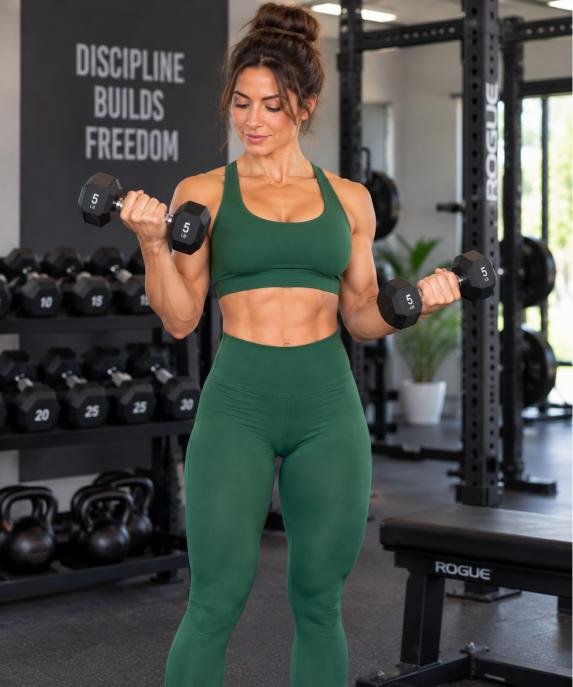
Instead of hunting for a magic number, use a fatigue-based approach. According to Mayo Clinic’s guidance on strength training, you should choose a weight that’s heavy enough to tire your target muscles by about the 12th to 15th repetition. If you can easily do more reps than that, it’s time to size up.
Here’s how to apply it in practice:
- Pick a light-to-moderate weight for the exercise you’re doing.
- Do a set of 12 to 15 reps with full control and good form.
- Check how the last few reps felt. If you could easily do 5+ more, the weight is too light. If you couldn’t finish with good form, it’s too heavy.
- Adjust and settle into a range where the last 2–3 reps feel genuinely challenging but doable.
This same logic applies whether you’re working with 1 kg or 15 kg dumbbells. The “right” weight is defined by how it feels on your body, not by a number on the dumbbell.
read also: How to Burn More Calories While Walking
A Rough Starting Point, If You Need One
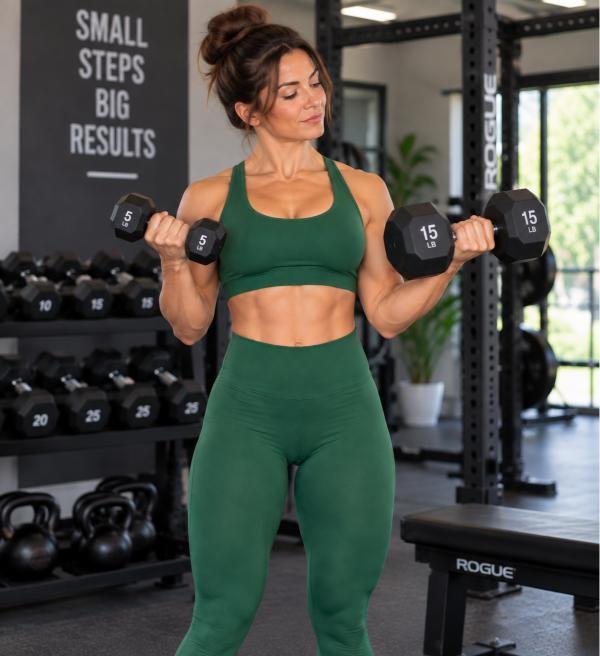
If you want a general ballpark to begin experimenting from, many trainers suggest women new to strength training often start somewhere in the range of 1–4 kg for smaller upper-body movements (like lateral raises or bicep curls) and 4–10 kg for larger muscle group exercises (like squats or rows). These figures are common practical starting points from fitness professionals, not official medical guidelines treat them as a place to begin testing, not a target to hit.
Some women will find these ranges too light on day one; others will need to start lighter. Both are completely normal.
Different Exercises Need Different Weights
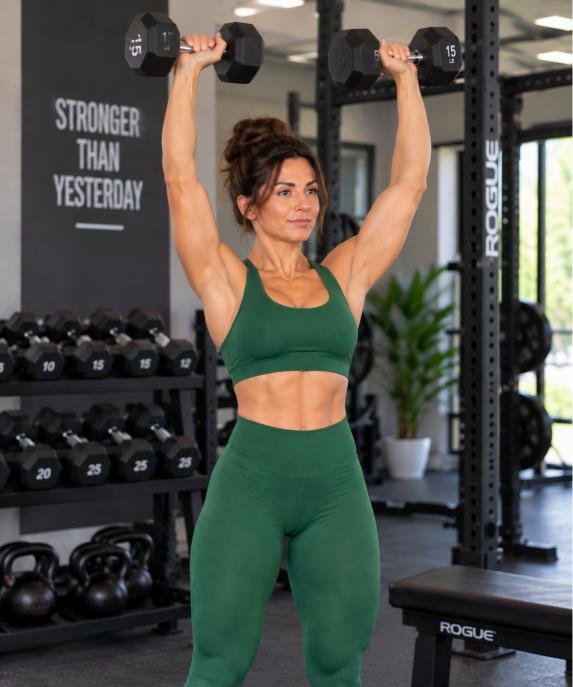
One dumbbell weight will not work for every move, and that’s expected. A weight that challenges your shoulders during an overhead press will likely feel far too heavy for a bicep curl, because smaller muscle groups fatigue faster than larger ones.
A practical tip: keep two or three dumbbell pairs on hand (for example, a lighter set and a moderate set) so you’re not stuck using one weight for your entire workout.
How to Progress Safely Over Time
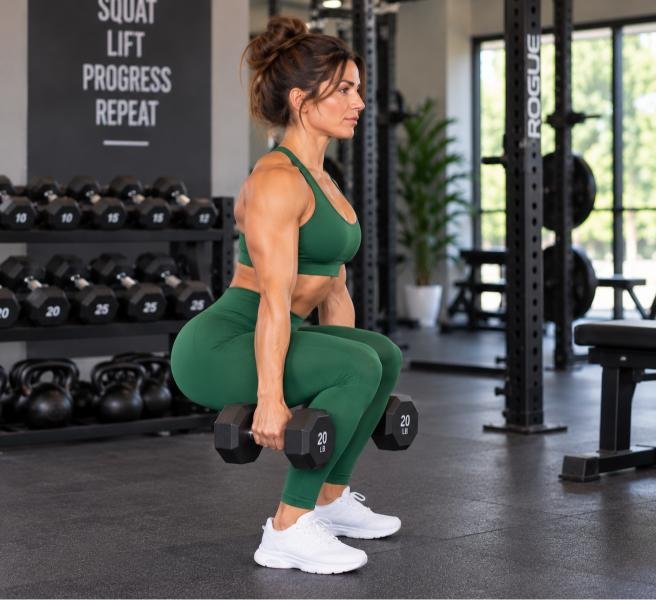
Progressive overload gradually increasing the demand on your muscles is how strength training guidelines say people continue to see improvement. In practice, this simply means:
- Once you can comfortably complete all your reps with good form, add a small amount of weight (even 0.5–1 kg makes a difference for smaller lifts).
- Increase gradually rather than jumping several kg at once.
- Give the same muscle group at least one full day of rest between strength sessions, per general strength-training recommendations.
There’s no set timeline for “when” you should move up in weight. It depends entirely on your consistency, recovery, and how your body responds — which varies from person to person.
read also: 45 Best Cute Gym Outfits for Women
Common Mistakes to Avoid
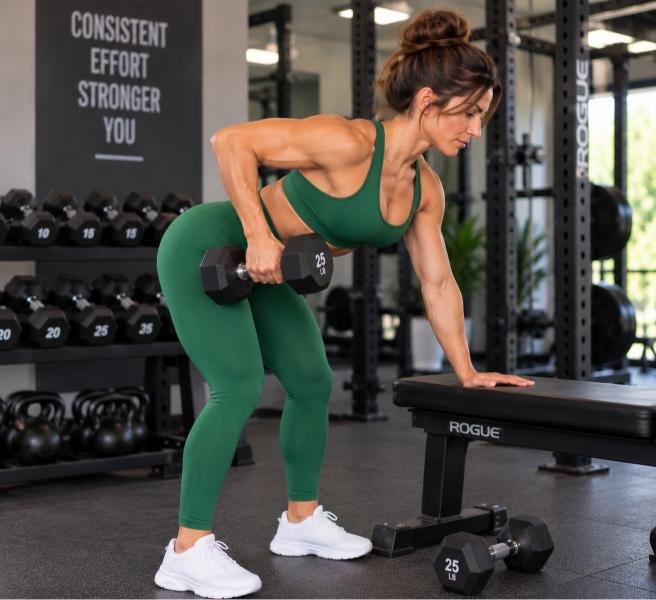
- Starting too heavy to “keep up” with someone else. Your training partner’s weight has no bearing on what’s appropriate for you.
- Sacrificing form for a heavier number. Poor form increases injury risk regardless of the weight used.
- Never increasing weight. If reps start feeling easy, your muscles have adapted — that’s the cue to progress.
- Skipping a warm-up. A short warm-up before lifting may help reduce injury risk.
When to Get Professional Guidance
If you’re pregnant, postpartum, managing a chronic health condition, recovering from an injury, or new to exercise after a long period of inactivity, talk to a doctor or a qualified trainer before starting a weight-training program. They can help tailor starting weights and progressions to your specific situation — something a general guide like this can’t do.
FAQs
What’s a good dumbbell weight for a female beginner in kg?
There’s no universal number, but many beginners start with lighter dumbbells (roughly 1–4 kg) for smaller movements and slightly heavier ones (4–10 kg) for larger muscle groups, adjusting based on how challenging the last few reps of a 12–15 rep set feel.
How do I know if my dumbbells are too light?
If you can easily complete 15+ reps without your muscles feeling fatigued, the weight is likely too light for a strength-building goal.
How often should women do dumbbell workouts?
General guidance suggests strength training all major muscle groups at least two days a week, with a rest day between sessions targeting the same muscles.
Should women lift heavy weights or use light weights with more reps?
Both approaches can build strength and muscle over time. What matters most is that the weight challenges your muscles by the end of the set, done with good form.