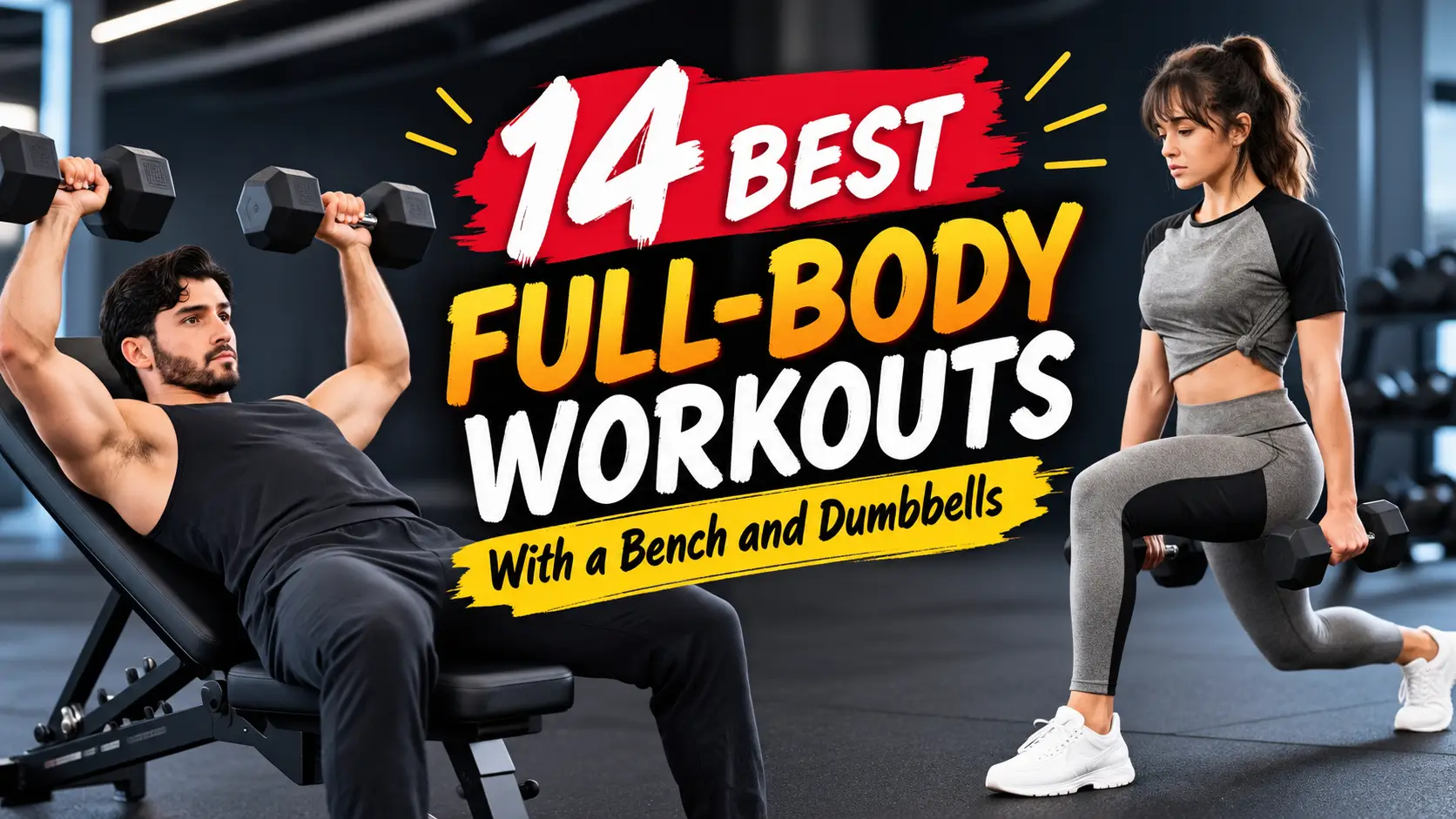
14 Best Full-Body Workouts With a Bench and Dumbbells
A bench and a pair of dumbbells can give you plenty of options for a complete home strength workout. You can train your legs, chest, back, shoulders, arms, and core without needing a large collection of equipment.
This full body workout with bench and dumbbells is designed for adults who want practical strength exercises they can perform at home or in a gym. You can adjust the dumbbell weight, repetitions, and bench position based on your fitness level.
The goal isn’t to rush through every exercise. Focus on controlled movement, good technique, and gradual progression.
Why Use a Bench and Dumbbells for Full-Body Training?
Dumbbells provide external resistance while a bench gives you a stable surface for exercises such as presses, rows, step-ups, and split squats.
Strength training can help adults maintain and improve muscular strength and function. The U.S. Department of Health and Human Services recommends muscle-strengthening activities involving all major muscle groups on at least two days each week.
You don’t need to perform all 14 exercises in every workout. Choose movements that collectively train the major muscle groups, then increase resistance gradually as your strength improves.
14 Full-Body Exercises With a Bench and Dumbbells
1. Dumbbell Goblet Squat to Bench

Hold one dumbbell vertically against your chest with both hands. Stand in front of the bench with your feet around shoulder-width apart.
Push your hips back and bend your knees. Lower yourself toward the bench with control, lightly touching it before driving through your feet to stand.
Works: Quads, glutes, hamstrings, and core.
Beginner tip: Use a higher bench or reduce the dumbbell weight if controlling the movement feels difficult.
2. Dumbbell Bench Press

Lie flat on the bench with a dumbbell in each hand. Position the weights near your chest with your palms facing forward.
Press both dumbbells upward until your arms are extended without aggressively locking your elbows. Lower the weights slowly until your upper arms move toward the sides of your torso.
Works: Chest, shoulders, and triceps.
Keep your feet planted and avoid bouncing the dumbbells off your chest.
3. One-Arm Dumbbell Bench Row

Place one hand and knee on the bench. Keep your back stable while holding a dumbbell with your opposite hand.
Pull the dumbbell toward your hip while keeping your elbow relatively close to your body. Lower the weight slowly.
Complete your repetitions on one side before switching.
Works: Upper back, lats, rear shoulders, and biceps.
4. Dumbbell Romanian Deadlift

Stand with your feet about hip-width apart and hold a dumbbell in each hand.
Keep your knees slightly bent as you push your hips backward. Lower the dumbbells along the front of your legs while keeping your spine in a comfortable neutral position.
Drive your hips forward to return to standing.
Works: Hamstrings, glutes, and lower-body posterior chain.
The movement should come primarily from your hips rather than from rounding your back.
5. Dumbbell Step-Up

Stand facing the bench while holding a dumbbell in each hand.
Place one foot securely on the bench. Push through that foot and bring your other leg up until you are standing on the bench.
Step down under control and repeat on the opposite side.
Works: Quads, glutes, hamstrings, and calves.
Use a stable bench that is appropriate for step-ups.
6. Seated Dumbbell Shoulder Press

Sit upright on the bench with a dumbbell in each hand.
Start with the weights around shoulder level. Press both dumbbells upward until your arms are nearly straight, then lower them under control.
Works: Shoulders, triceps, and upper chest.
Keep your ribs from flaring excessively as you press.
7. Bulgarian Split Squat

Stand a short distance in front of the bench with dumbbells at your sides.
Place the top of one foot behind you on the bench. Bend your front knee and lower your body while keeping most of your weight over the front leg.
Push through your front foot to return to the starting position.
Works: Quads, glutes, hamstrings, and core.
Start with body weight if the movement feels unstable.
8. Dumbbell Chest-Supported Row

Set the bench at a slight incline if your bench allows it. Lie face down with your chest supported and hold a dumbbell in each hand.
Pull both dumbbells toward your ribs while keeping your shoulders controlled. Lower the weights slowly.
Works: Upper back, lats, rear shoulders, and biceps.
Chest support can make it easier to focus on the pulling movement without using excessive torso momentum.
9. Dumbbell Hip Thrust

Sit on the floor with your upper back supported against the long edge of the bench.
Place a dumbbell carefully across your hips. Bend your knees and position your feet firmly on the floor.
Drive through your feet and raise your hips until your torso and thighs form a strong extended position. Lower with control.
Works: Glutes and hamstrings.
Use a lighter weight initially while you learn the movement.
10. Dumbbell Reverse Lunge

Stand upright while holding dumbbells at your sides.
Step one foot backward and lower your body until both knees bend comfortably. Push through your front foot to return to standing.
Alternate legs or complete all repetitions on one side before switching.
Works: Quads, glutes, hamstrings, and calves.
A reverse lunge may feel more controlled for some beginners than moving forward into a lunge.
11. Dumbbell Pullover

Lie lengthwise on the bench with your feet planted firmly on the floor.
Hold one dumbbell with both hands above your chest. With slightly bent elbows, slowly lower the dumbbell backward over your head as far as comfortable.
Pull the weight back over your chest using controlled movement.
Works: Chest, shoulders, and upper back.
Use a conservative weight and avoid forcing your shoulders into a deep range of motion.
12. Dumbbell Lateral Raise

Stand beside the bench with a light dumbbell in each hand.
Raise your arms outward until they approach shoulder height. Keep a slight bend in your elbows.
Lower the dumbbells slowly instead of letting them drop.
Works: Lateral deltoids and shoulders.
This exercise generally requires much less weight than presses or rows.
13. Dumbbell Bench Triceps Extension

Lie on the bench while holding a dumbbell in each hand.
Start with your arms extended above your chest. Bend your elbows and lower the dumbbells toward the sides of your head.
Extend your elbows to return to the starting position.
Works: Triceps.
Keep the upper arms relatively stable throughout the movement.
14. Dumbbell Bench-Supported Rear Delt Fly

Sit near the edge of the bench or use an appropriate supported position with your torso angled forward.
Hold light dumbbells underneath your shoulders. Raise your arms outward until they reach approximately shoulder level.
Pause briefly, then lower the weights slowly.
Works: Rear shoulders and upper back.
Use light weights and prioritize controlled movement over lifting heavier dumbbells.
How to Build a Full-Body Workout
You don’t need to perform all 14 exercises every time.
For a simple session, choose:
- 1 squat or lunge: Goblet squat or reverse lunge
- 1 hip-dominant exercise: Romanian deadlift or hip thrust
- 1 chest exercise: Dumbbell bench press
- 1 back exercise: One-arm row or chest-supported row
- 1 shoulder exercise: Shoulder press or lateral raise
- 1 additional movement: Step-up, triceps extension, or rear-delt fly
This gives you a balanced session without making the workout unnecessarily long.
Sets and Reps for Beginners
There isn’t one perfect rep range for everyone. Your starting point should match your experience, available weight, and ability to maintain good technique.
A practical starting structure is:
- 2–3 sets per exercise
- 8–12 controlled repetitions
- Rest between sets as needed
- Stop or reduce the weight when your technique starts breaking down
As an exercise becomes easier, you can gradually increase the weight or repetitions while maintaining good form.
The HHS Physical Activity Guidelines emphasize regular muscle-strengthening activity rather than prescribing one universal workout routine for every adult.
How Often Should You Do This Workout?
You can use full-body strength training on multiple days each week, allowing recovery between challenging sessions that train the same muscles.
For general health, federal guidelines recommend muscle-strengthening activity involving all major muscle groups at least two days per week.
You can also combine strength training with aerobic activity to address the broader physical-activity recommendations.
Safety Tips
Before exercising, make sure your bench is stable and rated for the movements you’re performing.
Start with a manageable dumbbell weight. You should be able to control the complete range of motion without using momentum.
Pay attention to pain. Normal muscular effort can feel challenging, but sharp, severe, or persistent pain is a reason to stop.
If you’re returning to exercise after an injury, have a medical condition, or are unsure whether a particular movement is appropriate for you, talk with a qualified healthcare professional.
Frequently Asked Questions
Can I get a full-body workout with only dumbbells and a bench?
Yes. A bench and dumbbells provide enough exercise options to train the major muscle groups, including your legs, chest, back, shoulders, and arms.
How heavy should my dumbbells be?
Choose a weight that allows you to maintain proper technique throughout the set. The appropriate weight can differ significantly between exercises.
Should beginners use a bench for dumbbell workouts?
A bench can provide support and create additional exercise options. Beginners should first become comfortable with basic movement patterns before adding heavier resistance.
Can I do this workout at home?
Yes, provided you have a stable bench and enough space to exercise safely. Make sure the bench doesn’t move during exercises such as step-ups or split squats.
Do I need to perform all 14 exercises?
No. You can select a smaller group that collectively trains your major muscle groups. Performing fewer exercises with good technique can be more practical than trying to fit everything into one session.
Final Thoughts
A bench and dumbbells can form the foundation of a versatile full-body strength routine. The 14 exercises above give you options for training your lower body, upper body, and core-supporting muscles from different angles.
Start with manageable resistance, learn each movement, and progress gradually. Consistency matters more than trying to make every workout exhausting.