
14 Best Back Exercises for Women in the Gym
Building a stronger back can help you develop upper-body strength and make everyday movements easier. A well-rounded back workout can also train several major muscle groups, including the lats, traps, rhomboids, and spinal erectors.
For women, resistance training can produce meaningful improvements in muscular strength and muscle growth. A systematic review of resistance-training research in healthy adult women found significant improvements in both strength and hypertrophy.
You do not need to lift extremely heavy weights to benefit. The key is using controlled movements, appropriate resistance, and good form.
14 Best Back Exercises for Women in the Gym
Here are 14 back exercises you can add to your gym routine.
1. Lat Pulldown

The lat pulldown is a simple way to train your latissimus dorsi, the large muscles running along the sides of your back.
Sit at the machine and secure your thighs under the pads. Grip the bar slightly wider than shoulder width. Pull the bar toward your upper chest while keeping your torso controlled.
Slowly return the bar to the starting position.
Tip: Avoid swinging your body to move the weight.
2. Seated Cable Row

The seated cable row targets the middle and upper back while also involving the arms.
Sit upright with your feet against the platform. Hold the handle and pull it toward your lower ribs. Keep your chest lifted and squeeze your shoulder blades gently.
Return the handle slowly without letting the weight pull you forward.
3. Single-Arm Dumbbell Row

This exercise lets you train one side of your back at a time.
Place one hand and knee on a bench. Hold a dumbbell with your opposite hand. Pull the weight toward your hip while keeping your back stable.
Lower the dumbbell slowly and complete your repetitions before switching sides.
4. Chest-Supported Dumbbell Row

A chest-supported row can help reduce the amount of body movement during a rowing exercise.
Set an adjustable bench at a slight incline and lie face down with a dumbbell in each hand. Pull the weights toward your ribs while keeping your elbows controlled.
Lower them slowly and repeat.
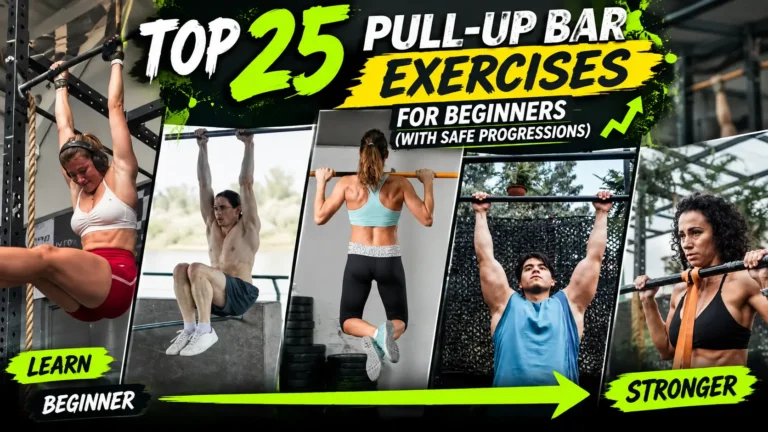
5. Assisted Pull-Up

Assisted pull-ups are useful if you want to practice the pull-up movement but cannot yet perform unassisted repetitions.
Place your knees or feet on the machine’s assistance platform, depending on the machine design. Grip the handles and pull your body upward.
Lower yourself with control.
Tip: Choose enough assistance to maintain good technique throughout the set.
6. Machine Row

A machine row provides external support while you train the back muscles.
Adjust the seat and chest support according to the machine instructions. Grip the handles and pull them toward your body.
Pause briefly when your hands reach the appropriate position, then slowly return to the starting position.
7. Straight-Arm Cable Pulldown

This movement emphasizes shoulder extension and can be used to train the lats.
Stand facing a high cable attachment and hold the bar with both hands. Keep your arms mostly straight and pull the bar downward toward your thighs.
Return the bar slowly while maintaining control.
Avoid turning the movement into a triceps pushdown by excessively bending your elbows.
8. Face Pull

Face pulls can train the rear shoulders and upper-back muscles.
Attach a rope to a cable at approximately upper-chest or face height. Hold the rope and pull it toward your face while keeping your elbows elevated.
Return slowly and maintain a controlled posture.
Use a manageable weight rather than trying to move the heaviest stack.
9. Reverse Dumbbell Fly

The reverse fly targets muscles around the upper back and rear shoulders.
Hold light dumbbells and hinge forward slightly from your hips. With a small bend in your elbows, raise the weights outward.
Stop around shoulder level and slowly lower them.
Because the movement uses relatively small muscles, lighter weights are usually easier to control.
10. Back Extension

Back extensions train the muscles along the back of your body, including the spinal erectors.
Position yourself on a back-extension bench with your feet secured. Keep your spine in a comfortable neutral position and hinge forward from your hips.
Raise your torso until it is aligned with your legs without aggressively arching your lower back.
11. Romanian Deadlift

The Romanian deadlift primarily trains the posterior chain, including the hamstrings and glutes, while the back muscles help maintain your torso position.
Hold a barbell or dumbbells in front of your thighs. Push your hips backward while keeping the weights close to your legs.
Lower until you feel a comfortable stretch in your hamstrings, then drive your hips forward to stand.
Tip: Start with a light weight while learning the hip-hinge movement.
12. Dumbbell Pullover

The dumbbell pullover can be included as an accessory movement for the upper body and lats.
Lie on a bench and hold one dumbbell above your chest with both hands. Slowly lower the weight behind your head as far as you can comfortably control.
Bring the dumbbell back over your chest.
Do not force the range of motion.
13. T-Bar Row

The T-bar row is a compound pulling exercise that can train multiple muscles across the back.
Stand with a stable stance and grip the handles. Hinge forward while keeping your back controlled.
Pull the weight toward your torso, then lower it slowly.
Use a resistance level that allows you to maintain your position throughout the movement.
14. Cable Rear-Delt Row

This cable movement combines a rowing pattern with a wider elbow position to emphasize the upper back and rear shoulders.
Set the cable around chest height. Hold the attachment with both hands and pull toward your upper chest while keeping your elbows comfortably away from your body.
Return the cable slowly.
How Often Should Women Train Their Back?
Back exercises can be included as part of a full-body or upper-body strength program.
The CDC recommends that adults perform muscle-strengthening activities on at least two days each week, working all major muscle groups, including the back.
You do not necessarily need to perform all 14 exercises in one workout. In fact, combining a few movements that train different areas of the back can make a session more manageable.
For example, a workout could include:
- Lat pulldown
- Seated cable row
- Single-arm dumbbell row
- Face pull
- Back extension
NIDDK notes that beginners can use machines, dumbbells, resistance bands, or other forms of resistance, while emphasizing proper form during strength training.
How Many Sets and Reps Should You Do?
There is no single set-and-rep combination that works for every woman.
For a general resistance-training approach, the American College of Sports Medicine provides an example of 2–3 sets of 8–12 repetitions with controlled technique.
Beginners can start with lighter resistance and focus on learning the movement. As your technique and strength improve, you can gradually increase the resistance.
The final repetitions should feel challenging without forcing you to sacrifice proper form.
Common Back Workout Mistakes
Using Too Much Weight
Heavy weights can make it difficult to control the movement. Choose a resistance that allows you to complete the exercise with good technique.
Using Momentum
Swinging dumbbells or using your entire body to move a cable can reduce control. Slow, deliberate repetitions are usually easier to perform correctly.
Rounding Your Back During Hinges
Exercises such as Romanian deadlifts require good control of your torso. Practice the hip-hinge pattern with light resistance before progressing.
Training Only One Part of the Back
A balanced workout can include both vertical pulls, such as pulldowns, and horizontal pulls, such as rows. Accessory movements can then target the upper back and rear shoulders.
Can Back Exercises Make Women Bulky?
Resistance training does not automatically make women excessively muscular.
Muscle growth depends on factors including training, nutrition, genetics, and overall training volume. NIDDK notes that regular strength training can help build stronger muscles and does not simply cause women to “bulk up.”
If your goal is general strength and fitness, focus on progressive training, proper technique, and consistency rather than worrying about a specific body shape.
When Should You Stop a Back Exercise?
Stop an exercise if you experience sharp or unusual pain, numbness, dizziness, or other concerning symptoms.
If you have an existing back injury, chronic health condition, or significant pain, speak with an appropriate healthcare professional before starting or substantially increasing your training. The CDC recommends discussing appropriate physical activity with a healthcare professional when chronic health conditions may affect exercise choices.
Frequently Asked Questions
What are the best back exercises for women at the gym?
Useful options include lat pulldowns, cable rows, dumbbell rows, assisted pull-ups, machine rows, face pulls, reverse flyes, and back extensions. A combination of pulling movements can train different areas of the back.
How many back exercises should I do per workout?
You do not need all 14 exercises in one session. A few well-chosen exercises can provide a more manageable workout while allowing you to train different back muscles.
Can women build back muscle with weights?
Yes. Research involving healthy adult women shows that resistance training can improve muscular strength and can also promote muscle hypertrophy.
Should beginners use machines or free weights?
Both can be useful. Machines may provide additional support while you learn movement patterns, while dumbbells and barbells allow more freedom of movement. Proper technique should remain the priority.
Final Thoughts
A strong back can be an important part of a balanced fitness routine. You can train it with machines, cables, dumbbells, and barbells without needing an overly complicated workout.
Start with manageable resistance, learn each movement carefully, and gradually progress as your strength improves. Most importantly, choose exercises that fit your experience level, goals, and comfort.
Image Credits
Images used in this article are sourced from Pexels. Credit is not required under the Pexels License, but we appreciate and acknowledge the photographers who made these images available.