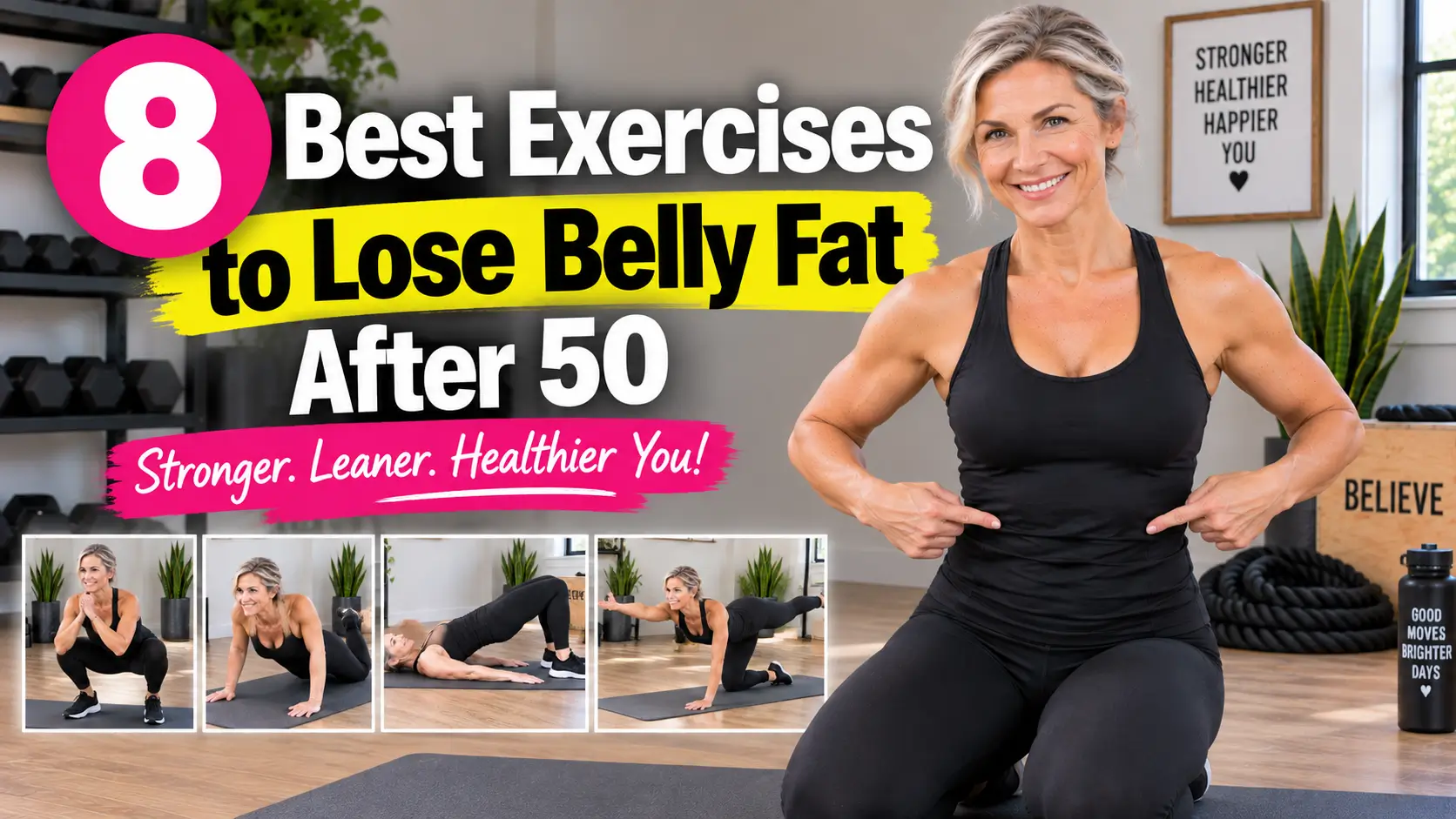
8 Best Exercises to Lose Belly Fat After 50
If you’re looking for the best exercises to lose belly fat after 50, the honest starting point is this: no single move burns fat off your stomach specifically. What actually works is a combination of full-body strength training, regular cardio, and core work that together reduce overall body fat and protect the muscle mass you naturally start losing with age. The eight exercises below reflect that approach — they’re practical, low-risk for most people in this age group, and backed by how fat loss and muscle maintenance actually work rather than by any quick-fix promise.
Why Spot Reduction Doesn’t Work
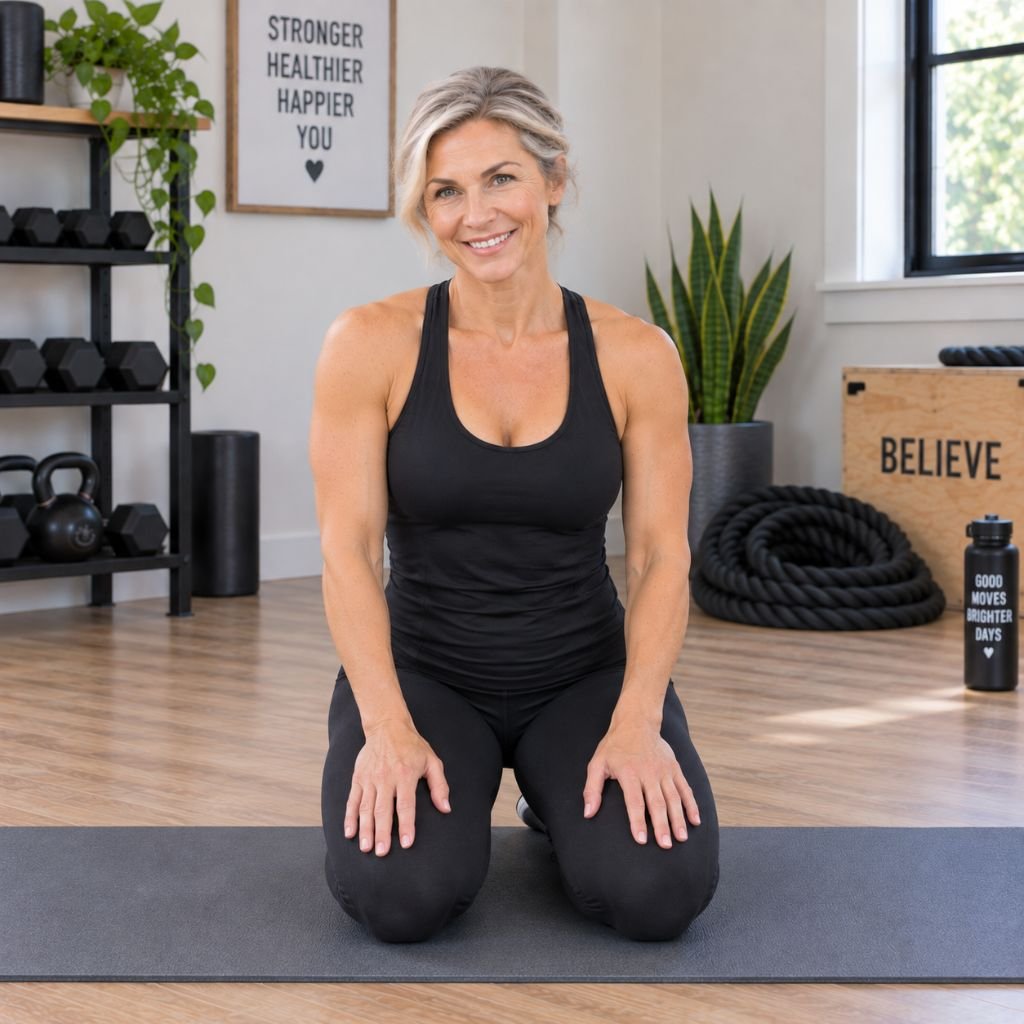
Before getting into the exercises, it’s worth clearing up a common misconception: you cannot target fat loss in one specific area by exercising that area alone. Doing hundreds of crunches will strengthen your abdominal muscles, but it won’t selectively burn the fat sitting on top of them. Fat loss happens across the whole body as you build muscle, move more, and manage your overall calorie balance, and the belly is often one of the last places it shows up. This is why the most effective approach after 50 combines strength training and cardiovascular exercise with core work, rather than relying on ab exercises alone.
read also: 22 Best Leg Exercises With Ankle Weights at Home
1. Brisk Walking
Walking is one of the most accessible forms of cardio, and it remains genuinely effective for fat loss when done consistently. Federal physical activity guidelines recommend adults get at least 150 minutes of moderate aerobic activity per week, such as brisk walking, or 75 minutes of more vigorous activity. After 50, walking is particularly valuable because it’s low-impact, easy on the joints, and simple to fit into daily life — a walk around the block, at work, or with family all count.
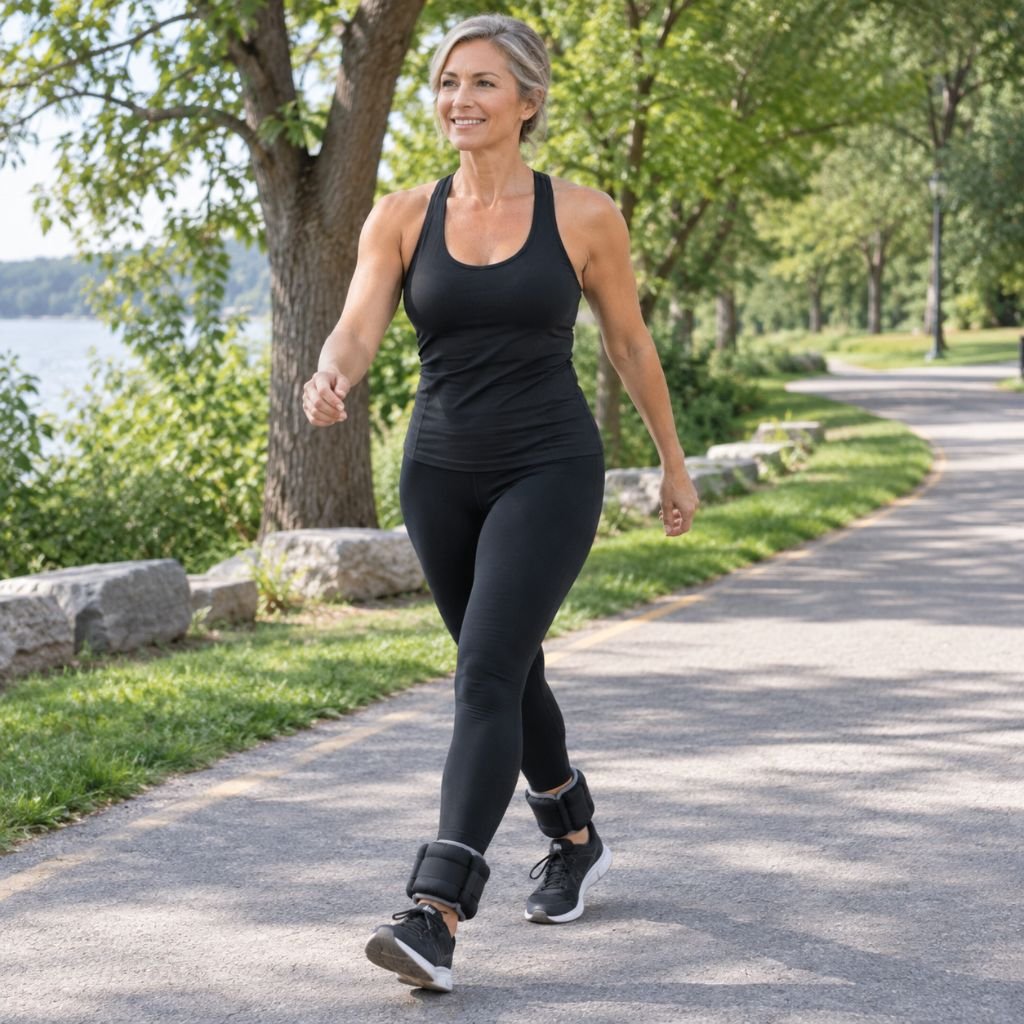
How to do it: Walk at a pace where you’re slightly breathless but can still hold a conversation, for 30 minutes most days of the week. Add a bit of incline or pick up the pace occasionally as your fitness improves.
2. Bodyweight Squats
Muscle mass naturally declines with age, and maintaining it is one of the most important things you can do for long-term metabolic health, since muscle burns more calories at rest than fat does. Squats are a compound movement, meaning they work multiple large muscle groups — quads, glutes, hamstrings, and core — at once, which makes them efficient for both strength and calorie expenditure.
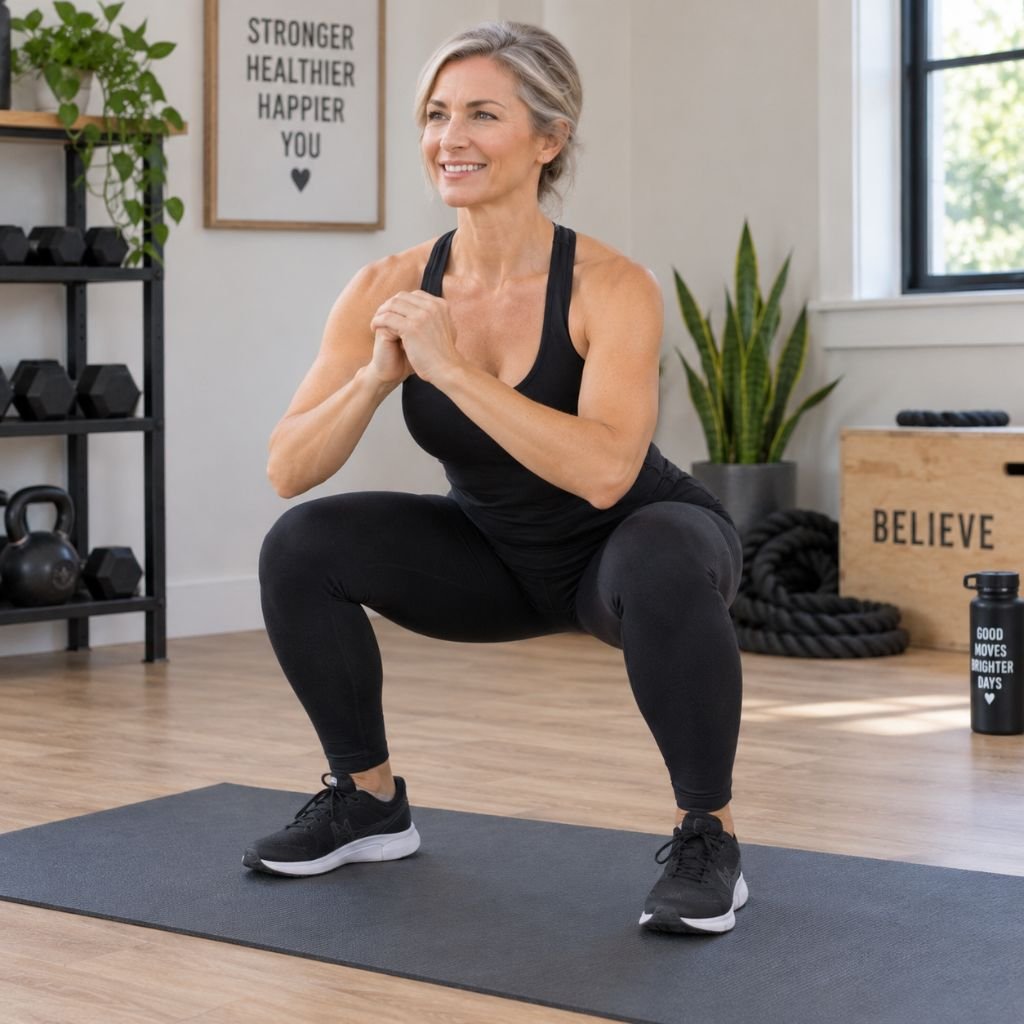
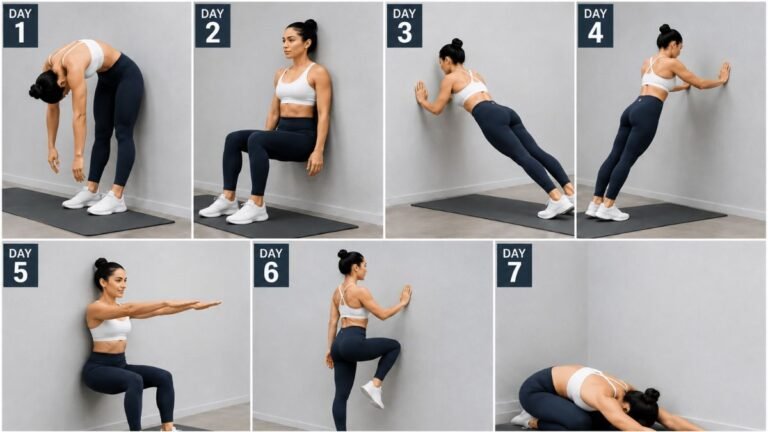
How to do it: Stand with feet shoulder-width apart, lower your hips back and down as if sitting into a chair, keeping your chest lifted, then push through your heels to stand. Use a chair behind you for support if you’re building confidence with the movement.
read also: 45 Best Cute Gym Outfits for Women
3. Plank
The plank is a core-strengthening exercise that builds stability through your abdominal muscles, lower back, and shoulders without requiring any spinal flexion, which makes it a safer choice than repeated crunches for many people, especially those managing back sensitivity. A stronger core supports better posture and can reduce strain during everyday movements like lifting and bending.
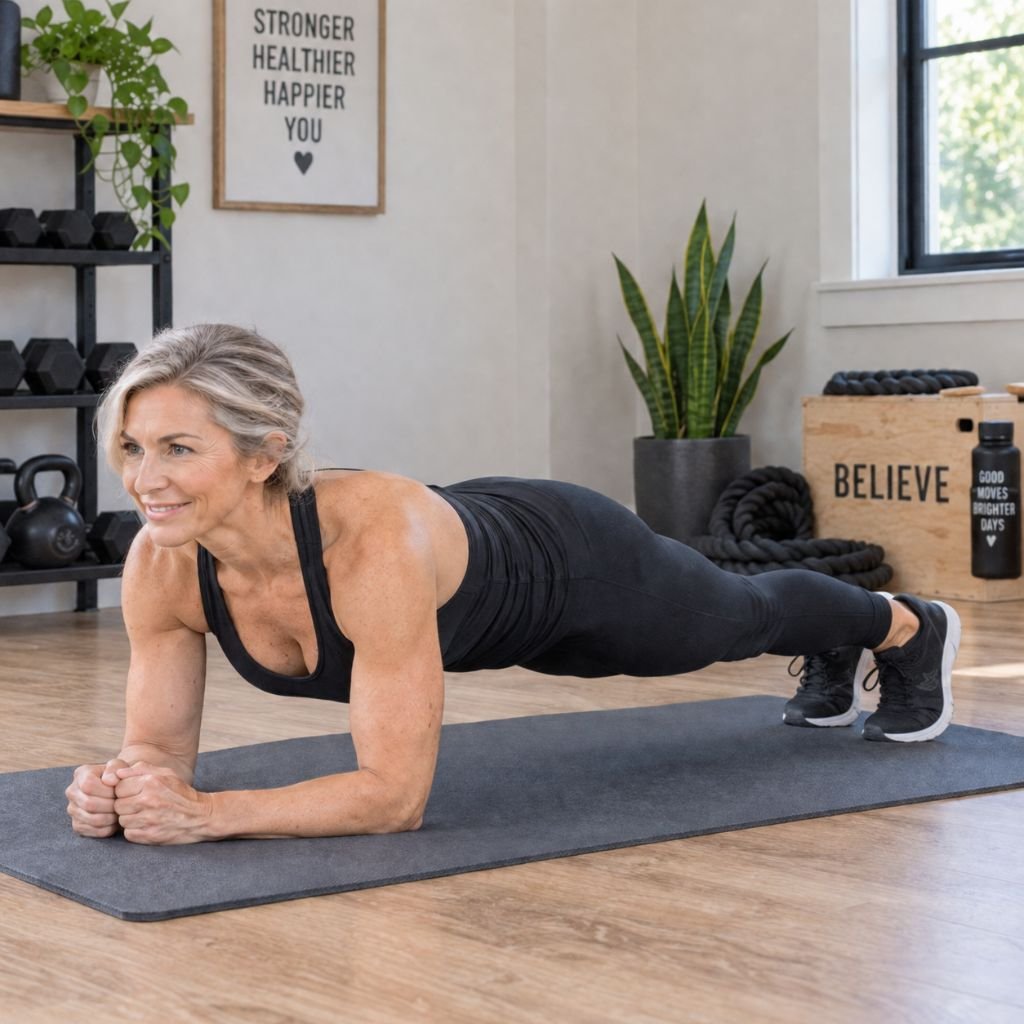
How to do it: Rest on your forearms and toes (or knees, for an easier variation) with your body in a straight line from head to heels. Hold, keeping your hips level and your core engaged, starting with 15 to 20 seconds and building up gradually.
4. Bird Dog
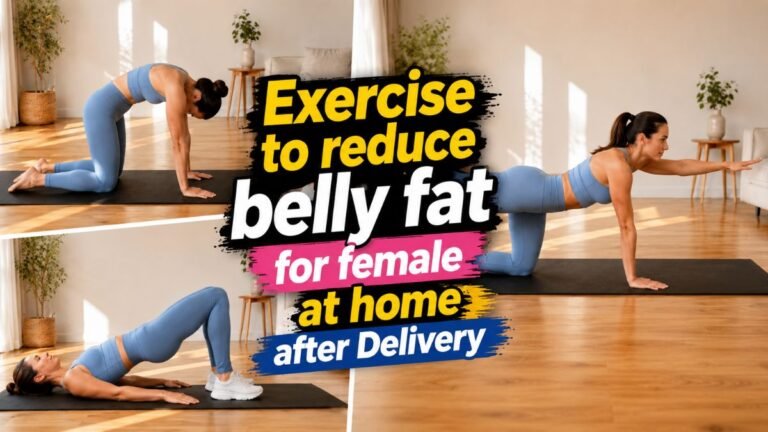
Bird dog is a controlled, low-impact core exercise that also challenges balance and coordination — both of which become increasingly valuable to train after 50. It works your deep core stabilizers along with your glutes and shoulders, all while keeping your spine in a neutral, protected position.
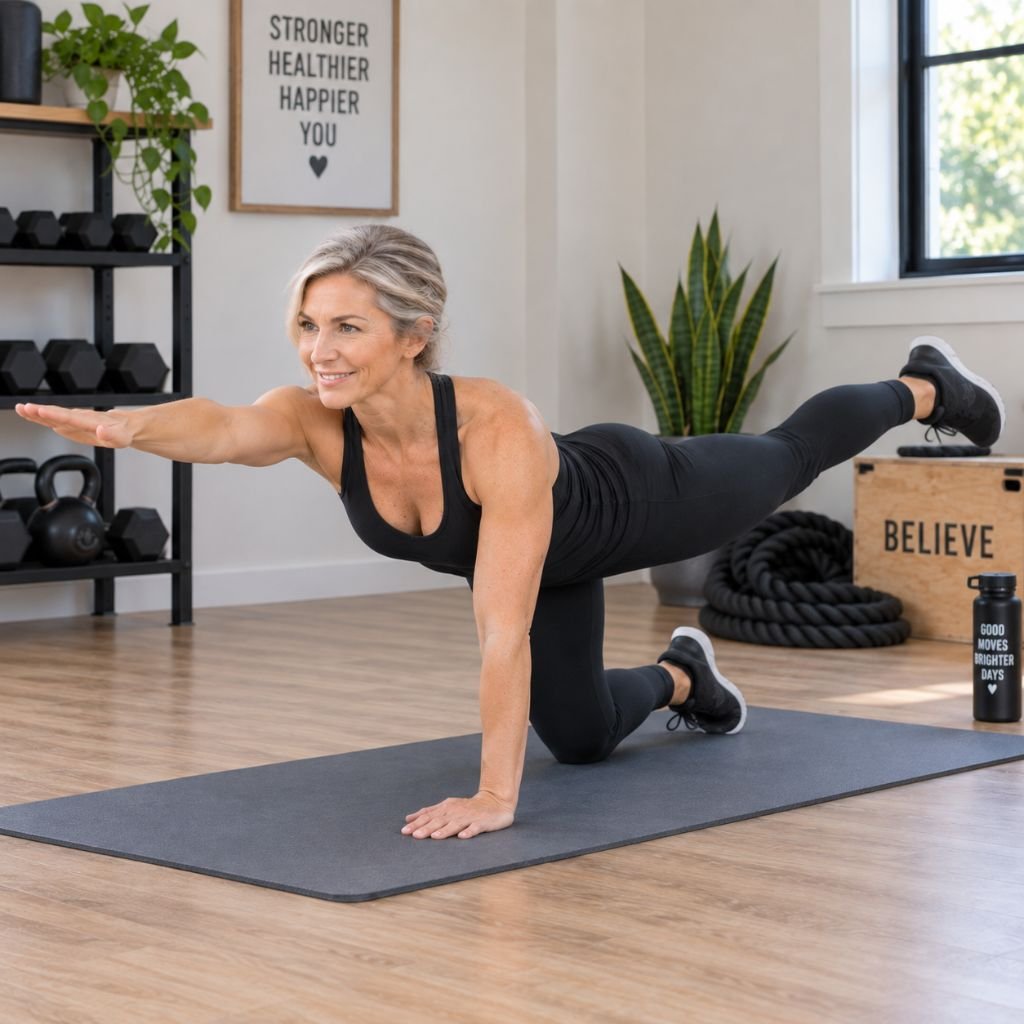
How to do it: Start on hands and knees. Extend one arm forward and the opposite leg back simultaneously, keeping your hips and shoulders level, then return to start and switch sides. Move slowly and focus on control rather than speed.
5. Standing Side Bend
Standing side bends work the oblique muscles along the sides of your waist. While they won’t spot-reduce fat, they contribute to overall core strength and can help your midsection feel more supported and stable as you lose body fat through the other exercises on this list.
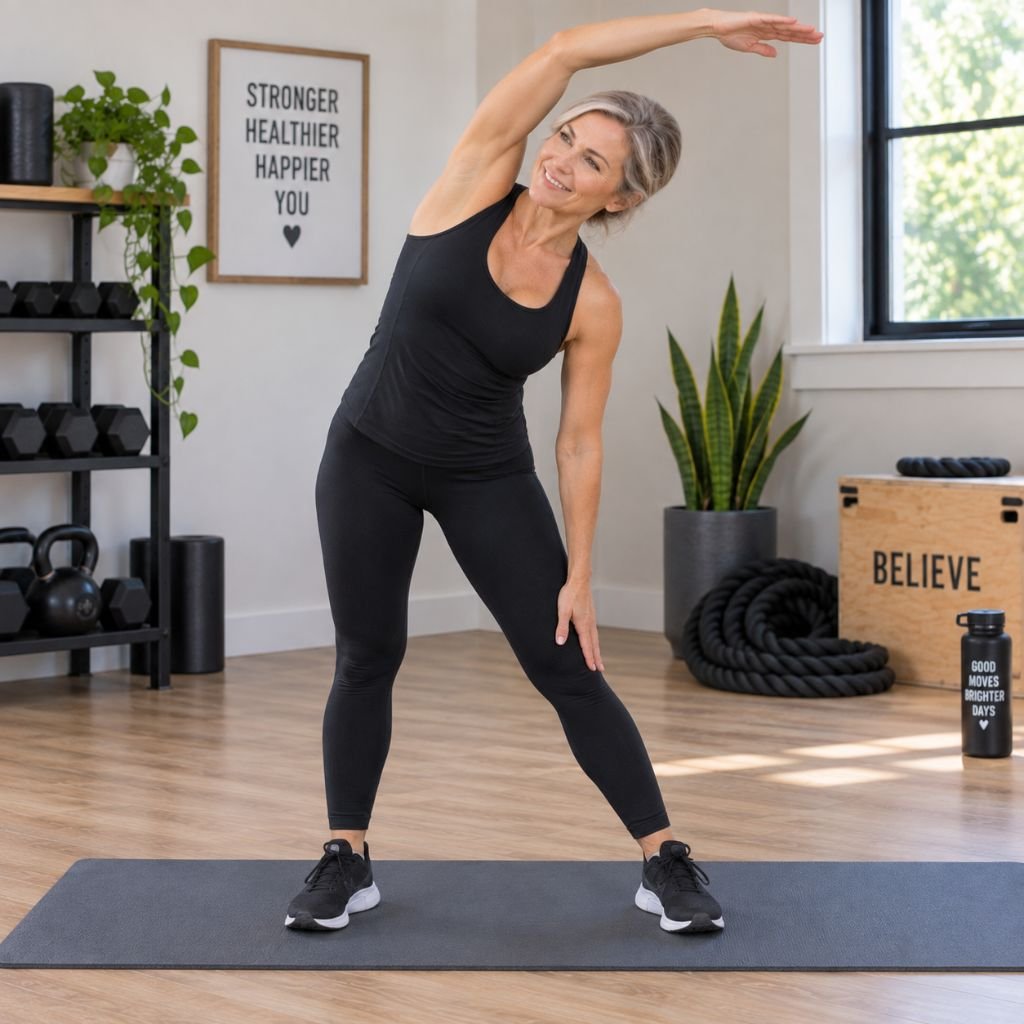
How to do it: Stand with feet hip-width apart, arms at your sides. Slowly bend to one side, sliding your hand down toward your knee, then return to center and repeat on the other side. Keep the movement controlled rather than bouncing.
6. Step-Ups
Step-ups mimic a natural movement — climbing stairs — and build strength in the legs and glutes while also elevating your heart rate, giving you a combination of strength and cardio benefit in one exercise. This kind of functional strength training becomes increasingly valuable after 50 for maintaining independence in daily activities.
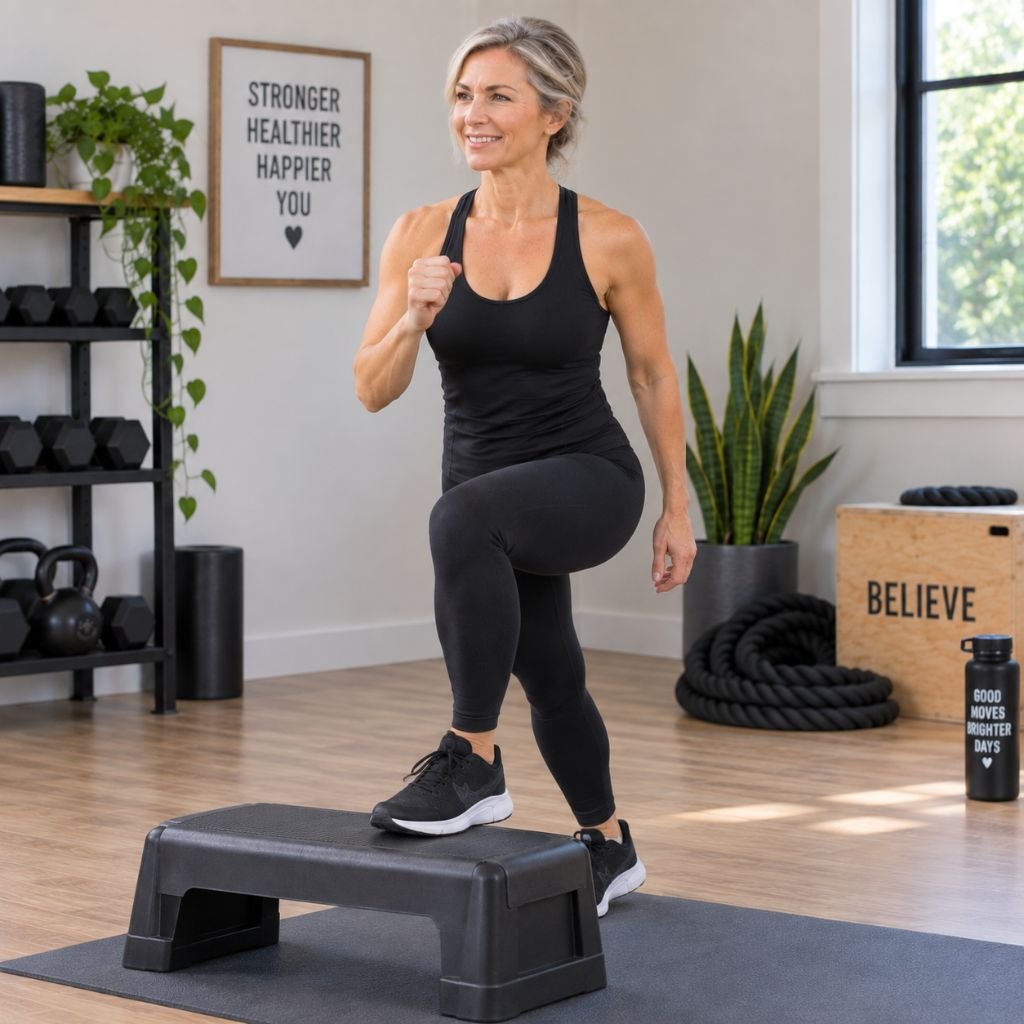
How to do it: Using a sturdy step or the bottom stair, step up with one foot, driving through the heel to bring the other foot up to meet it, then step back down with control. Hold a railing or wall for balance if needed.
7. Modified Push-Up
Push-ups engage your chest, shoulders, triceps, and core simultaneously, making them another efficient compound movement. A modified version — performed from the knees or against a wall or counter — lowers the intensity while still providing real strength benefits, which makes it a practical entry point if a full push-up isn’t accessible yet.
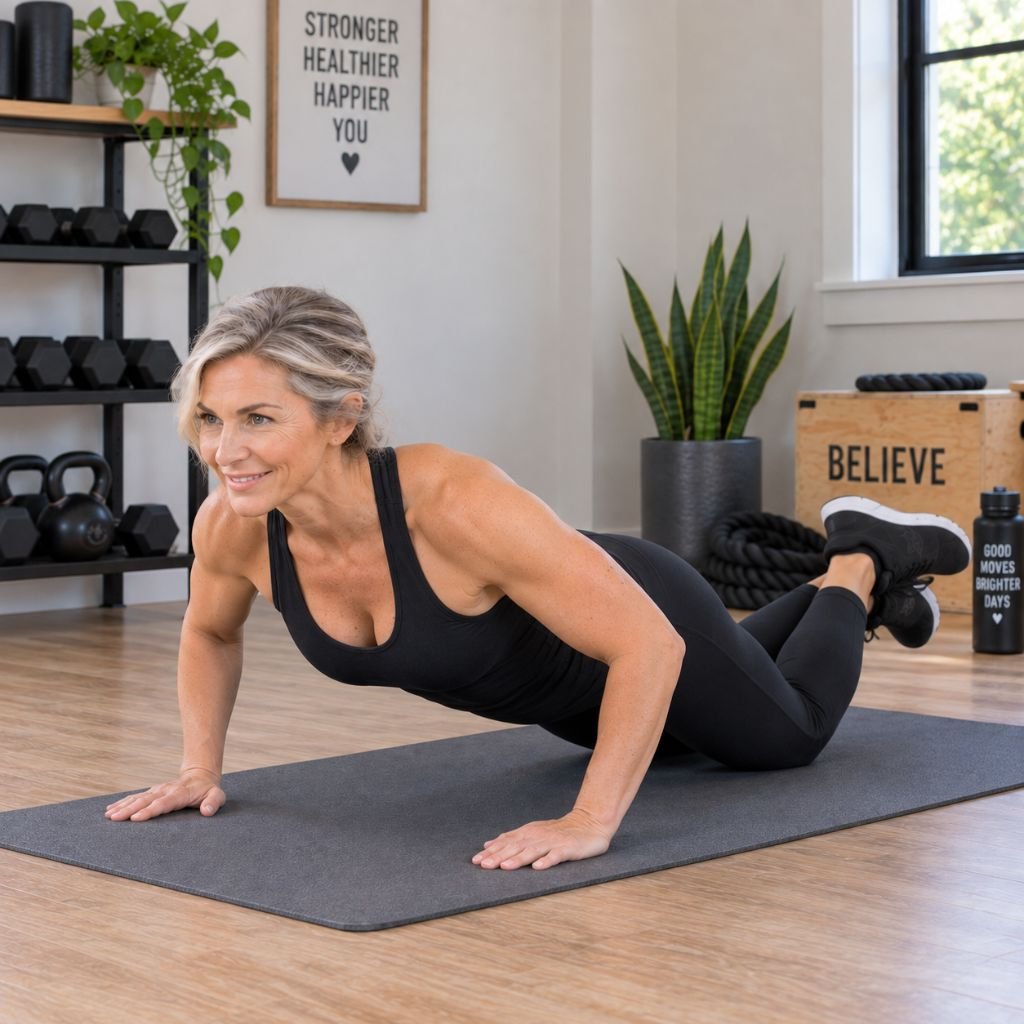
How to do it: From a wall, counter, or knees, lower your chest toward the surface with elbows at roughly a 45-degree angle, then push back to the start, keeping your core engaged throughout.
8. Glute Bridge
The glute bridge strengthens the glutes, hamstrings, and lower back while also engaging the core to stabilize your hips. Strong glutes and a stable pelvis support better posture and can ease lower back strain, which becomes more common with age and prolonged sitting.
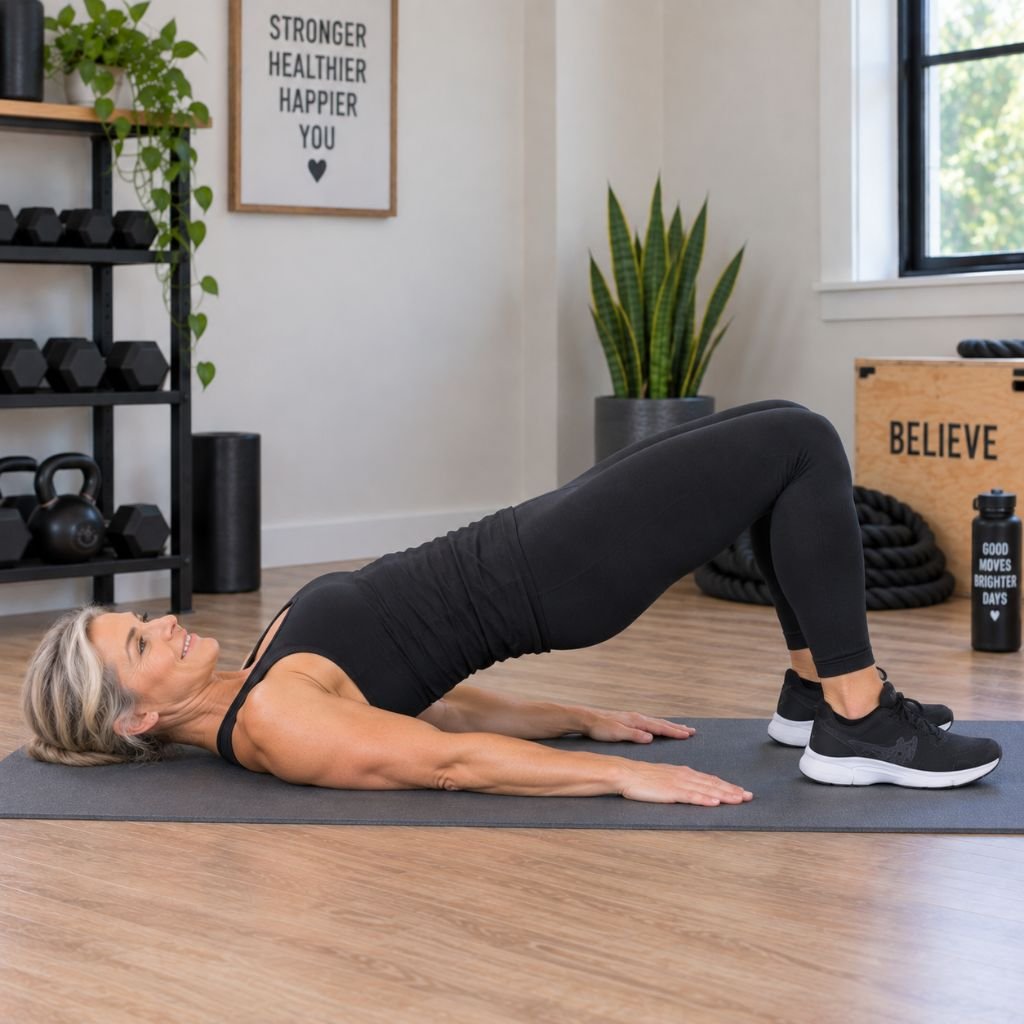
How to do it: Lie on your back with knees bent and feet flat on the floor. Lift your hips toward the ceiling, squeezing your glutes at the top, then lower with control. Keep the movement slow rather than bouncing through it.
Benefits of This Approach
- Preserves muscle mass. Strength-focused moves like squats, push-ups, and glute bridges help counter the natural muscle loss that occurs with age, which supports a healthier metabolism.
- Low joint stress. Every exercise above can be done without high-impact jumping or running, making them accessible for most fitness levels after 50.
- Improves core stability and posture. Planks, bird dogs, and side bends build the kind of core strength that supports everyday movement, not just appearance.
- Supports cardiovascular health. Regular walking contributes to the aerobic activity linked to lower risk of heart disease and other chronic conditions.
- Realistic and sustainable. None of these exercises require special equipment, a gym membership, or extreme intensity, which makes them easier to stick with long term.
Common Mistakes to Avoid
- Relying only on ab exercises. Doing crunches or side bends alone, without strength training or cardio, won’t meaningfully reduce belly fat.
- Skipping strength training. Cardio alone burns calories, but strength training is what helps preserve the muscle mass that keeps your metabolism active as you age.
- Doing too much too soon. Jumping into high-intensity routines without a gradual buildup increases injury risk, especially if you’re returning to exercise after a long break.
- Ignoring nutrition. Exercise supports fat loss, but it works alongside — not instead of — a reasonable, consistent approach to eating.
- Expecting fast results. Fat loss, especially around the midsection, tends to happen gradually and unevenly across the body, not overnight or in one specific spot.
- Neglecting recovery. Muscles need rest to rebuild and strengthen; training the same muscle groups intensely every day without breaks can backfire.
Precautions
If you have any existing health conditions heart disease, joint problems, osteoporosis, or a history of back injury talk to a doctor before starting a new exercise routine, particularly one that includes strength training. Warm up before each session, and stop any exercise that causes sharp or joint pain (mild muscle fatigue is normal and expected). Pay attention to balance-dependent moves like step-ups; use a wall, chair, or railing for support until you feel steady. Progress gradually rather than increasing intensity, weight, or duration all at once, and allow rest days between strength sessions targeting the same muscle groups.
Beginner Advice
If you’re just getting started, you don’t need to do all eight exercises in one session. Pick two or three a walk, a set of squats, and a plank, for example and build consistency before adding more. Focus on form over speed or repetitions; a slow, controlled squat is more valuable than a fast, sloppy one. Give yourself several weeks to adapt before expecting to see noticeable changes, and remember that consistency over months matters far more than intensity in any single week.
FAQs
Can I lose belly fat after 50 without changing my diet? Exercise alone can help, but most reliable fat loss comes from combining regular physical activity with attention to overall eating habits. Neither one replaces the other.
How often should I do these exercises? A reasonable approach is walking most days of the week, paired with strength exercises like squats, push-ups, and glute bridges two to three times a week, allowing rest days in between strength sessions.
Is it harder to lose belly fat after 50? Hormonal changes and a natural decline in muscle mass with age can make fat loss, especially around the midsection, feel slower than it did earlier in life. This is part of why maintaining muscle through strength training becomes more important, not less, as you get older.
Do I need equipment for these exercises? No. Every exercise on this list uses just your body weight, though a stable step or chair for balance support can help with a few of them.
Are crunches better than planks for belly fat? Neither exercise burns belly fat directly, since spot reduction isn’t possible. Planks are often recommended as a lower-strain alternative to repeated crunches because they build core stability without repetitive spinal flexion.
How long before I see results? This varies widely based on your starting point, consistency, and nutrition. Most people notice improvements in strength and stamina before they notice visible changes in body composition, so tracking how you feel and perform is a useful measure alongside the mirror.