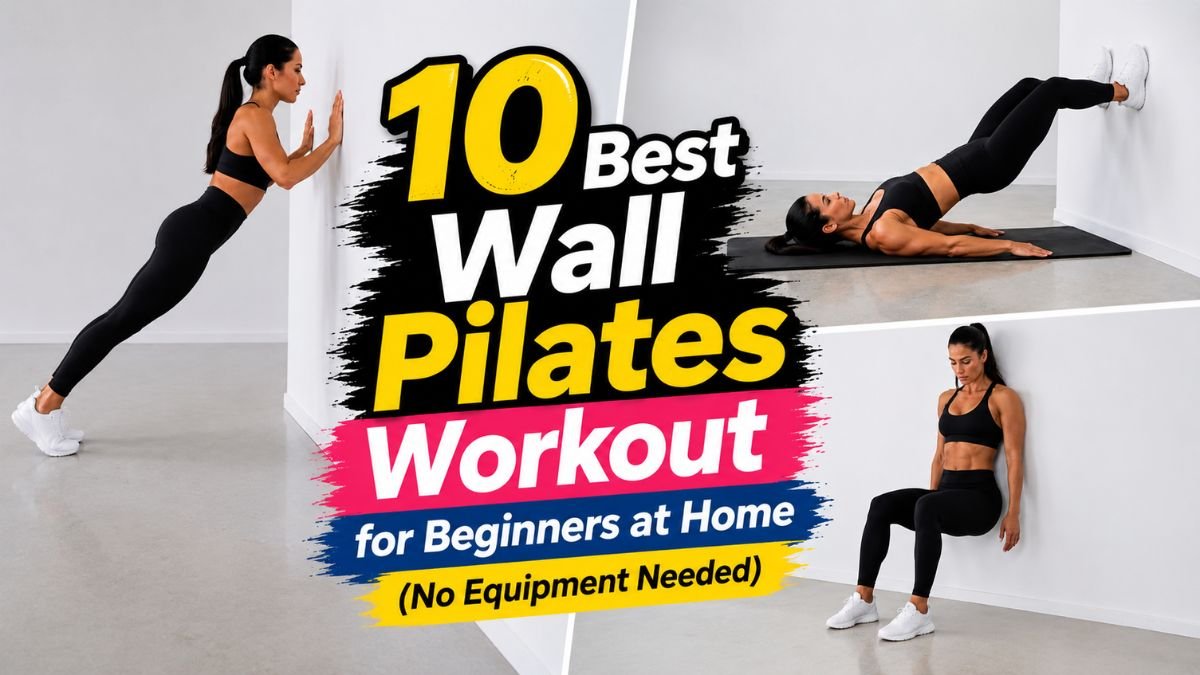
10 Best Wall Pilates Workout for Beginners at Home (No Equipment Needed)
Wall Pilates is a modern twist on traditional Pilates that uses a wall for support, resistance, and alignment during exercises. It combines classic Pilates principles core strength, flexibility, and controlled movement with the added stability of a wall, making it easier to maintain proper form. This workout has quickly gained popularity among beginners because it’s low-impact, requires no special equipment, and helps build confidence before progressing to more advanced Pilates moves. It’s also a great option for anyone working out at home, as all you need is a clear wall space. In this article, you’ll find easy, beginner-friendly Wall Pilates exercises along with a simple routine to help you get started on your fitness journey.
What Is Wall Pilates?
- Wall Pilates is a form of Pilates that incorporates a wall as a prop to guide movements, provide support, and add resistance during exercises.
- Unlike traditional Pilates, which often relies on mats, reformers, or other equipment, Wall Pilates uses just a flat wall, making it more accessible and beginner-friendly.
- The wall is used to improve alignment, enhance balance, and offer extra stability, helping beginners perform exercises with correct form while reducing the risk of injury.
Benefits of Wall Pilates for Beginners
- Improves posture
- Strengthens core
- Increases flexibility
- Better balance
- Low-impact workout
- No gym required
Things You’ll Need Before Starting
- A clear wall
- Yoga mat
- Comfortable workout clothes
- Water bottle
- 10–20 minutes of free time
Wall Roll Down
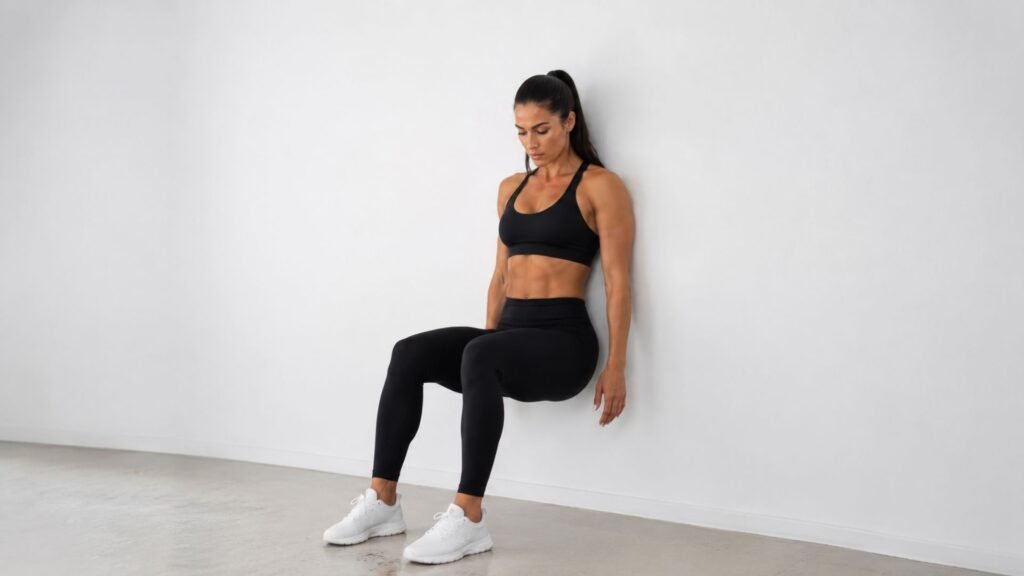
What it is
The Wall Roll Down is a gentle mobility and posture exercise that improves spinal flexibility, core control, and body awareness. It is commonly used in Pilates and warm-up routines.
How to do it
Stand with your back against a wall and your feet a few inches away. Slowly tuck your chin and roll your spine down one vertebra at a time while keeping your back in contact with the wall. Pause at the bottom, then slowly roll back up to the starting position.
Time/Reps
- 8–12 reps × 2–3 sets
- Move slowly and with control.
Benefits
- Improves spinal mobility and flexibility.
- Strengthens core muscles and promotes better posture.
- Relieves back and neck tension while increasing body awareness.
Wall Squat Hold
What it is
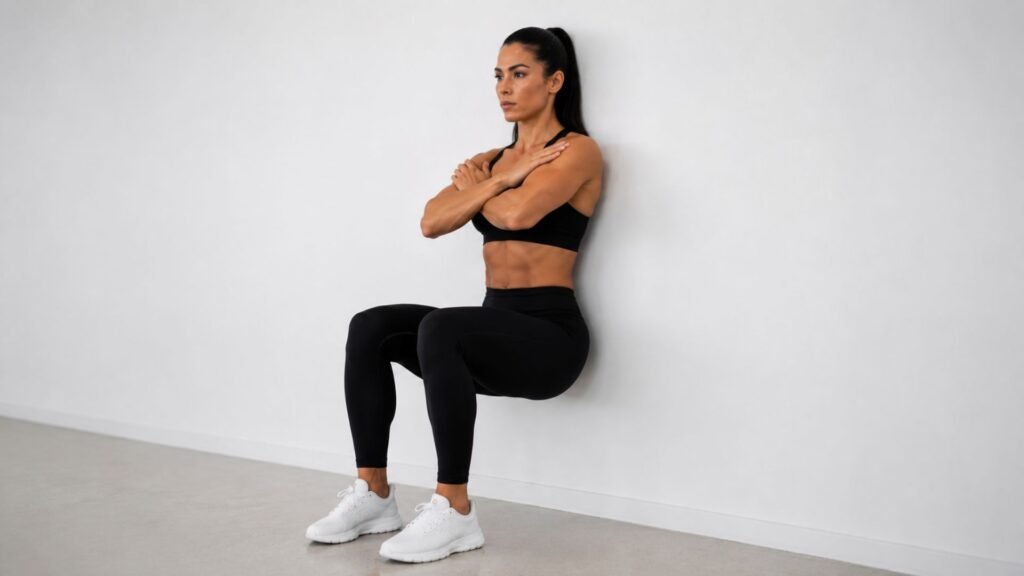
The Wall Squat Hold is an isometric lower-body exercise where you hold a seated squat position against a wall. It builds strength and endurance in the legs without requiring any equipment.
How to do it
Stand with your back flat against a wall and your feet shoulder-width apart. Slide down until your knees are bent at a 90-degree angle and your thighs are parallel to the floor. Keep your back against the wall, cross your arms over your chest, and hold the position while breathing steadily.
Time/Reps
- Hold for 30–60 seconds
- Repeat for 2–3 sets
Benefits
- Strengthens the quadriceps, glutes, and calves.
- Improves lower-body endurance and stability.
- Enhances core strength and posture.
Wall Bridge
What it is
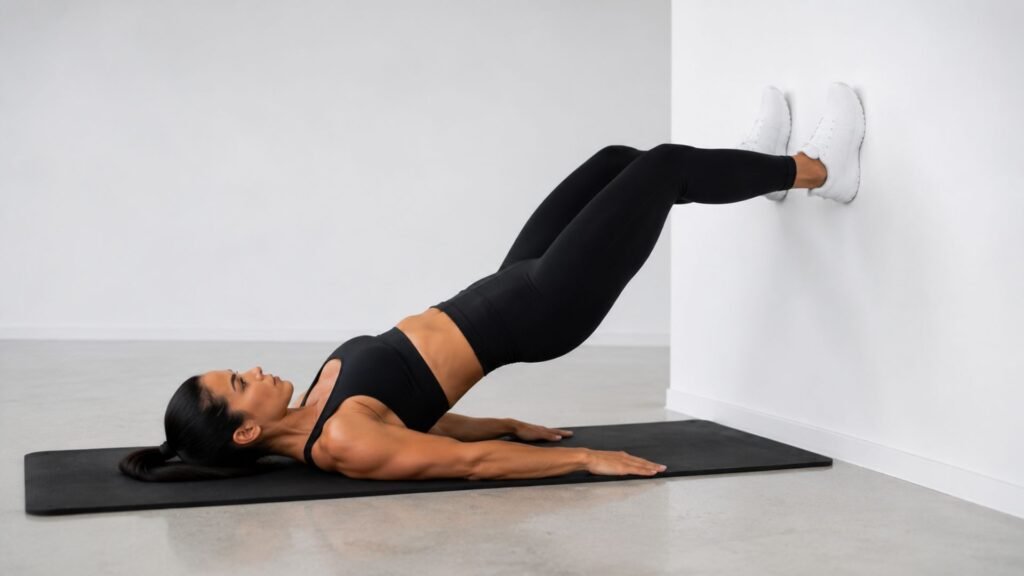
The Wall Bridge is a glute-strengthening exercise performed with your feet pressed against a wall. It targets the glutes, hamstrings, and core while improving hip stability and lower-body control.
How to do it
Lie on your back with your feet flat against a wall and your knees bent. Place your arms by your sides. Press your feet into the wall and lift your hips until your body forms a straight line from your shoulders to your knees. Squeeze your glutes at the top, then slowly lower back down with control.
Time/Reps
- 12–15 reps × 3 sets
- Rest 30–45 seconds between sets.
Benefits
- Strengthens the glutes, hamstrings, and core.
- Improves hip stability and lower-body strength.
- Enhances posture and pelvic control.
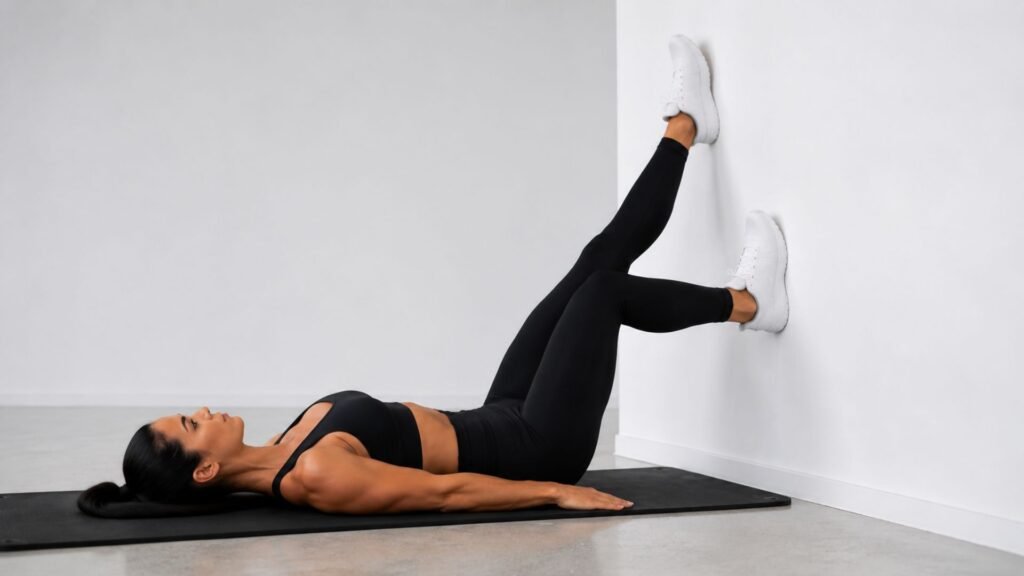
Wall Leg Slides
What it is
Wall Leg Slides are a low-impact exercise that improves hip mobility, core stability, and leg control. Performed with your feet against a wall, this movement helps strengthen the lower body while promoting smooth, controlled motion.
How to do it
Lie on your back with both feet flat against a wall and your knees bent. Tighten your core and keep your lower back supported on the mat. Slowly slide one foot upward along the wall until the leg is nearly straight, then return to the starting position. Repeat with the opposite leg while maintaining steady, controlled movements.
Time/Reps
- 10–12 reps per leg × 2–3 sets
- Rest 30–45 seconds between sets.
Benefits
- Improves hip mobility and flexibility.
- Strengthens the core, glutes, and leg muscles.
- Enhances balance, coordination, and lower-body control.
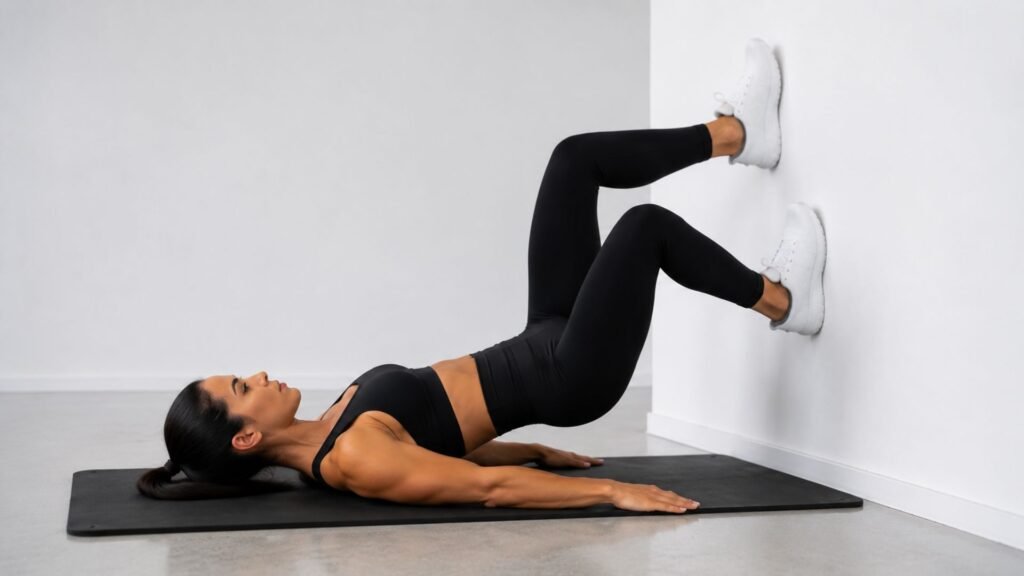
Wall March
What it is
Wall March is a controlled bodyweight exercise that improves core stability, hip strength, and lower-body coordination. Using a wall for support helps maintain proper alignment throughout the movement.
How to do it
Lie on your back on a yoga mat with both feet pressed against a wall. Engage your core and keep your hips steady. Lift one knee toward your chest while the other foot stays firmly on the wall. Return to the starting position and alternate legs in a slow, controlled marching motion.
Time/Reps
- 10–15 reps per leg × 2–3 sets
- Rest 30–45 seconds between sets.
Benefits
- Strengthens the core and hip muscles.
- Improves balance, stability, and body control.
- Enhances coordination and lower-body movement patterns.
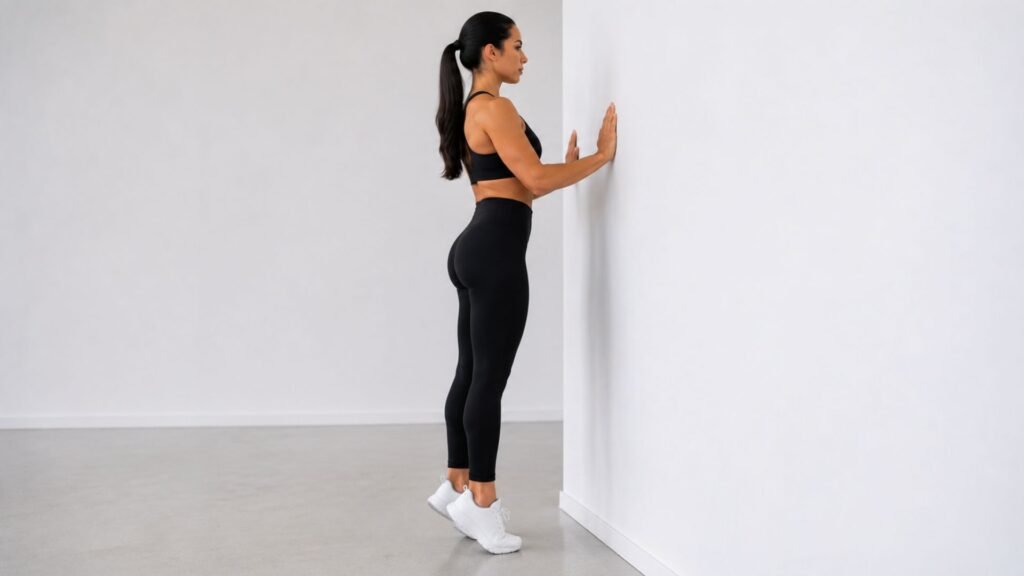
Wall Heel Raises
What it is
Wall Heel Raises are a simple lower-body exercise that strengthens the calf muscles and improves ankle stability. The wall provides light support to help maintain balance during the movement.
How to do it
Stand facing a wall and lightly place your hands on it for support. Keep your feet hip-width apart and your body upright. Slowly raise your heels until you are standing on your tiptoes, pause briefly, then lower your heels back to the floor with control.
Time/Reps
- 15–20 reps × 2–3 sets
- Rest 30–45 seconds between sets.
Benefits
- Strengthens the calves and ankles.
- Improves balance and lower-leg stability.
- Enhances walking, running, and jumping performance.
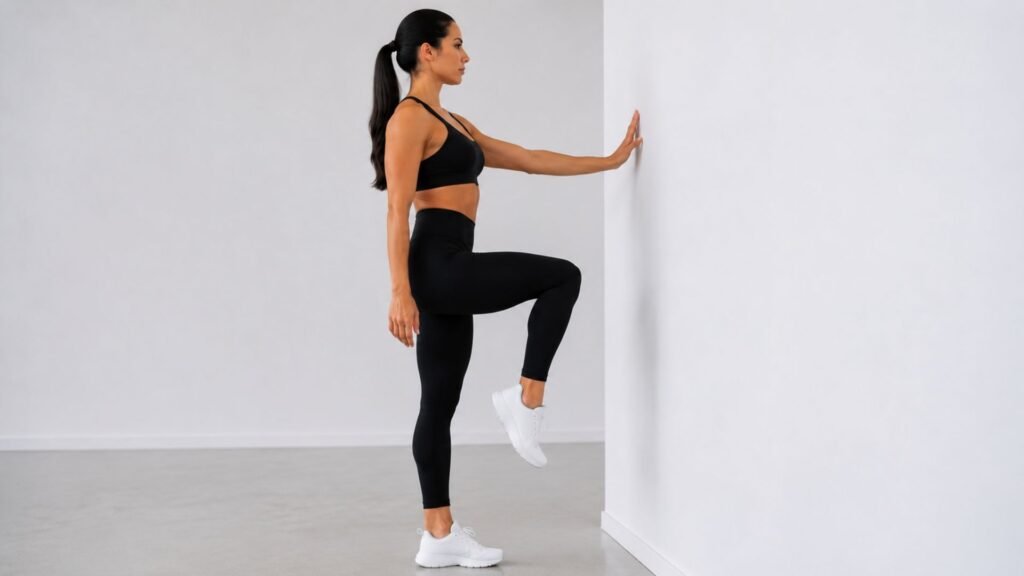
Wall Single-Leg Balance
What it is
Wall Single-Leg Balance is a stability exercise that improves balance, coordination, and lower-body strength. Light wall support makes it suitable for beginners while helping develop better body control.
How to do it
Stand beside a wall and lightly touch it with your fingertips for balance. Shift your weight onto one foot and lift the opposite knee to hip height. Keep your core engaged, maintain an upright posture, and hold the position before switching to the other leg.
Time/Reps
- Hold for 20–30 seconds per leg × 2–3 sets
- Rest 20–30 seconds between sets.
Benefits
- Improves balance and single-leg stability.
- Strengthens the ankles, legs, and core muscles.
- Enhances coordination and overall body control.
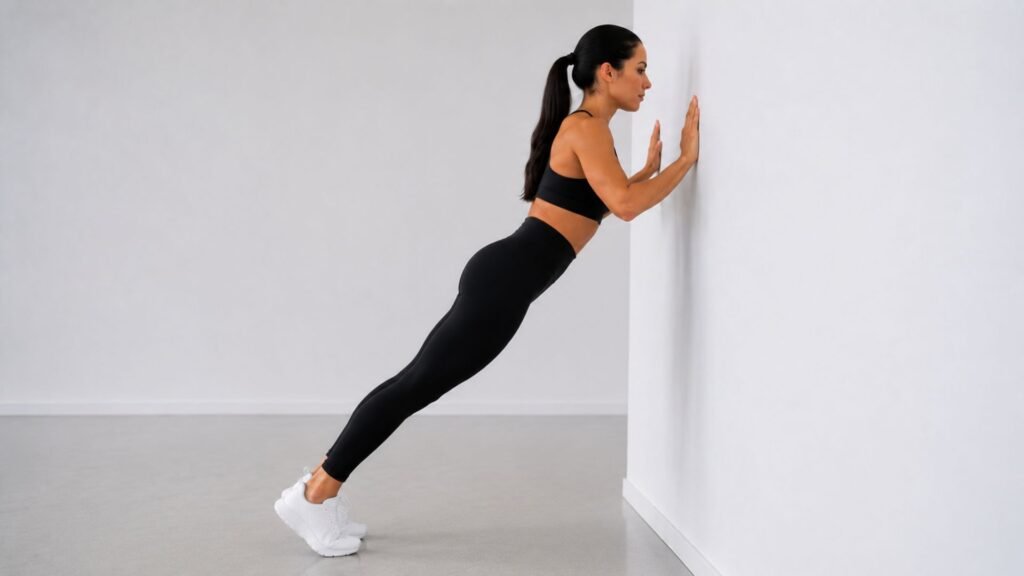
Wall Push-Ups
What it is
Wall Push-Ups are a beginner-friendly upper-body exercise performed against a wall. They help build strength in the chest, shoulders, and arms while placing less stress on the wrists and joints than traditional push-ups.
How to do it
Stand facing a wall with your hands placed shoulder-width apart. Keep your body in a straight line from head to heels. Bend your elbows to bring your chest toward the wall, then push through your palms to return to the starting position. Keep your core engaged throughout the movement.
Time/Reps
- 12–15 reps × 2–3 sets
- Rest 30–45 seconds between sets.
Benefits
- Strengthens the chest, shoulders, and triceps.
- Improves upper-body stability and posture.
- Builds pushing strength with low impact on the joints.
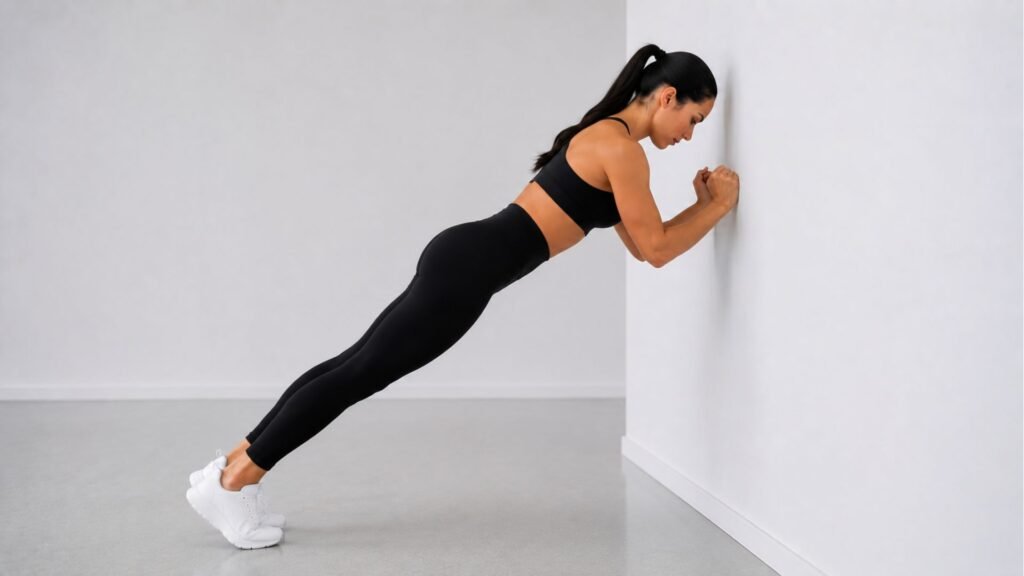
Wall Plank
What it is
Wall Plank is a beginner-friendly core exercise performed with your forearms against a wall. It helps improve core stability, posture, and upper-body strength while placing less pressure on the wrists than a floor plank.
How to do it
Stand facing a wall and place your forearms on it with your elbows directly below your shoulders. Step your feet back until your body forms a straight line from head to heels. Tighten your core, keep your hips level, and hold the position while breathing normally.
Time/Reps
- Hold for 20–40 seconds × 2–3 sets
- Rest 30–45 seconds between sets.
Benefits
- Strengthens the core, shoulders, and upper back.
- Improves posture, balance, and body stability.
- A low-impact plank variation suitable for beginners and recovery workouts.
15-Minute Beginner Wall Pilates Routine
| Exercise | Time |
|---|---|
| Wall Roll Down | 2 min |
| Wall Squat Hold | 2 min |
| Wall Bridge | 2 min |
| Wall Leg Slides | 2 min |
| Wall March | 2 min |
| Wall Heel Raises | 2 min |
| Wall Stretch | 3 min |
Beginner Tips for Better Results
- Move slowly and with control
- Focus on breathing
- Keep your core engaged
- Don’t rush the exercises
- Practice 3–4 times a week
Common Mistakes to Avoid
- Standing too far from the wall
- Holding your breath
- Arching your lower back
- Rushing through movements
- Skipping warm-up
Frequently Asked Questions
Is Wall Pilates good for beginners?
Yes, Wall Pilates is ideal for beginners since the wall provides extra support and stability, making it easier to learn proper form.
Can I lose weight with Wall Pilates?
Yes, when combined with a balanced diet, regular Wall Pilates sessions can help burn calories and support gradual weight loss.
How often should beginners do Wall Pilates?
3–4 sessions a week are enough to build strength and flexibility while allowing your body time to recover.
Do I need any equipment?
No, all you need is a clear wall space and a mat — no special equipment is required.