8 Low-Impact Exercises for Weight Loss: A Complete At-Home Guide for Women
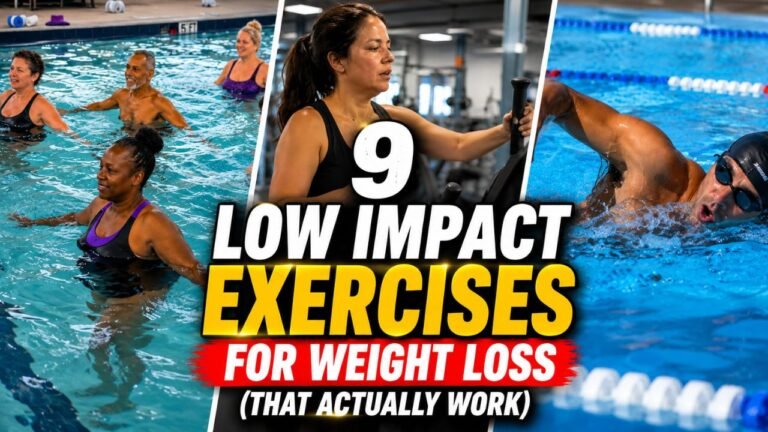
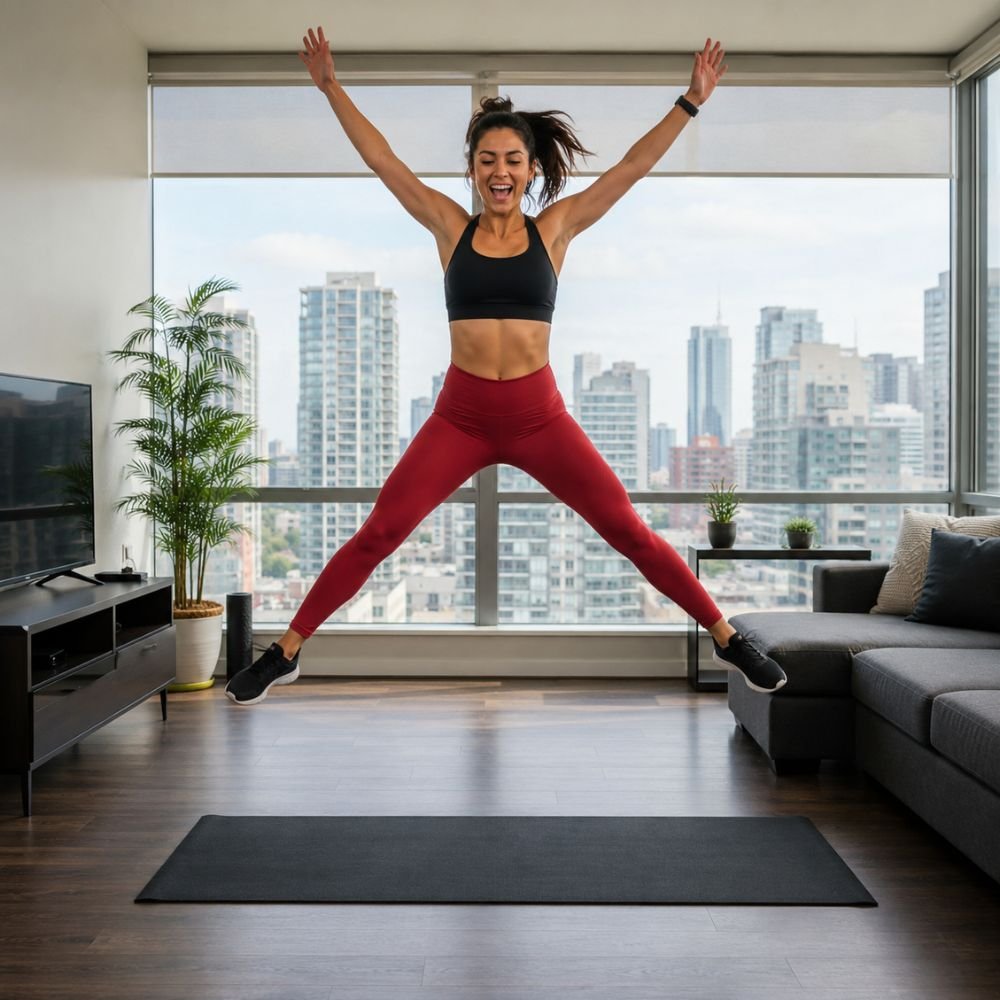
Low impact” often gets misread as “low effort,” but that’s not what the research actually shows. Low-impact exercise simply means movements that avoid hard, jarring stress on your joints — no jumping, no pounding while still raising your heart rate and building real muscle. For women dealing with joint pain, returning to exercise after time off, managing a higher body weight, or just wanting a sustainable routine that doesn’t leave knees and hips aching the next day, low-impact training isn’t a compromise. Done consistently, it’s genuinely effective for weight loss.
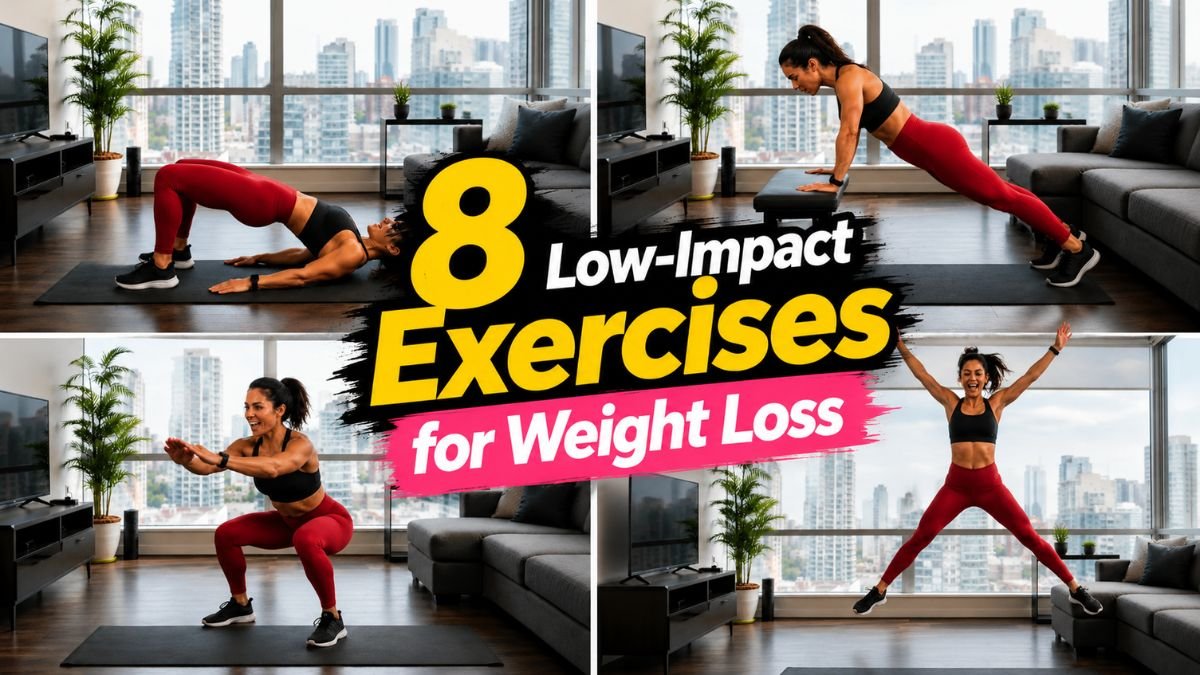
This guide covers 8 low-impact exercises you can do at home, with no gym required, along with what each one targets, how long or how many reps to aim for, and simple form tips to get the most out of every session.
Why Low-Impact Training Works for Weight Loss
A few things make low-impact exercise a legitimate weight-loss strategy, not just a gentler alternative:
- It’s sustainable. The exercise that burns the most calories on paper is worthless if joint pain or exhaustion makes you quit after a week. Low-impact training is easier to sustain long-term, and consistency is what actually drives results.
- It still builds calorie-burning muscle. Strength-based low-impact moves like squats and glute bridges build muscle, which raises your resting metabolic rate — meaning you burn more calories even outside of exercise.
- It supports better breathing and fat metabolism. With less physical strain, the body has more oxygen available for the metabolic processes that burn fat for fuel, compared to high-intensity efforts where you’re gasping for breath.
- It protects your joints for the long run. This matters especially for anyone managing extra body weight, arthritis, or a previous injury — the goal is to keep moving for years, not to push through pain for a few weeks and then stop.
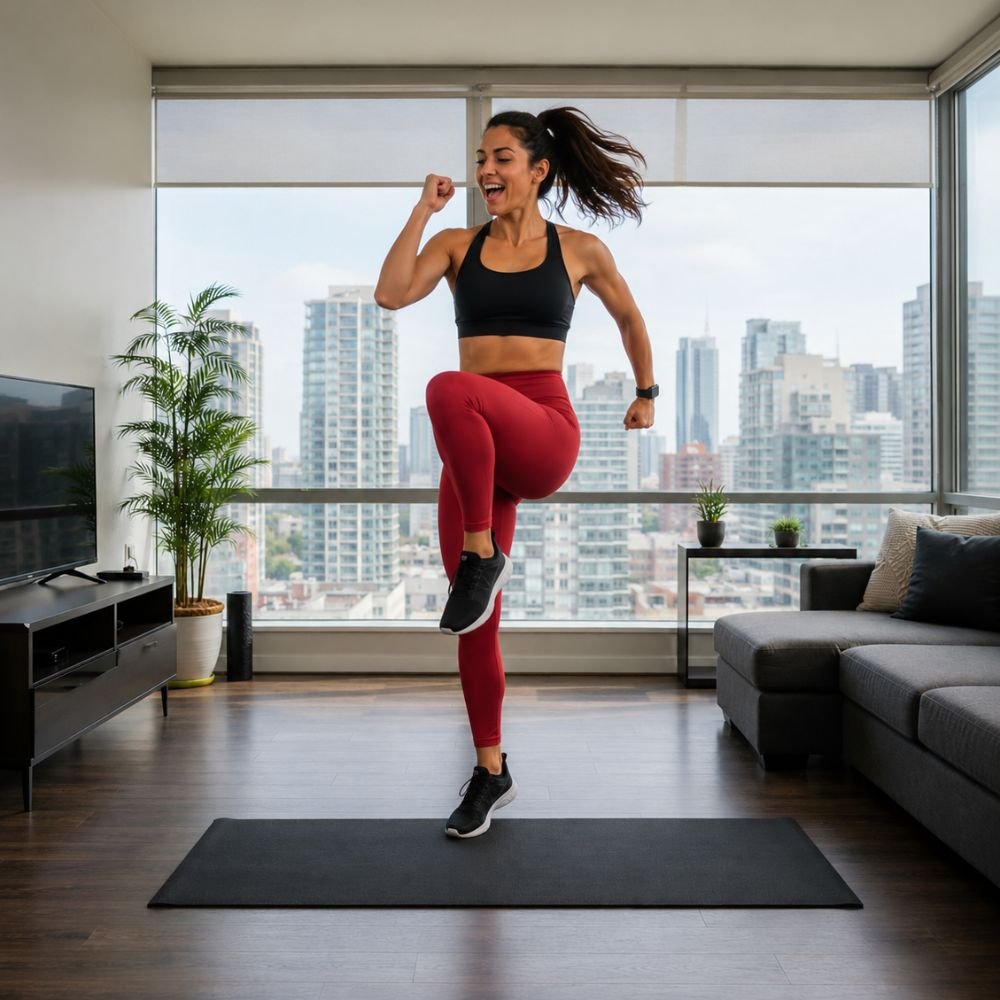
1. Brisk Walking or Marching in Place
Walking is one of the most consistently supported exercises for fat loss in research, including studies specifically on women. If outdoor walking isn’t convenient, marching in place at home delivers a similar low-impact cardio effect.
| Detail | Info |
|---|---|
| Target area | Full body, cardiovascular system |
| Approx. calories burned | 150–300 per 30 minutes, depending on pace |
| Duration | 20–30 minutes |
| Equipment | None (optional light hand weights for added intensity) |
| Form tip | Keep your pace brisk enough that talking is still possible but slightly effortful |
2. Bodyweight Squats
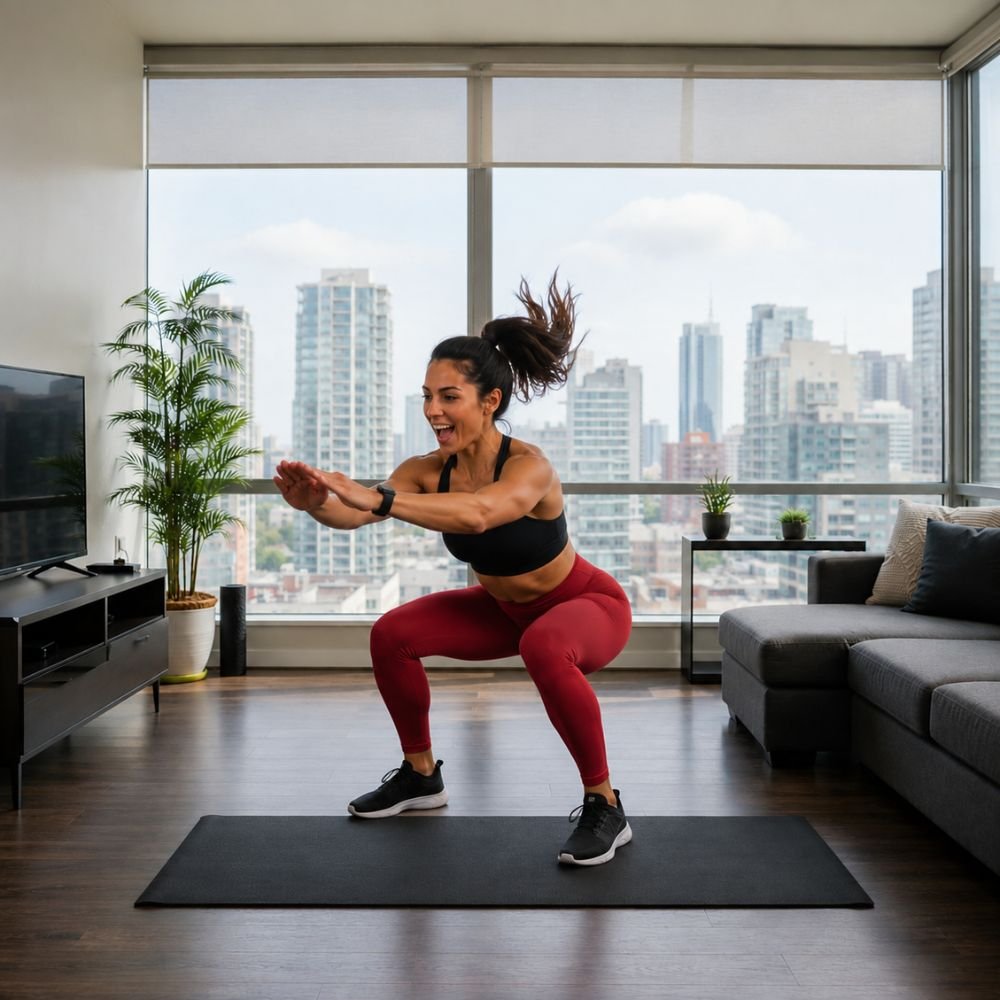
One of the most effective lower-body strength moves available without equipment, squats build muscle in the legs and glutes, which directly supports a higher resting metabolism.
| Detail | Info |
|---|---|
| Target area | Quads, glutes, hamstrings, core |
| Approx. calories burned | 100–150 per 15 minutes of continuous sets |
| Duration/Reps | 3 sets x 12–15 reps |
| Equipment | None (or hold light dumbbells for added resistance) |
| Form tip | Keep your weight in your heels and your knees tracking over your toes, lowering only as far as comfortable |
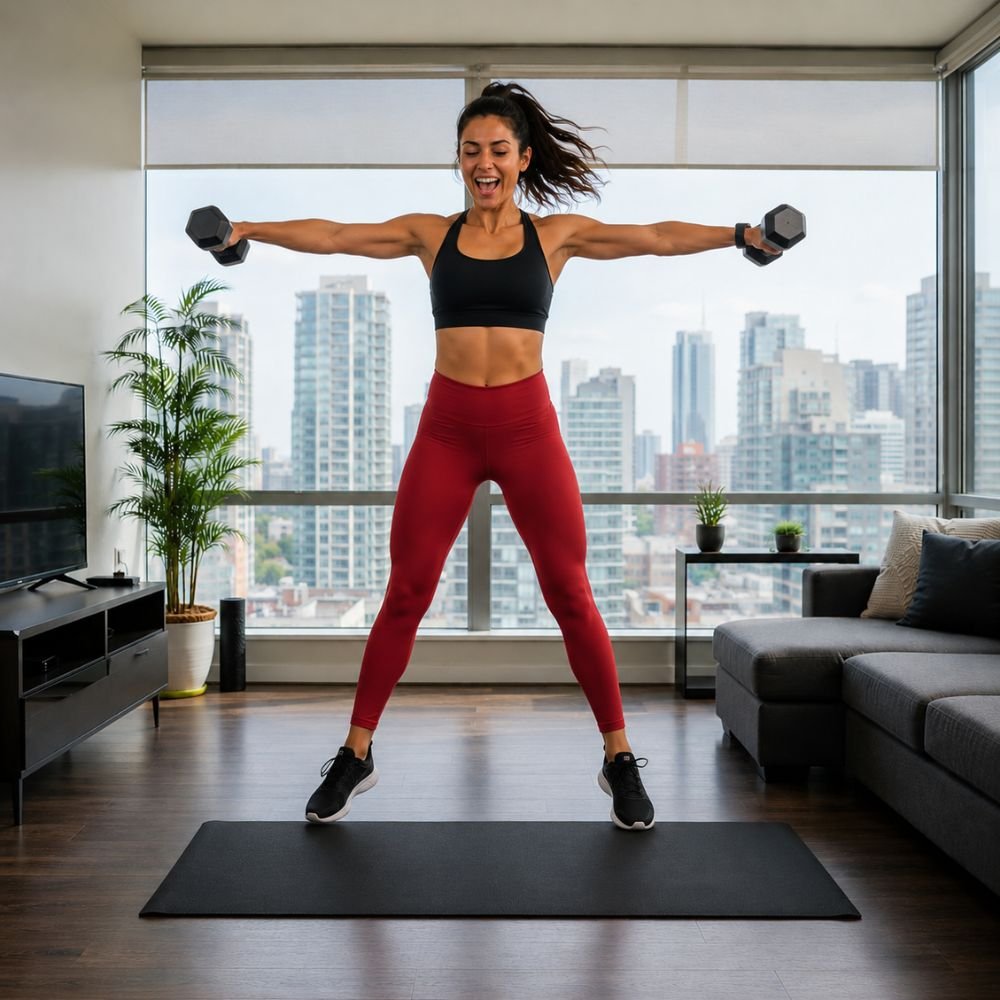
3. Standing Dumbbell Exercises (Lateral Raises, Curls, Presses)
Simple standing movements with light dumbbells — lateral raises, bicep curls, overhead presses — build upper-body muscle without any joint-jarring impact, and are easy to do in a small space at home.
| Detail | Info |
|---|---|
| Target area | Shoulders, arms, upper back |
| Approx. calories burned | 100–150 per 20-minute circuit |
| Duration/Reps | 3 sets x 10–12 reps per movement |
| Equipment | Light to moderate dumbbells (start with 2–5 lbs if new to strength training) |
| Form tip | Move slowly and with control rather than swinging the weights using momentum |
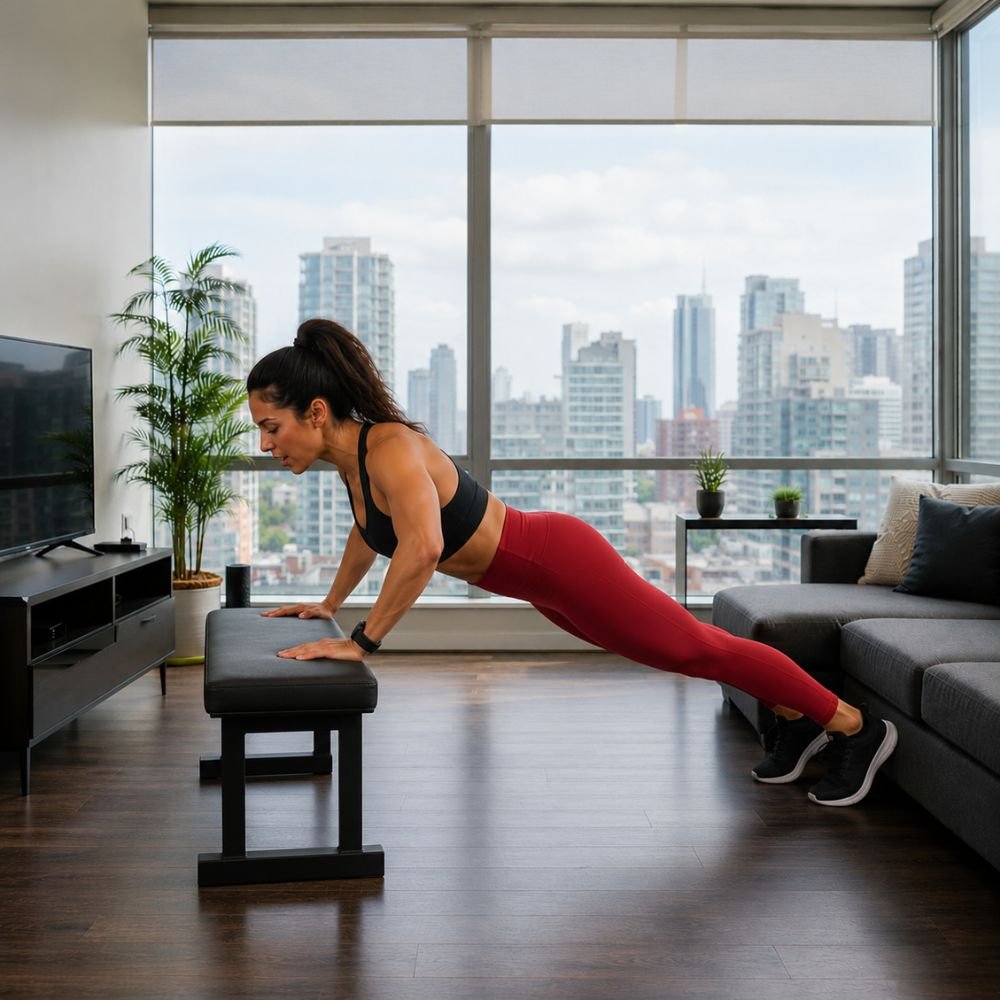
4. Wall or Incline Push-Ups
A joint-friendly variation of a classic strength move, wall or incline push-ups (hands on a sturdy table or counter) build upper-body and core strength without the wrist and shoulder strain of full floor push-ups.
| Detail | Info |
|---|---|
| Target area | Chest, shoulders, triceps, core |
| Approx. calories burned | 80–100 per 15 minutes |
| Duration/Reps | 3 sets x 10–15 reps |
| Equipment | A wall or sturdy elevated surface |
| Form tip | Keep your body in a straight line from head to heels rather than letting your hips sag |
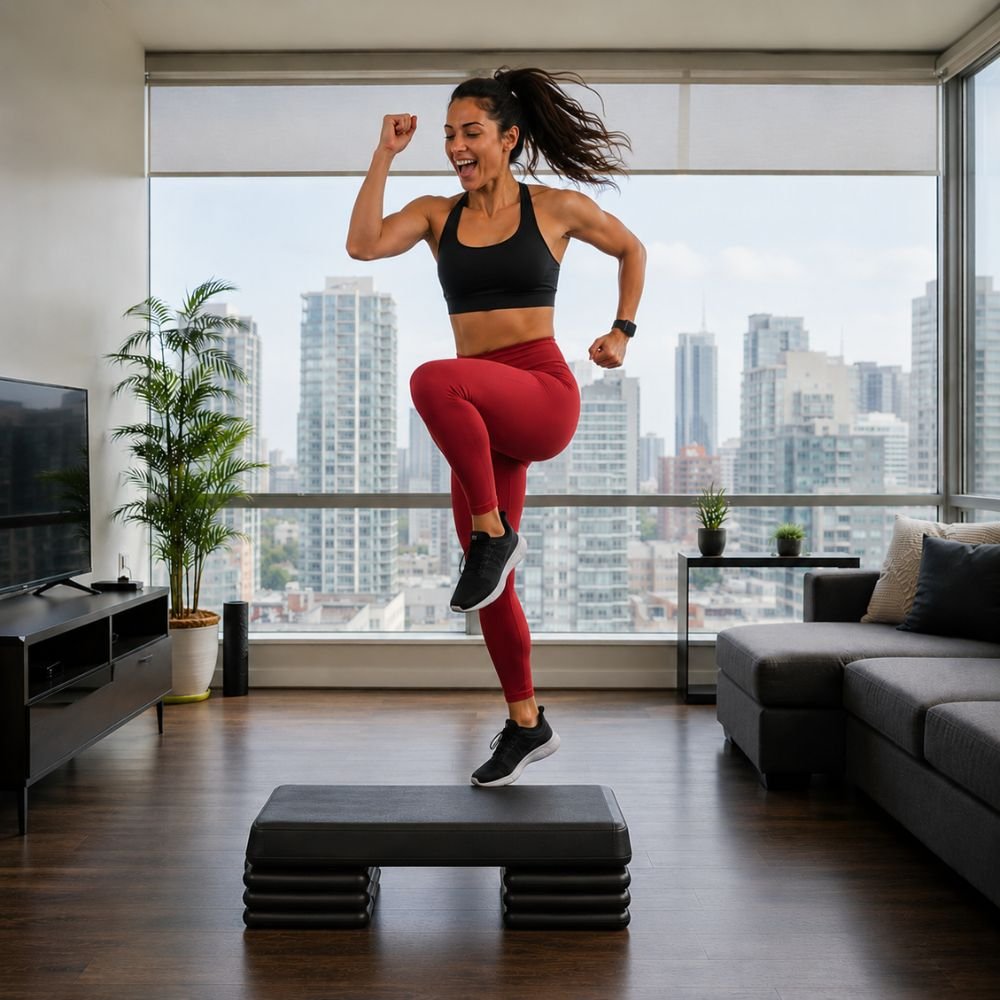
5. Step-Ups
Using a staircase step or a sturdy, low platform, step-ups combine cardio with lower-body strength work, and the intensity is easy to control simply by adjusting your pace.
| Detail | Info |
|---|---|
| Target area | Glutes, quads, calves |
| Approx. calories burned | 150–200 per 20 minutes |
| Duration/Reps | 3 sets x 10–12 reps per leg |
| Equipment | A stair step or sturdy platform 6–12 inches high |
| Form tip | Press through your whole foot on the step rather than pushing off with your trailing leg |
6. Glute Bridges
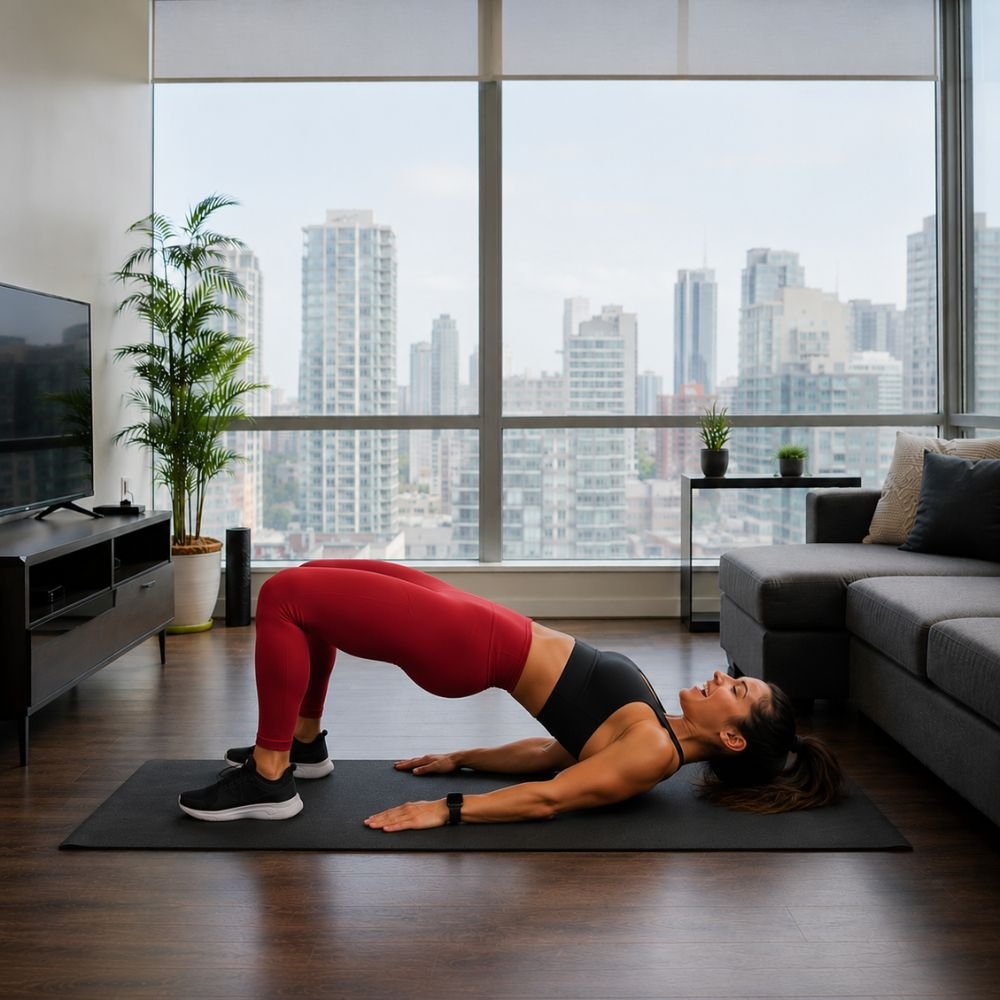
A floor-based exercise that isolates the glutes and hamstrings, glute bridges are gentle on the knees and lower back while still delivering real strength gains.
| Detail | Info |
|---|---|
| Target area | Glutes, hamstrings, core |
| Approx. calories burned | 80–120 per 15 minutes |
| Duration/Reps | 3 sets x 15 reps |
| Equipment | None (or a dumbbell across the hips for added resistance) |
| Form tip | Squeeze your glutes at the top of the movement instead of overarching your lower back |
7. Standing Side Leg Lifts
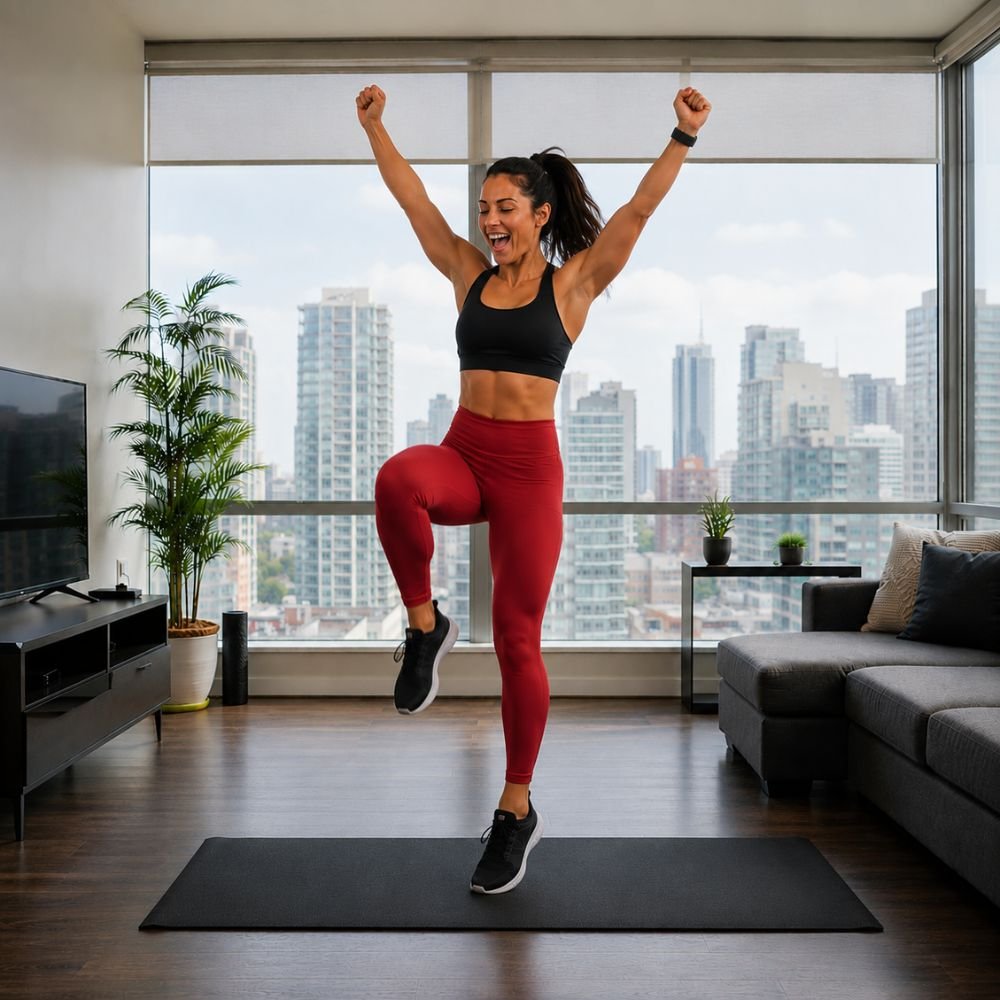
A simple, low-impact way to target the outer hips and glutes — an area that’s often missed by squats and lunges alone — while also improving balance.
| Detail | Info |
|---|---|
| Target area | Outer hips, glutes (gluteus medius) |
| Approx. calories burned | 60–100 per 15 minutes |
| Duration/Reps | 3 sets x 12–15 reps per leg |
| Equipment | None (hold onto a wall or chair for balance if needed) |
| Form tip | Keep your torso upright and lift with control rather than swinging your leg for momentum |
8. Pilates-Based Core Work
Slow, controlled Pilates-style movements — like standing or floor-based core exercises focused on breath and control — build deep core strength without any high-impact strain, and they’re widely recommended as an accessible entry point into structured exercise.
| Detail | Info |
|---|---|
| Target area | Deep core, obliques, posture-supporting muscles |
| Approx. calories burned | 100–150 per 20 minutes |
| Duration | 15–20 minutes |
| Equipment | None (a mat is helpful for floor-based moves) |
| Form tip | Prioritize slow, controlled movement paired with steady breathing over speed or repetition count |
Sample 30-Minute Low-Impact Home Routine
| Order | Exercise | Duration/Reps |
|---|---|---|
| 1 | Marching in place (warm-up) | 3 minutes |
| 2 | Bodyweight squats | 3 sets x 12–15 |
| 3 | Standing dumbbell lateral raises | 3 sets x 10–12 |
| 4 | Wall push-ups | 3 sets x 10–15 |
| 5 | Step-ups | 3 sets x 10–12 per leg |
| 6 | Glute bridges | 3 sets x 15 |
| 7 | Standing side leg lifts | 3 sets x 12–15 per leg |
| 8 | Pilates-based core work (cool-down) | 5 minutes |
Making Low-Impact Training Actually Work for Weight Loss
- Consistency beats intensity. Three to five sessions a week of moderate, low-impact movement will outperform one exhausting workout followed by days of soreness and avoidance.
- Add resistance gradually. As bodyweight movements start to feel easy, adding light dumbbells or resistance bands keeps progress moving without adding joint impact.
- Pair exercise with a balanced diet. Exercise alone, low-impact or otherwise, is only part of the weight-loss equation — a modest, sustainable calorie deficit through diet is what drives most of the actual results.
- Track how you feel, not just the scale. Improved energy, better sleep, and increased strength are all signs the routine is working, even on weeks when the scale doesn’t move much.
Final Thoughts
Low-impact doesn’t mean low results — it means training in a way your body can sustain for months and years instead of days and weeks. These eight exercises, done consistently and paired with a reasonable diet, can genuinely support weight loss while protecting your joints along the way. Start with two or three that feel manageable, build up gradually, and let consistency do what any single “best” exercise never could on its own.