
Top 12 Upper Body Dumbbell Workouts You Can Do At Home: The Complete Guide
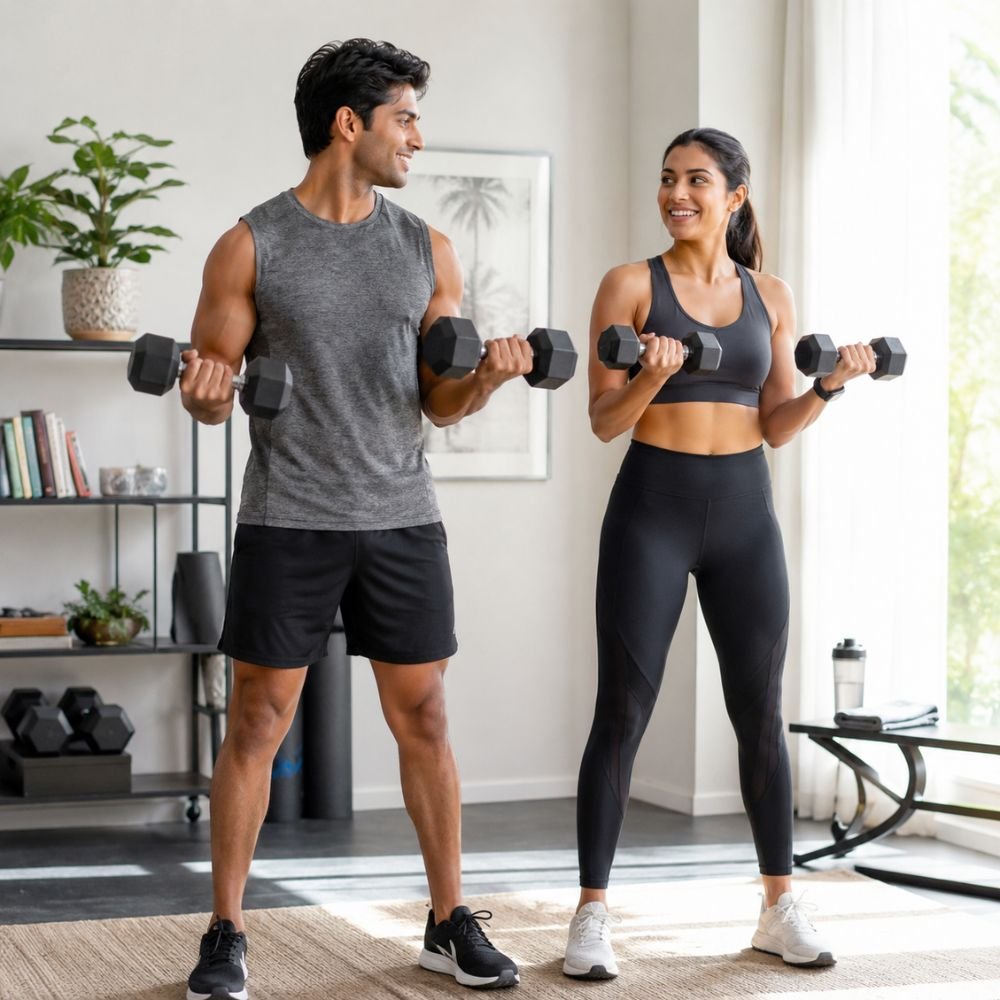
Not everyone can make it to the gym every day — time constraints, expensive memberships, or simply a preference for training at home all get in the way. The good news is that with just one pair of dumbbells, you can train your entire upper body (chest, shoulders, back, biceps, triceps) extremely effectively. This article is written from a practical, form-first angle — not just a list of exercises, but also how to choose the right weight, proper technique, common mistakes, and a full weekly schedule, so it’s something you can actually use.
Why Dumbbell Workouts At Home Actually Work
- Minimal space, maximum results — a small room is enough.
- Joint-friendly movement — dumbbells allow a natural range of motion, putting less stress on the shoulders and wrists compared to a barbell.
- Fixes muscle imbalances — each arm works independently, so weakness on one side can’t hide behind the stronger side.
- Easy progressive overload — you can start light and gradually increase weight as you get stronger.
Why Warming Up Matters
Before any upper body session, spend 5–8 minutes warming up (arm circles, shoulder rotations, light push-ups, jumping jacks). This lowers injury risk and helps the muscles activate properly before you load them.
How To Choose The Right Dumbbell Weight
| Experience Level | Men (Women) — Bicep/Shoulder Moves | Men (Women) — Chest/Back Moves | How To Tell |
|---|---|---|---|
| Beginner | 2–5 kg (1–3 kg) | 4–8 kg (2–5 kg) | The last 2 reps should feel mildly challenging |
| Intermediate | 6–10 kg (3–6 kg) | 8–15 kg (5–10 kg) | You feel fatigued by reps 8–12 without breaking form |
| Advanced | 10 kg+ (6 kg+) | 15 kg+ (10 kg+) | Only the last 1–2 reps are genuinely hard to complete |
Note: These are general guidelines — everyone’s strength differs. Never sacrifice form just to lift heavier.
Top 12 Upper Body Dumbbell Exercises — At A Glance
| No. | Exercise | Primary Muscle | Sets x Reps | Level |
|---|---|---|---|---|
| 1 | Dumbbell Floor Press | Chest | 3 x 10–12 | Beginner |
| 2 | Dumbbell Floor Fly | Chest (outer) | 3 x 12–15 | Beginner |
| 3 | Dumbbell Shoulder Press | Shoulders (front/side) | 3 x 8–10 | Intermediate |
| 4 | Dumbbell Lateral Raise | Shoulders (side delt) | 3 x 12–15 | Beginner |
| 5 | Dumbbell Front Raise | Shoulders (front delt) | 3 x 12 | Beginner |
| 6 | Bent-Over Dumbbell Row | Upper back | 3 x 10–12 | Intermediate |
| 7 | Single-Arm Dumbbell Row | Back (lats) | 3 x 10 per side | Intermediate |
| 8 | Dumbbell Pullover | Chest + lats | 3 x 10–12 | Intermediate |
| 9 | Dumbbell Bicep Curl | Biceps | 3 x 10–12 | Beginner |
| 10 | Hammer Curl | Biceps + forearms | 3 x 10–12 | Beginner |
| 11 | Overhead Triceps Extension | Triceps | 3 x 10–12 | Intermediate |
| 12 | Dumbbell Kickback | Triceps | 3 x 12–15 | Beginner |
Exercise-By-Exercise Breakdown
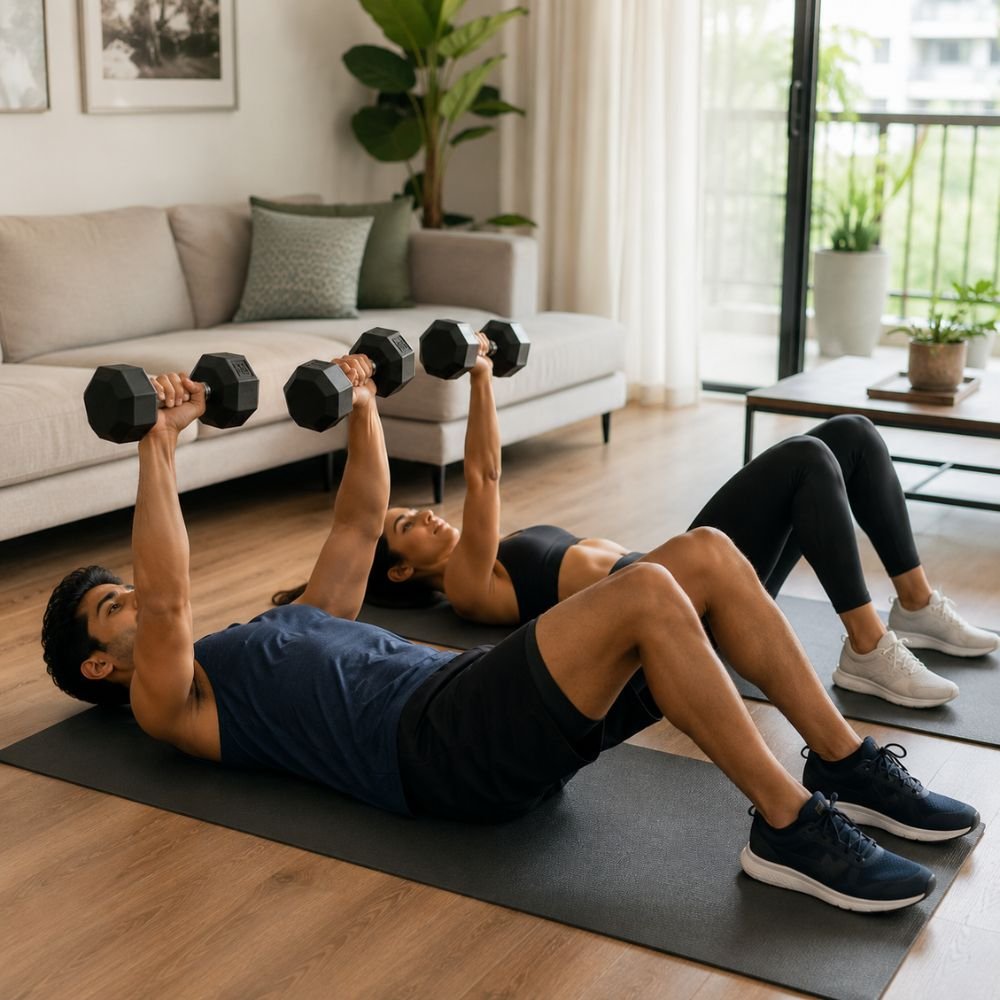
1. Dumbbell Floor Press (Chest)
Lie on your back on the floor with knees bent. Hold a dumbbell in each hand with elbows at roughly a 45° angle, press straight up, then lower slowly until your elbows lightly touch the floor.
- Tip: Keep your shoulders relaxed on the way down — don’t let the dumbbells drop or bounce.
2. Dumbbell Floor Fly (Chest)
Lying down, open your arms out to the sides with a slight bend in the elbows (like a reverse hug), then bring them back together above your chest.
- Tip: Keep a slight bend in the elbows throughout to protect the shoulder joint.
3. Dumbbell Shoulder Press (Shoulders)

Standing or seated, bring the dumbbells up to shoulder height and press straight overhead, then lower with control.
- Tip: Don’t arch your lower back — keep your core braced.
4. Dumbbell Lateral Raise (Side Shoulders)
Using a light weight, raise your arms out to the sides up to shoulder level, then lower slowly.
- Tip: Avoid swinging or using momentum; a slow, controlled movement is far more effective.
5. Dumbbell Front Raise (Front Shoulders)
Raise the dumbbells straight out in front of you to shoulder height, then lower back down.
- Tip: You can alternate one arm at a time to keep your core stable.
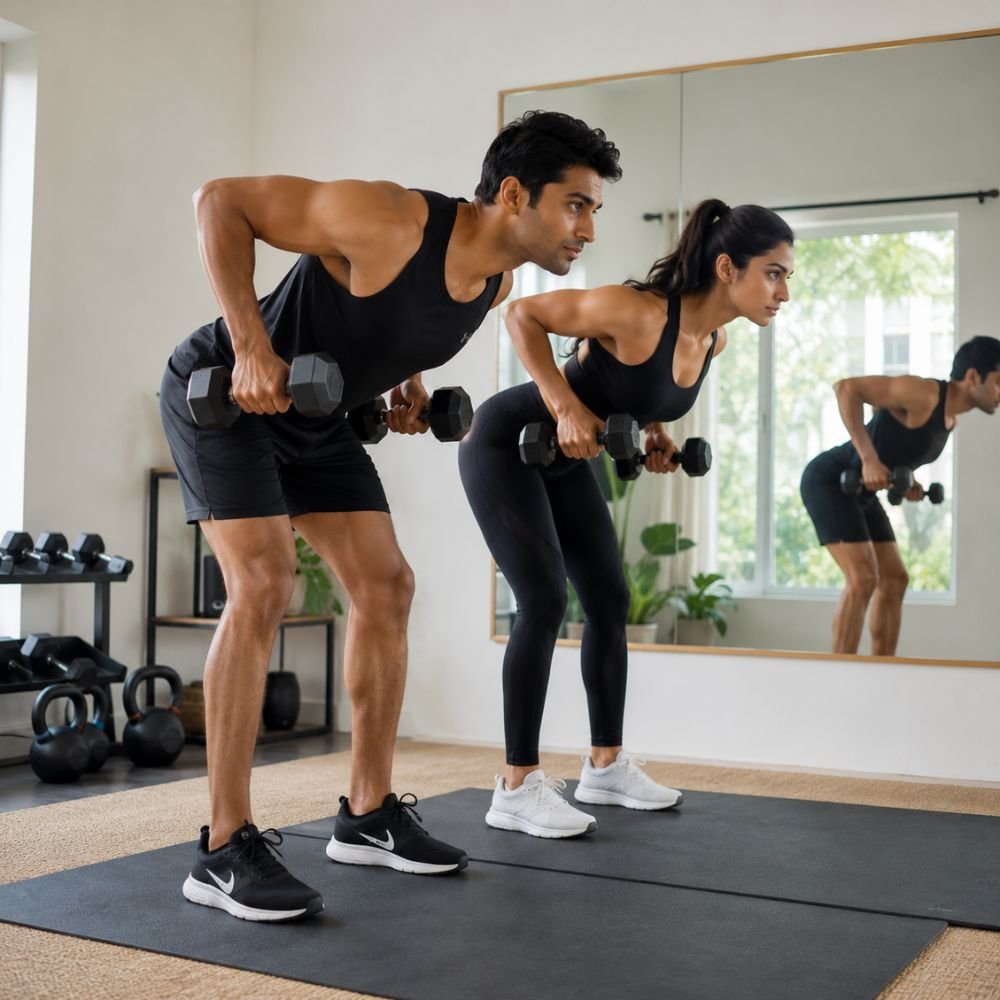
6. Bent-Over Dumbbell Row (Back)
Hinge forward slightly at the hips with a flat back, and pull the dumbbells toward your waist by bending the elbows.
- Tip: Don’t round your back — this is the single most common mistake with this exercise.
7. Single-Arm Dumbbell Row (Back)
Place one hand and knee on a bench or chair for support, and row the dumbbell in your other hand toward your waist.
- Tip: Keep the elbow close to your body and avoid twisting the wrist.
8. Dumbbell Pullover (Chest + Lats)
Lying on your back, hold one dumbbell with both hands and lower it behind your head, then bring it back over your chest.
- Tip: Move slowly and focus on feeling a good stretch through the shoulders and lats.
9. Dumbbell Bicep Curl (Biceps)
Keeping your elbows tucked close to your body, curl the dumbbells up to shoulder height, then lower slowly.
- Tip: Don’t swing your body for momentum — let the biceps do all the work.
10. Hammer Curl (Biceps + Forearms)
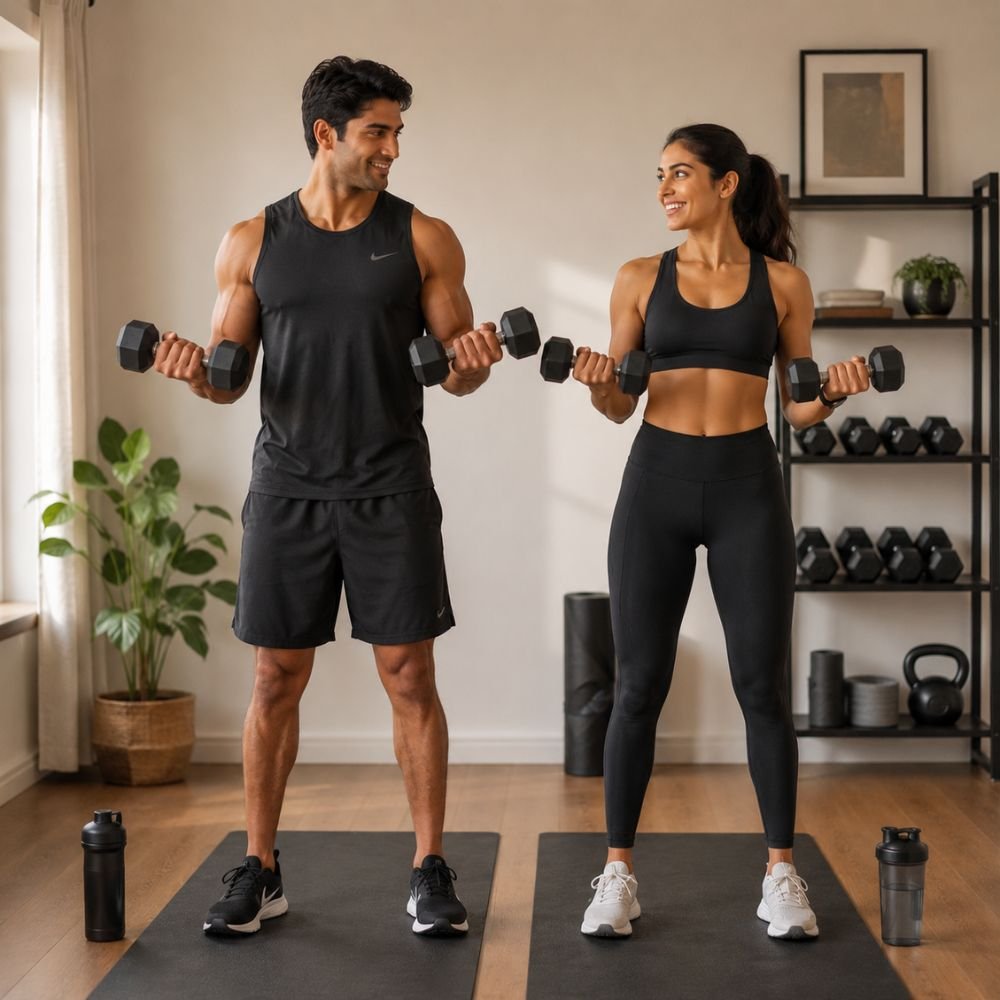
Hold the dumbbells vertically (palms facing inward) and curl them up.
- Tip: This variation also builds forearm and grip strength.
11. Overhead Triceps Extension (Triceps)
Hold one dumbbell with both hands overhead, bend your elbows to lower it behind your head, then extend back up.
- Tip: Keep your elbows fixed in place — only the forearms should move.
12. Dumbbell Kickback (Triceps)
Hinge forward, keep the elbow pinned to your side, and extend the dumbbell straight back.
- Tip: Keep your wrist neutral and avoid moving the elbow.
Common Mistakes And How To Fix Them
| Mistake | Effect | Correct Approach |
|---|---|---|
| Lifting too heavy | Breaks form, raises injury risk | Choose a weight that allows 8–12 clean reps |
| Using momentum/jerky reps | Reduces tension on the target muscle | Keep the movement slow and controlled |
| Holding your breath | Dizziness or blood pressure spikes | Exhale on the lift, inhale on the lower |
| Skipping warm-up | Muscle strain / injury | Always warm up for 5–8 minutes before training |
| Training the same muscle daily | Poor recovery | Give each muscle group at least 48 hours of rest |

Sample One-Week Upper Body Schedule
| Day | Focus |
|---|---|
| Monday | Chest + Triceps (Exercises 1, 2, 8, 11, 12) |
| Tuesday | Rest or light cardio |
| Wednesday | Shoulders + Back (Exercises 3, 4, 5, 6, 7) |
| Thursday | Rest |
| Friday | Biceps + full upper-body repeat (Exercises 9, 10 + any 3 from earlier) |
| Saturday/Sunday | Rest or stretching |
Diet And Recovery Tips
- Aim for roughly 1.2–1.6 grams of protein per kg of body weight to support proper muscle recovery.
- Have a light protein + carb snack within 30–45 minutes after your workout.
- 7–8 hours of sleep is just as important for muscle growth as the workout itself.
- Stay well hydrated — dehydration affects both performance and recovery.

Important Safety Notes
- Always start with lighter weights and prioritize form over load.
- If you feel sharp pain in any joint, stop the exercise immediately.
- Train on a flat, non-slip surface.
- If you have a pre-existing injury or medical condition, consult a doctor or physiotherapist before starting.
Conclusion
With just one pair of dumbbells at home, it’s entirely possible to train your upper body effectively — as long as you focus on correct form, appropriate weight selection, and consistency. Following the 12 exercises, schedule, and diet tips above, you should notice a clear difference within 6–8 weeks.
Frequently Asked Questions (FAQ)
Q1. Can dumbbells alone build a good upper body? Yes — with proper progressive overload and consistency, this is completely achievable.
Q2. How often should I train upper body in a week? For beginners, 2–3 times a week is ideal, with at least 48 hours between sessions.
Q3. How long before I see results? With consistent training and proper diet, most people start noticing strength and muscle tone changes within 4–8 weeks.
Q4. Can women do the same exercises? Absolutely — just start with slightly lighter weights; everything else stays the same.