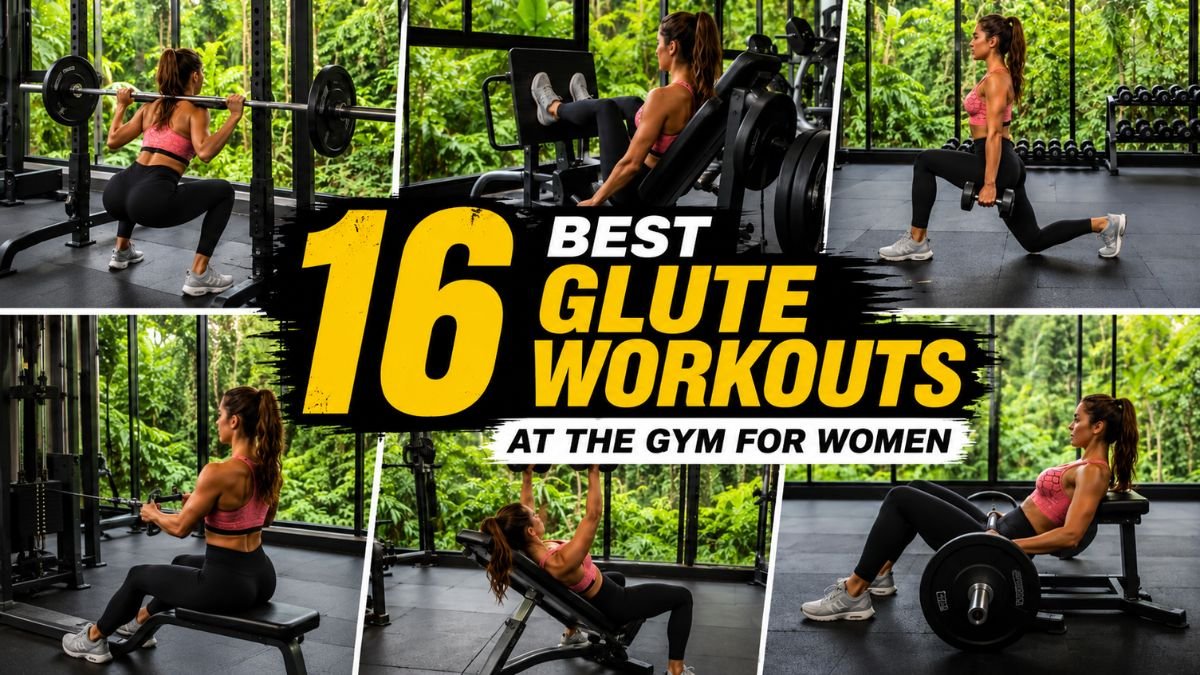
16 Best Glute Workouts at the Gym for Women
Strong glutes aren’t just about how they look they’re the largest, most powerful muscle group in your body, and they do most of the work behind squatting, sprinting, climbing stairs, and simply standing up without your lower back taking over. Because so many people sit for most of the day, the glutes are also one of the most commonly underactive muscle groups, which is part of why a dedicated glute-focused gym routine makes such a visible difference, both in strength and shape.
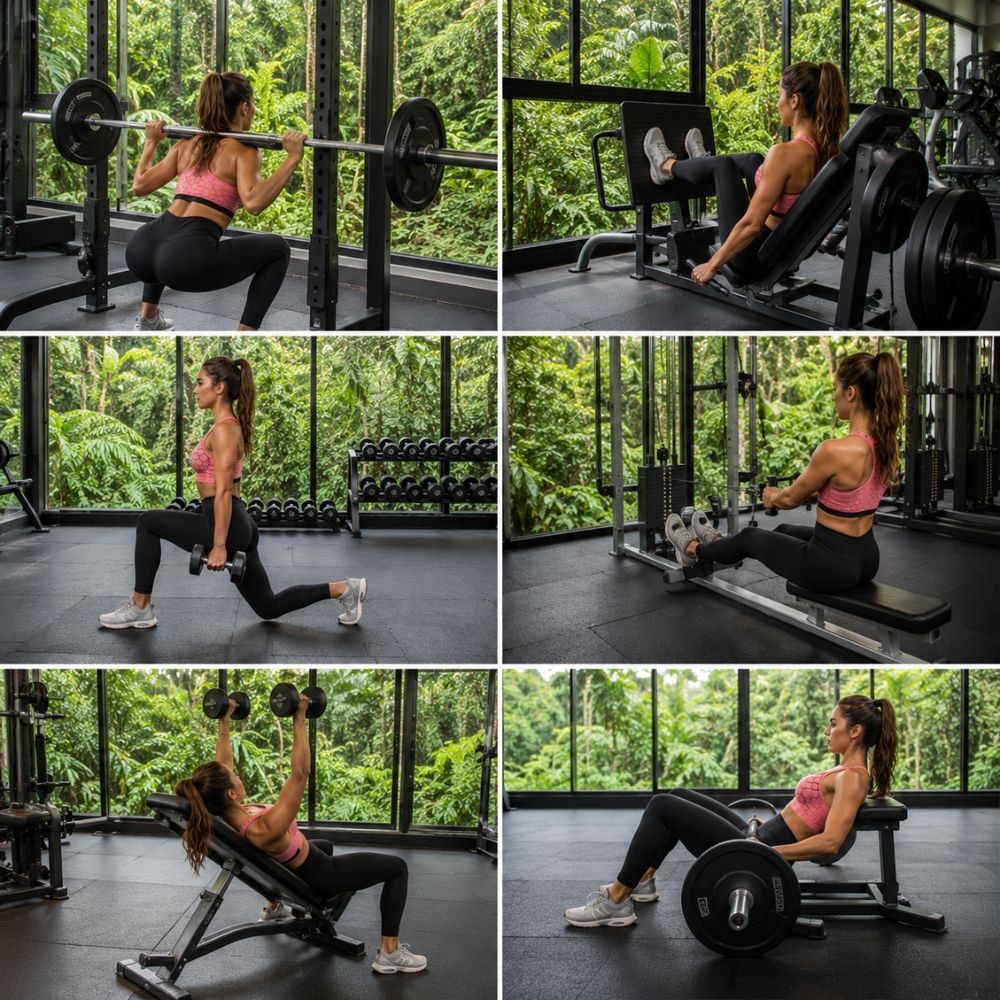
This guide covers 16 of the most effective glute exercises you can do at a commercial gym, based on EMG (muscle activation) research and biomechanics testing rather than trends. Each one includes sets, reps, primary muscle focus, and form tips so you can build a routine that actually targets all three glute muscles the gluteus maximus, medius, and minimus instead of just the parts that feel the most “worked.”
Understanding the Glute Muscles Before You Start
The glutes are made up of three muscles, and most gym routines accidentally train only one of them:
- Gluteus maximus – the largest muscle, responsible for hip extension (driving your hips forward, like standing up from a squat). Most compound lower-body lifts target this.
- Gluteus medius – sits on the side of the hip, responsible for hip abduction (moving your leg outward) and pelvic stability. This is the muscle behind a “lifted,” rounded side profile.
- Gluteus minimus – the smallest of the three, working alongside the medius for hip stability and rotation.
A well-rounded routine trains all three, which is why this list includes hip-extension exercises, abduction-focused moves, and single-leg stability work not just squats and lunges.
1. Barbell Hip Thrust
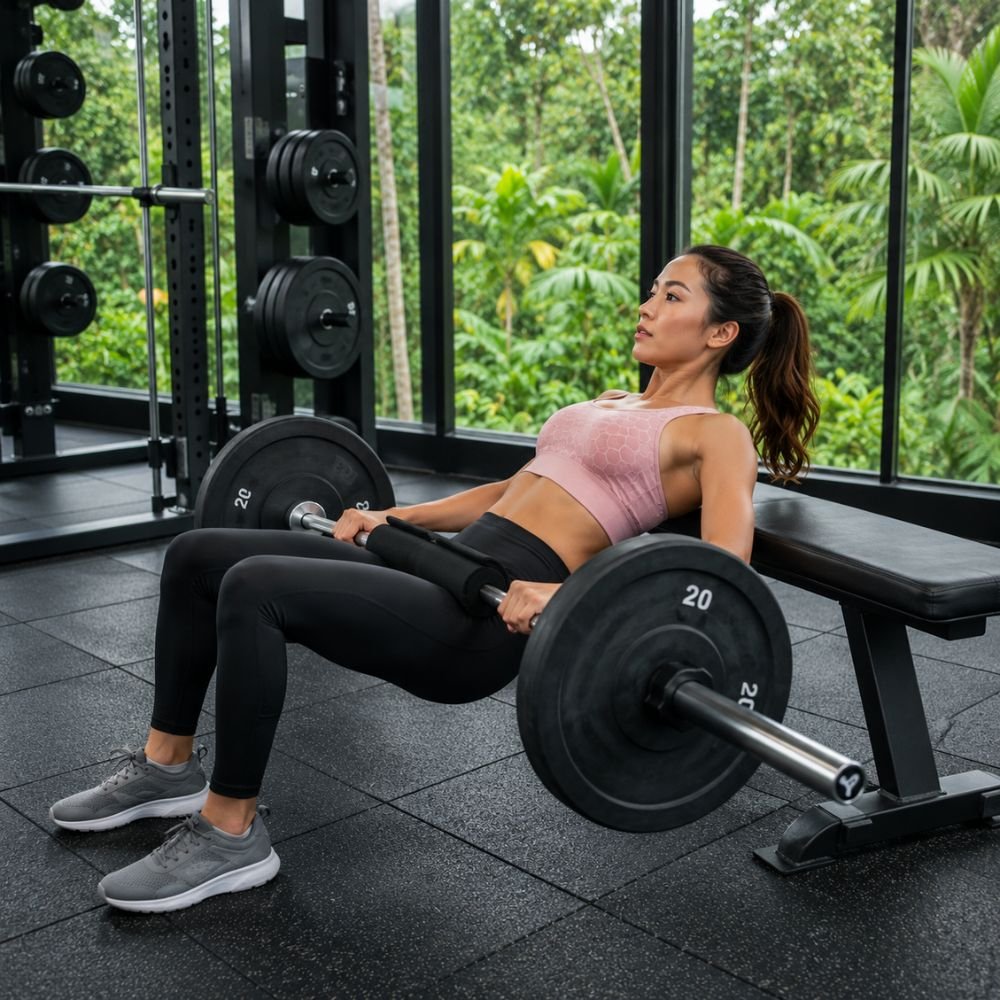
Widely considered the single most effective exercise for gluteus maximus activation, the hip thrust isolates hip extension without much involvement from the quads, which is why it consistently shows the highest muscle activation on EMG studies among compound glute exercises.
| Detail | Info |
|---|---|
| Primary muscle | Gluteus maximus |
| Equipment | Barbell, bench, hip thrust pad |
| Sets x Reps | 3–4 sets x 8–12 reps |
| Form tip | Drive through your heels and pause at the top with a full glute squeeze rather than hyperextending your lower back |
2. Glute Bridge
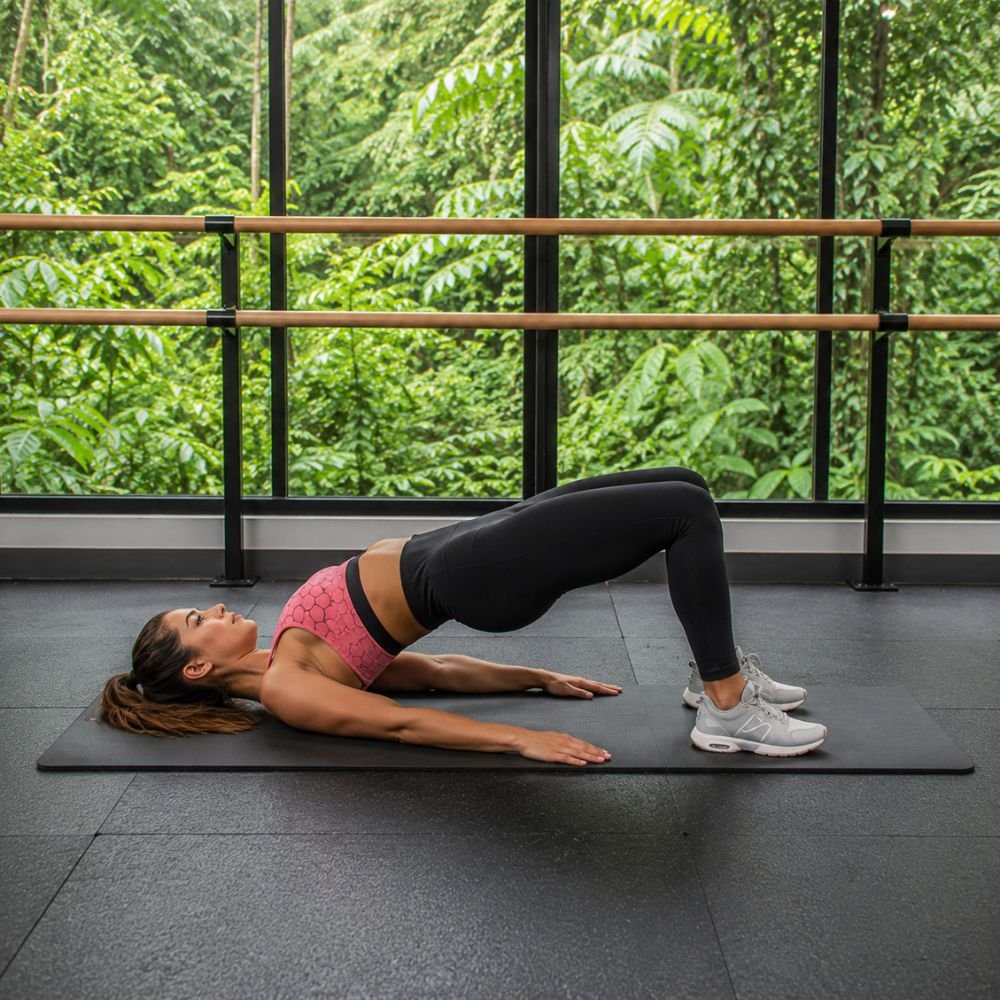
A more beginner-friendly, floor-based version of the hip thrust, the glute bridge is a strong entry point for building the mind-muscle connection before progressing to loaded hip thrusts.
| Detail | Info |
|---|---|
| Primary muscle | Gluteus maximus |
| Equipment | Bodyweight, or dumbbell/barbell across hips |
| Sets x Reps | 3 sets x 12–15 reps |
| Form tip | Keep your ribs down and avoid arching your lower back to isolate the glutes rather than the spine |
3. Bulgarian Split Squat
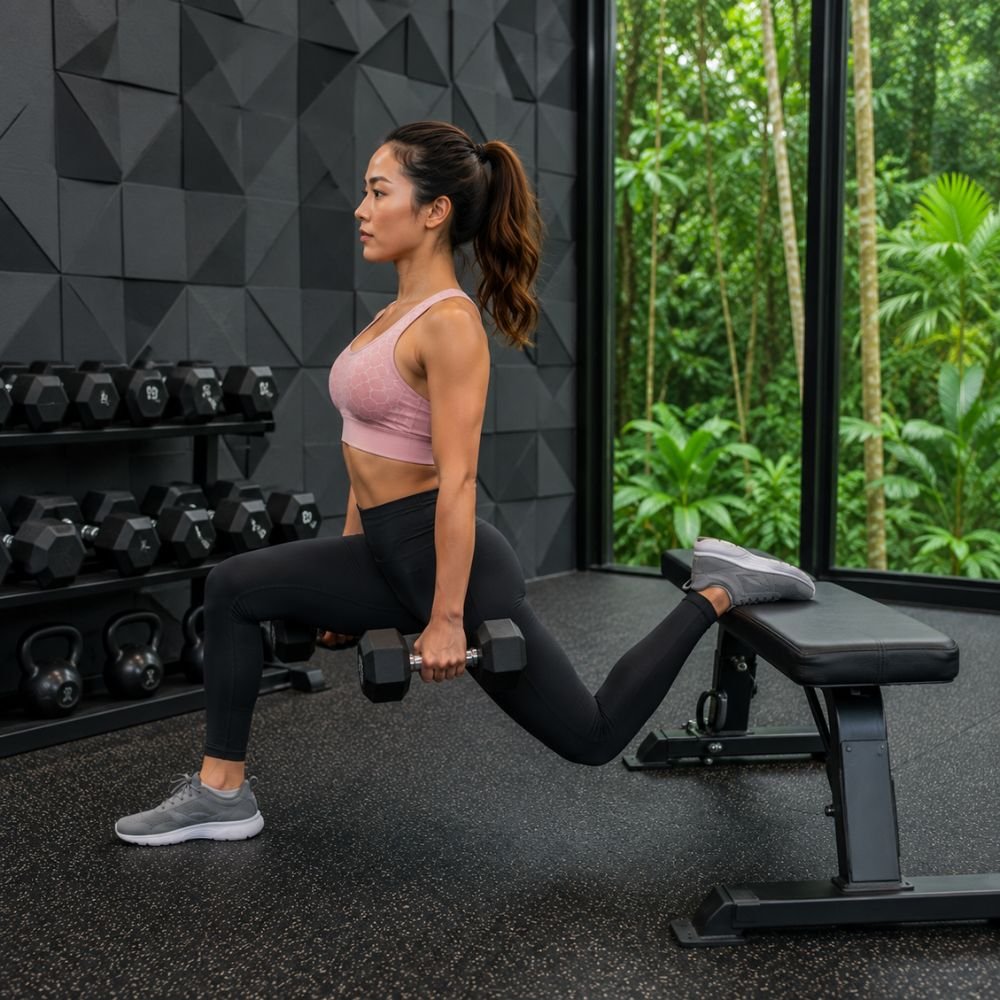
This single-leg squat variation, with the rear foot elevated on a bench, is one of the highest-activating unilateral glute exercises studied, largely because it demands stability alongside strength.
| Detail | Info |
|---|---|
| Primary muscle | Gluteus maximus, with gluteus medius for stability |
| Equipment | Dumbbells or barbell, bench |
| Sets x Reps | 3 sets x 8–10 reps per leg |
| Form tip | Keep most of your weight through the front heel and lower slowly rather than dropping into the bottom position |
4. Walking Lunge
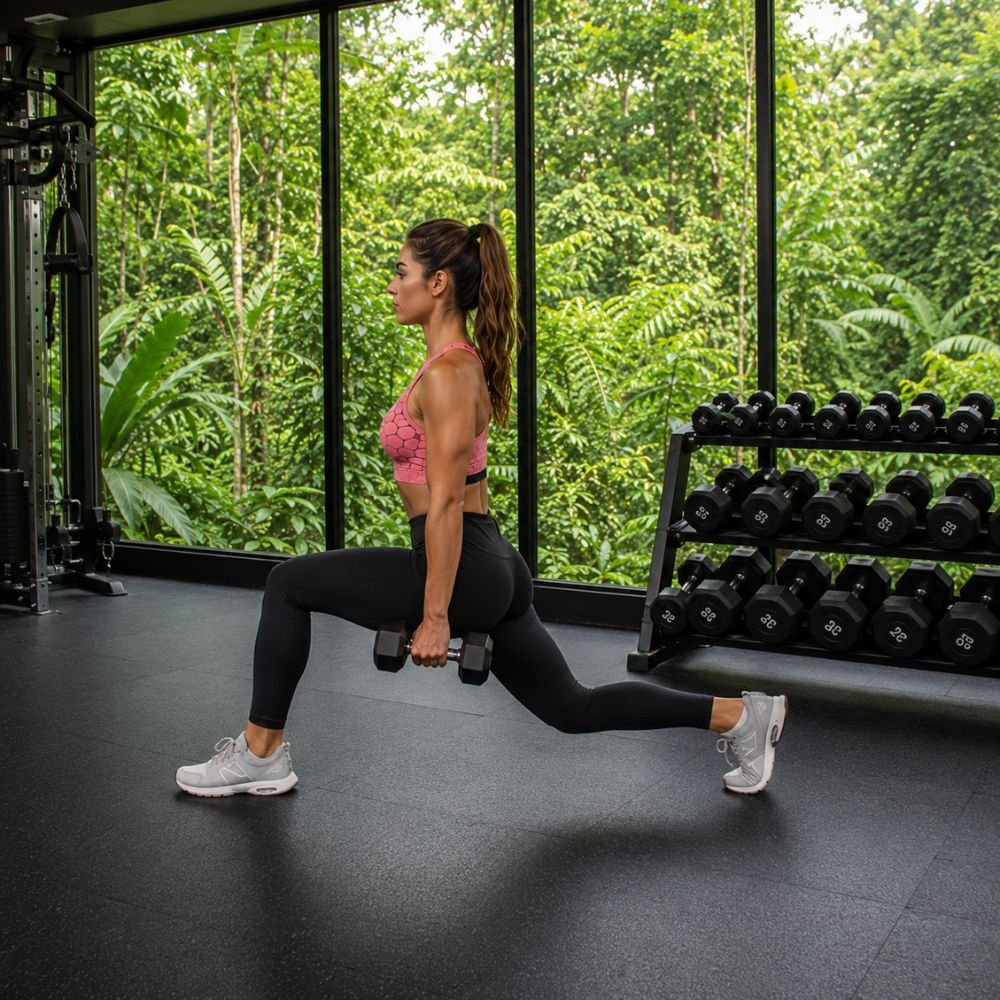
A dynamic, functional movement that trains the glutes through a full range of motion while also challenging balance and coordination.
| Detail | Info |
|---|---|
| Primary muscle | Gluteus maximus |
| Equipment | Bodyweight, dumbbells, or barbell |
| Sets x Reps | 3 sets x 10–12 steps per leg |
| Form tip | Take a long enough step that your front shin stays close to vertical at the bottom |
5. Reverse Lunge
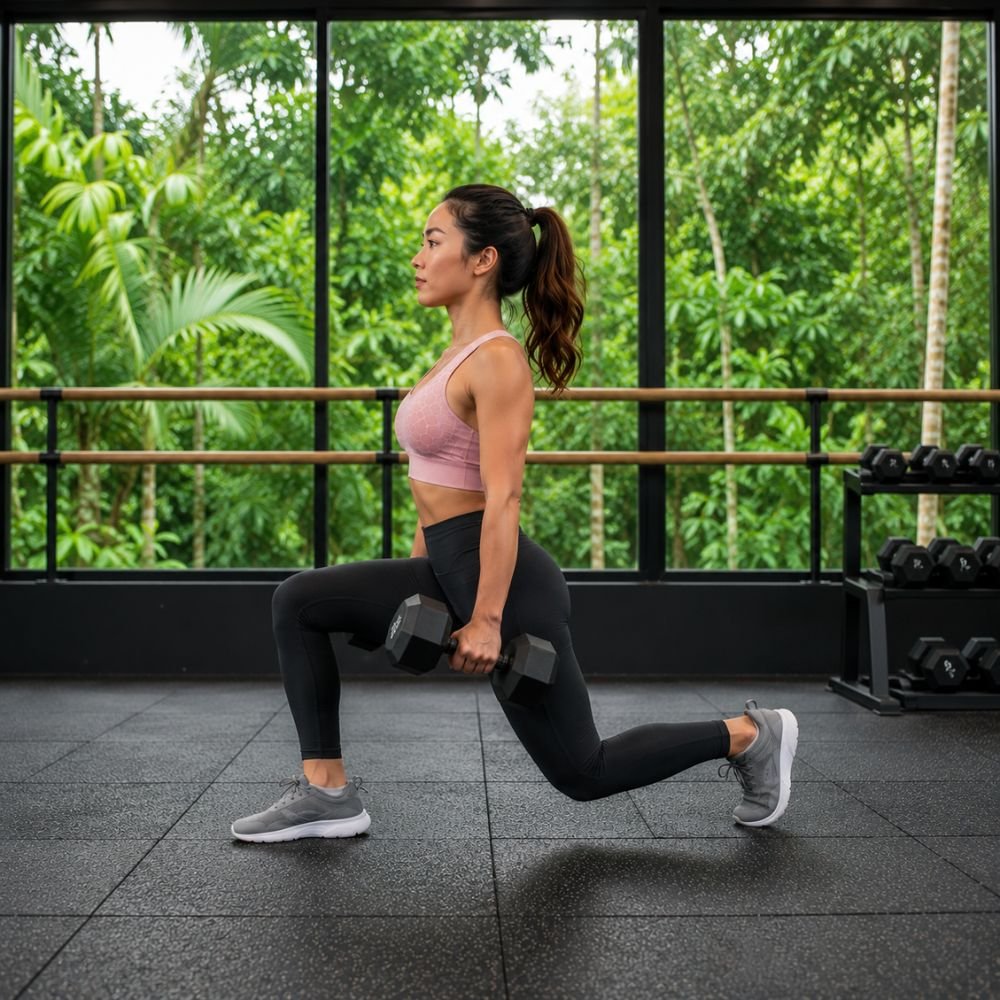
Reverse lunges tend to be gentler on the knees than forward lunges while still delivering strong glute activation, making them a good option for building volume without joint strain.
| Detail | Info |
|---|---|
| Primary muscle | Gluteus maximus |
| Equipment | Bodyweight or dumbbells |
| Sets x Reps | 3 sets x 10–12 reps per leg |
| Form tip | Step back far enough that your front knee stays roughly above your ankle, not pushed past your toes |
6. Curtsy Lunge
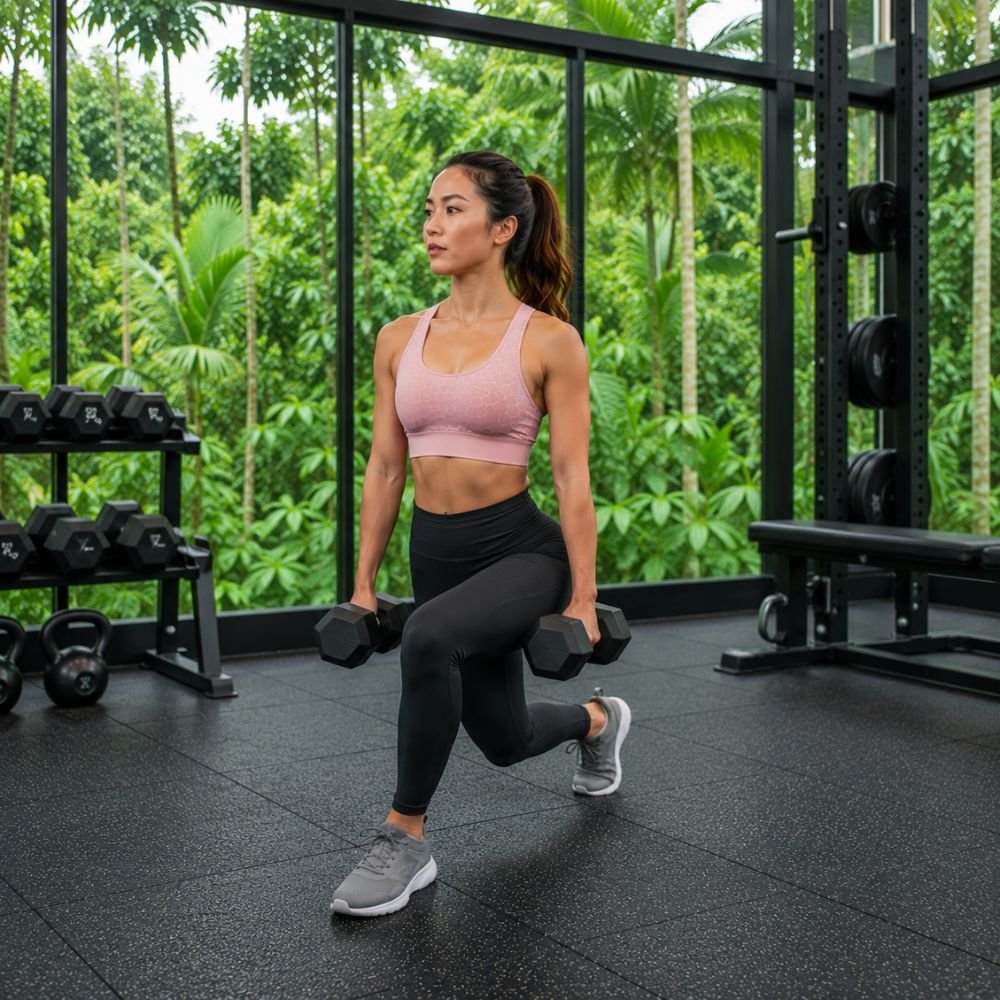
By stepping diagonally behind the body instead of straight back, the curtsy lunge shifts more emphasis onto the gluteus medius and the upper/outer glute fibers than a standard lunge does.
| Detail | Info |
|---|---|
| Primary muscle | Gluteus medius, gluteus maximus |
| Equipment | Bodyweight or dumbbells |
| Sets x Reps | 3 sets x 10–12 reps per leg |
| Form tip | Keep your hips facing forward throughout the movement rather than rotating with the step |
7. Cable Glute Kickback
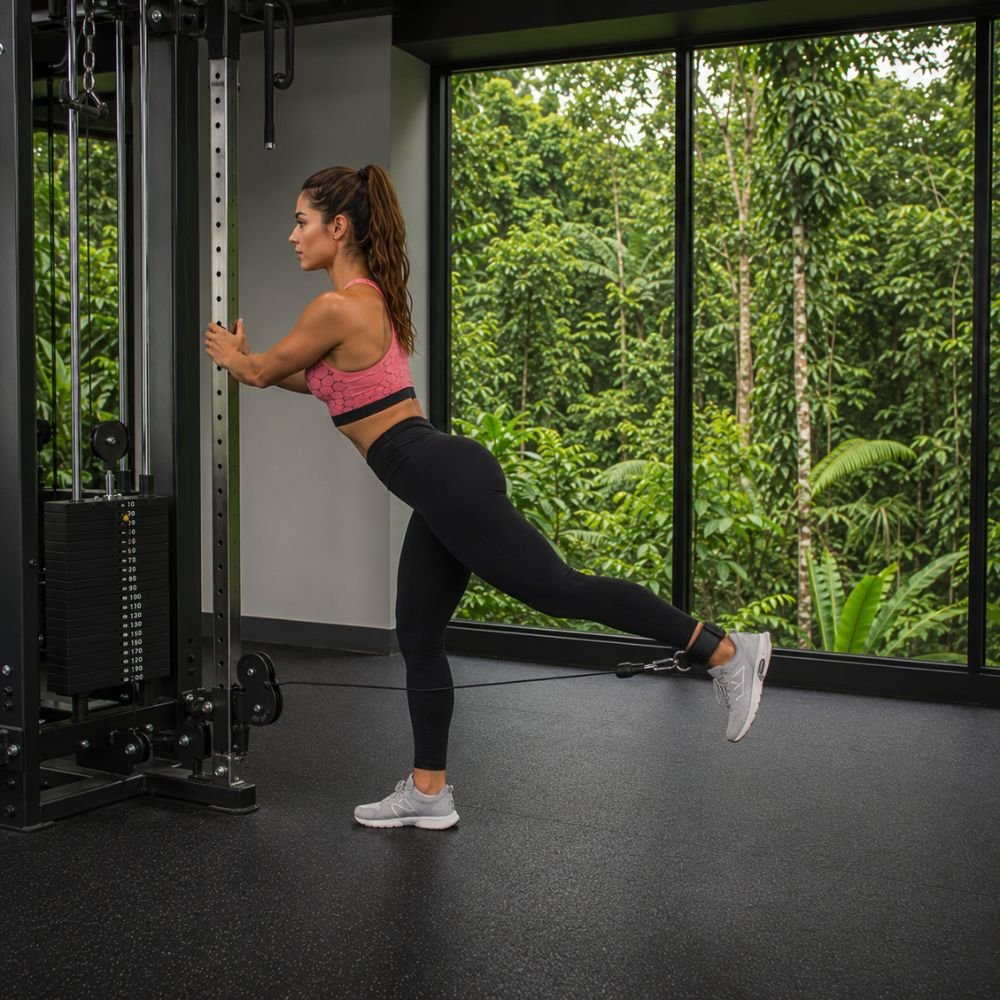
A single-leg isolation move that lets you train each side independently, which is useful for correcting strength imbalances between legs.
| Detail | Info |
|---|---|
| Primary muscle | Gluteus maximus |
| Equipment | Cable machine with ankle strap |
| Sets x Reps | 3 sets x 12–15 reps per leg |
| Form tip | Move slowly and focus on squeezing at the top rather than swinging the leg for momentum |
8. Romanian Deadlift
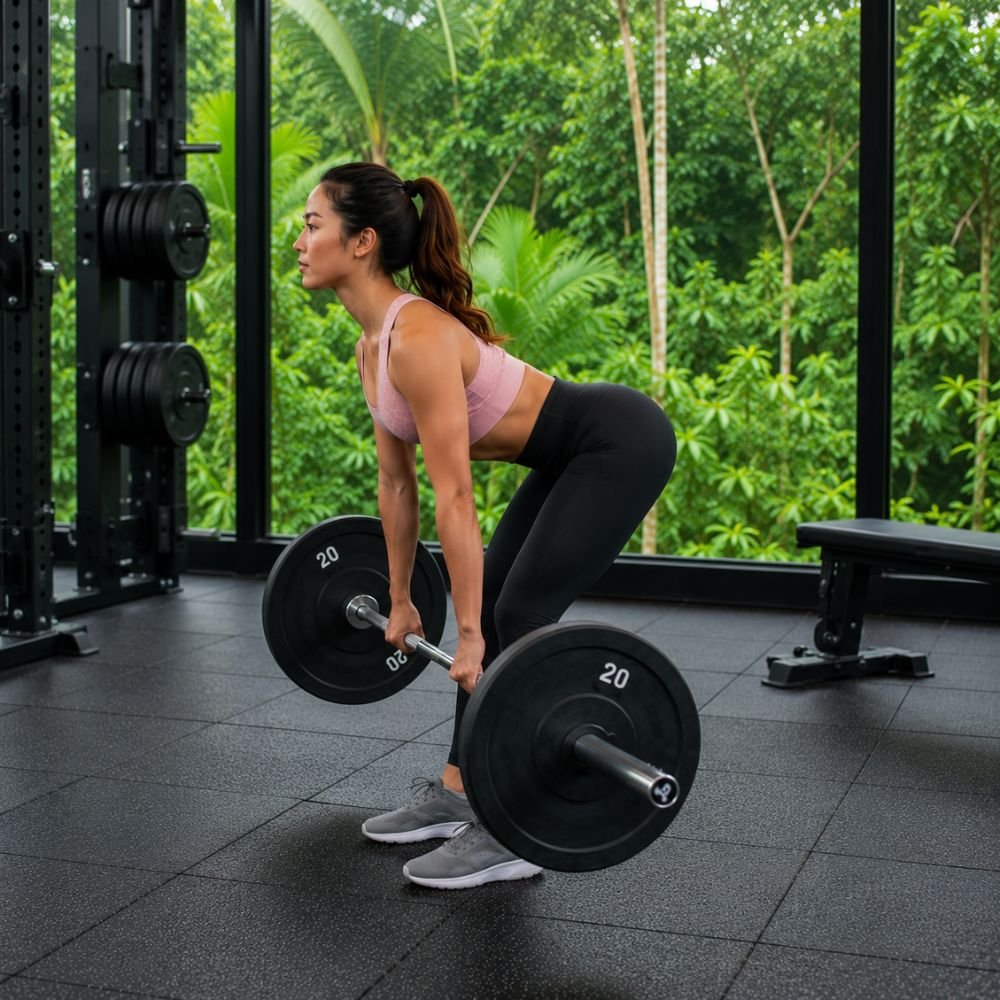
A hip-hinge movement that heavily loads the glutes and hamstrings together, the Romanian deadlift is a foundational strength exercise for the entire posterior chain.
| Detail | Info |
|---|---|
| Primary muscle | Gluteus maximus, hamstrings |
| Equipment | Barbell or dumbbells |
| Sets x Reps | 3–4 sets x 8–10 reps |
| Form tip | Push your hips back rather than bending at the knees, keeping the weight close to your legs throughout |
9. Sumo Deadlift
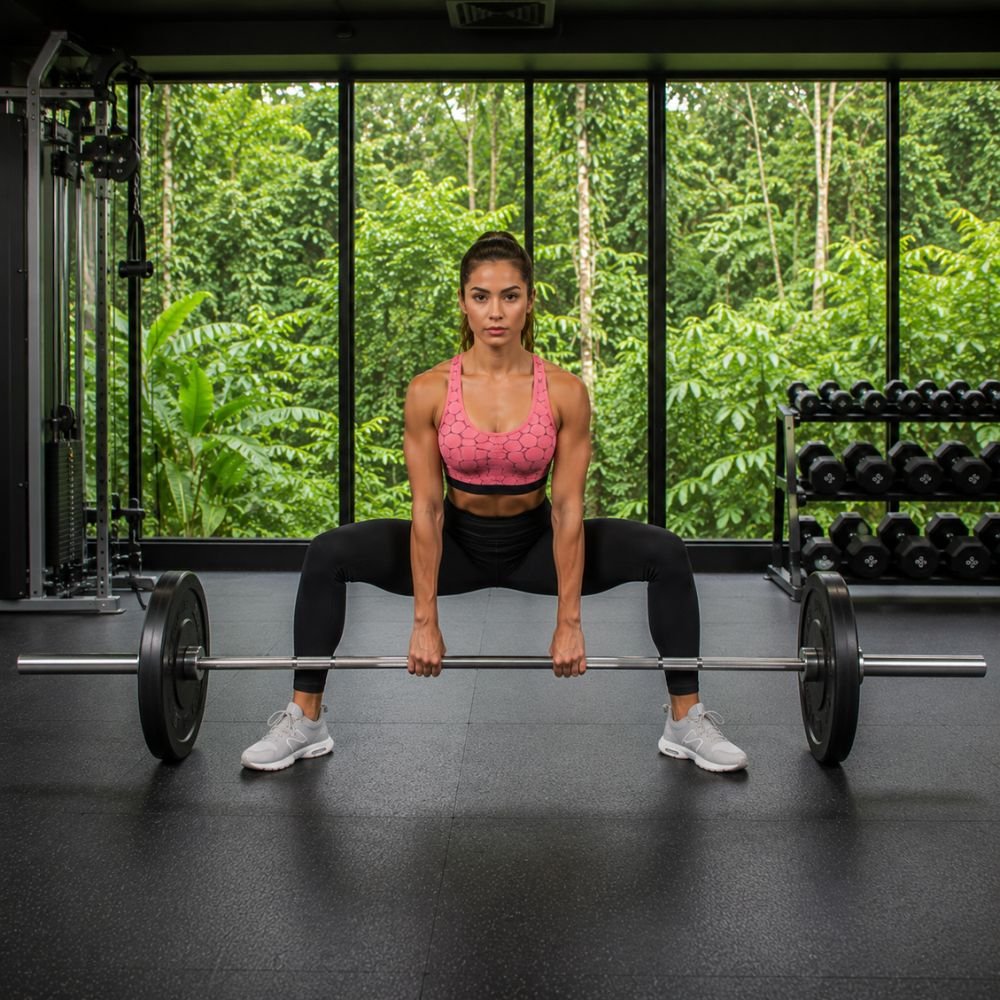
The wider stance in a sumo deadlift shifts more emphasis onto the glutes and inner thighs compared to a conventional deadlift, while often feeling more comfortable for hips that don’t tolerate a narrow stance well.
| Detail | Info |
|---|---|
| Primary muscle | Gluteus maximus, adductors |
| Equipment | Barbell |
| Sets x Reps | 3–4 sets x 6–8 reps |
| Form tip | Keep your knees tracking in the same direction as your toes throughout the lift |
10. Step-Ups
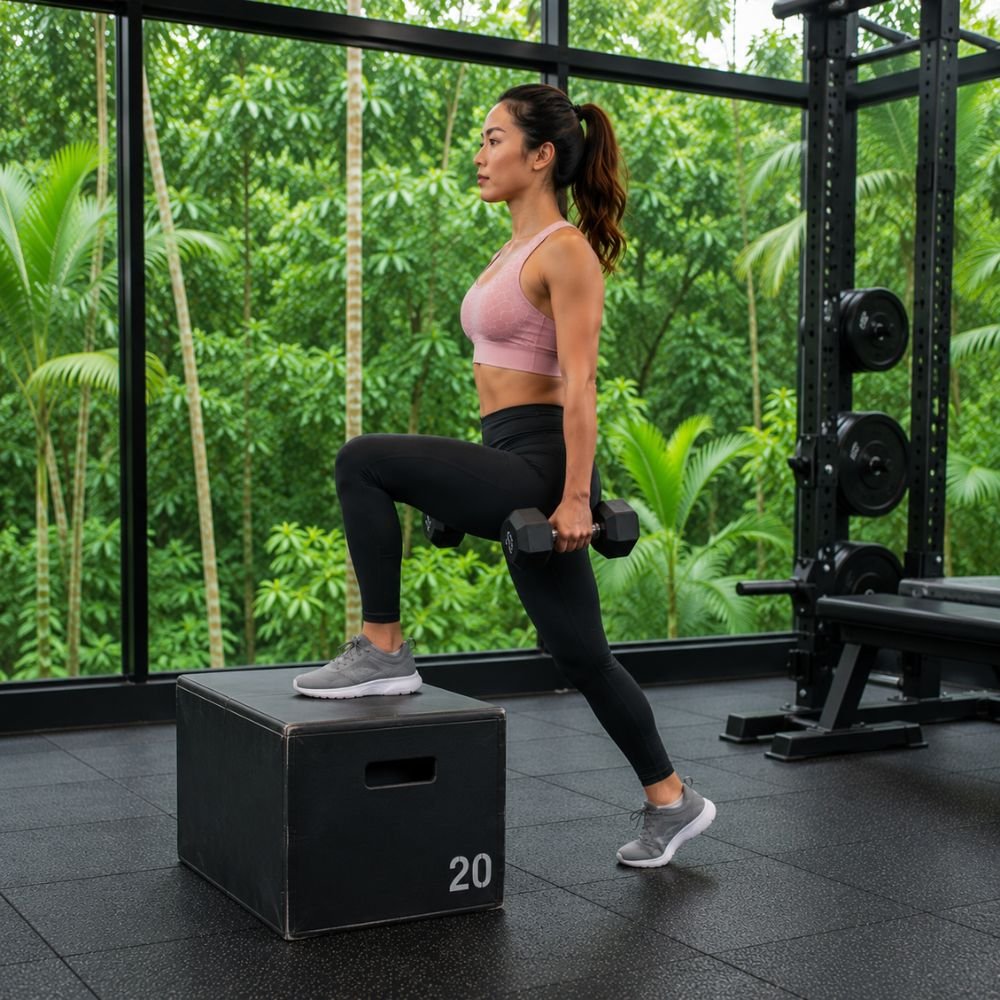
Step-ups consistently rank among the highest EMG-activating glute exercises across research, largely because they combine hip extension with single-leg stability demands.
| Detail | Info |
|---|---|
| Primary muscle | Gluteus maximus |
| Equipment | Bench or box, optional dumbbells |
| Sets x Reps | 3 sets x 10–12 reps per leg |
| Form tip | Drive through the heel of the stepping leg rather than pushing off the trailing foot |
11. Leg Press (High Foot Placement)
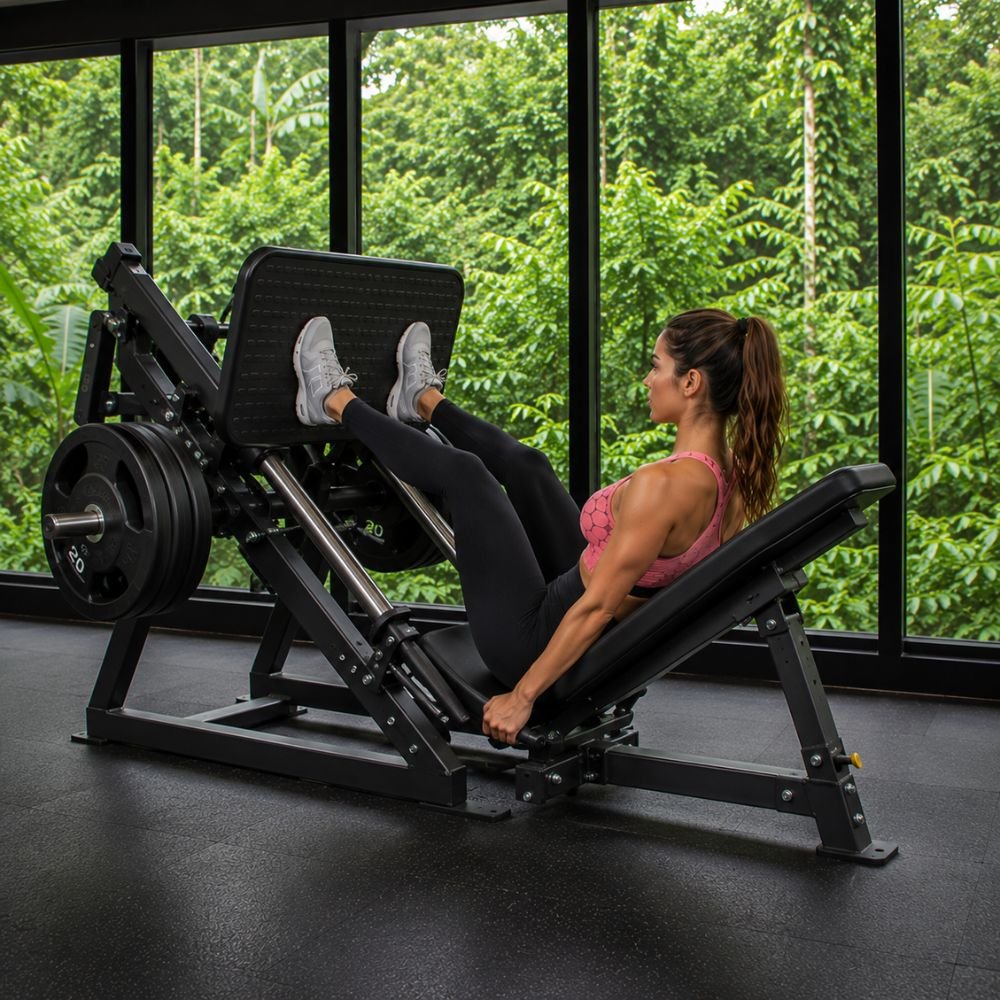
A machine-based option that lets you load heavy weight safely, the leg press shifts emphasis toward the glutes and hamstrings when your feet are placed higher and wider on the platform.
| Detail | Info |
|---|---|
| Primary muscle | Gluteus maximus, hamstrings |
| Equipment | Leg press machine |
| Sets x Reps | 3–4 sets x 10–12 reps |
| Form tip | Avoid letting your lower back round off the pad at the bottom of the movement |
12. Cable or Machine Hip Abduction
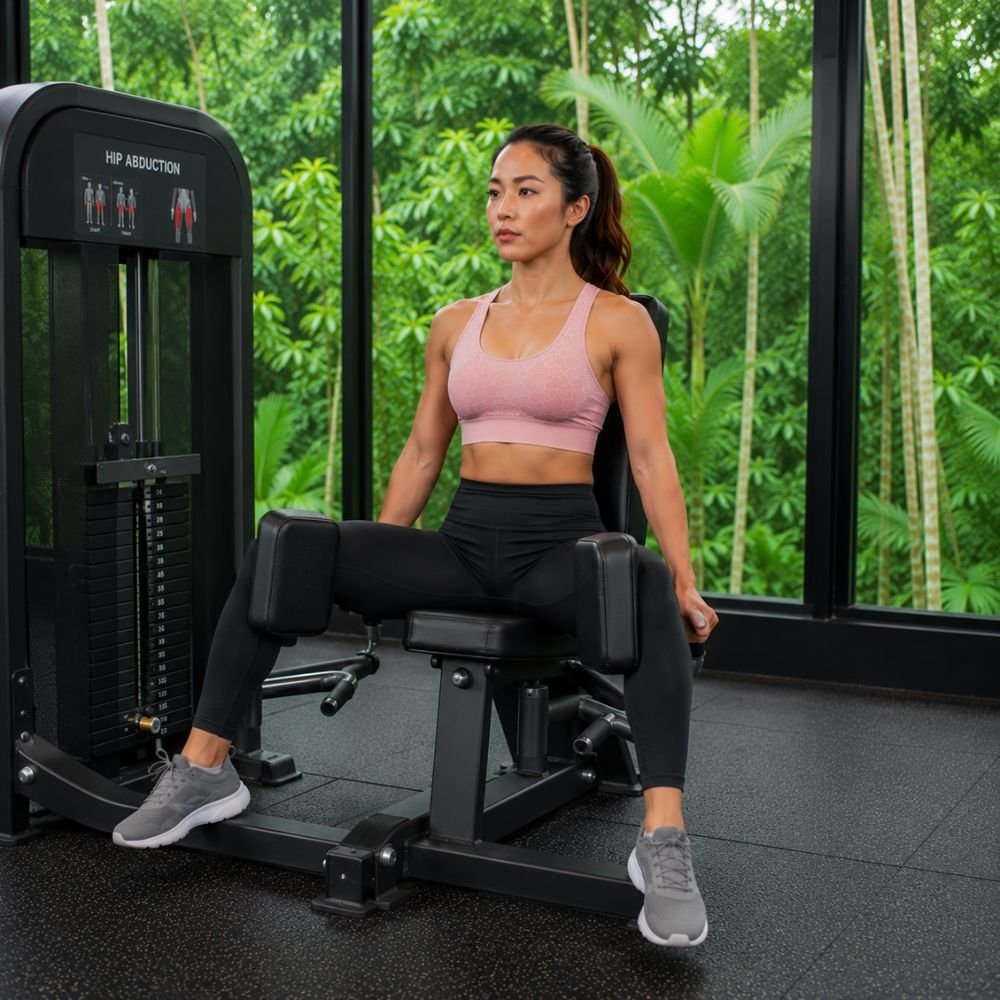
This move directly isolates the gluteus medius and minimus, which is why it’s one of the few exercises specifically shown to target the “side glute” area that squats and hip thrusts largely miss.
| Detail | Info |
|---|---|
| Primary muscle | Gluteus medius, gluteus minimus |
| Equipment | Seated abduction machine or cable with ankle strap |
| Sets x Reps | 3 sets x 12–15 reps |
| Form tip | Control the return phase rather than letting the weight snap your leg back |
13. Banded Lateral Walk (Monster Walk)
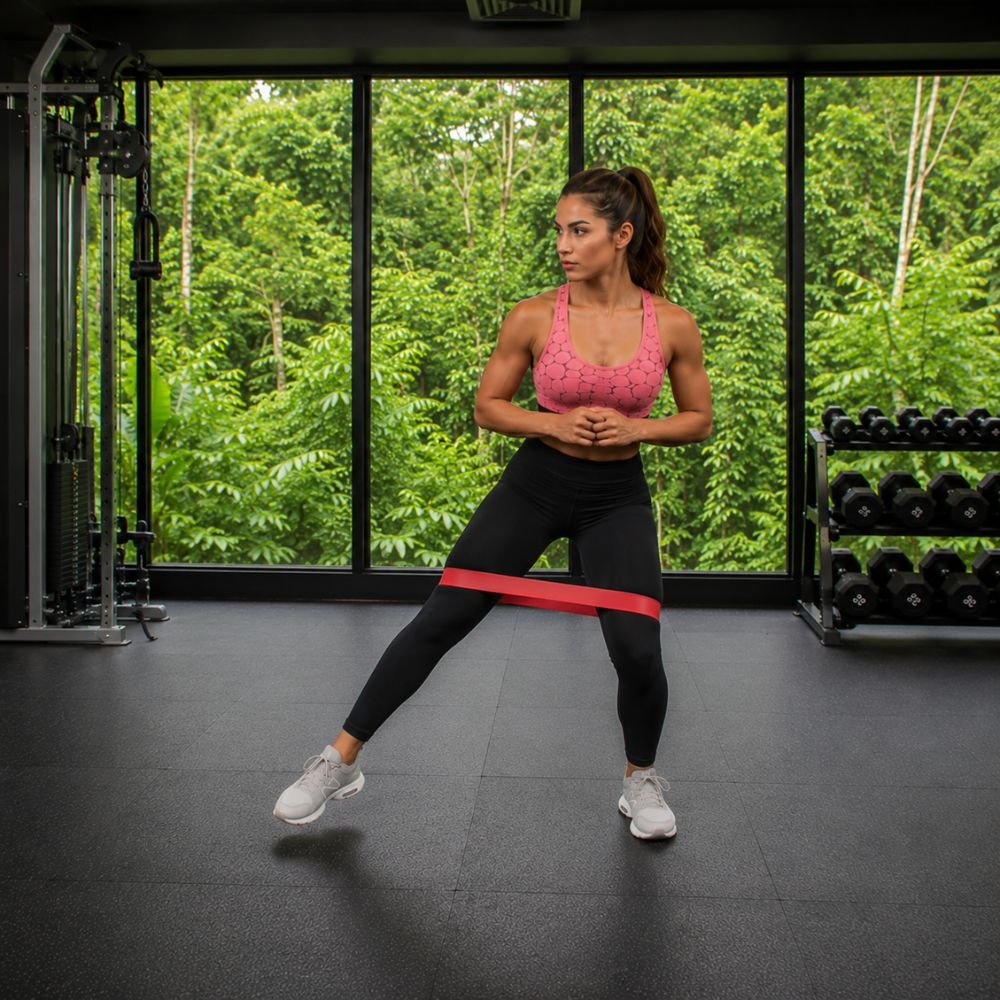
A low-load but highly effective activation exercise for the gluteus medius, often used as a warm-up before heavier lifts to “wake up” the glutes before compound movements.
| Detail | Info |
|---|---|
| Primary muscle | Gluteus medius |
| Equipment | Resistance band around thighs or ankles |
| Sets x Reps | 3 sets x 15–20 steps each direction |
| Form tip | Keep a slight bend in your knees and avoid letting your feet turn outward |
14. Kettlebell Swing
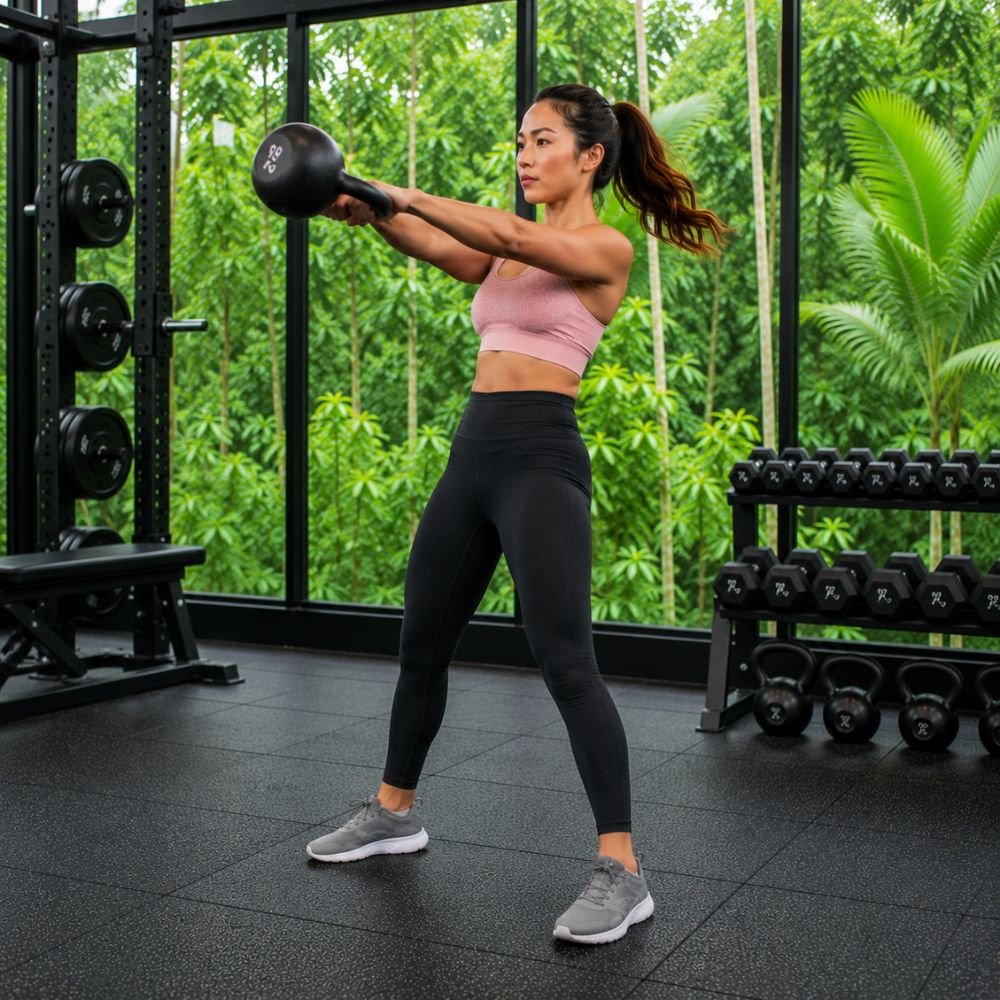
A dynamic, hip-hinge-based power movement, the kettlebell swing trains the glutes explosively rather than under slow, controlled tension, which adds a different training stimulus to a routine built mostly around slower lifts.
| Detail | Info |
|---|---|
| Primary muscle | Gluteus maximus, hamstrings |
| Equipment | Kettlebell |
| Sets x Reps | 3–4 sets x 15–20 reps |
| Form tip | The power should come from snapping your hips forward, not from lifting with your arms or shoulders |
15. Single-Leg Romanian Deadlift
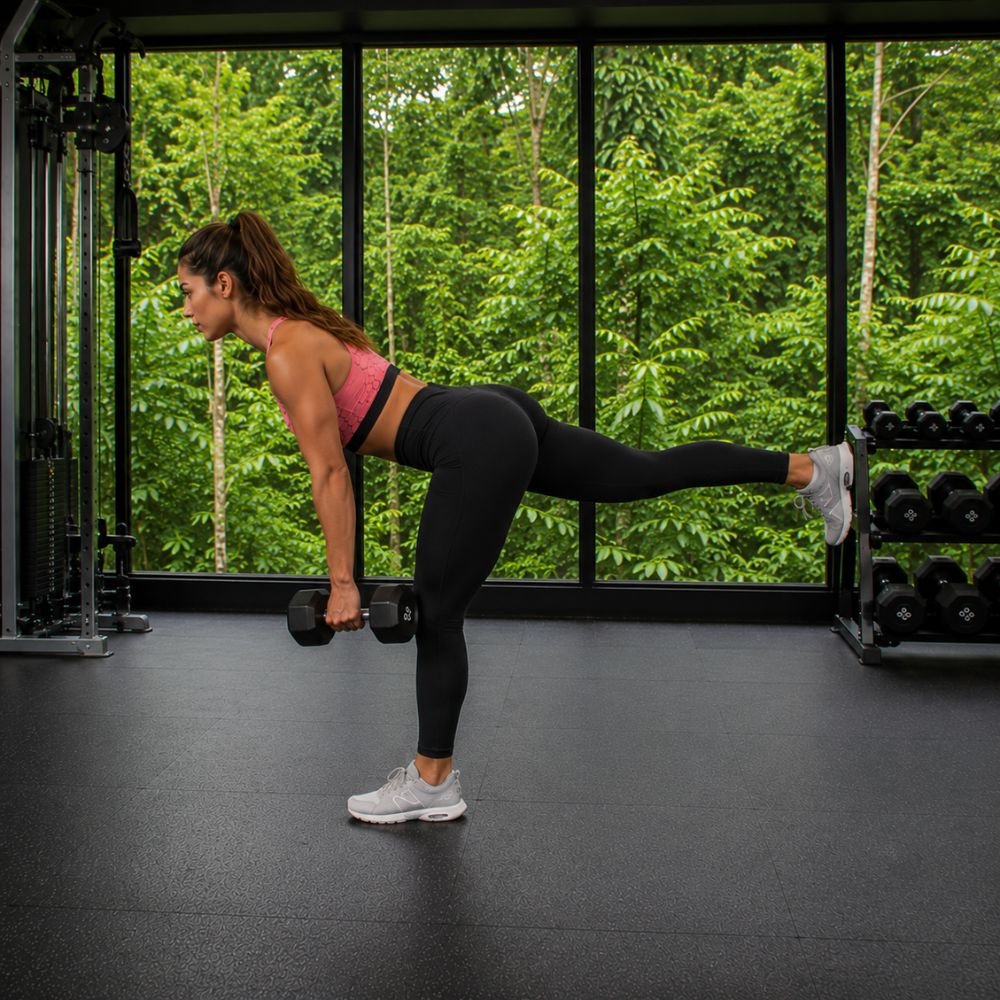
This unilateral hinge movement builds glute strength while also training balance and correcting side-to-side strength imbalances that bilateral lifts can hide.
| Detail | Info |
|---|---|
| Primary muscle | Gluteus maximus, gluteus medius |
| Equipment | Dumbbell or kettlebell |
| Sets x Reps | 3 sets x 8–10 reps per leg |
| Form tip | Keep your hips square to the floor throughout instead of letting them rotate open |
16. Back Extension (Glute-Focused)
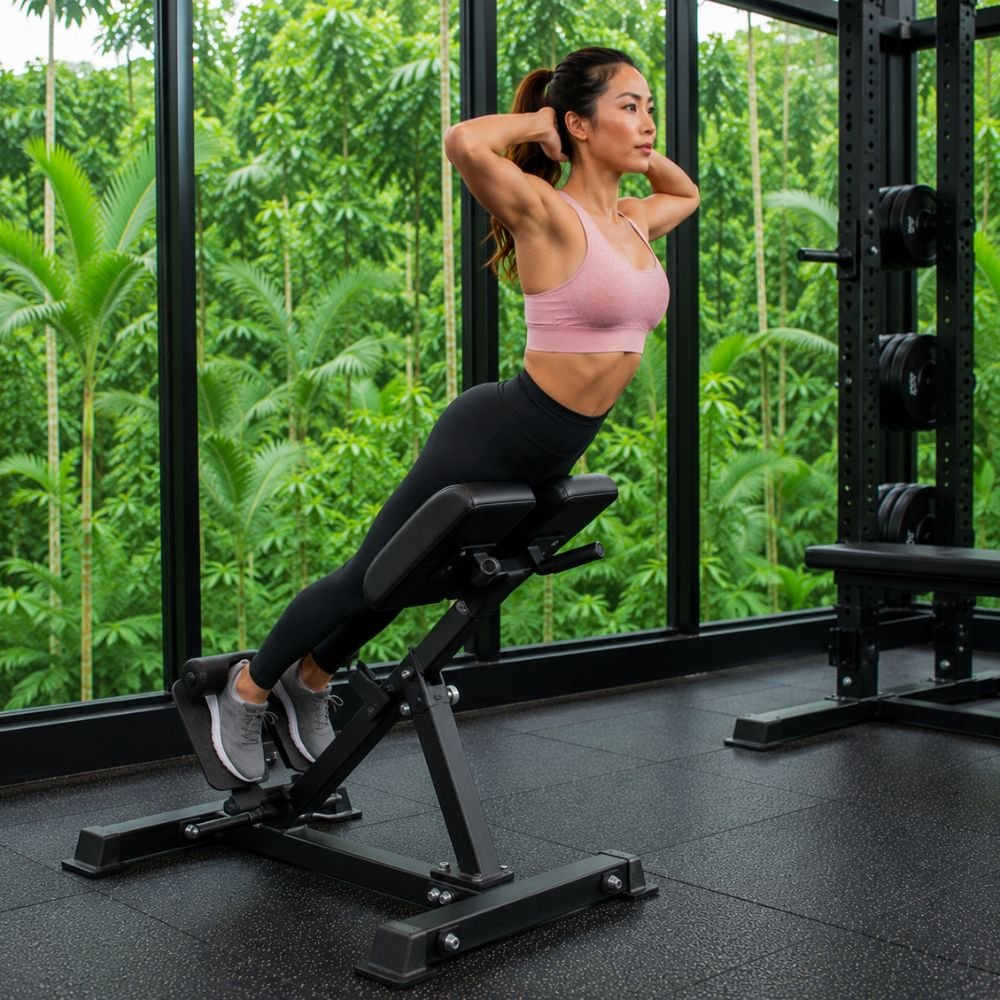
Performed on a hyperextension bench with a rounded upper back and a pause-and-squeeze at the top, this variation shifts emphasis from the lower back onto the glutes and hamstrings.
| Detail | Info |
|---|---|
| Primary muscle | Gluteus maximus, hamstrings |
| Equipment | Hyperextension/back extension bench |
| Sets x Reps | 3 sets x 12–15 reps |
| Form tip | Round your upper back slightly and squeeze your glutes at the top rather than hyperextending your spine |
Sample Glute-Focused Gym Routine
If you’re not sure how to combine these 16 exercises into an actual session, here’s a sample structure that hits all three glute muscles without overloading any single joint pattern:
| Order | Exercise | Sets x Reps |
|---|---|---|
| 1 | Banded lateral walk (warm-up) | 2 x 15–20 steps |
| 2 | Barbell hip thrust | 4 x 8–12 |
| 3 | Bulgarian split squat | 3 x 8–10 per leg |
| 4 | Romanian deadlift | 3 x 8–10 |
| 5 | Cable hip abduction | 3 x 12–15 |
| 6 | Cable glute kickback | 3 x 12–15 per leg |
| 7 | Back extension | 3 x 12–15 |
[IMAGE 15]
A Few Training Tips for Better Results
- Don’t skip the abduction and lateral movements. Squats, lunges, and deadlifts mainly train the gluteus maximus — the medius and minimus need dedicated abduction and lateral work to develop fully.
- Focus on the squeeze, not just the weight. Research on hip thrusts and bridges shows that a strong mind-muscle connection at the top of the movement matters as much as the load itself.
- Progressive overload still applies. Gradually increasing weight, reps, or sets over time is what actually drives glute growth — the same exercises done at the same weight indefinitely will plateau.
- Recovery matters as much as training. The glutes, like any muscle, grow during rest — two to three focused sessions per week with adequate recovery tends to outperform daily, low-quality training.
Final Thoughts
Building strong, well-developed glutes isn’t about doing endless squats — it’s about deliberately training all three glute muscles with a mix of hip-extension, single-leg, and abduction-focused movements, then progressively adding load over time. Pick six to eight exercises from this list of 16, rotate them across your weekly sessions, and stay consistent glute development responds well to steady, structured training more than any single “magic” exercise.