15 Minute Workout at Home No Equipment
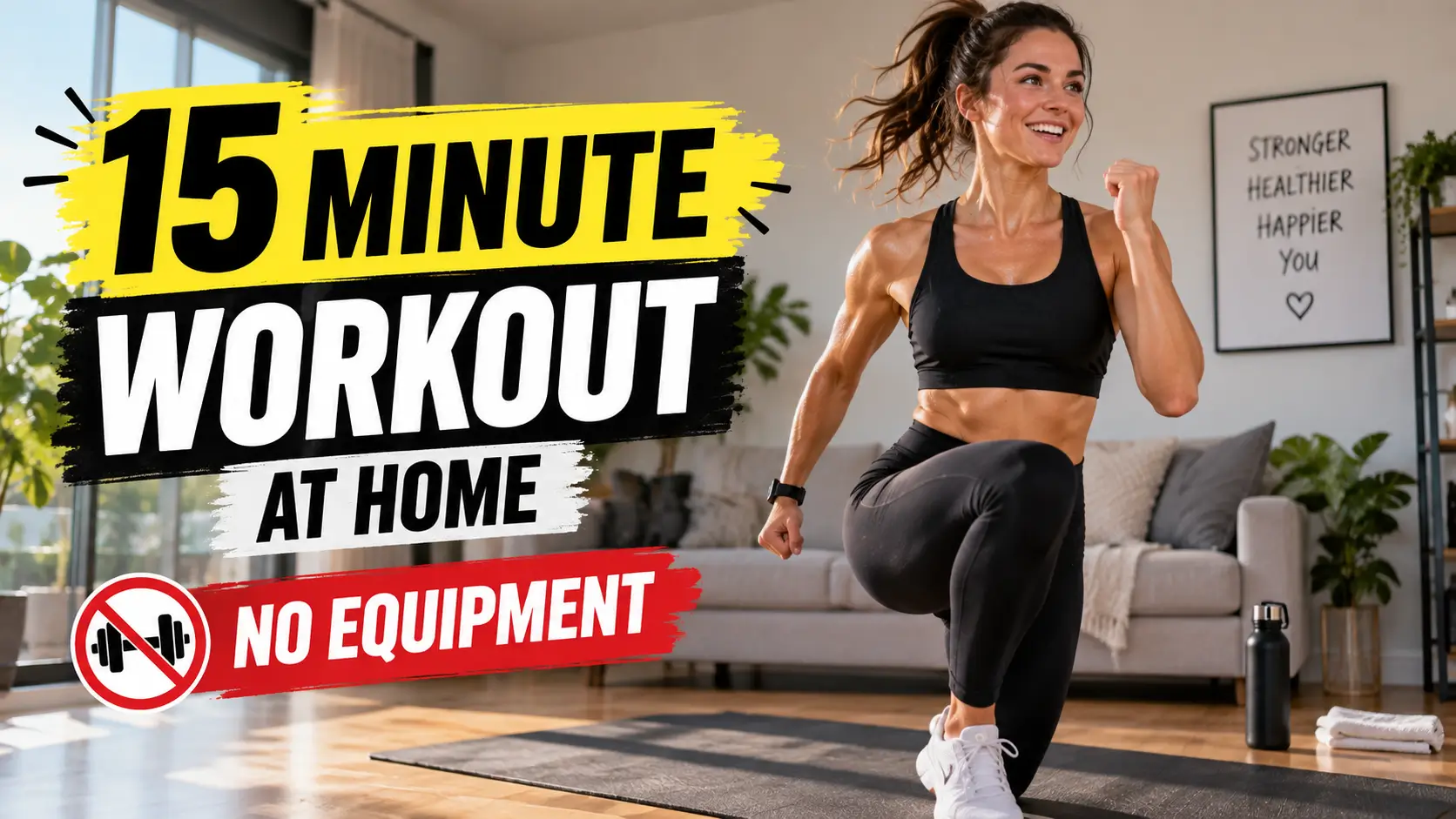
If your schedule feels too packed for a full hour at the gym, a 15 minute workout at home no equipment required can still deliver real fitness benefits you just need a bit of floor space and the willingness to move with intention for a short stretch of time. Research on short exercise sessions has consistently found that brief, focused workouts can improve cardiovascular health, strength, and mood, which makes 15 minutes a genuinely worthwhile investment rather than a consolation prize for people who “don’t have time” to work out properly.
Why a 15 Minute Workout at Home No Equipment Actually Works
It’s tempting to assume that anything under an hour doesn’t “count,” but that’s not what the evidence shows. Research published in the European Heart Journal found that short bouts of vigorous activity, even when broken up into just a few minutes at a time throughout the week, were linked to meaningfully lower risk of heart disease and early death compared to no activity at all. Other research has found that scattering short, intense bursts of movement across the day can produce similar improvements in blood pressure, blood sugar, and cardiovascular fitness as one longer, continuous session. In other words, consistency and intensity matter more than simply logging a long duration — which is exactly why a focused 15-minute session, done regularly, is a legitimate way to build and maintain fitness.
The Workout: A Simple No-Equipment Circuit
This routine uses just your body weight and works your whole body — legs, chest, core, and cardiovascular system — in one session. It’s structured as a circuit: move through the exercises with minimal rest between them, then rest briefly before repeating the circuit.
Warm-up (2 minutes)
- 1 minute of marching in place or gentle jumping jacks
- 1 minute of arm circles, hip circles, and bodyweight squats to loosen up your joints
Main Circuit (repeat 3 times, about 40 seconds of work and 20 seconds of rest per exercise)
| # | Exercise | Muscles Worked | Time |
|---|---|---|---|
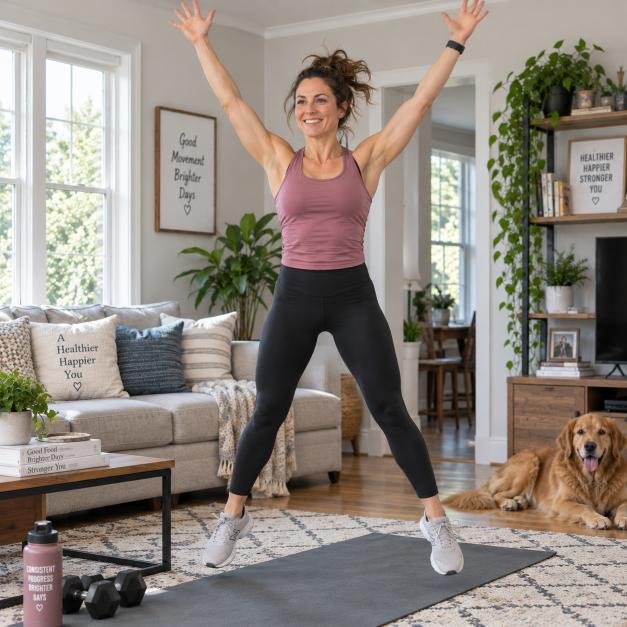
| 1 | Jumping jacks | Full body, cardiovascular system | 40 sec work / 20 sec rest |
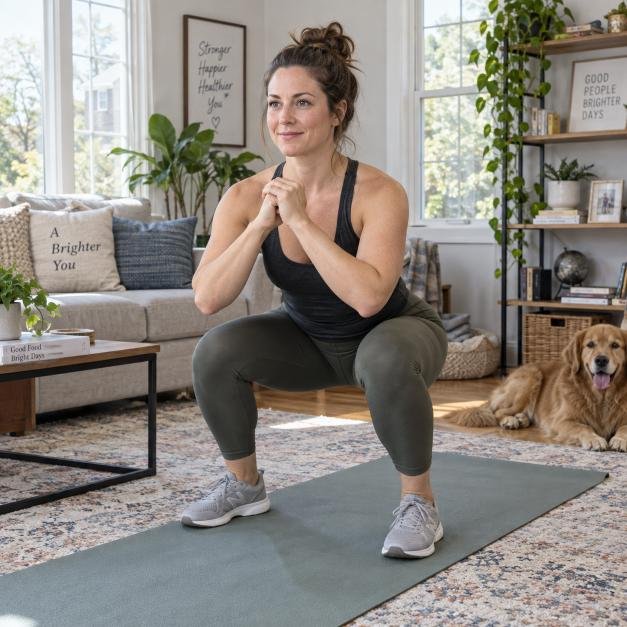
| 2 | Bodyweight squats | Quads, glutes, hamstrings | 40 sec work / 20 sec rest |
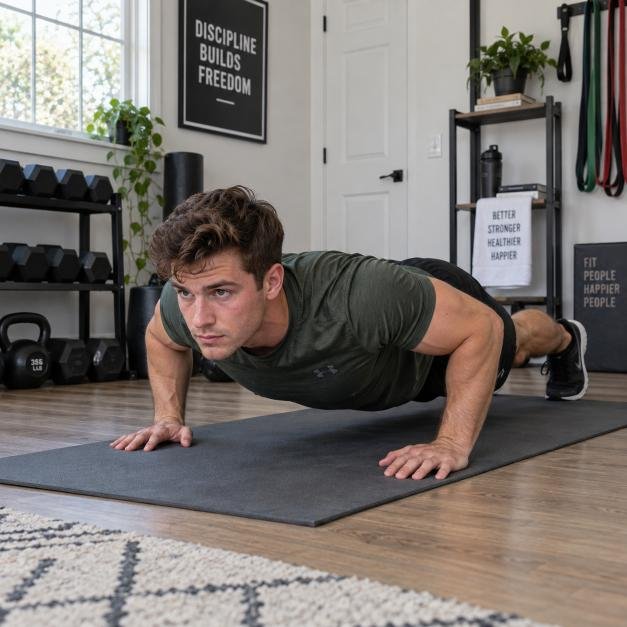
| 3 | Push-ups (modified from knees if needed) | Chest, shoulders, triceps, core | 40 sec work / 20 sec rest |
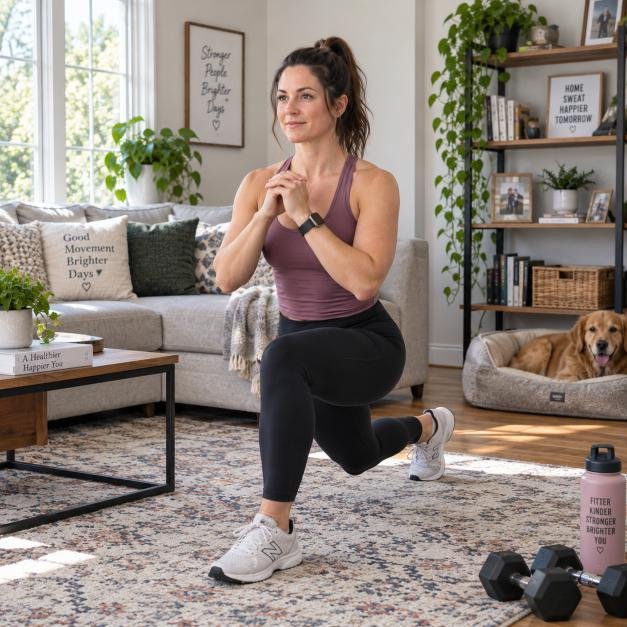
| 4 | Reverse lunges | Legs, glutes, balance | 40 sec work / 20 sec rest |
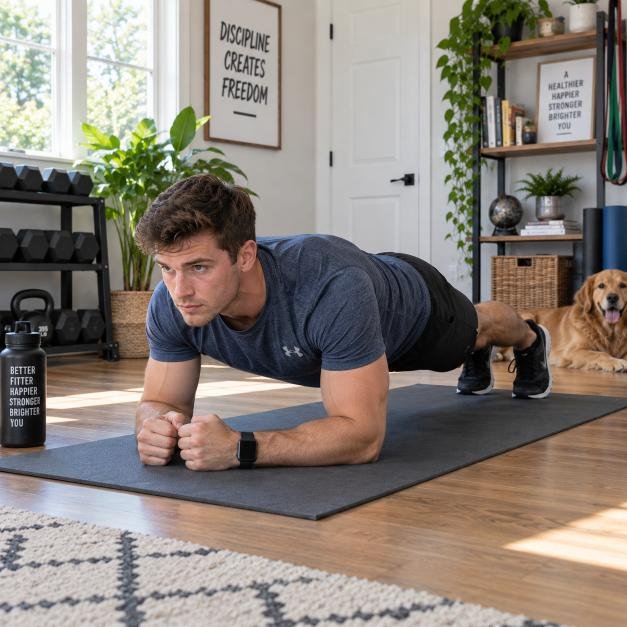
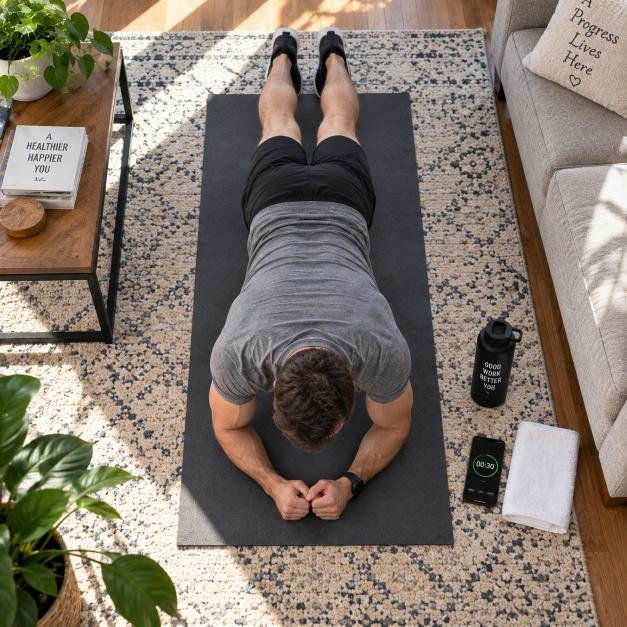
| 5 | Plank hold | Core, shoulders | 40 sec work / 20 sec rest |
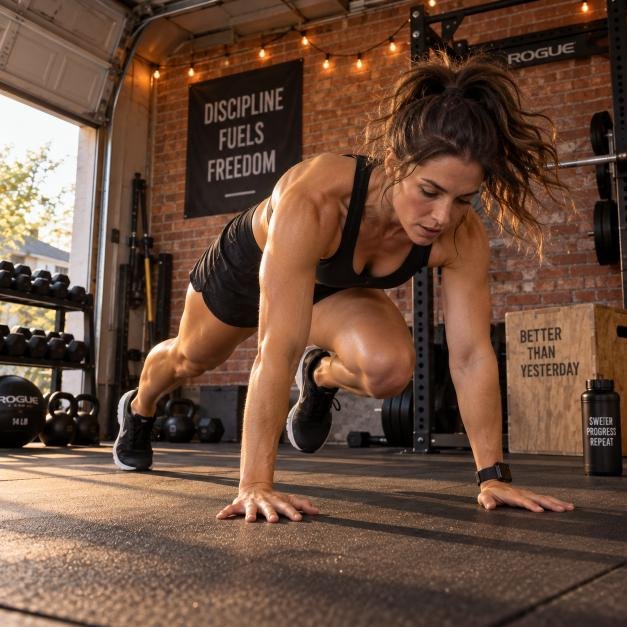
| 6 | Mountain climbers | Core, cardiovascular system | 40 sec work / 20 sec rest |
Cool-down (1–2 minutes)
- Slow, controlled stretches for your hamstrings, quads, chest, and shoulders
- A few deep breaths to bring your heart rate back down gradually
Three rounds of this six-exercise circuit, plus a warm-up and cool-down, comfortably fits into 15 minutes.
read also: Kettlebell Workouts for Female Beginners Over 50
Benefits of a Short, No-Equipment Routine
- Removes common barriers. No gym membership, no commute, and no equipment costs stand between you and a workout.
- Fits into a busy schedule. Fifteen minutes is easier to protect on a hectic day than a full hour, which makes consistency more realistic.
- Builds real cardiovascular and strength benefits. Combining strength moves (squats, push-ups, lunges) with cardio moves (jumping jacks, mountain climbers) covers both bases in one session.
- Supports mental health. Physical activity, even in short bursts, is associated with improved mood and reduced stress, giving you a mental reset in addition to the physical benefits.
- Scales to your fitness level. Nearly every move in this circuit has an easier or harder variation, so beginners and more advanced exercisers can use the same basic structure.
Practical Tips to Get the Most Out of It
- Treat it like an appointment. Fifteen minutes is short enough to schedule consistently — pick a specific time of day and protect it the way you would a meeting.
- Focus on form over speed. Especially with squats, lunges, and push-ups, moving with control produces better results and lower injury risk than rushing through reps.
- Use a timer. A simple phone timer for work and rest intervals keeps you moving efficiently without constantly checking a clock.
- Progress gradually. As the circuit starts to feel easier, add a fourth round, shorten your rest periods slightly, or add a few extra reps rather than jumping straight to advanced variations.
- Modify as needed. Push-ups from your knees, squats to a chair, or a shorter plank hold are all valid ways to make the workout accessible while you build strength.
Common Mistakes to Avoid
- Skipping the warm-up. Going straight into jumping jacks or lunges without warming up increases the risk of strain, especially if your muscles are cold.
- Sacrificing form for speed. Rushing through reps to “finish faster” reduces the effectiveness of each exercise and raises injury risk.
- Doing it inconsistently. A single 15-minute workout here and there is far less valuable than doing it regularly, even if some sessions are shorter or easier than others.
- Ignoring rest between rounds. Skipping the built-in rest periods can lead to poor form as fatigue sets in — a brief pause protects your technique.
- Comparing your pace to others. Everyone’s starting fitness level is different; the goal is steady personal progress, not matching someone else’s speed or intensity.
read also: Top 15 Leg Exercises for Women with Weights
Precautions
If you’re new to exercise, pregnant, managing a chronic health condition, or recovering from an injury, check with a doctor before starting a new workout routine, particularly one involving jumping or higher-intensity moves like jumping jacks and mountain climbers. Warm up properly before increasing intensity, and modify or skip any move that causes joint pain — mild muscle fatigue during a workout is normal, sharp or joint pain is not. Make sure you have enough clear floor space and a non-slip surface, especially for movements like lunges and mountain climbers where balance and footing matter.
Beginner Advice
If 15 minutes at this pace feels like too much right now, that’s completely normal — start where you are. Try the circuit with longer rest periods between exercises, fewer rounds, or easier variations (knee push-ups, a shorter plank hold, bodyweight squats to a chair for support). It’s better to complete a shortened version with good form than to push through a full session with poor technique. Add rounds, reduce rest time, or increase intensity gradually as the workout starts to feel more manageable, typically over a few weeks of consistent practice.

FAQs
Can a 15-minute workout actually help me get fit? Yes. Research on short exercise sessions has found real improvements in cardiovascular health, blood pressure, and overall fitness from brief, consistent activity, especially when it includes some higher-intensity effort.
How often should I do a 15-minute workout like this? Most people benefit from doing a session like this several times a week, with rest or lighter activity on other days to allow your muscles to recover.
Do I need any equipment at all? No. This entire circuit uses only body weight. If you want to add variety later, light dumbbells or resistance bands can be incorporated, but they aren’t necessary to get a real workout.
Will 15 minutes a day help me lose weight? It can contribute to a calorie deficit and support fat loss, especially when combined with attention to overall daily movement and eating habits. Fifteen minutes alone, without other lifestyle factors in place, is less likely to produce major weight loss on its own.
Is it better to do 15 minutes daily or a longer workout a few times a week? Both approaches can work well; what matters most is finding a routine you can actually stick with consistently. Short daily sessions tend to be easier to maintain for many people with busy schedules.
Can beginners do this exact routine? Yes, with modifications. Knee push-ups, shorter plank holds, and slower pacing make this circuit accessible for beginners while still providing a real workout.