

21-Day Weight Loss Challenge at Home: A Complete, Research-Backed Guide
A 21-day challenge won’t transform your body overnight and any program promising that should raise a red flag. What it can do, when built around realistic habits, is kickstart genuine, sustainable weight loss and prove to you that consistency, not extreme restriction, is what actually works.
This guide lays out a realistic 21-day plan you can follow entirely at home combining simple bodyweight workouts, balanced meal habits, and daily structure based on what research actually shows about safe, sustainable weight loss.
The Right Angle for This Topic
The most genuine and responsible angle for this topic is “realistic habit-building, not a crash diet.” Many 21-day challenges online promise dramatic transformations — 10, 15, even 20 pounds lost in three weeks. That kind of rapid loss is usually water weight and muscle, not fat, and it almost always comes back once the “challenge” ends.
A trustworthy article on this topic should:
- Set honest expectations (a few pounds of real, sustainable loss — not a dramatic before/after)
- Focus on habits that can continue past day 21, not a restrictive short-term fix
- Combine movement and nutrition, since neither alone is as effective as both together
- Avoid strict calorie counts or rigid food rules that can backfire into frustration or unhealthy patterns
This approach builds trust because it matches what health experts and research actually recommend, rather than chasing engagement with unrealistic promises.

What Research Says About Realistic 21-Day Weight Loss
Health organizations, including the CDC, consistently point to 1–2 pounds (0.5–1 kg) of weight loss per week as the safe, sustainable range. Over 21 days, that adds up to roughly 3–6 pounds (1.5–2.5 kg) — a modest but real and maintainable result. Faster loss usually comes from water and muscle rather than fat, and tends to reverse quickly once normal eating resumes.
It’s also worth being honest about something many “21-day” programs imply: research on habit formation suggests it typically takes much longer than 21 days — often two to three months — for a new behavior to become automatic. So think of this challenge as a strong starting point, not a finish line.
| Myth | Reality |
|---|---|
| “You can lose 10+ pounds of fat in 21 days” | Realistic fat loss is closer to 3–6 pounds; faster loss is mostly water/muscle |
| “21 days is enough to lock in a habit for life” | Most research shows habit formation takes longer, often 2–3 months |
| “You need to cut out entire food groups” | Balanced, moderate calorie reduction works better long-term than elimination diets |
| “More exercise always equals more results” | Consistency and recovery matter more than daily intense workouts |
The Two Pillars: Movement and Nutrition
Sustainable weight loss comes from a moderate calorie deficit — burning slightly more than you consume — created through a combination of better food choices and regular movement, not one extreme measure alone.
Nutrition Habits for the 21 Days
- Start meals with protein and vegetables — they help with fullness and reduce cravings later in the day.
- Practice portion awareness rather than strict calorie counting — filling half your plate with vegetables is a simple, sustainable rule of thumb.
- Limit ultra-processed foods and added sugar, without banning entire food groups outright.
- Drink water consistently throughout the day — mild dehydration is often mistaken for hunger.
- Don’t skip meals to “save calories” — this often backfires into overeating later.
- Allow flexibility. One less-than-perfect meal doesn’t undo your progress; consistency over the full 21 days matters far more than any single day.

Movement Habits for the 21 Days
- Aim for a mix of cardio and strength, even in short home sessions — both play a role in fat loss and metabolism.
- Move daily in some form, even if it’s just a 20–30 minute walk on rest days.
- Prioritize consistency over intensity — a moderate workout you actually complete beats an extreme one you dread and skip.
- Include rest and recovery days — overtraining without recovery can stall progress and increase injury risk.
Sample 21-Day At-Home Structure
| Week | Focus | Daily Pattern |
|---|---|---|
| Week 1 (Days 1–7) | Building the habit | 20–25 minute bodyweight workout, 5 days; 2 rest/walk days |
| Week 2 (Days 8–14) | Increasing consistency | Add 5–10 minutes to workouts; introduce one new exercise variation |
| Week 3 (Days 15–21) | Locking in the routine | Maintain workouts; focus meal habits on portion awareness and protein-first meals |
Sample Home Workout (No Equipment Needed)
| Exercise | Sets/Reps | Targets |
|---|---|---|
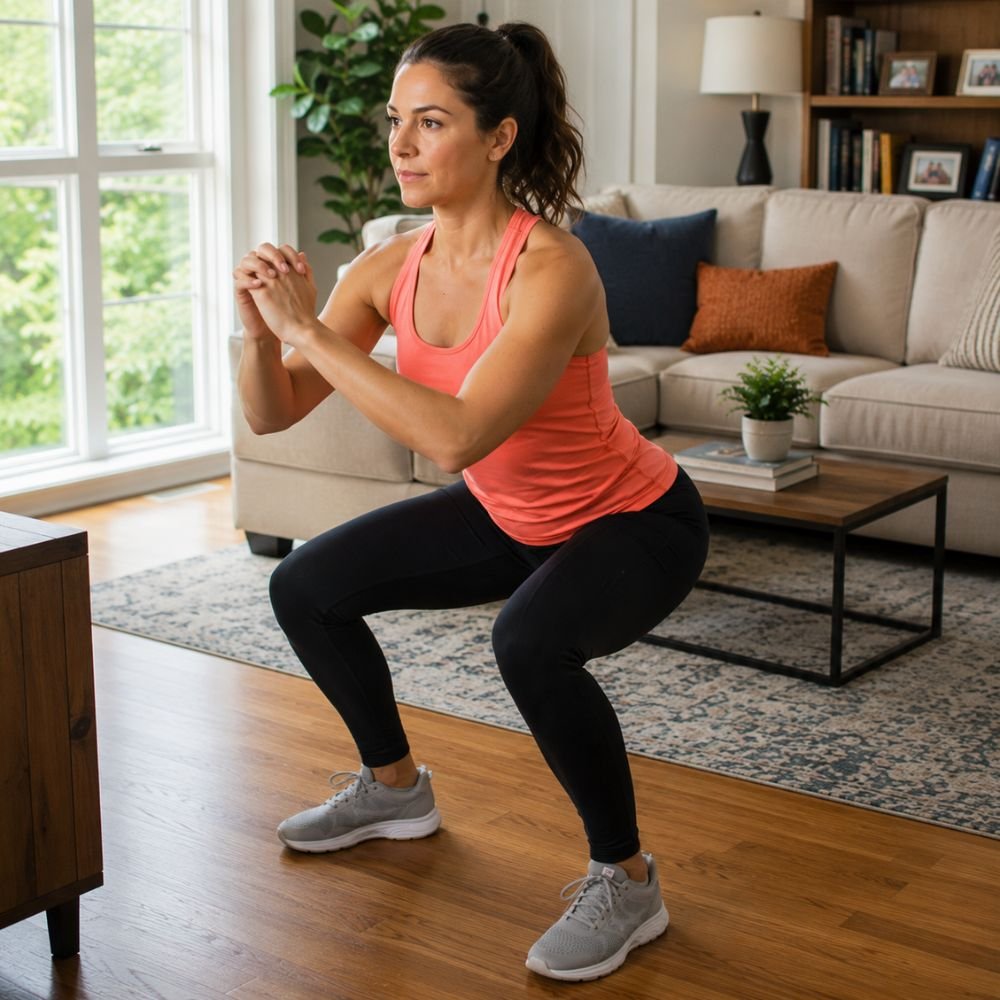
| Bodyweight squats | 3 sets of 12–15 reps | Legs, glutes |
| Push-ups (or knee push-ups) | 3 sets of 8–12 reps | Chest, arms, core |
| Walking lunges | 3 sets of 10 reps per leg | Legs, balance |
| Plank hold | 3 sets of 20–30 seconds | Core |
| Glute bridges | 3 sets of 12–15 reps | Glutes, hamstrings |
| Brisk walk or marching in place | 20–30 minutes | Cardio, calorie burn |
Tracking Progress Beyond the Scale
The number on the scale is only one measurement, and it can fluctuate daily due to water, hormones, and food timing. Alongside weight, track:
- Energy levels throughout the day
- How your clothes fit
- Sleep quality
- Consistency — how many planned workouts and meals you actually followed

Common Mistakes to Avoid
- Cutting calories too drastically. This often leads to fatigue, muscle loss, and rebound overeating.
- Skipping strength-based movement. Bodyweight strength exercises help preserve muscle while losing fat, unlike cardio alone.
- Expecting daily scale drops. Weight loss isn’t linear — plateaus and fluctuations are normal.
- Abandoning the plan after one off day. One missed workout or meal doesn’t cancel your progress; what matters is returning to the routine.

Frequently Asked Questions
How much weight can I realistically lose in 21 days? Most people following a moderate calorie deficit combined with regular movement can expect roughly 3–6 pounds (1.5–2.5 kg) of sustainable loss, though this varies by individual.
Do I need special equipment for this challenge? No. All the exercises in this plan use only bodyweight, making it fully doable at home without a gym membership.
What if I don’t lose weight every single day? That’s completely normal. Body weight fluctuates daily due to water retention, hormones, and digestion. Focus on the weekly trend rather than daily numbers.
Can I continue this routine after day 21? Yes — and you should. Since real habit change typically takes longer than 21 days, treating this as the start of an ongoing routine, rather than a one-time challenge, is what leads to lasting results.
Final Thoughts
The real value of a 21-day challenge isn’t the number on the scale at the end — it’s proving to yourself that a realistic, balanced routine of home workouts and mindful eating is something you can actually stick to. Use these three weeks to build habits worth keeping, not to chase a quick fix that disappears the moment the challenge ends.
disclaimer: This article is for general informational purposes and is not a substitute for medical or nutritional advice. If you have any underlying health conditions, or a history of disordered eating, please consult a doctor or registered dietitian before starting a new weight-loss program.