Gym Routine for Weight Loss and Toning Female: 10 Best Exercises for Beginners
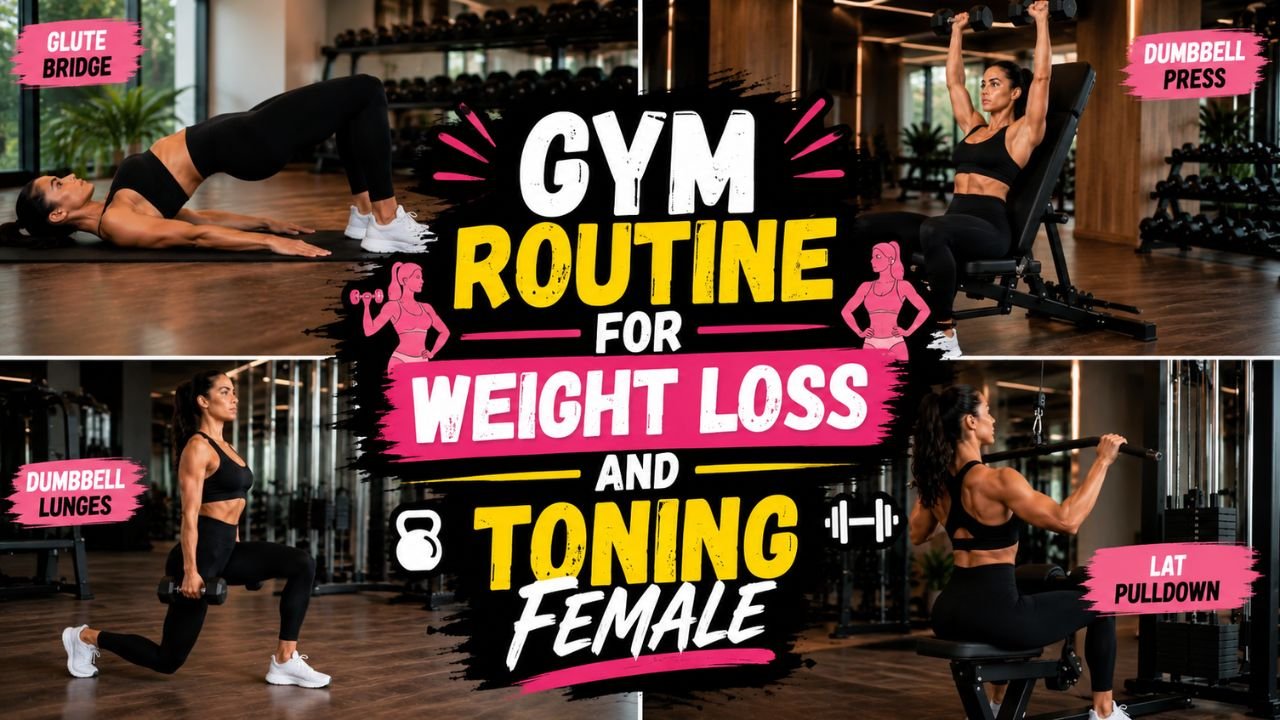
Weight loss and body toning are often confused, but they’re not the same thing. Weight loss focuses on reducing overall body fat through a calorie deficit, while body toning is about strengthening and shaping muscles to give the body a firmer, more defined appearance. For women, gym workouts are especially effective because they combine both goals — burning fat while building lean muscle, boosting metabolism, and improving overall strength and confidence. Unlike random home routines, structured gym training offers progressive overload, proper form guidance, and access to equipment that accelerates results. In this article, we’ve put together a beginner-friendly gym routine designed to help women lose weight, tone their bodies, and build lasting fitness habits — without feeling overwhelmed.
What Is a Gym Routine for Weight Loss and Toning?
- A gym routine is a structured plan of exercises performed regularly to achieve specific fitness goals, such as fat loss and muscle definition.
- An effective routine combines weight loss and muscle toning by pairing fat-burning workouts with resistance exercises that shape and firm the body.
- Cardio exercises like running, cycling, or the treadmill boost heart rate and burn calories, while strength training builds lean muscle that keeps metabolism high even at rest.
Benefits of Following a Gym Routine
- Burns calories
- Builds lean muscle
- Tones arms, legs, glutes and core
- Improves metabolism
- Increases strength
- Boosts confidence
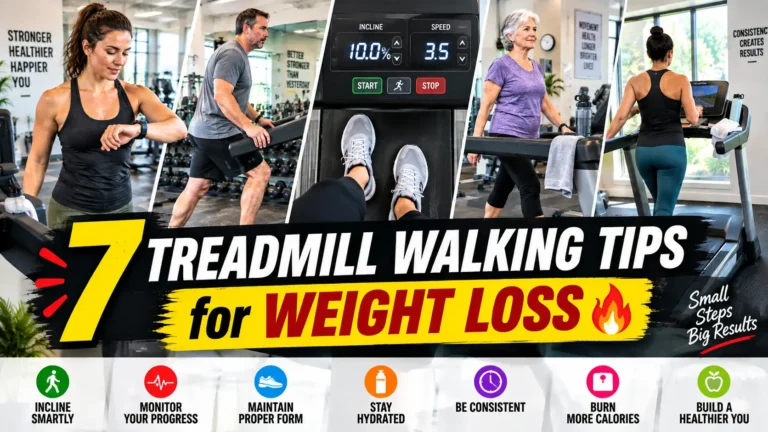
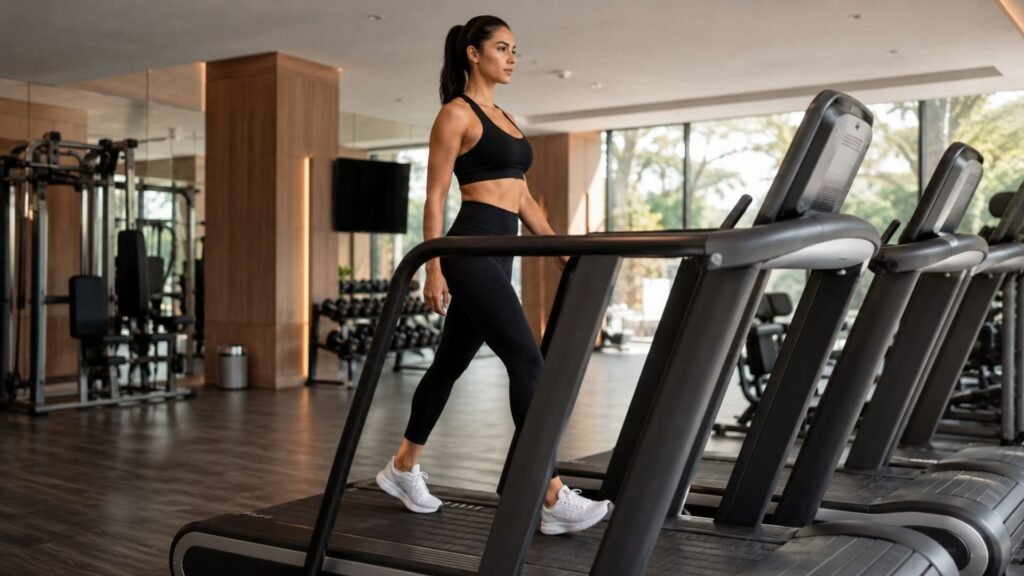
Walking on a Treadmill
What it is
Walking on a treadmill is a simple and effective cardio exercise that helps improve cardiovascular fitness, burn calories, and increase daily physical activity. It is suitable for beginners and all fitness levels.
How to do it
Stand tall with your shoulders relaxed and your core engaged. Start the treadmill at a comfortable walking speed. Swing your arms naturally while taking steady, even steps. Look straight ahead, avoid holding the handrails unless necessary, and maintain a smooth walking rhythm throughout the session.
Time/Reps
- 20–30 minutes per session
- 3–5 times per week
Benefits
- Burns calories and supports healthy weight management.
- Improves heart and lung health.
- Strengthens the legs, glutes, and calf muscles.
- Enhances endurance and overall fitness.
- Low-impact exercise that is gentle on the joints.
- Helps reduce stress and boosts energy levels.
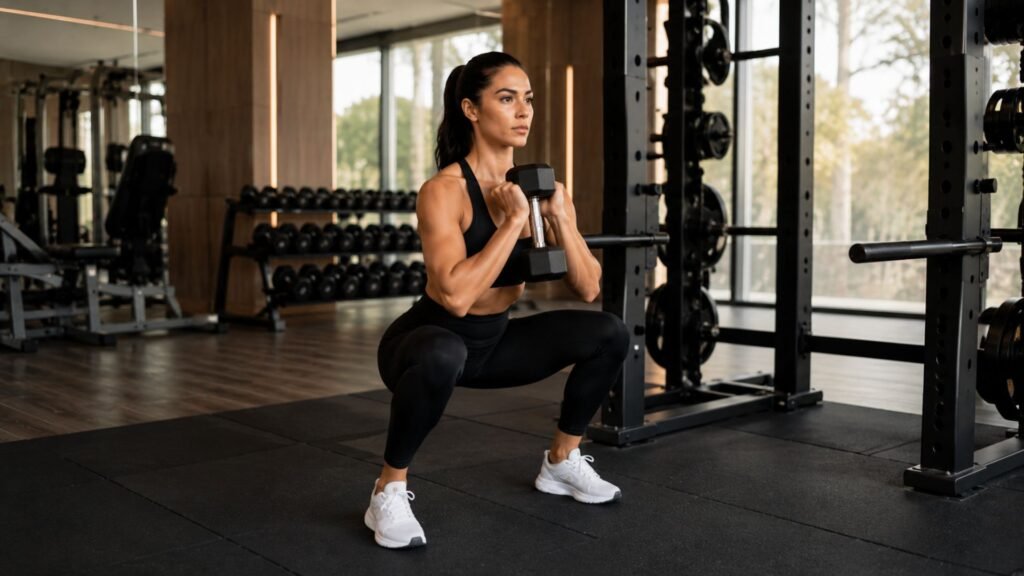
Goblet Squats
What it is
Goblet Squats are a lower-body strength exercise performed while holding a dumbbell or kettlebell close to your chest. They help build leg strength, improve squat form, and engage your core.
How to do it
Stand with your feet shoulder-width apart and hold a dumbbell vertically against your chest with both hands. Keep your chest up, back straight, and core tight. Lower your hips until your thighs are parallel to the floor or slightly below. Push through your heels to return to the starting position while maintaining proper posture.
Time/Reps
- 10–15 reps × 3 sets
- Rest 45–60 seconds between sets.
Benefits
- Strengthens the glutes, quadriceps, and hamstrings.
- Improves lower-body power and stability.
- Engages the core for better balance and posture.
- Enhances squat technique for beginners.
- Increases functional strength for everyday movements.
- Supports muscle toning and calorie burning.
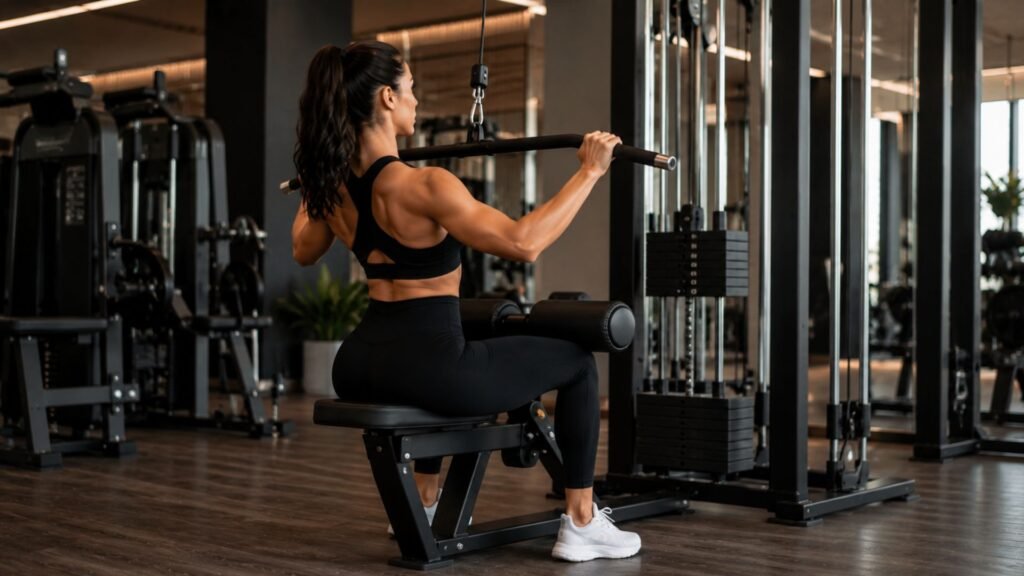
Lat Pulldown
What it is
The Lat Pulldown is an upper-body strength exercise performed on a cable machine. It primarily targets the latissimus dorsi (lats), helping to build a stronger, wider back while also engaging the shoulders and arms.
How to do it
Sit on the lat pulldown machine with your thighs secured under the pads. Grip the wide bar slightly wider than shoulder-width. Keep your chest up and your back straight. Pull the bar down toward your upper chest by squeezing your shoulder blades together. Pause briefly, then slowly return the bar to the starting position with control.
Time/Reps
- 10–12 reps × 3 sets
- Rest 60–90 seconds between sets.
Benefits
- Strengthens the back, shoulders, and biceps.
- Improves upper-body pulling strength.
- Enhances posture by promoting proper shoulder alignment.
- Builds a wider, more defined back.
- Increases grip strength and muscle endurance.
- Supports better performance in pull-ups and other upper-body exercises.
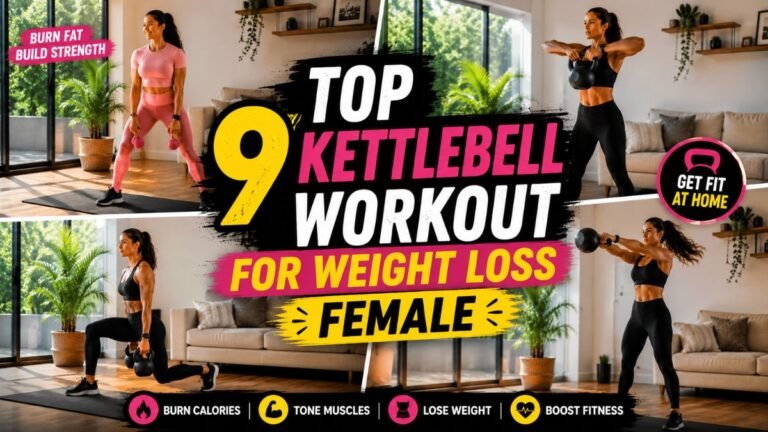
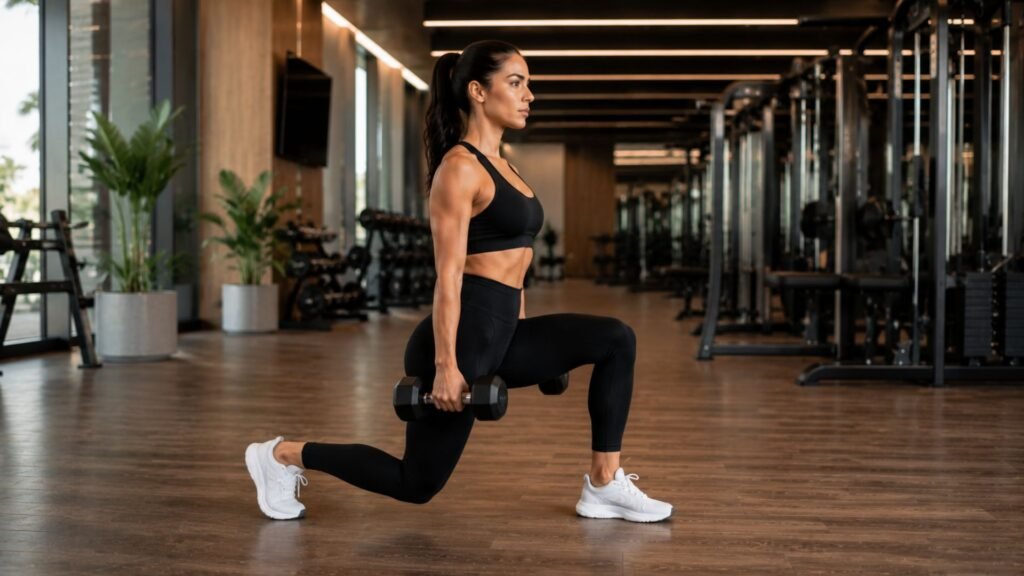
Dumbbell Lunges
What it is
Dumbbell Lunges are a lower-body strength exercise that involves stepping forward while holding a dumbbell in each hand. This movement targets the legs and glutes while improving balance, coordination, and overall lower-body strength.
How to do it
Stand upright with a dumbbell in each hand and your feet hip-width apart. Step one foot forward and lower your body until both knees are bent at about 90 degrees. Keep your chest up, core engaged, and front knee aligned over your ankle. Push through your front heel to return to the starting position, then repeat with the opposite leg.
Time/Reps
- 10–12 reps per leg × 3 sets
- Rest 45–60 seconds between sets.
Benefits
- Strengthens the glutes, quadriceps, hamstrings, and calves.
- Improves balance, stability, and coordination.
- Increases lower-body strength and endurance.
- Helps build toned legs and glutes.
- Engages the core for better posture and control.
- Enhances functional movement for daily activities and sports.
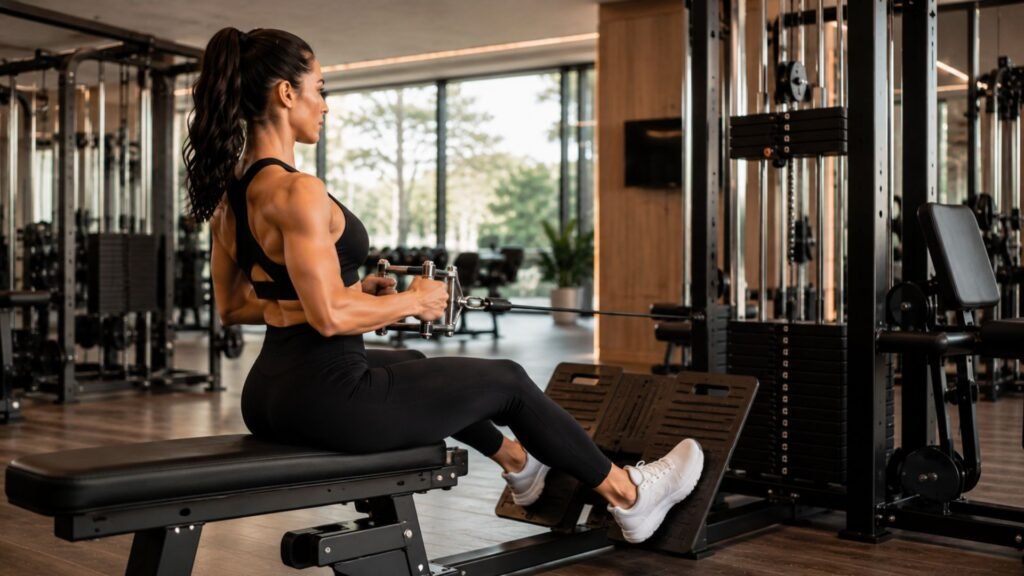
Seated Cable Row
What it is
The Seated Cable Row is a strength-training exercise that targets the muscles of the upper and middle back. Using a cable machine, it helps improve posture, build back strength, and enhance overall pulling power.
How to do it
Sit on the cable row machine with your feet firmly on the footrests and your knees slightly bent. Grip the handle with both hands and keep your back straight. Pull the handle toward your waist while squeezing your shoulder blades together. Pause briefly, then slowly extend your arms to return to the starting position without rounding your back.
Time/Reps
- 10–12 reps × 3 sets
- Rest 60–90 seconds between sets.
Benefits
- Strengthens the upper and middle back muscles.
- Improves posture and spinal stability.
- Builds stronger shoulders and biceps.
- Enhances pulling strength for everyday activities.
- Increases muscle definition in the back.
- Helps reduce the risk of shoulder and upper-back injuries with proper form.
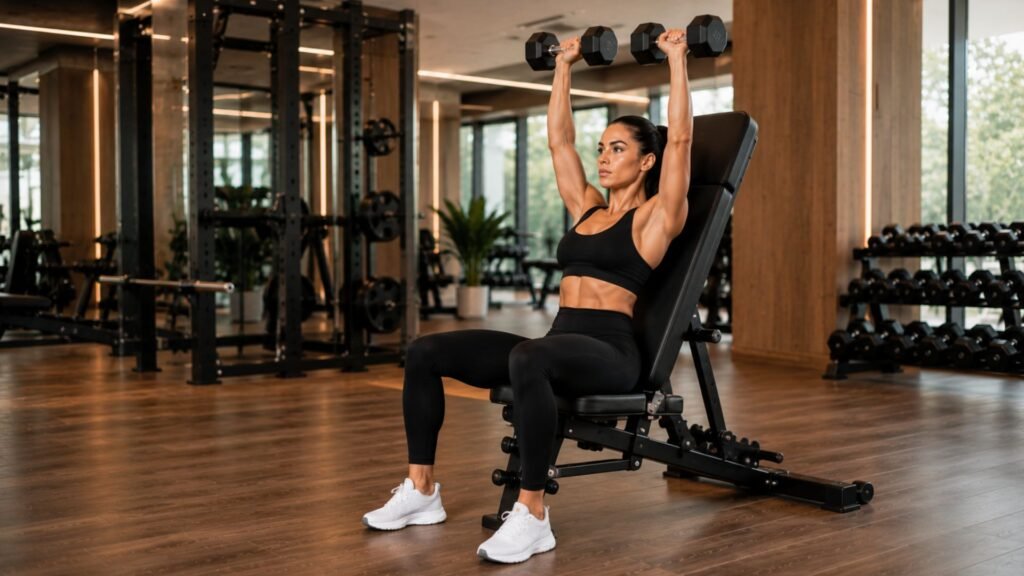
Dumbbell Shoulder Press
What it is
The Dumbbell Shoulder Press is an upper-body strength exercise that targets the shoulders while also engaging the triceps and upper chest. It is an excellent movement for building shoulder size, strength, and stability.
How to do it
Sit on an adjustable bench with your back supported and hold a dumbbell in each hand at shoulder level, palms facing forward. Keep your feet flat on the floor and your core engaged. Press the dumbbells overhead until your arms are fully extended without locking your elbows. Slowly lower the weights back to the starting position with control.
Time/Reps
- 10–12 reps × 3 sets
- Rest 60–90 seconds between sets.
Benefits
- Strengthens the front, side, and rear shoulder muscles.
- Builds stronger triceps and upper-body pressing power.
- Improves shoulder stability and mobility.
- Enhances upper-body muscle definition and posture.
- Increases functional strength for everyday lifting movements.
- Helps create broader, more toned shoulders.
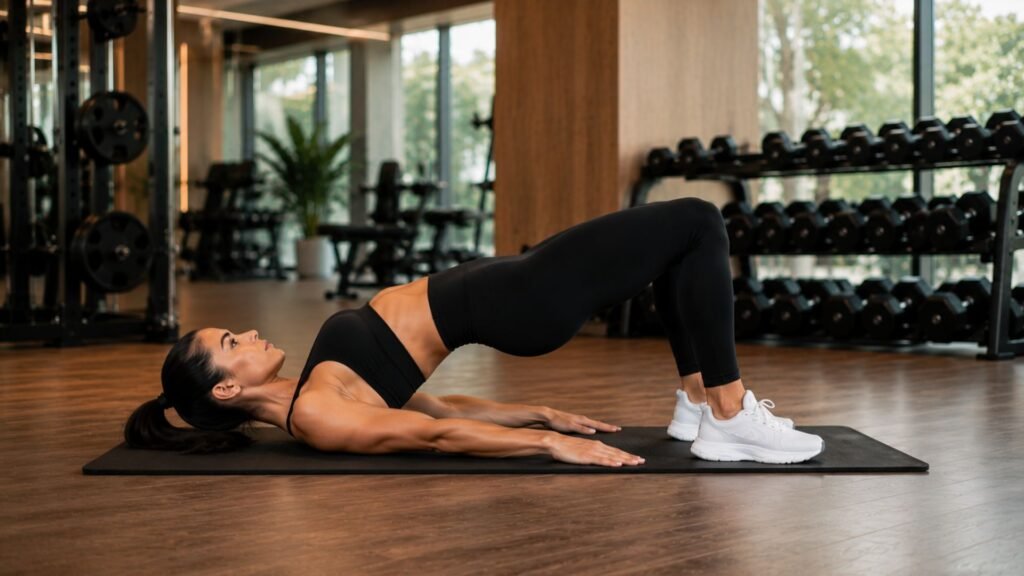
Glute Bridge
What it is
The Glute Bridge is a bodyweight exercise that targets the glutes, hamstrings, and core. It is an effective movement for strengthening the posterior chain, improving hip stability, and enhancing lower-body power.
How to do it
Lie on your back with your knees bent and your feet flat on the floor, hip-width apart. Place your arms by your sides with your palms facing down. Press through your heels and lift your hips until your body forms a straight line from your shoulders to your knees. Squeeze your glutes at the top, pause for a second, then slowly lower your hips back to the starting position.
Time/Reps
- 12–15 reps × 3 sets
- Rest 30–60 seconds between sets.
Benefits
- Strengthens the glutes, hamstrings, and lower back.
- Improves hip mobility and stability.
- Engages the core for better balance and posture.
- Helps reduce lower back discomfort caused by weak glutes.
- Enhances athletic performance and lower-body power.
- Tones and shapes the glutes while supporting functional movement.
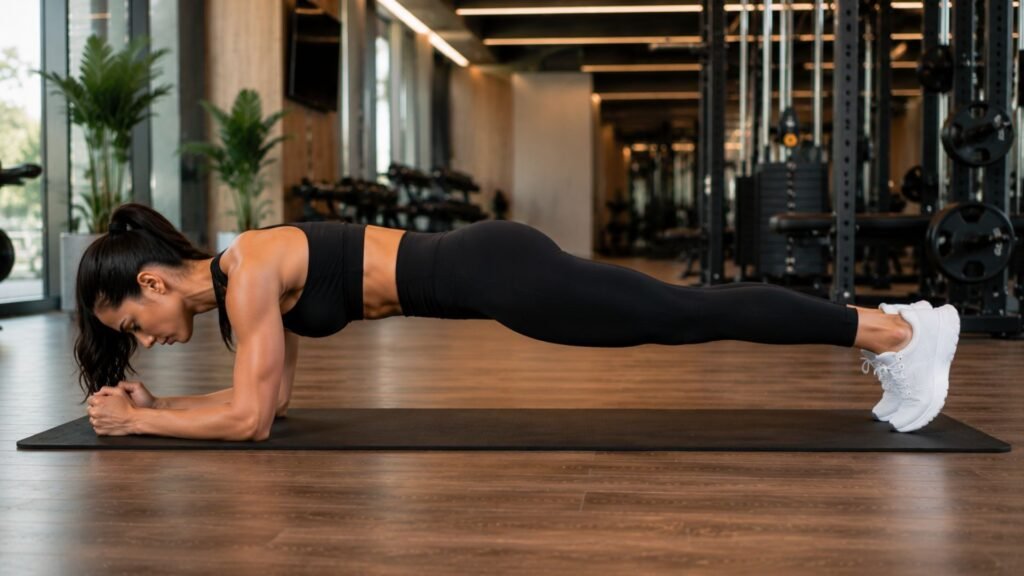
Forearm Plank
What it is
The Forearm Plank is an isometric core exercise that strengthens the abdominal muscles, lower back, shoulders, and glutes. It improves overall stability, posture, and core endurance without requiring any equipment.
How to do it
Place your forearms on the floor with your elbows directly under your shoulders. Extend your legs behind you and balance on your toes. Keep your body in a straight line from your head to your heels, engage your core, and avoid letting your hips sag or rise too high. Hold the position while breathing steadily.
Time/Reps
- 30–60 seconds × 3 sets
- Rest 30–45 seconds between sets.
Benefits
- Strengthens the core, shoulders, and lower back.
- Improves posture and spinal stability.
- Increases core endurance and balance.
- Engages the glutes and leg muscles for full-body stability.
- Helps reduce the risk of lower back pain by improving core strength.
- Enhances overall athletic performance and functional fitness.
Bicycle Crunches
What it is
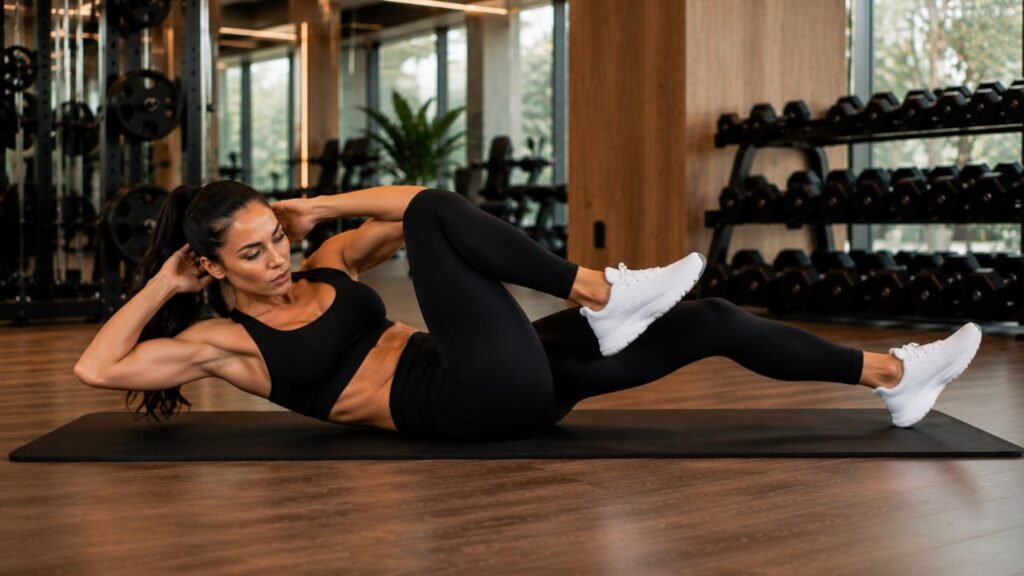
Bicycle Crunches are a bodyweight core exercise that targets the abdominal muscles, especially the rectus abdominis and obliques. This exercise also engages the hip flexors and helps improve core strength and stability.
How to do it
Lie on your back on an exercise mat with your hands lightly behind your head. Lift your shoulders off the floor and raise your legs with your knees bent. Bring your right elbow toward your left knee while extending your right leg. Switch sides in a smooth, controlled motion, alternating elbows and knees as if pedaling a bicycle. Keep your core engaged and avoid pulling on your neck.
Time/Reps
- 15–20 reps per side × 3 sets
- Rest 30–45 seconds between sets.
Benefits
- Strengthens the abdominal muscles and obliques.
- Improves core stability and balance.
- Helps tone and define the midsection.
- Enhances coordination through alternating movements.
- Supports better posture and spinal stability.
- Requires no equipment, making it ideal for home or gym workouts.
Elliptical Trainer
What it is
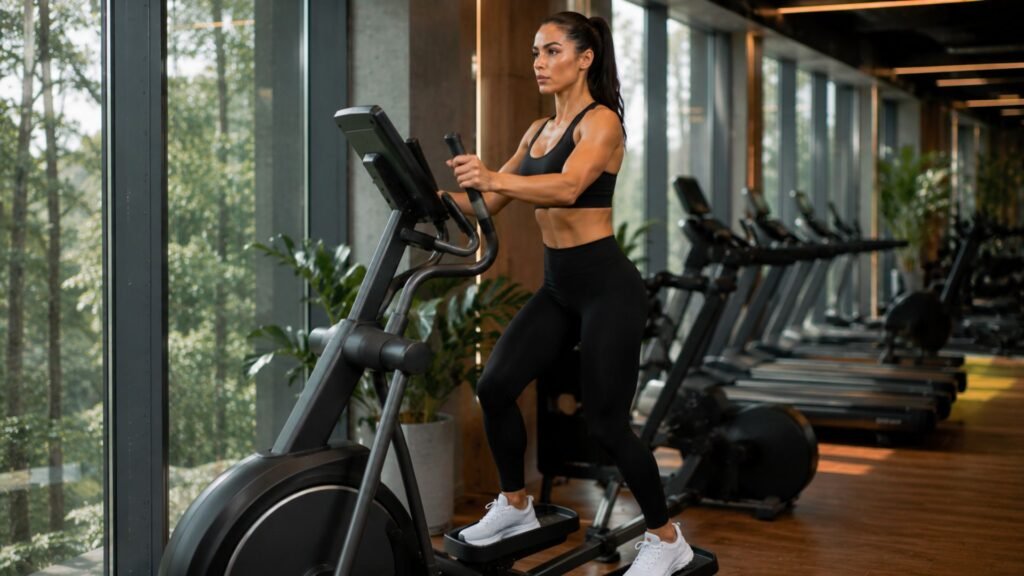
The Elliptical Trainer is a low-impact cardio machine that simulates walking, running, and stair climbing. It provides a full-body workout by engaging both the upper and lower body while reducing stress on the joints.
How to do it
Step onto the pedals and place your hands on the moving handles. Stand upright with your core engaged and look straight ahead. Begin moving your legs in a smooth, elliptical motion while pushing and pulling the handles naturally. Maintain a steady pace and avoid leaning on the handlebars.
Time/Reps
- 20–30 minutes per session
- 3–5 sessions per week
Benefits
- Burns calories and supports weight loss.
- Provides a low-impact workout that is gentle on the knees and joints.
- Strengthens the legs, glutes, arms, and shoulders.
- Improves cardiovascular endurance and lung capacity.
- Enhances coordination and balance through full-body movement.
- Boosts overall fitness while reducing the risk of exercise-related injuries.
Weekly Gym Routine for Beginners
| Day | Workout |
|---|---|
| Monday | Lower Body + Cardio |
| Tuesday | Upper Body + Core |
| Wednesday | Cardio + Stretching |
| Thursday | Lower Body + Glutes |
| Friday | Full Body Strength |
| Saturday | Cardio + Abs |
| Sunday | Rest & Recovery |
Diet Tips for Weight Loss and Toning
- Eat more protein
- Stay hydrated
- Choose complex carbs
- Include healthy fats
- Avoid sugary drinks
- Sleep 7–9 hours
Common Mistakes to Avoid
- Skipping warm-up
- Using poor exercise form
- Lifting weights that are too heavy
- Doing only cardio
- Not getting enough protein
- Inconsistent workouts
Conclusion
Combining strength training, cardio, and a balanced diet is the most effective approach to achieving both weight loss and body toning. Rather than rushing into intense workouts, beginners should focus on maintaining proper form and staying consistent with their routine. Over time, this steady, well-rounded approach delivers lasting results — helping women build strength, lose fat, and tone their bodies safely and sustainably.
Frequently Asked Questions
Is gym good for weight loss and toning?
Yes, gym workouts combine cardio and strength training, making them highly effective for burning fat and building lean, toned muscle.
How many days a week should women go to the gym?
3–5 days a week works well, balancing workout days with adequate rest for recovery.
Should beginners do cardio every day?
No, 3–4 days of cardio per week is enough; the rest should include strength training to avoid overtraining and support toning.
How long before I see toning results?
With consistent effort, visible toning results typically appear within 6–8 weeks.