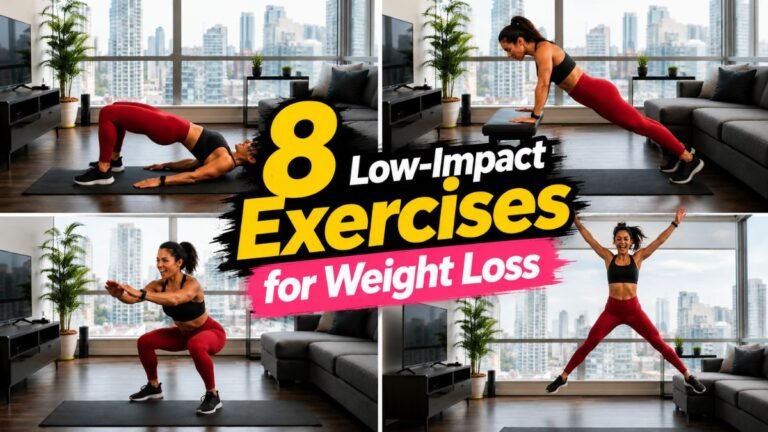
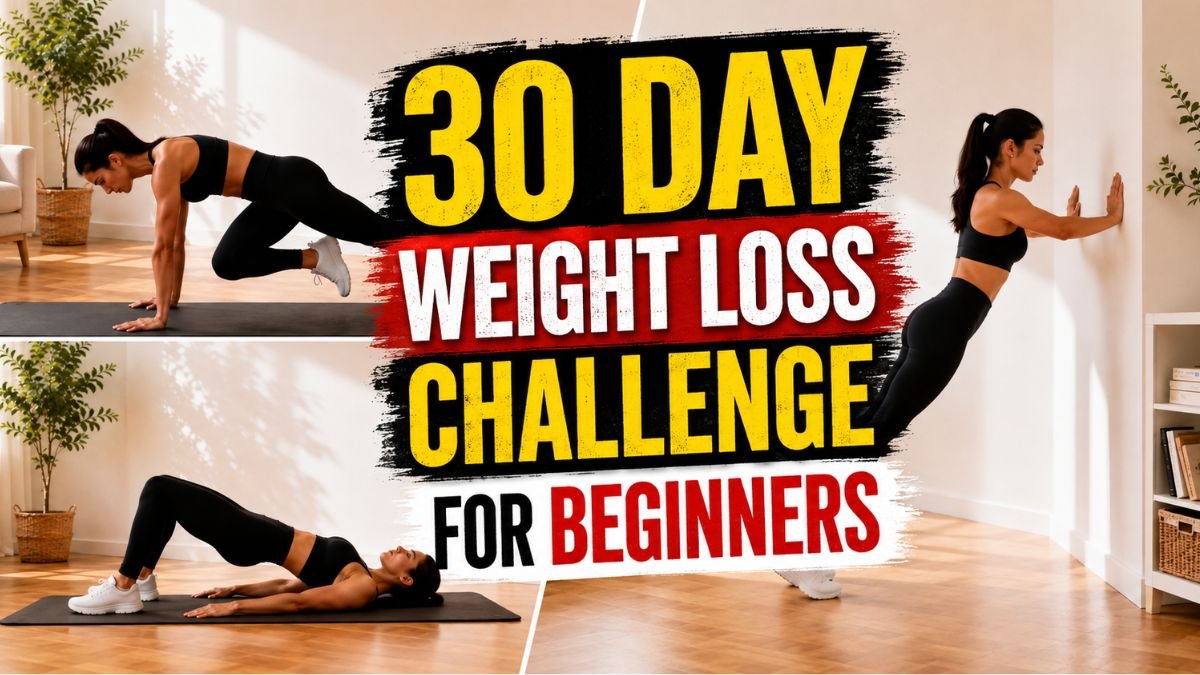
30 day weight loss challenge for beginners
A 30-day weight loss challenge is a structured, time-bound program designed to help you build healthy habits through daily exercise, mindful eating, and consistency. Instead of overwhelming beginners with complex routines, it breaks fitness down into simple, manageable daily tasks that gradually increase in intensity. This makes it especially effective for beginners, as it eliminates guesswork, keeps motivation high with visible short-term goals, and helps establish a sustainable routine without burning out. In this article, you’ll learn how to structure your 30-day journey, discover beginner-friendly workouts and diet tips, and get practical strategies to stay consistent and see real results by the end of the month.
What Is a 30-Day Weight Loss Challenge?
- A 30-day weight loss challenge is a focused fitness commitment where you follow a structured plan of workouts and healthy eating habits every day for one month.
- It’s important to set realistic expectations — this challenge is about building sustainable habits and kickstarting progress, not achieving dramatic overnight transformations.
- With consistent effort, beginners can safely lose around 4–8 pounds (roughly 2–4 kg) in 30 days through a combination of exercise and a calorie-controlled diet.
Benefits of a 30-Day Weight Loss Challenge
- Fat loss
- Better fitness
- Increased energy
- Healthy habits
- Improved confidence
Before You Start
- Measure your weight
- Take body measurements
- Set a realistic goal
- Prepare workout clothes & water bottle
30-Day Weight Loss Challenge Plan (Week by Week)
Week 1 – Build the Habit
- Daily walking
- Basic bodyweight exercises
- Drink more water
Week 2 – Increase Activity
- Cardio
- Strength exercises
- Healthy meals
Week 3 – Burn More Calories
- HIIT (Beginner-friendly)
- Core workouts
- Better sleep
Week 4 – Stay Consistent
- Full-body workouts
- Healthy eating
- Track your progress
Daily Workout Routine
- Warm-up (5 minutes)
- Main workout (20–30 minutes)
- Cool-down stretches (5 minutes)
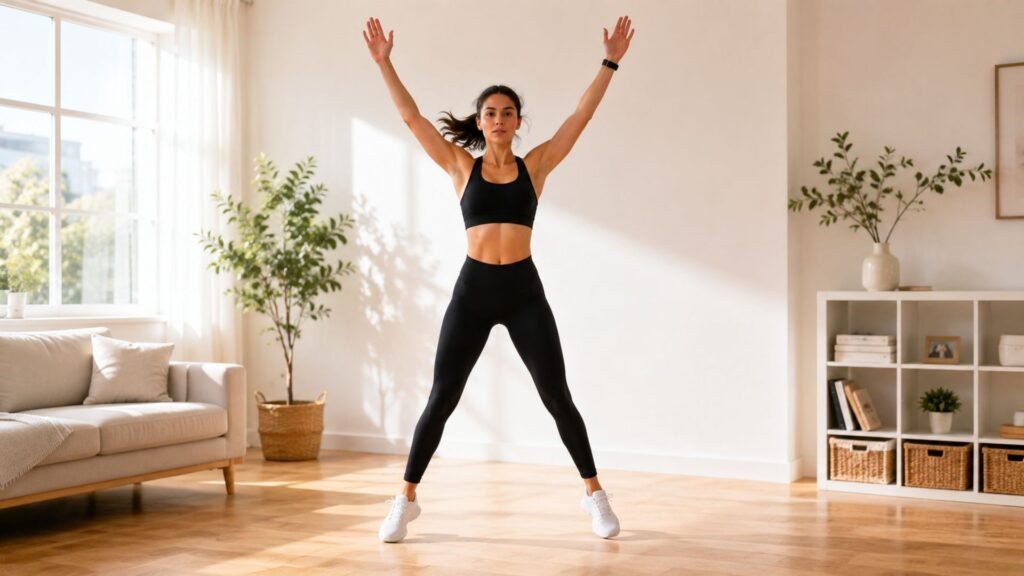
Jumping Jacks
What it is
Jumping Jacks are a simple full-body cardio exercise that increases your heart rate while engaging the legs, arms, shoulders, and core. They are ideal for warming up, burning calories, and improving overall fitness.
How to do it
Stand with your feet together and your arms by your sides. Jump your feet out to shoulder width while raising your arms overhead. Quickly jump back to the starting position and continue at a steady, controlled pace.
Time/Reps
- 30–60 seconds × 3–4 rounds
- Or 20–30 reps × 3 sets
Benefits
- Boosts cardiovascular endurance and burns calories.
- Improves coordination, agility, and full-body mobility.
- Strengthens the legs, shoulders, and core while increasing energy levels.
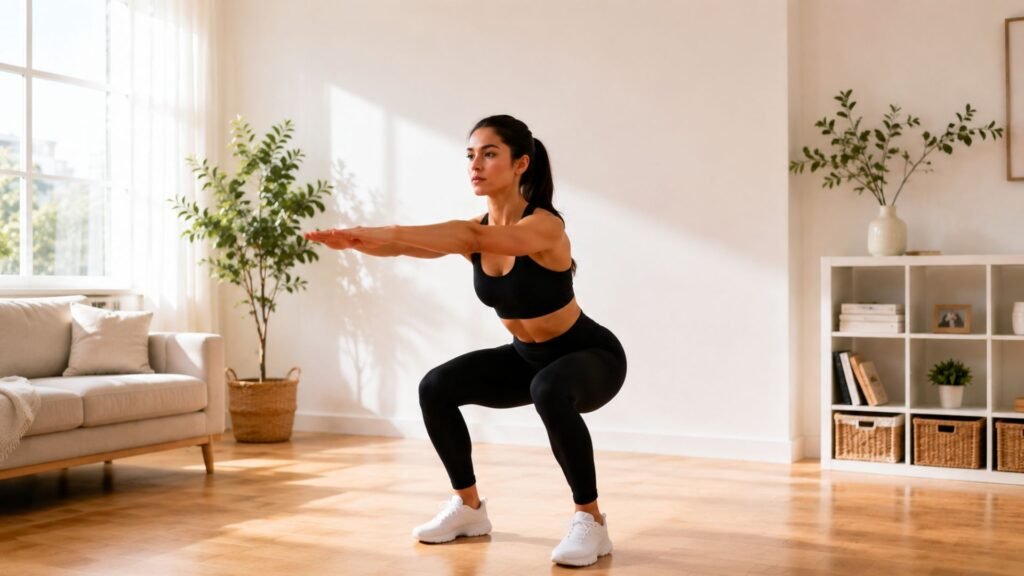
Bodyweight Squats
What it is
Bodyweight Squats are a fundamental lower-body exercise that uses your own body weight for resistance. They strengthen the legs, glutes, and core while improving balance and mobility.
How to do it
Stand with your feet shoulder-width apart and your toes slightly turned out. Extend your arms forward for balance, push your hips back, and bend your knees to lower into a squat. Keep your chest up and your heels flat on the floor. Press through your heels to return to the starting position.
Time/Reps
- 12–15 reps × 3 sets
- Rest 30–60 seconds between sets.
Benefits
- Strengthens the thighs, glutes, and core muscles.
- Improves lower-body stability, balance, and flexibility.
- Supports better posture and makes everyday movements easier.
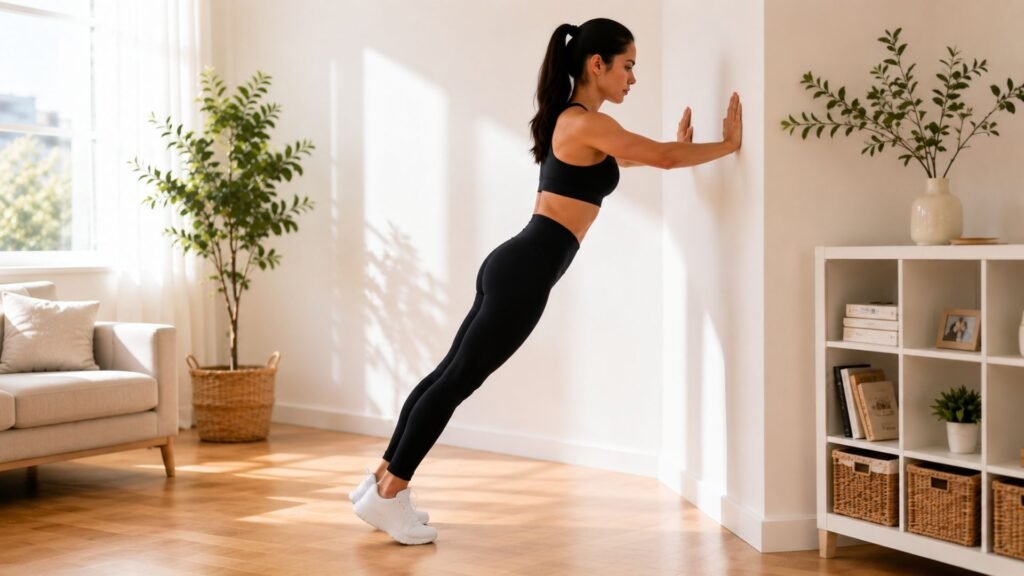
Wall Push-Ups
What it is
Wall Push-Ups are an easy upper-body exercise that uses a wall for support instead of the floor. They are perfect for beginners who want to build strength safely and improve muscle endurance.
How to do it
Stand facing a wall with your feet slightly behind you. Place your hands on the wall at shoulder width and keep your body in a straight line. Bend your elbows to bring your chest toward the wall, then push yourself back to the starting position while keeping your core engaged.
Time/Reps
- 10–15 reps × 3 sets
- Rest 30–45 seconds between sets.
Benefits
- Strengthens the chest, shoulders, and triceps.
- Improves upper-body stability and posture.
- Beginner-friendly and gentle on the wrists and shoulders.
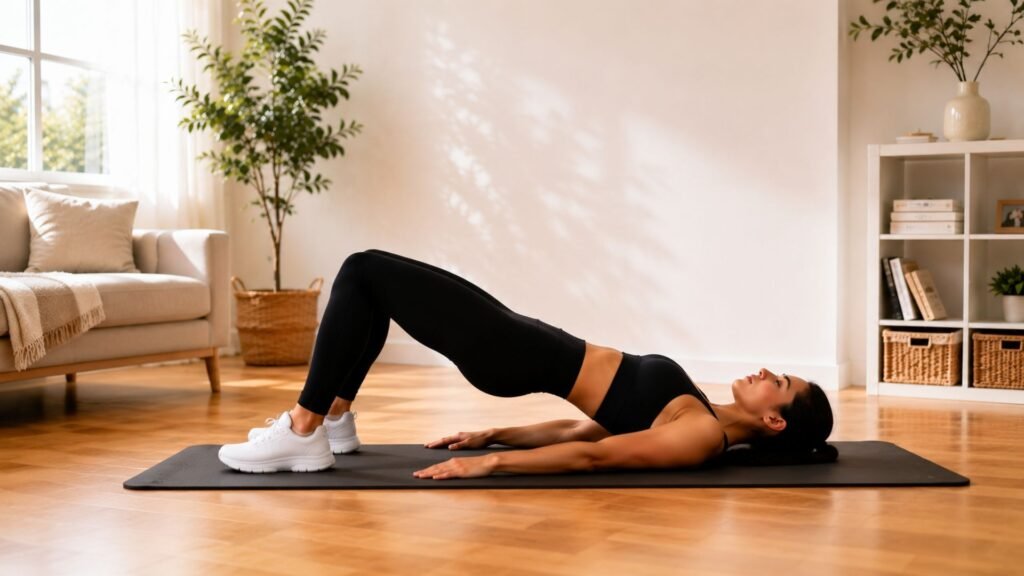
Glute Bridge
What it is
The Glute Bridge is a beginner-friendly bodyweight exercise that strengthens the glutes, hamstrings, and core. It is an excellent movement for improving hip stability and lower-body strength.
How to do it
Lie on your back with your knees bent and your feet flat on the floor, hip-width apart. Keep your arms by your sides. Press through your heels and lift your hips until your body forms a straight line from your shoulders to your knees. Squeeze your glutes at the top, then slowly lower your hips back down.
Time/Reps
- 12–15 reps × 3 sets
- Rest 30–45 seconds between sets.
Benefits
- Strengthens the glutes, hamstrings, and core muscles.
- Improves hip stability, posture, and lower-body mobility.
- Helps reduce lower back strain by activating the posterior chain.
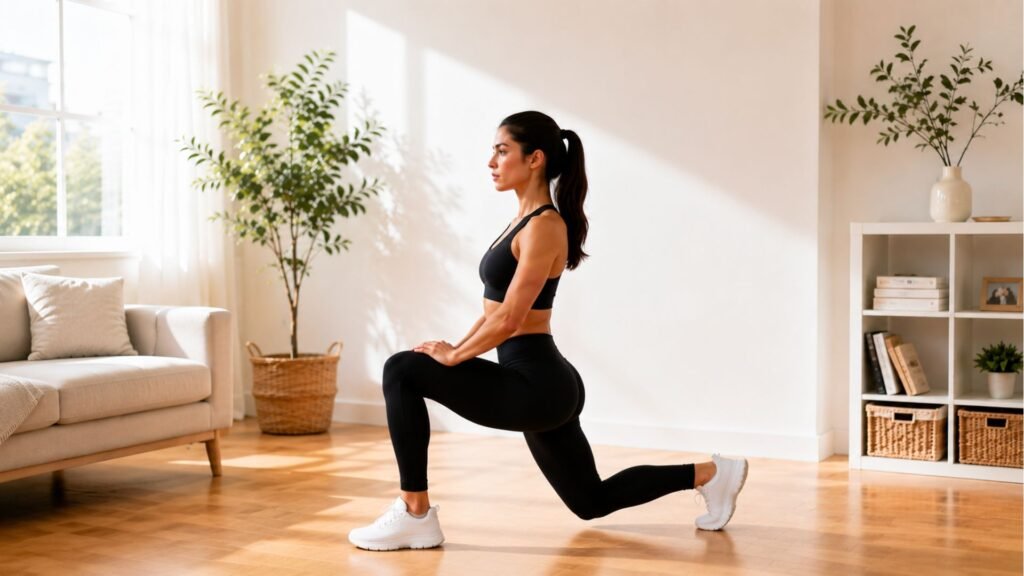
Forward Lunges
What it is
Forward Lunges are a lower-body exercise that strengthens the legs, glutes, and core. They also improve balance, coordination, and hip mobility, making them a great choice for beginners.
How to do it
Stand upright with your feet together. Step one foot forward and lower your body until both knees are bent at about 90 degrees. Keep your front knee directly above your ankle and your chest lifted. Push through your front heel to return to the starting position, then repeat with the opposite leg.
Time/Reps
- 10–12 reps per leg × 3 sets
- Rest 30–60 seconds between sets.
Benefits
- Strengthens the quadriceps, glutes, hamstrings, and calves.
- Improves balance, stability, and lower-body coordination.
- Increases hip flexibility and supports better functional movement.
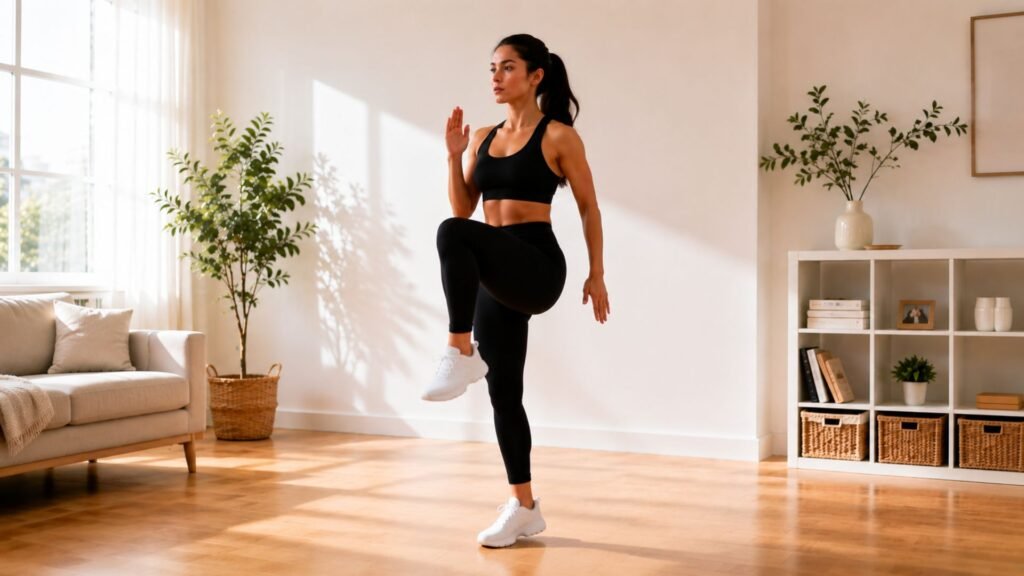
High Knees
What it is
High Knees are a simple cardio exercise that raises your heart rate while strengthening the legs and core. It is an excellent warm-up movement for improving speed, coordination, and endurance.
How to do it
Stand with your feet hip-width apart. Lift one knee toward waist height while pumping the opposite arm. Quickly switch legs in a running motion, landing softly on the balls of your feet. Keep your chest up and your core engaged throughout the exercise.
Time/Reps
- 30–45 seconds × 3 sets
- Rest 30 seconds between sets.
Benefits
- Boosts cardiovascular fitness and burns calories.
- Strengthens the legs, core, and hip muscles.
- Improves coordination, balance, and overall agility.
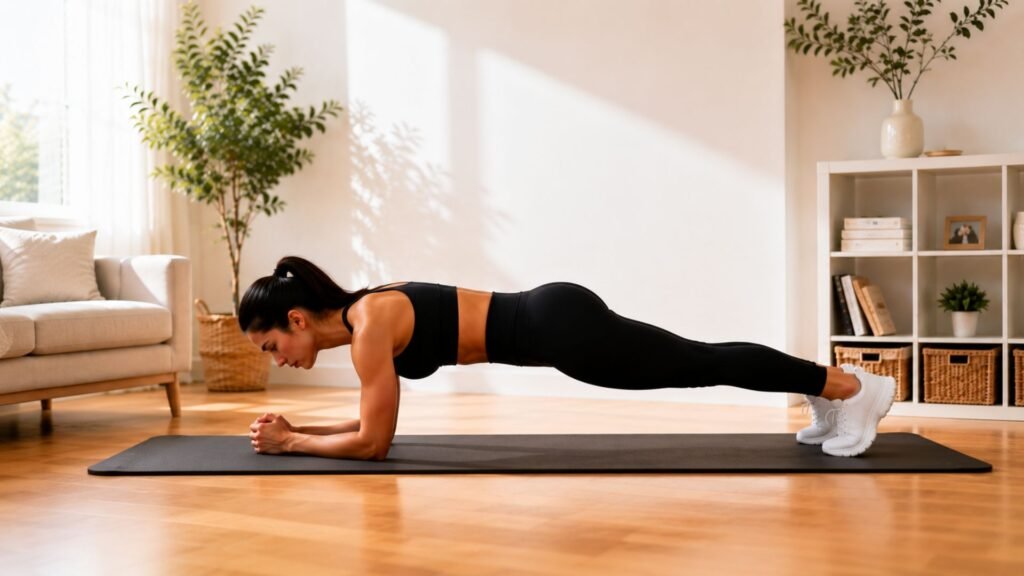
Forearm Plank
What it is
The Forearm Plank is a bodyweight exercise that strengthens the core while engaging the shoulders, back, glutes, and legs. It helps improve stability, posture, and overall body control.
How to do it
Place your forearms on a yoga mat with your elbows directly under your shoulders. Extend your legs behind you and balance on your toes. Keep your body in a straight line from head to heels, tighten your core, and avoid letting your hips sag or rise too high.
Time/Reps
- Hold for 20–45 seconds × 3 sets
- Rest 30–45 seconds between sets.
Benefits
- Builds core strength and improves body stability.
- Strengthens the shoulders, back, glutes, and legs.
- Enhances posture and supports better balance.
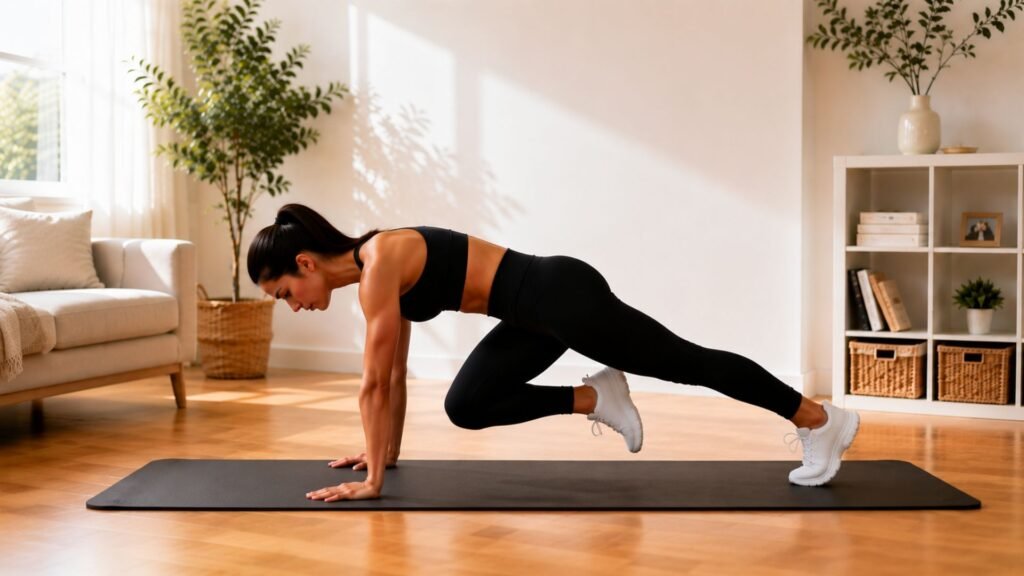
Mountain Climbers
What it is
Mountain Climbers are a full-body cardio exercise that combines core strengthening with dynamic movement. They help improve endurance, coordination, and overall fitness while burning calories.
How to do it
Start in a high plank position with your hands directly under your shoulders and your body in a straight line. Pull one knee toward your chest, then quickly switch legs in a smooth, running motion. Keep your core tight and avoid letting your hips rise or drop.
Time/Reps
- 30–45 seconds × 3 sets
- Rest 30–45 seconds between sets.
Benefits
- Strengthens the core, shoulders, and leg muscles.
- Increases heart rate for effective calorie burning.
- Improves agility, coordination, and cardiovascular endurance.
March in Place
What it is
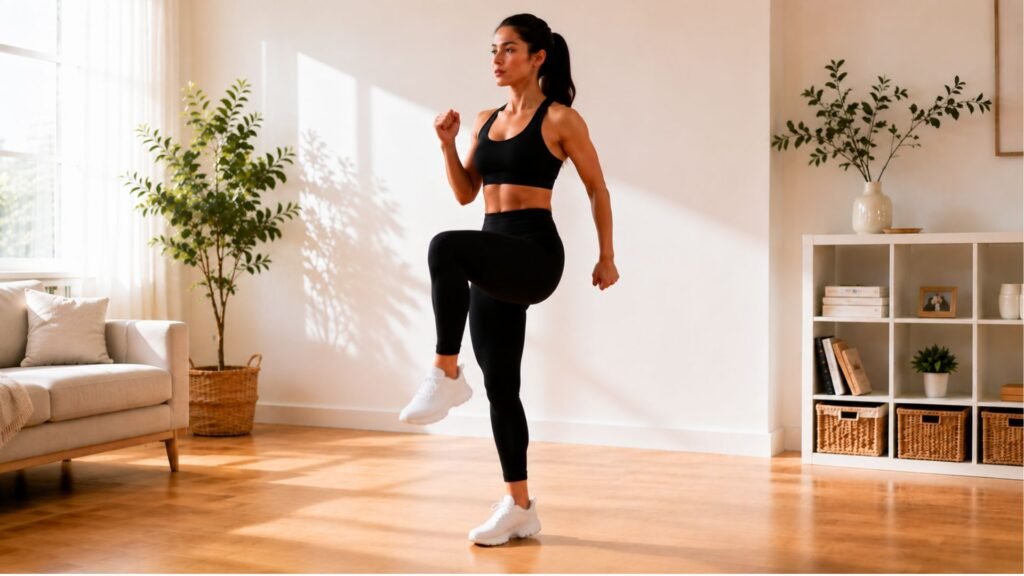
March in Place is a beginner-friendly cardio exercise that mimics walking while staying in one spot. It helps increase heart rate, improve circulation, and prepare the body for more intense workouts.
How to do it
Stand tall with your feet hip-width apart. Lift one knee to a comfortable height while swinging the opposite arm naturally. Lower your foot and repeat with the other leg. Continue alternating legs at a steady, comfortable pace while keeping your core engaged.
Time/Reps
- 45–60 seconds × 3 sets
- Rest 20–30 seconds between sets.
Benefits
- Improves cardiovascular fitness and stamina.
- Enhances balance, coordination, and lower-body mobility.
- Gently strengthens the legs and core with low impact on the joints.
Brisk Walking
What it is
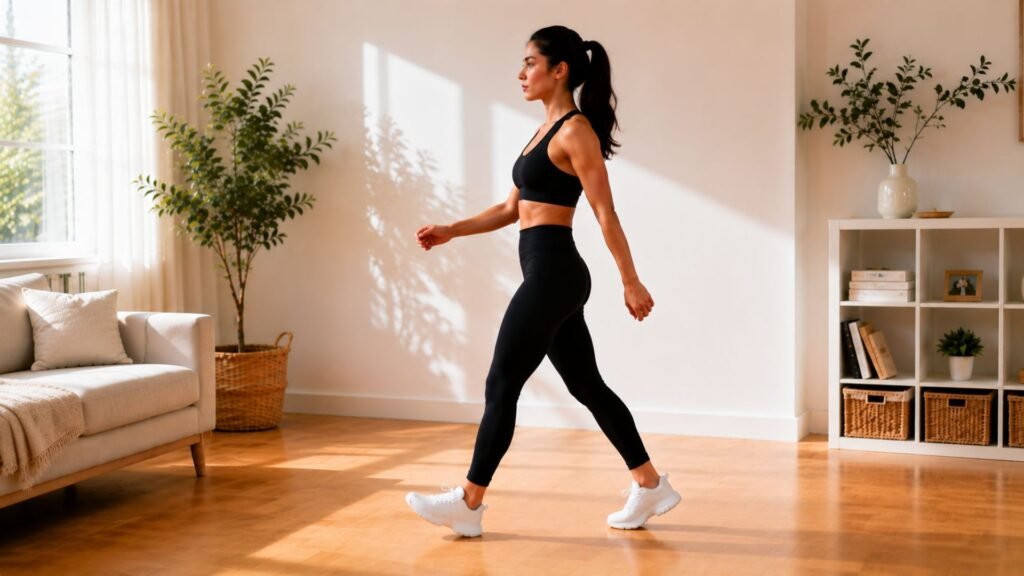
Brisk Walking is a low-impact cardio exercise performed at a faster pace than normal walking. It helps improve heart health, increase endurance, and burn calories without putting excessive stress on the joints.
How to do it
Stand upright with your shoulders relaxed and your core engaged. Walk at a steady, brisk pace while swinging your arms naturally. Take smooth, even steps, keep your head up, and breathe comfortably throughout the session.
Time/Reps
- 20–30 minutes per session
- 3–5 sessions per week
Benefits
- Improves cardiovascular health and stamina.
- Burns calories and supports healthy weight management.
- Strengthens the legs while improving posture and overall mobility.
Simple Diet Tips
- Eat more protein
- Reduce sugar
- Drink 2–3 liters of water
- Include fruits & vegetables
- Avoid late-night snacks
Foods to Eat
- Eggs
- Oats
- Chicken/Fish
- Greek Yogurt
- Fruits
- Vegetables
- Brown Rice
- Nuts
Foods to Avoid
- Sugary drinks
- Fast food
- Fried snacks
- Cakes & pastries
- Processed foods
Common Mistakes Beginners Make
- Skipping meals
- Overtraining
- Not sleeping enough
- Drinking less water
- Expecting quick results
Tips to Stay Motivated
- Take progress photos
- Track your workouts
- Celebrate small wins
- Stay consistent
- Exercise with a friend
Frequently Asked Questions (FAQs)
Can beginners lose weight in 30 days?
Yes, beginners can lose weight in 30 days by following a consistent workout routine along with a balanced, calorie-controlled diet.
How much weight can I lose?
Most beginners can safely lose around 4–8 pounds (2–4 kg) in 30 days, depending on effort, diet, and consistency.
Do I need gym equipment?
No, this challenge can be done at home using just bodyweight exercises, though optional tools like dumbbells or resistance bands can add variety.
What if I miss one day?
Missing a day is okay — simply resume the next day and stay consistent rather than giving up on the challenge.
Final Thoughts
Consistency matters far more than perfection when it comes to lasting results. Even if you miss a day or don’t follow the plan perfectly, what counts is showing up and continuing to try. Once your 30 days are complete, don’t stop there — carry forward the healthy habits you’ve built, whether it’s regular movement, mindful eating, or better sleep. Weight loss and fitness are ongoing journeys, not one-time events, so keep challenging yourself, celebrate small wins, and stay committed to becoming a stronger, healthier version of yourself.