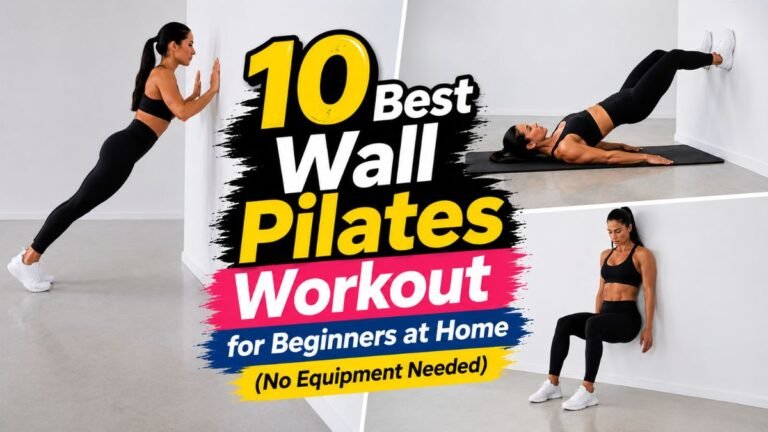
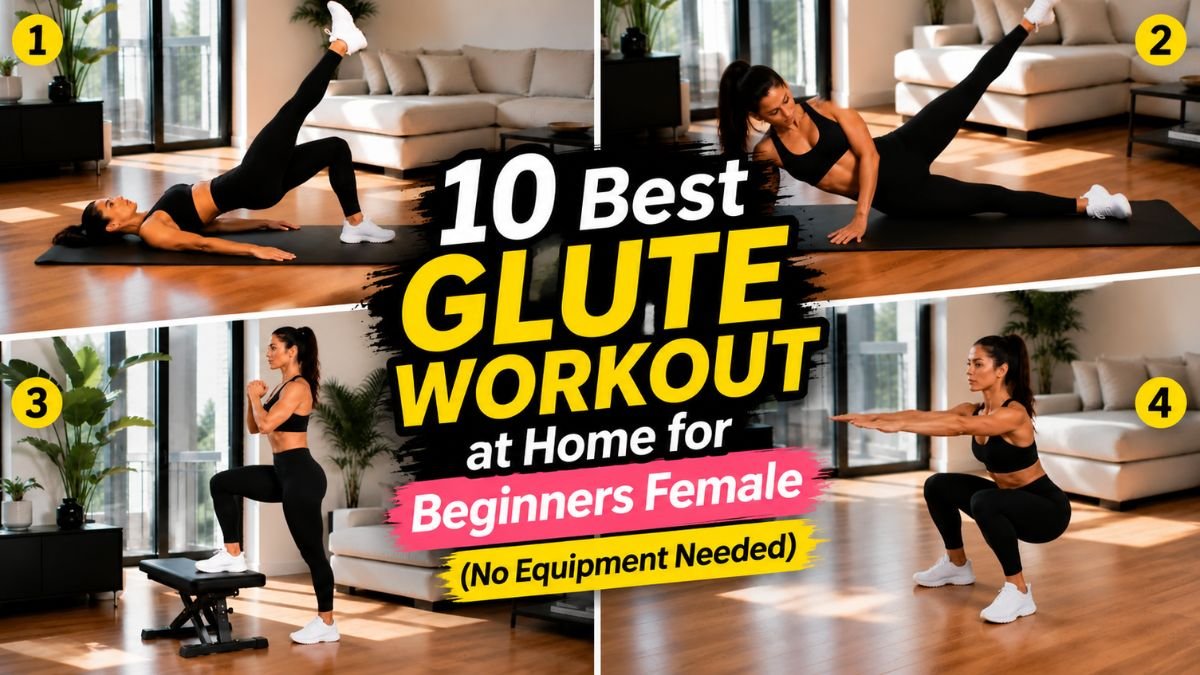
10 Best Glute Workout at Home for Beginners Female (No Equipment Needed)
The glutes, or gluteal muscles, are a group of three muscles located in the buttocks the gluteus maximus, gluteus medius, and gluteus minimus. These muscles play a crucial role in almost every lower-body movement, from walking and climbing stairs to running and jumping. Strong glutes not only enhance your posture and balance but also help prevent lower back and knee injuries. The good news is that you don’t need a gym membership or fancy equipment to train them beginners can easily build strong, toned glutes right at home using simple bodyweight exercises. In this article, we’ll walk you through beginner-friendly glute exercises, an easy-to-follow workout plan, and practical tips to help you get the most out of every session.
What Is a Glute Workout?
- Meaning: A glute workout refers to exercises specifically aimed at strengthening and toning the buttock muscles.
- Basic Role: The gluteus maximus powers hip extension and movements like standing and climbing, while the gluteus medius and minimus stabilize the hips and support balance.
- Benefits: Strong glutes enhance posture, improve athletic performance, and help prevent lower back and knee injuries.
Benefits of Glute Workout at Home
- Stronger hips and legs
- Better posture
- Improved balance
- Supports lower back
- Helps build toned glutes
- No gym required
10 Best Glute Workout at Home for Beginners Female (No Equipment Needed)
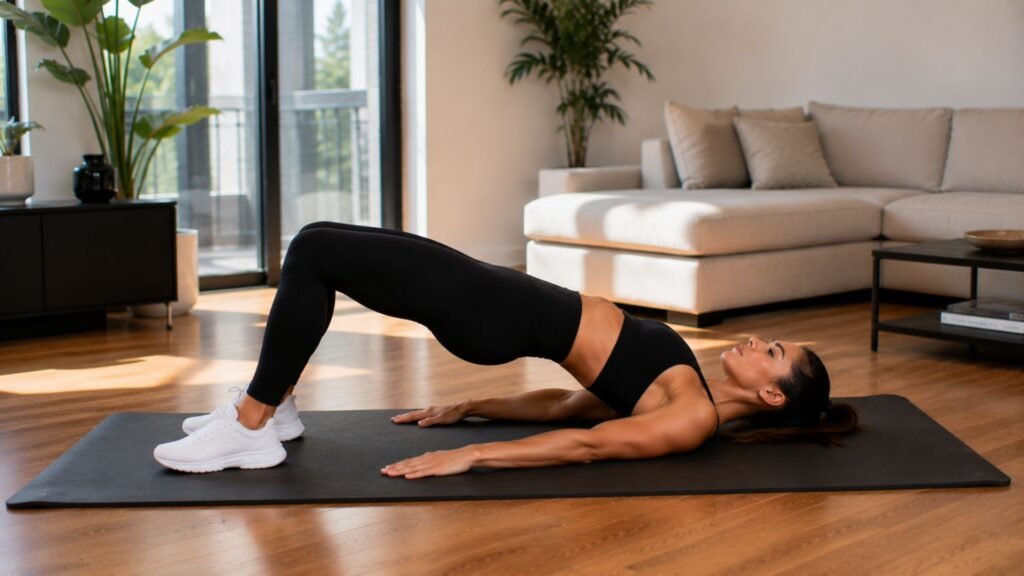
1. Glute Bridge
What It Is
The Glute Bridge is a beginner-friendly lower-body exercise that targets the glutes, hamstrings, and core. It helps strengthen the hips while improving stability and posture.
How to Do It
Lie on your back with your knees bent and your feet flat on the floor, hip-width apart. Keep your arms by your sides. Press through your heels and lift your hips until your body forms a straight line from your shoulders to your knees. Squeeze your glutes at the top, then slowly lower your hips back to the starting position.
Time/Reps
12–15 reps × 3 sets
Rest for 30–45 seconds between sets.
Benefits
- Strengthens and tones the glute muscles.
- Activates the hamstrings and core.
- Improves hip mobility and stability.
- Supports better posture and lower back health.
- Enhances lower-body strength for everyday movement.
- Requires no equipment, making it ideal for home workouts.
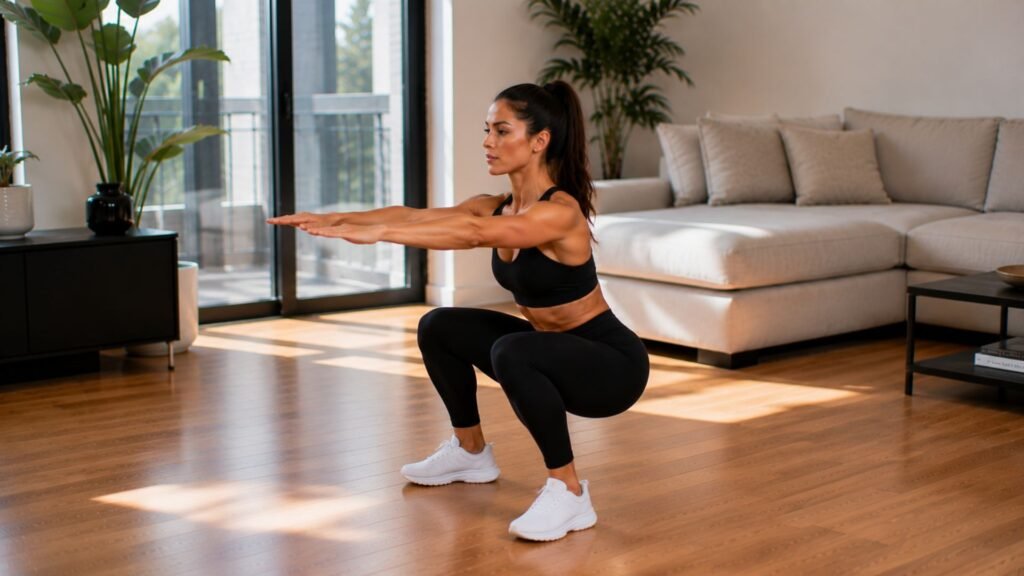
2. Bodyweight Squats
What It Is
Bodyweight Squats are a foundational lower-body exercise that uses your own body weight to strengthen the legs, glutes, and core. They help improve balance, mobility, and overall functional fitness.
How to Do It
Stand with your feet shoulder-width apart and your toes slightly pointed outward. Extend your arms forward for balance, push your hips back, and bend your knees as you lower your body until your thighs are parallel to the floor. Keep your chest up, your core engaged, and your heels flat on the ground. Press through your heels to return to the starting position.
Time/Reps
12–15 reps × 3 sets
Rest for 30–45 seconds between sets.
Benefits
- Strengthens the glutes, quadriceps, hamstrings, and calves.
- Improves lower-body power and muscular endurance.
- Enhances balance, stability, and coordination.
- Increases hip, knee, and ankle mobility.
- Supports better posture and functional movement.
- Requires no equipment, making it perfect for home workouts.
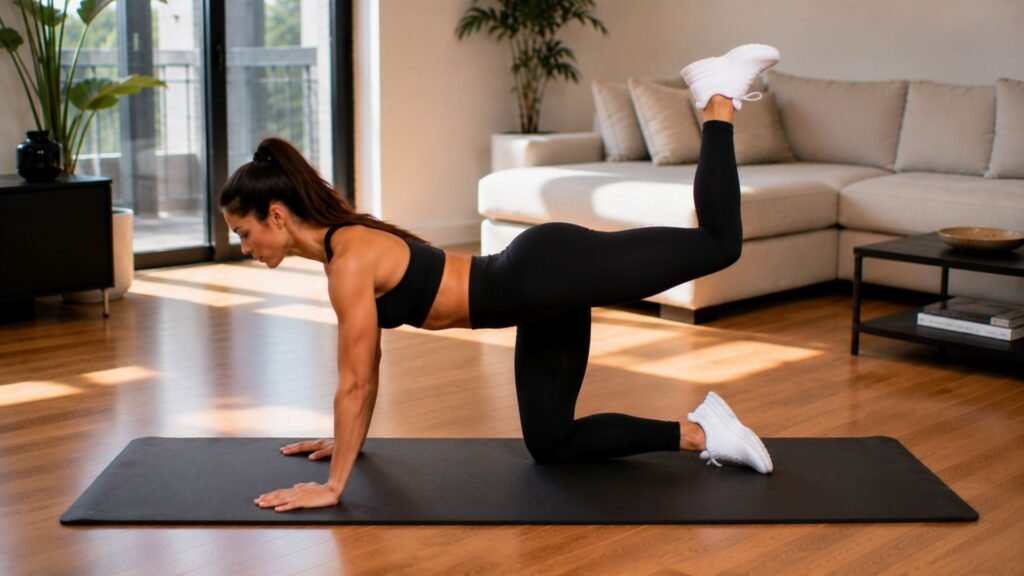
3. Donkey Kicks
What It Is
Donkey Kicks are a bodyweight exercise designed to strengthen and tone the glute muscles. They also engage the hamstrings and core, making them an excellent lower-body workout for home fitness.
How to Do It
Start on all fours with your hands directly under your shoulders and your knees under your hips. Keep one knee bent at a 90-degree angle and lift that leg upward until your thigh is in line with your torso or slightly higher. Squeeze your glutes at the top, then slowly lower your knee back to the starting position. Complete all repetitions on one side before switching legs.
Time/Reps
12–15 reps per leg × 3 sets
Rest for 30–45 seconds between sets.
Benefits
- Strengthens and tones the glute muscles.
- Activates the hamstrings and core.
- Improves hip stability and mobility.
- Supports better posture and lower-body strength.
- Low-impact exercise suitable for all fitness levels.
- Requires no equipment, making it perfect for home workouts.
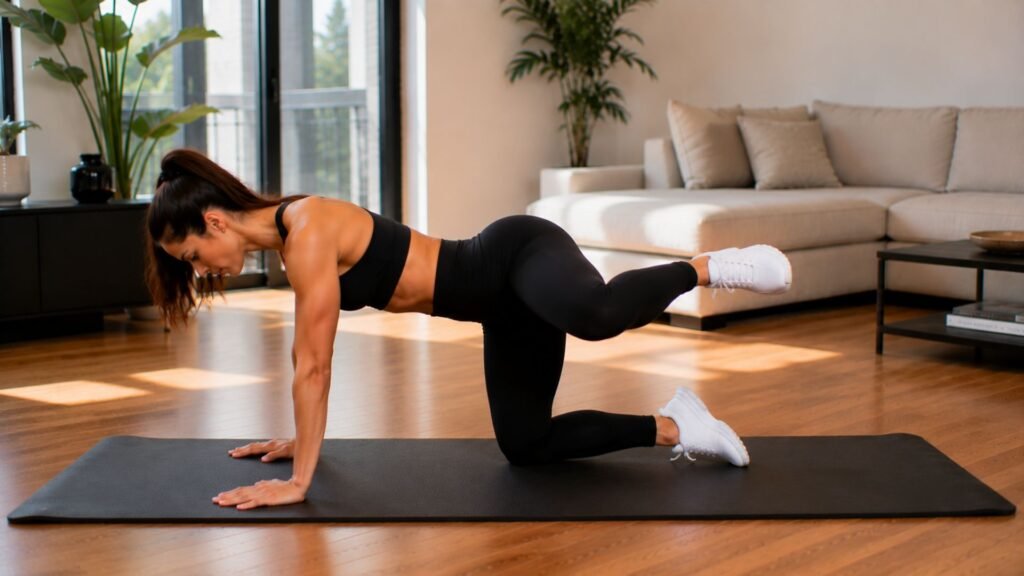
4. Fire Hydrants
What It Is
Fire Hydrants are a bodyweight glute exercise that targets the outer glutes and hip muscles. This movement helps strengthen the hips, improve stability, and enhance lower-body mobility.
How to Do It
Start on all fours with your hands directly under your shoulders and your knees beneath your hips. Keep your knee bent at a 90-degree angle and lift one leg out to the side as high as you comfortably can without rotating your hips. Pause briefly at the top, then slowly return to the starting position. Complete all repetitions on one side before switching legs.
Time/Reps
12–15 reps per leg × 3 sets
Rest for 30–45 seconds between sets.
Benefits
- Strengthens and tones the glutes and hip muscles.
- Improves hip mobility and joint stability.
- Enhances balance and lower-body control.
- Supports better posture and pelvic alignment.
- Helps activate muscles before lower-body workouts.
- Requires no equipment, making it ideal for home workouts.
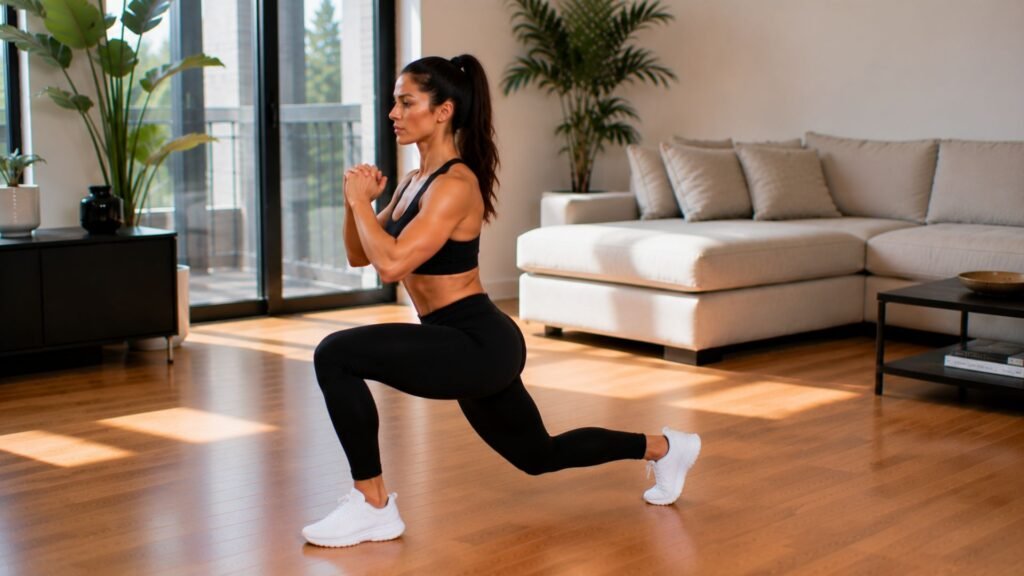
5. Reverse Lunges
What It Is
Reverse Lunges are a lower-body exercise that strengthens the glutes, quadriceps, hamstrings, and calves. Stepping backward places less stress on the knees while improving balance and stability.
How to Do It
Stand upright with your feet hip-width apart and your hands together in front of your chest. Step one leg backward and lower your body until both knees form approximately 90-degree angles. Keep your front knee aligned over your ankle and your torso upright. Push through the front heel to return to the starting position, then repeat with the opposite leg.
Time/Reps
10–12 reps per leg × 3 sets
Rest for 30–45 seconds between sets.
Benefits
- Strengthens the glutes, thighs, and calves.
- Improves balance, coordination, and stability.
- Places less pressure on the knees than forward lunges.
- Enhances hip mobility and lower-body flexibility.
- Builds functional strength for everyday movements.
- Requires no equipment, making it ideal for home workouts.
6. Step-Ups
What It Is
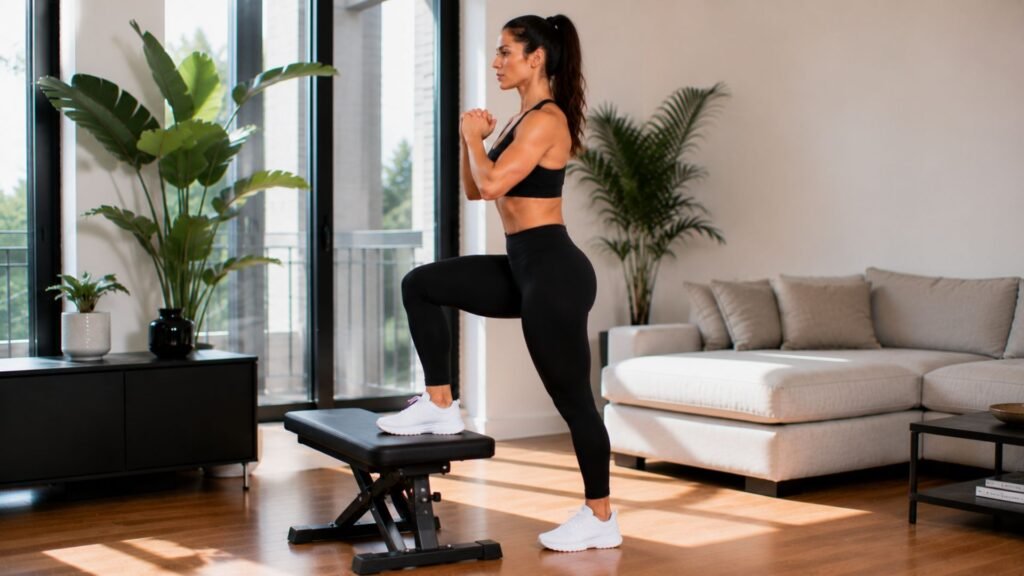
Step-Ups are a functional lower-body exercise that strengthens the glutes, quadriceps, hamstrings, and calves. They also improve balance, coordination, and single-leg stability by mimicking everyday climbing movements.
How to Do It
Stand facing a sturdy bench or step with your feet hip-width apart. Place one foot firmly on the bench and press through your heel to lift your body until both legs are straight. Step down slowly with control and repeat all repetitions before switching to the opposite leg. Keep your chest up and core engaged throughout the movement.
Time/Reps
10–12 reps per leg × 3 sets
Rest for 30–45 seconds between sets.
Benefits
- Strengthens the glutes, thighs, and calves.
- Improves balance, coordination, and stability.
- Enhances single-leg strength and functional fitness.
- Supports better hip and knee joint stability.
- Increases lower-body power for daily activities and sports.
- Can be performed with minimal equipment at home.
7. Side-Lying Leg Raises
What It Is
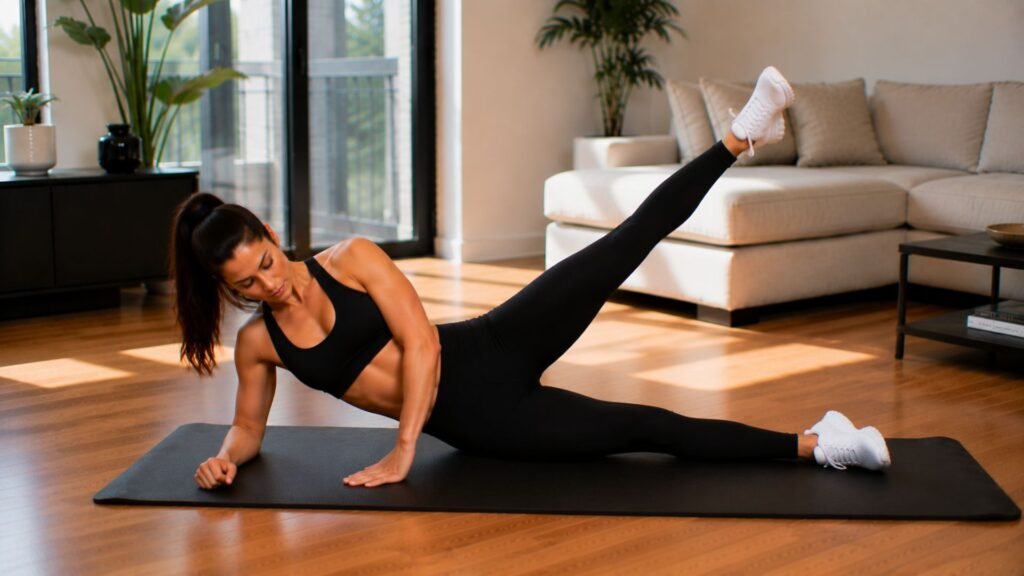
Side-Lying Leg Raises are a bodyweight exercise that targets the outer glutes, hip abductors, and thighs. They help strengthen the hips, improve stability, and sculpt the lower body.
How to Do It
Lie on one side with your legs straight and stacked on top of each other. Support your head with your lower arm and place your upper hand on the floor for balance. Keep your top leg straight and slowly lift it as high as comfortable without rotating your hips. Pause briefly at the top, then lower it with control. Complete all repetitions before switching sides.
Time/Reps
12–15 reps per leg × 3 sets
Rest for 30–45 seconds between sets.
Benefits
- Strengthens the glutes, outer thighs, and hip muscles.
- Improves hip stability and mobility.
- Enhances balance and lower-body control.
- Helps tone and shape the legs and glutes.
- Supports better posture and pelvic alignment.
- Requires no equipment, making it ideal for home workouts.
8. Clamshell Exercise
What It Is
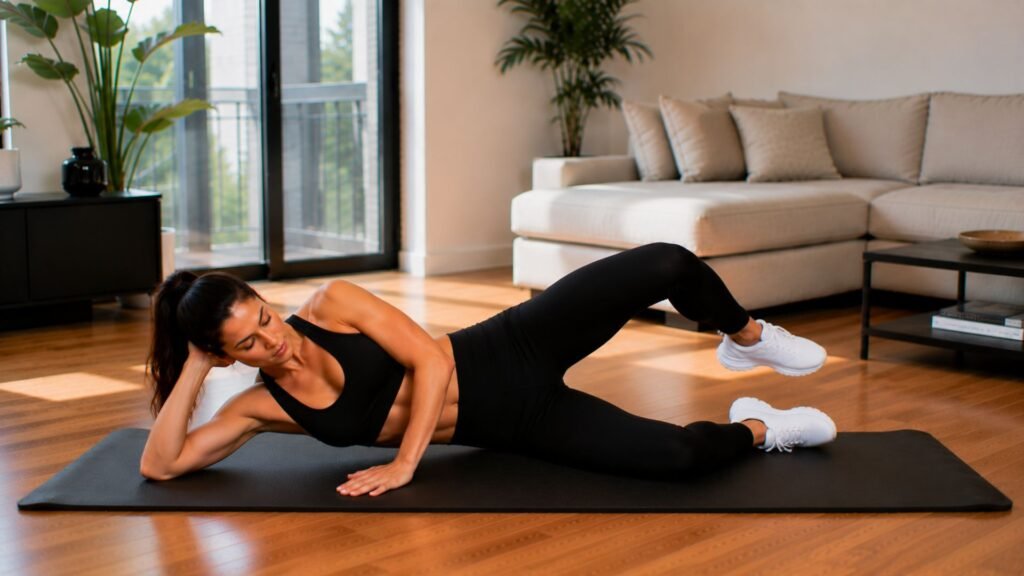
The Clamshell is a low-impact exercise that strengthens the gluteus medius and hip muscles. It helps improve hip stability, supports proper knee alignment, and enhances lower-body movement.
How to Do It
Lie on one side with your knees bent at about 90 degrees and your feet stacked together. Rest your head on your lower arm and keep your hips aligned. Keeping your feet touching, lift your top knee as high as comfortable without rolling your hips backward. Pause briefly, then lower your knee slowly. Complete all repetitions before switching sides.
Time/Reps
15–20 reps per side × 3 sets
Rest for 30–45 seconds between sets.
Benefits
- Strengthens the glutes and outer hip muscles.
- Improves hip stability and mobility.
- Supports healthy knee alignment during movement.
- Helps tone the hips and lower body.
- Reduces muscle imbalances and enhances posture.
- Requires no equipment, making it perfect for home workouts.
9. Single-Leg Glute Bridge
What It Is
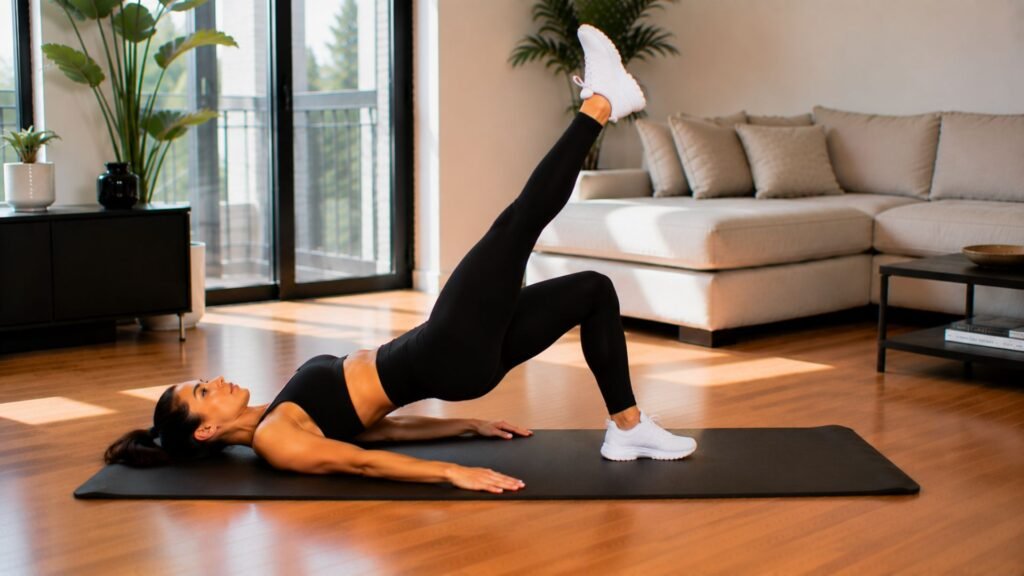
The Single-Leg Glute Bridge is an advanced variation of the traditional glute bridge that targets one side of the body at a time. It strengthens the glutes, hamstrings, and core while improving balance and hip stability.
How to Do It
Lie on your back with one knee bent and the other leg extended straight toward the ceiling. Place your planted foot flat on the floor and keep your arms by your sides. Press through the planted heel to lift your hips until your body forms a straight line from your shoulders to your knee. Squeeze your glutes at the top, then slowly lower your hips back down. Complete all repetitions on one side before switching legs.
Time/Reps
10–12 reps per leg × 3 sets
Rest for 30–45 seconds between sets.
Benefits
- Builds stronger and more defined glutes.
- Improves single-leg balance and stability.
- Strengthens the core and hamstrings.
- Helps correct left-to-right muscle imbalances.
- Supports better hip mobility and lower-body power.
- Requires no equipment, making it ideal for home workouts.
10. Standing Glute Kickbacks
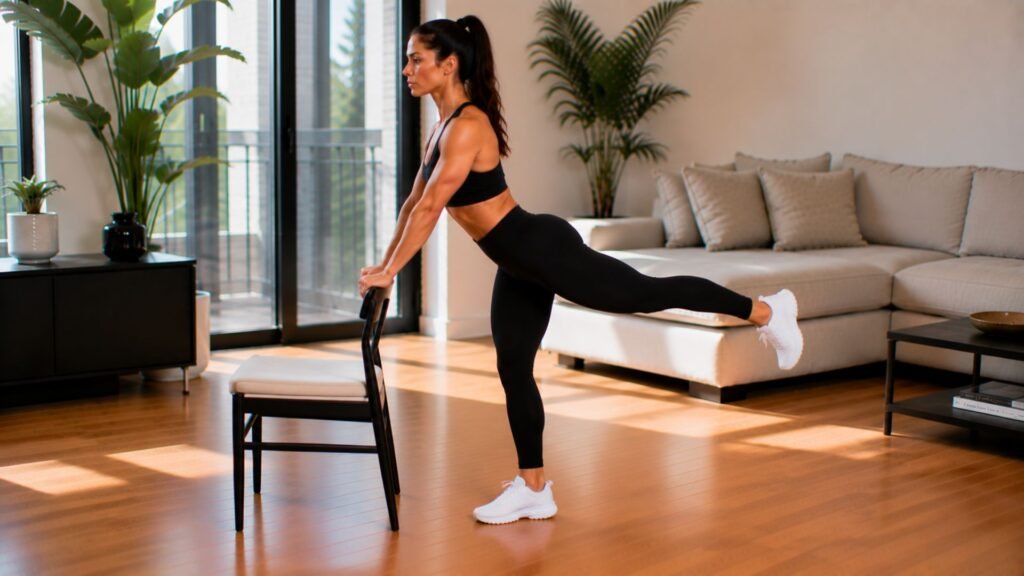
What It Is
Standing Glute Kickbacks are a simple lower-body exercise that targets the glute muscles while also engaging the hamstrings and core. This movement helps improve hip strength, balance, and lower-body stability.
How to Do It
Stand behind a sturdy chair and lightly hold the backrest for support. Keep your body upright and your core engaged. Extend one leg straight behind you without bending your back or leaning forward. Squeeze your glutes at the top of the movement, then slowly return your leg to the starting position. Complete all repetitions before switching to the other leg.
Time/Reps
12–15 reps per leg × 3 sets
Rest for 30–45 seconds between sets.
Benefits
- Strengthens and tones the glute muscles.
- Improves hip stability and mobility.
- Activates the hamstrings and core.
- Enhances balance and posture.
- Supports better lower-body strength for daily activities.
- Easy to perform at home with minimal equipment.
Weekly Glute Workout Plan for Beginners
| Day | Workout |
|---|---|
| Monday | Glute Workout |
| Tuesday | Walking + Stretching |
| Wednesday | Glute Workout |
| Thursday | Rest |
| Friday | Glute + Legs |
| Saturday | Light Cardio |
| Sunday | Rest |
Tips to Get Better Results
- Warm up for 5 minutes
- Focus on proper form
- Increase reps gradually
- Eat enough protein
- Stay consistent
- Stretch after every workout
Common Mistakes to Avoid
- Rushing through reps
- Not squeezing the glutes
- Poor squat form
- Skipping rest days
- Ignoring warm-up
Frequently Asked Questions
Can beginners do glute workouts at home?
Yes, beginners can easily start with bodyweight exercises like squats, glute bridges, and lunges at home — no equipment needed.
How many days a week should I train glutes?
2–3 days a week is ideal, with rest days in between for muscle recovery
Do I need resistance bands?
No, they’re not necessary but can add extra resistance to speed up results as you progress.
How long before I see results?
With consistent training, most beginners notice visible improvement in 4–6 weeks.