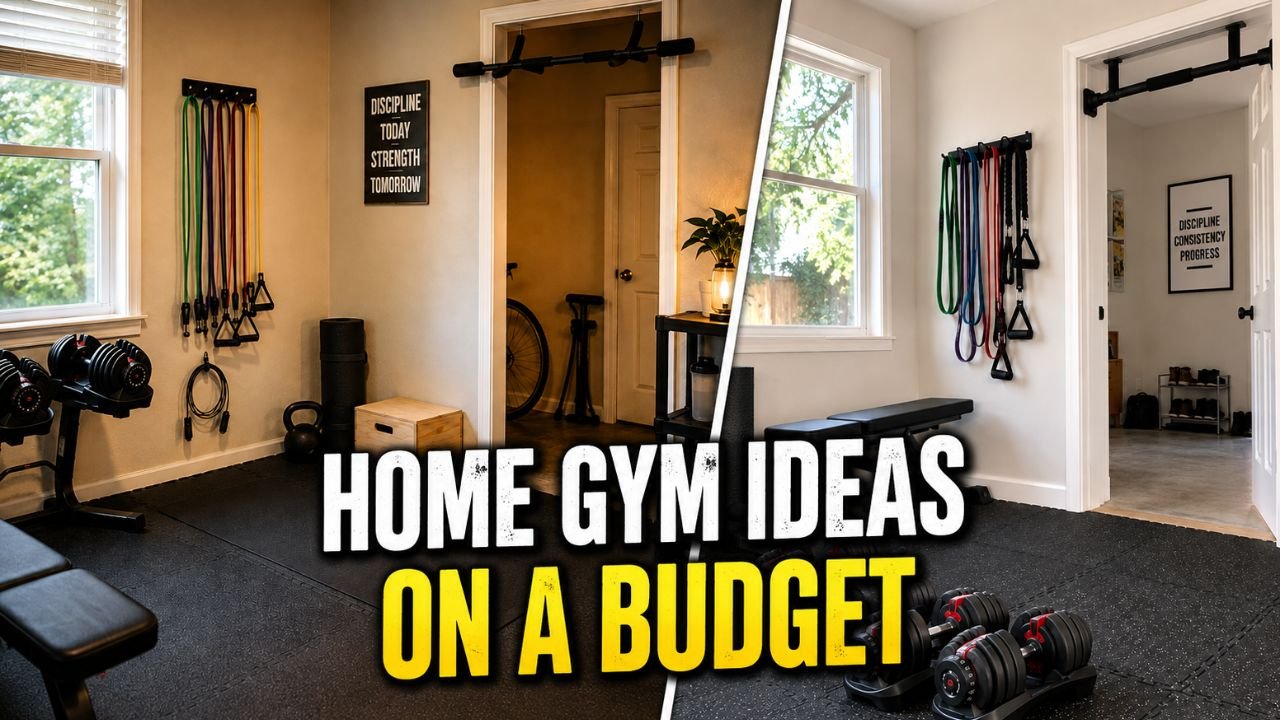
Home gym ideas on a budget: Build a Real Workout Space Without Spending a Fortune
Gym memberships add up faster than most people expect. Between the monthly fee, the drive time, and that awkward wait for the squat rack, it’s no surprise more people are asking whether they can just train at home instead. The good news is you absolutely can and you don’t need a spare room the size of a garage or a credit card bill that keeps you up at night.
I’ve helped friends and clients set up home gyms ranging from a literal closet corner to a converted one-car garage, and the pattern is always the same: the people who stick with it aren’t the ones who bought the most stuff. They’re the ones who bought the right stuff, in the right order, for the training they actually enjoy.
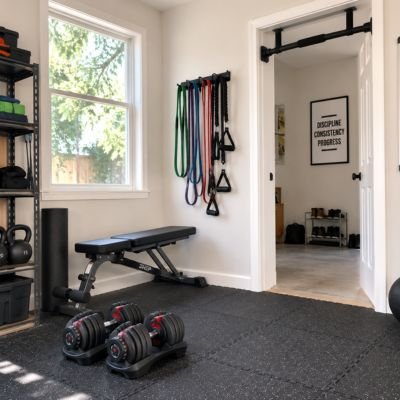
Here’s how to do that without overspending.
Start With Space, Not Equipment
Before you buy anything, figure out where this gym is actually going to live. A lot of budget home gyms fail before they start because someone buys a squat rack for a room that can’t fit it.
Walk through your space and ask a few practical questions:
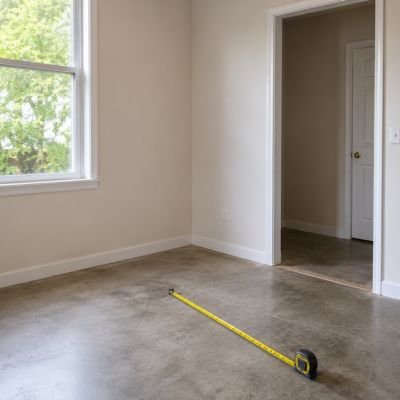
- How much floor space can you dedicate, even temporarily?
- What’s your ceiling height (this matters more than people think for overhead presses or jump rope work)?
- Is the flooring hard (concrete, tile, wood) or carpeted?
- Will you need to set up and pack away equipment daily, or does it get to stay put?
A 6×8-foot area is enough for a genuinely effective strength and cardio setup. You don’t need a dedicated room — a corner of a garage, a bedroom, or even a covered patio works fine.
read also: 30 day weight loss challenge for beginners
The Foundation: Cheap Gear That Covers the Most Ground
You don’t need to buy everything at once. Build outward from a small set of versatile tools that let you train your whole body.
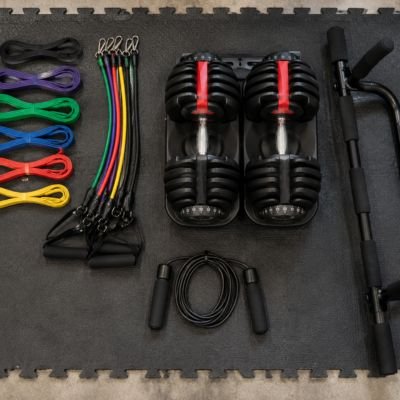
1. Resistance Bands
These are the best dollar-for-dollar value in fitness equipment. A set of loop bands and long resistance bands can run you well under $50 and let you train nearly every major muscle group — rows, presses, squats, deadlift patterns, lateral raises, you name it. They’re also easy on the joints, which makes them a smart addition even if you eventually add heavier equipment.
2. Adjustable Dumbbells
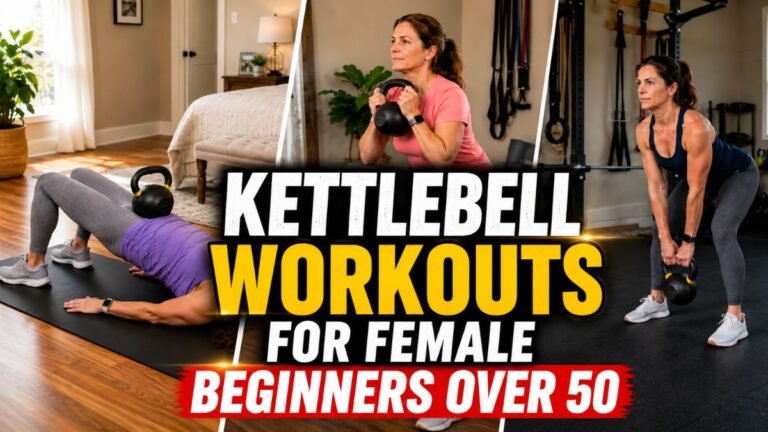
Traditional dumbbell sets get expensive fast because you’re buying multiple pairs. Adjustable dumbbells solve that by letting one pair cover a wide weight range. They cost more upfront than a couple of fixed pairs, but they save money and space in the long run, especially if your gym has to double as a guest room or office.
If adjustable dumbbells are still out of budget, secondhand marketplaces are worth checking regularly. Dumbbells hold their value, but people selling off home gym equipment (often after a New Year’s resolution fades) can be a good source of low-cost fixed-weight sets.
3. A Pull-Up Bar
A doorway pull-up bar is one of the most cost-effective pieces of equipment you can own. Pull-ups and their variations (rows, hangs, negatives) build serious upper body and grip strength, and a decent bar costs a fraction of what a lat pulldown machine would run you.
4. A Stability Ball or Bench Alternative
A proper adjustable bench is a nice upgrade later, but early on, a stability ball can substitute for a lot of bench work — presses, core exercises, hip thrusts — while also giving you a tool for balance and mobility training.
5. Jump Rope
Cardio doesn’t need a treadmill. A jump rope costs very little, takes up almost no space, and delivers a genuinely demanding workout in a short amount of time. It’s one of the most underrated budget cardio tools out there.
Don’t Underestimate Bodyweight Training
It’s easy to assume you need equipment to get a real workout, but bodyweight training is a legitimate, well-established method of building strength and conditioning — not just a “beginner” placeholder until you can afford weights.
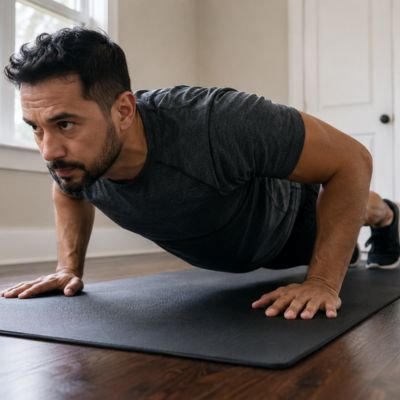
Push-ups, squats, lunges, planks, glute bridges, and step-ups (using a sturdy box or stair) can form the backbone of a complete program. Progressive overload doesn’t require adding plates — you can increase difficulty through tempo changes, single-limb variations, added range of motion, or simply increasing reps and reducing rest.
Plenty of well-designed home programs use nothing but bodyweight and a set of bands. Don’t feel like you’re missing out on results just because you’re not loading a barbell.
Smart Places to Save (and Where Not To)
Budget doesn’t mean cheap in every category. Some corners are safe to cut; others aren’t.
Safe to save on:
- Branded workout clothing — plain, functional gear performs the same job
- Fancy storage racks — a wall-mounted pegboard or a few sturdy hooks work fine
- Bluetooth-connected everything — a basic timer app on your phone does the job
Worth spending a bit more on:
- Flooring, if you’re lifting anything heavier than light dumbbells. Interlocking rubber mats protect both your floor and your equipment, and they reduce noise if you’re training in an apartment or above a shared space.
- A pull-up bar rated for your body weight with a safety margin — this is a case where a cheap, poorly rated bar is a genuine injury risk.
- Any equipment involving moving weight overhead or behind your body (barbells, heavier dumbbells) should come from a reputable brand, even a budget-friendly one, rather than an unknown off-brand with no weight rating information.
Common Mistakes People Make Setting Up a Home Gym
Buying equipment before building a habit. It’s tempting to buy a full setup on day one. A better approach: start minimal, train consistently for a few weeks, and let your actual training habits tell you what to add next.
Ignoring flooring and space safety. Working out on a slick floor or too close to furniture is how minor injuries happen. Give yourself real clearance, especially for dynamic movements.
Skipping a warm-up because “it’s just my living room.” The environment doesn’t change how your body needs to prepare for exercise. A few minutes of mobility work and light cardio before training still matters at home.
Overbuying storage before you have anything to store. Wait until you know what equipment you’ll actually keep before investing in racks or shelving systems.
Neglecting ventilation and lighting. These are easy to overlook, but a stuffy, poorly lit space makes it much harder to want to train there regularly. Even a cheap fan and a brighter bulb can change how consistently you use the space.
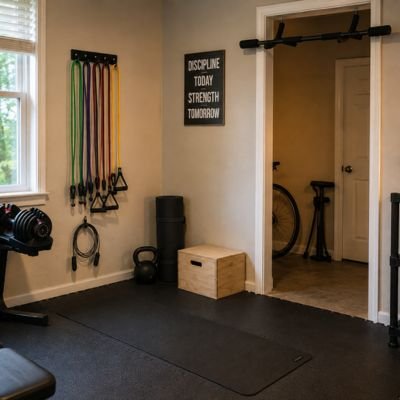
Sample Budget Starter Setup
A reasonable starting point for someone building a home gym from scratch might look like this:
- Set of resistance bands
- One pair of adjustable dumbbells
- Doorway pull-up bar
- Jump rope
- A few interlocking floor mats
This combination covers strength training for your whole body, basic cardio, and grip/upper-body work, and it can realistically be assembled for a modest total — often less than a couple of months of a typical gym membership, depending on where you shop and whether you buy new or secondhand.
Frequently Asked Questions
How much space do I really need for a home gym?
A 6×8-foot area is usually enough for bodyweight training, dumbbell work, and band exercises. You’ll want a bit more room if you plan to add a barbell setup later.
Is bodyweight training as effective as using weights?
Bodyweight training can build meaningful strength and muscle, particularly for beginners and intermediate lifters. Advanced lifters chasing significant strength gains eventually benefit from external resistance, but bodyweight training remains a legitimate long-term method on its own.
Should I buy equipment new or secondhand?
Secondhand equipment, especially dumbbells, kettlebells, and benches, is often a smart way to save money since these items don’t wear out the way cardio machines with motors or electronics do. Just inspect for rust, cracks, or damage before buying.
Do I need a bench right away?
Not necessarily. A stability ball, a sturdy step, or even the floor can substitute for many bench exercises early on. A bench is a reasonable upgrade once you know you’re sticking with home training long-term.
How do I know what to buy next after my starter setup?
Pay attention to what your current program keeps asking for. If you keep wishing you had more resistance for squats, that’s a sign to prioritize heavier dumbbells or a barbell setup before spending on anything else.