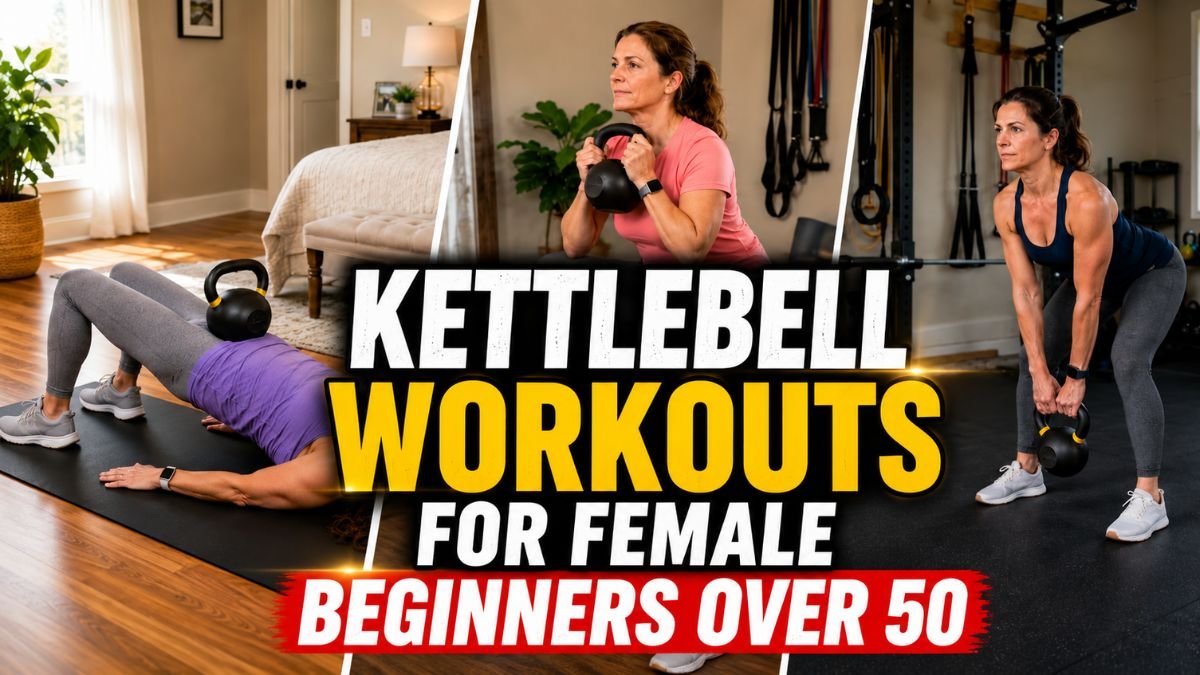
Kettlebell Workouts for Female Beginners Over 50: A Complete, Research-Backed Guide
Turning 50 doesn’t mean slowing down — it means training smarter. After midlife, women naturally start losing muscle mass and bone density as estrogen levels decline, especially around menopause. The good news: this decline isn’t inevitable. Weight-bearing strength training, and kettlebells in particular, is one of the most effective tools women over 50 can use to protect their bones, rebuild muscle, and stay independent for decades to come.
This guide covers why kettlebells are so well suited to women over 50, the safety basics every beginner should know, and a simple, effective set of exercises to start with — no gym or prior experience required.
The Right Angle for This Topic
For this topic, the most genuine and useful angle isn’t “get fit” or “lose weight” — it’s “protect what matters most as you age”: bone density, muscle mass, and balance. Women searching this topic are usually thinking about:
- Is this safe for my joints, bones, and heart at my age?
- Will this help with menopause-related muscle and bone loss?
- How do I start as a complete beginner without getting hurt?
- What’s a realistic, sustainable routine — not an extreme program?
So this article leads with safety and long-term health, not intensity or aesthetics — because that’s what actually matters and builds trust for this audience.
Why Kettlebells Are Especially Valuable After 50
As estrogen declines during perimenopause and menopause, women face two compounding challenges: sarcopenia (age-related muscle loss) and reduced bone mineral density, particularly at the hip and spine — the two areas most vulnerable to fracture after menopause. Bones respond to load. When muscles pull against them during resistance training, it stimulates the cells responsible for maintaining and rebuilding bone density. Kettlebells offer this loading in a joint-friendly, controlled way, unlike high-impact activities that can be harder on aging joints.
| Benefit | Why It Matters After 50 |
|---|---|
| Builds and preserves muscle mass | Directly counters age-related muscle loss (sarcopenia) |
| Supports bone density | Weight-bearing load helps protect against osteoporosis risk |
| Improves balance and coordination | Reduces fall risk, a major safety concern with age |
| Boosts functional strength | Makes daily tasks like lifting, carrying, and standing easier |
| Low-impact but effective | Works muscles and bones without excessive joint strain |
| Time-efficient | Two to three short sessions a week deliver meaningful results |
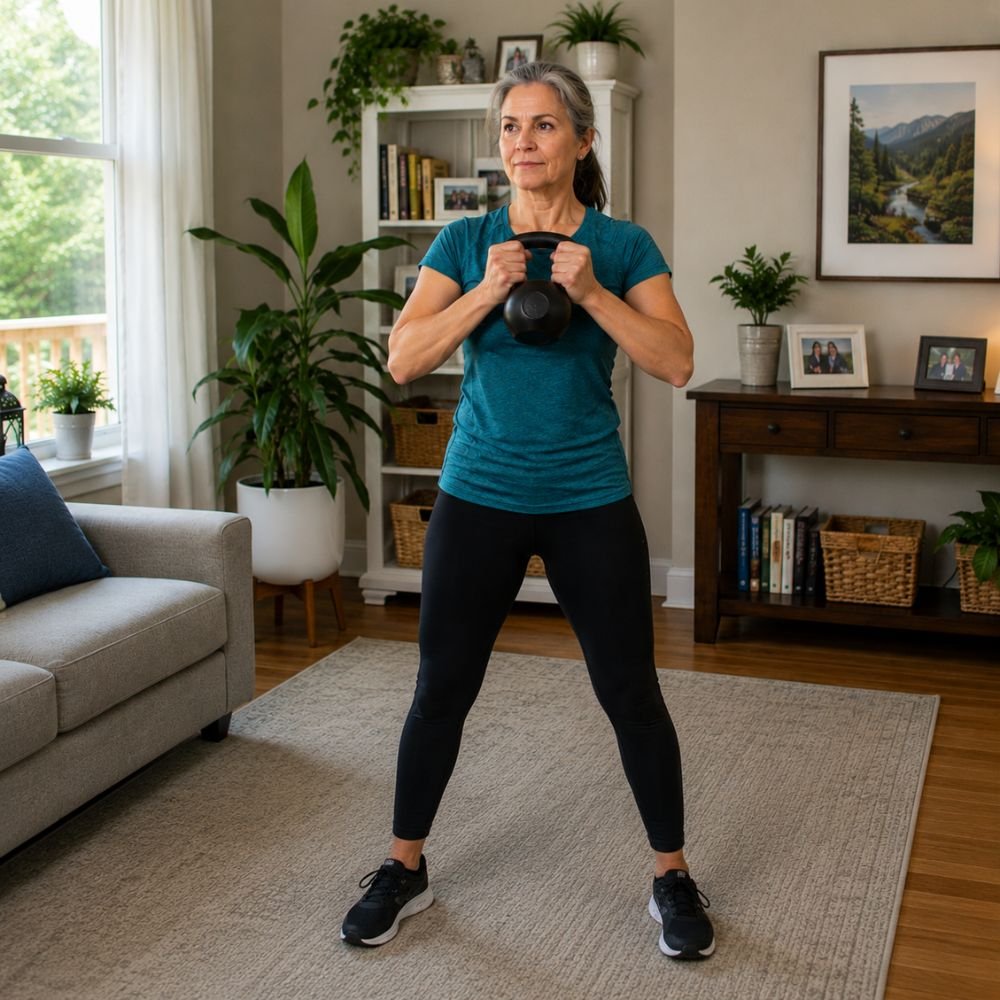
place after this section] “Realistic photograph, rectangular 16:9 format, a fit woman in her mid-50s with grey-streaked hair, wearing a teal workout top and black leggings, standing confidently in a bright home living room holding a kettlebell in both hands at chest height, natural daylight from a large window, entire frame sharply in focus including furniture and wall décor, no background blur, authentic candid fitness photography, real skin texture”
Safety Guidelines for Beginners Over 50
- Get medical clearance first if you have osteoporosis, joint replacements, high blood pressure, or any heart condition.
- Start with a light kettlebell, typically 4–8 kg (8–18 lb), and increase gradually as your form improves.
- Warm up for 5–10 minutes with gentle mobility work for the hips, shoulders, and spine before lifting.
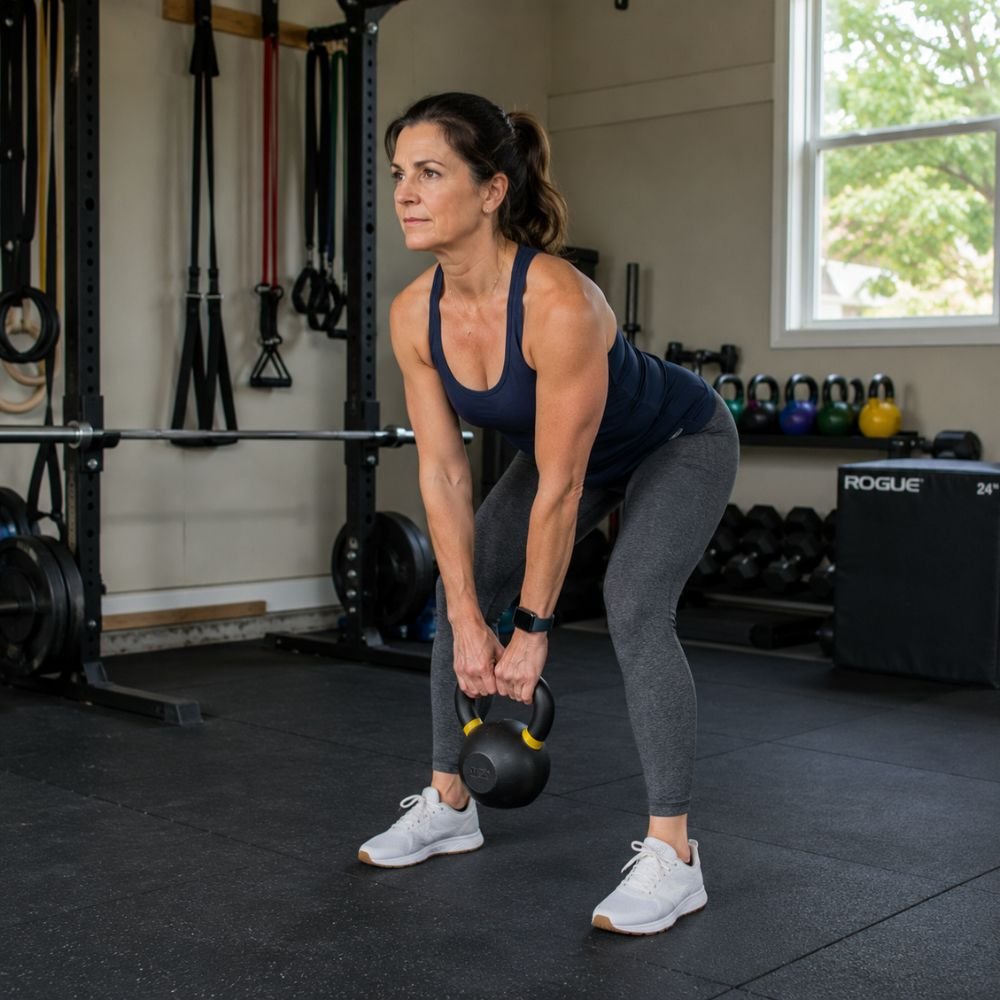
- Learn the hip hinge before attempting swings — this is the single most important technique to master safely.
- Prioritize form over speed or weight. Kettlebell training rewards control, not intensity.
- Train on a stable, non-slip surface with enough open space around you.
- Consider one session with a certified trainer early on to check your form on foundational moves.
- Stop immediately if you feel sharp pain, dizziness, or unusual shortness of breath.
6 Best Kettlebell Exercises for Female Beginners Over 50
1. Kettlebell Deadlift
Stand with feet hip-width apart, kettlebell on the floor between your feet. Hinge at your hips, keeping your back flat, and grip the handle with both hands. Drive through your heels to stand tall, squeezing your glutes at the top, then hinge back down with control.
| Detail | Info |
|---|---|
| Muscles worked | Hamstrings, glutes, lower back, grip |
| Sets/Reps | 2–3 sets of 8–10 reps |
| Why it matters | Teaches the safe hip-hinge pattern that protects your lower back in daily life and in every other kettlebell move |
2. Goblet Squat
Hold the kettlebell close to your chest by the horns, elbows tucked in. Lower into a squat by pushing your hips back and bending your knees, keeping your chest lifted, then press through your heels to stand.
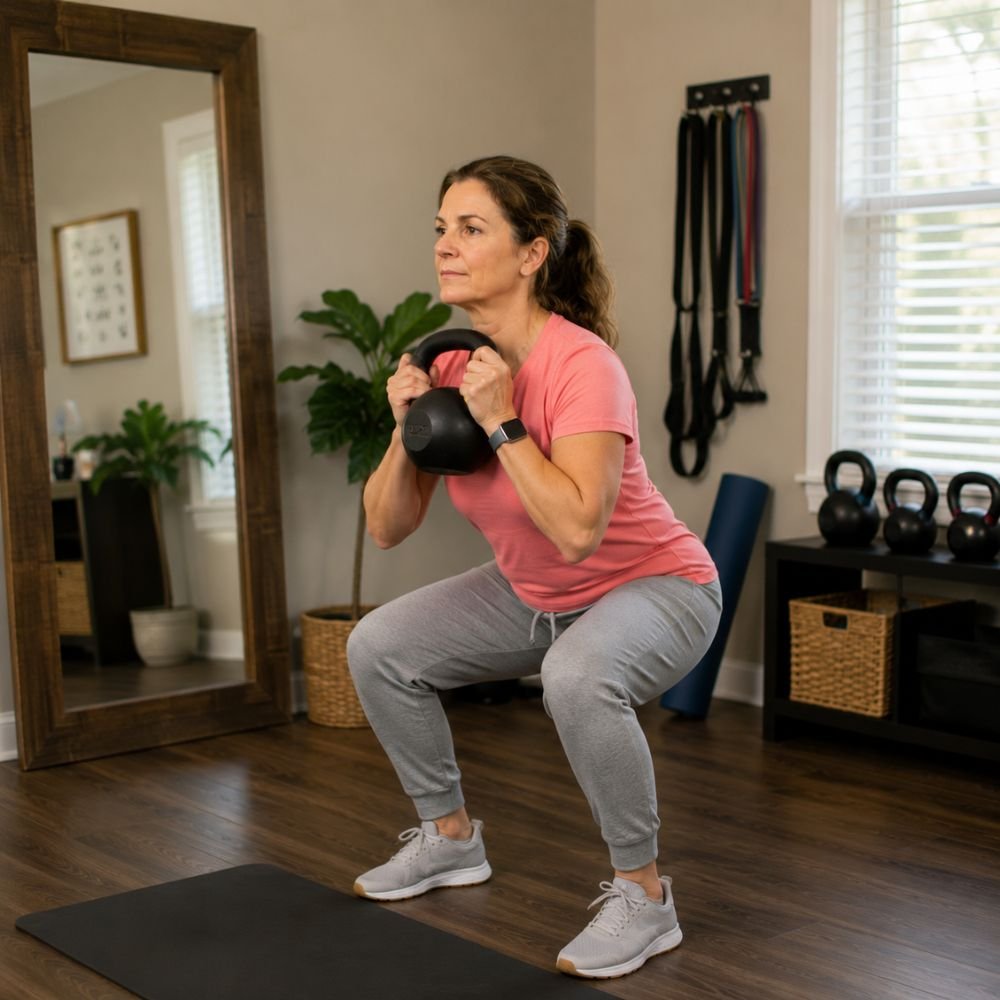
| Detail | Info |
|---|---|
| Muscles worked | Quads, glutes, core |
| Sets/Reps | 2–3 sets of 8–10 reps |
| Why it matters | One of the most recommended moves for building lower-body strength and bone-loading benefits at the hip |
place after Goblet Squat] “Realistic photo, rectangular 16:9, woman in her early 50s wearing a coral pink t-shirt and grey joggers, holding a kettlebell at chest height in a controlled squat position, cozy home gym corner with a yoga mat and mirror sharply detailed in the background, no blur, warm natural daylight, genuine unposed expression”
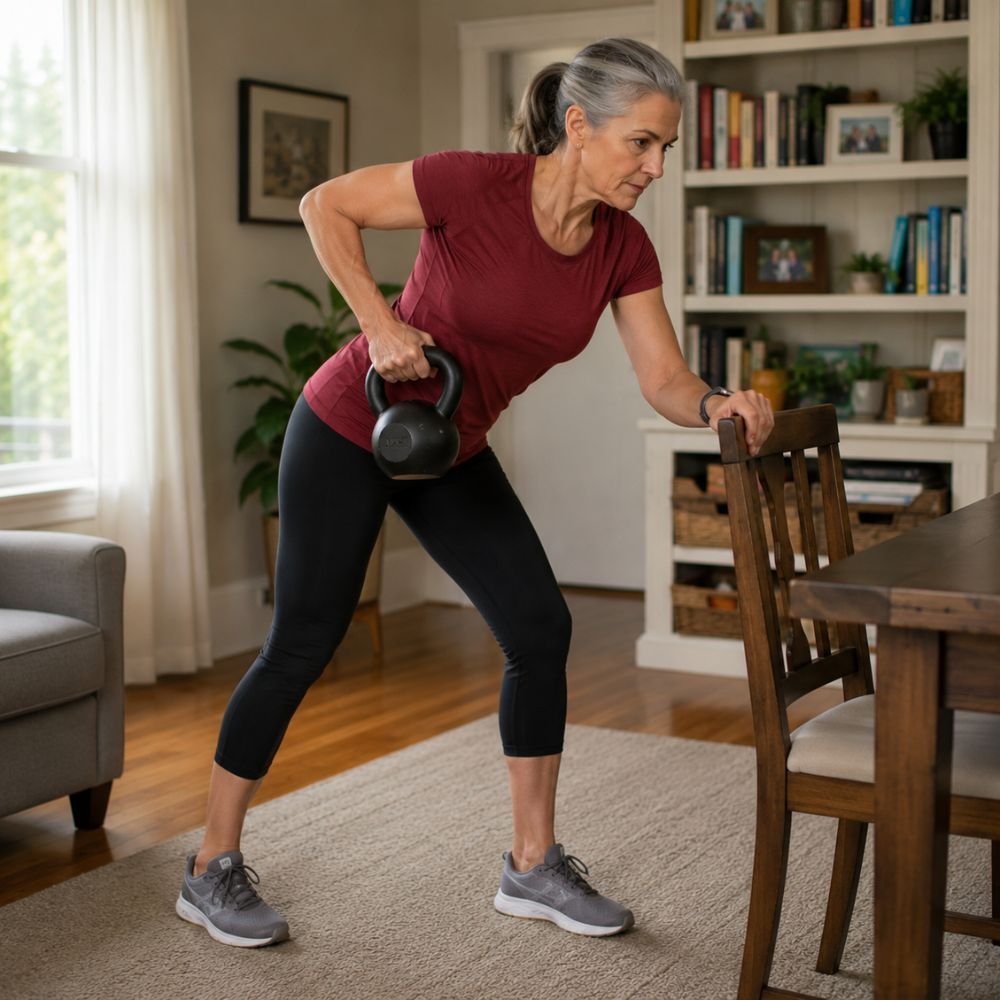
3. Single-Arm Row
Hinge forward with one hand resting on a sturdy chair or bench for support, torso close to parallel with the floor. Hold the kettlebell in the opposite hand and pull it toward your ribs, squeezing your shoulder blade, then lower slowly.
| Detail | Info |
|---|---|
| Muscles worked | Upper back, shoulders, core |
| Sets/Reps | 2–3 sets of 8–10 reps per side |
| Why it matters | Strengthens the muscles that support posture, which tends to weaken with age and long hours of sitting |
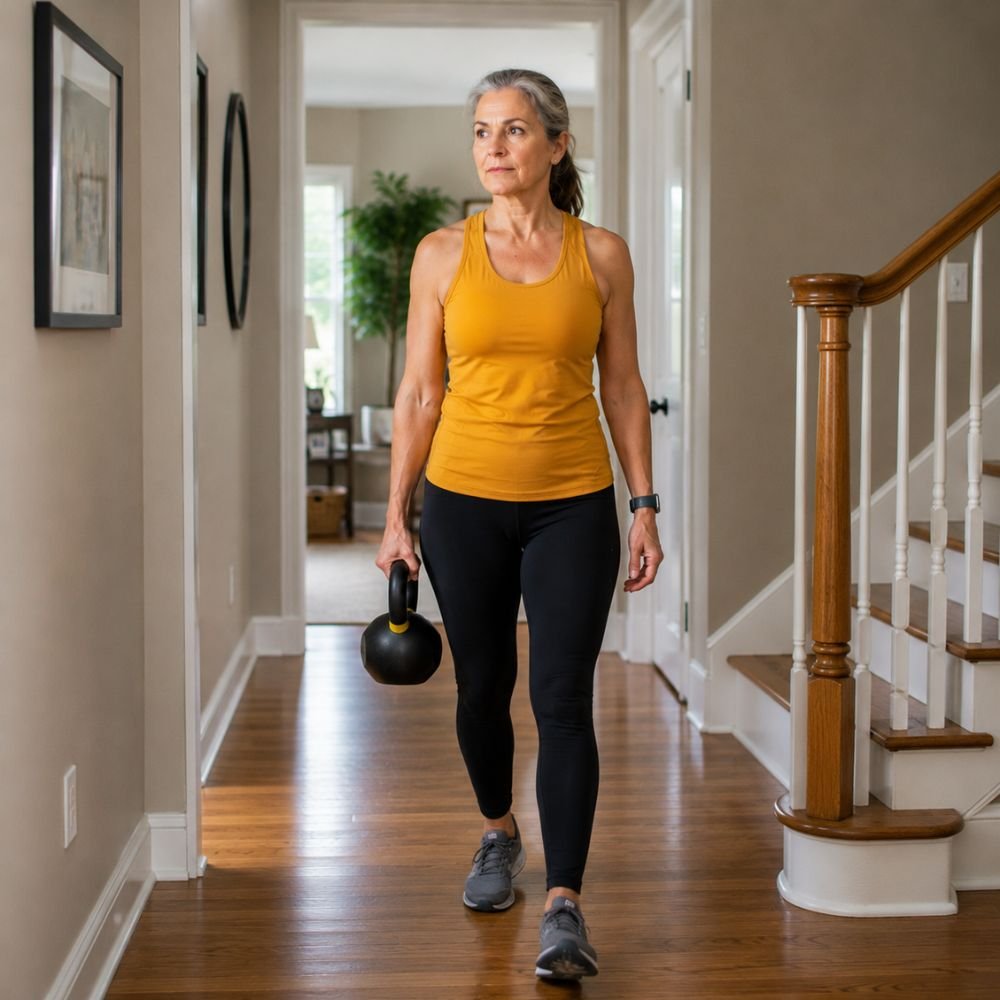
4. Suitcase Carry
Hold a kettlebell in one hand at your side, standing tall as if carrying a suitcase. Walk forward for a set distance, keeping your torso upright without leaning to either side.
| Detail | Info |
|---|---|
| Muscles worked | Core (obliques), grip strength, shoulders, legs |
| Sets/Reps | 2–3 sets of 20–30 seconds per side |
| Why it matters | Builds functional grip and core strength directly transferable to carrying groceries or luggage safely |
place after Suitcase Carry] “Realistic photo, rectangular 16:9, woman in her late 50s wearing a mustard yellow tank top and black leggings, walking confidently while holding a kettlebell at her side, bright hallway with wooden flooring fully in focus, no background blur, natural indoor lighting, authentic candid movement”
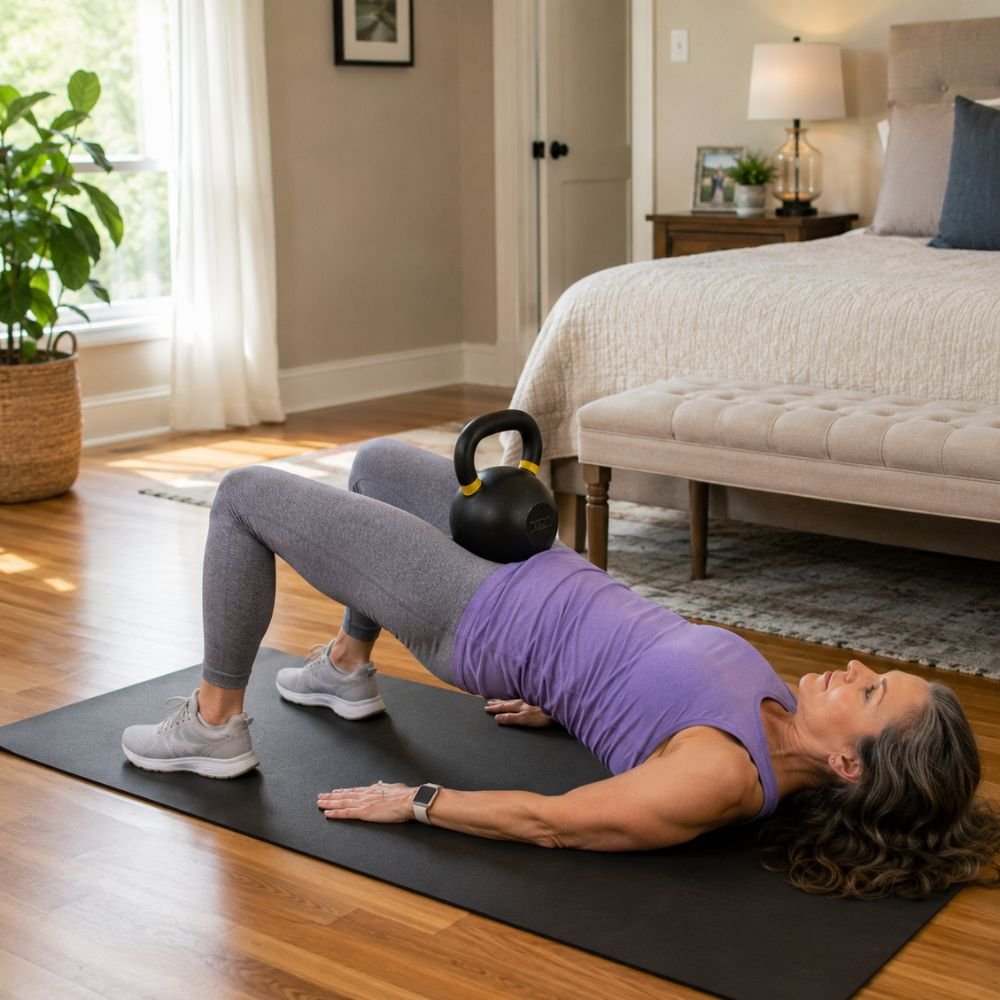
5. Glute Bridge with Kettlebell
Lie on your back with knees bent, feet flat on the floor, and a kettlebell resting on your hips held with both hands. Press through your heels to lift your hips up, squeezing your glutes at the top, then lower with control.
| Detail | Info |
|---|---|
| Muscles worked | Glutes, hamstrings, core |
| Sets/Reps | 2–3 sets of 10–12 reps |
| Why it matters | A gentle, floor-based way to build hip and lower-back strength, ideal for beginners easing into loaded movement |
place after Glute Bridge] “Realistic photo, rectangular 16:9, woman in her mid-50s wearing a lavender purple workout top and grey leggings, lying on a yoga mat performing a glute bridge with a kettlebell resting on her hips, sunlit bedroom floor space fully in focus, no blur, soft natural daylight”
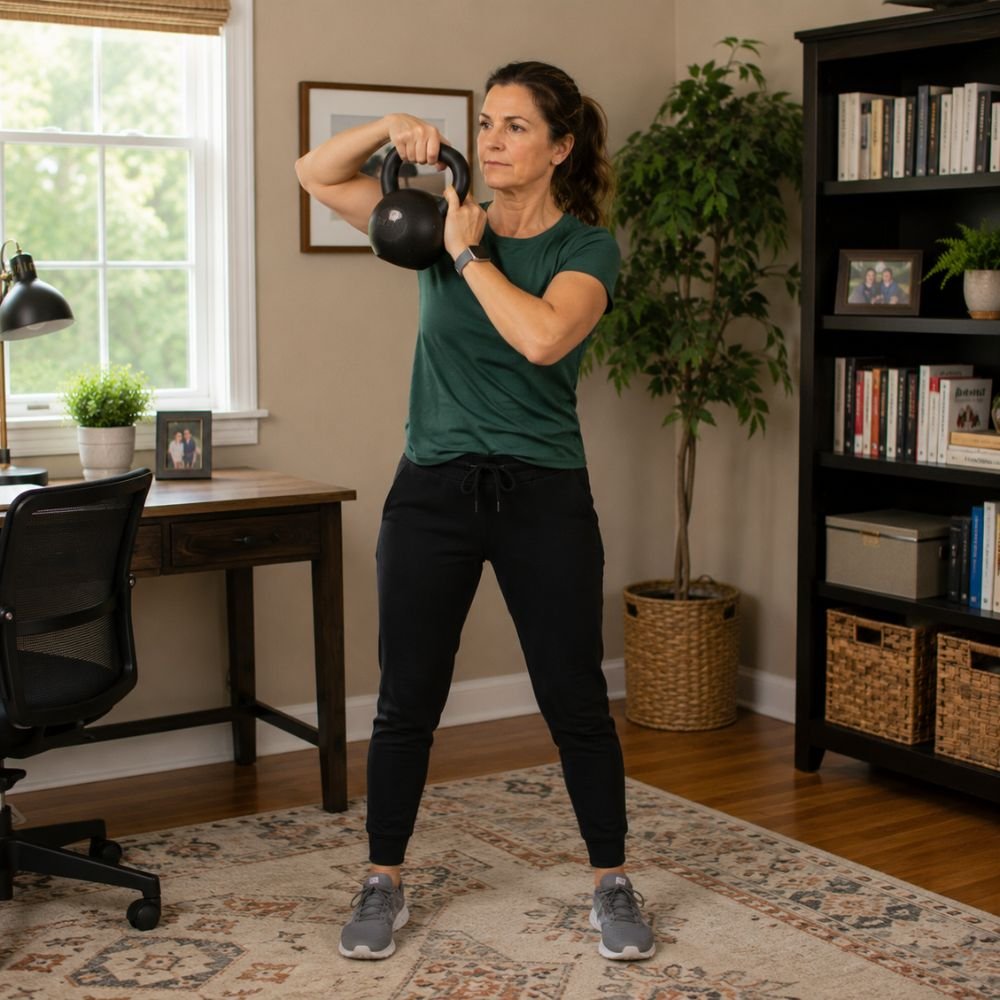
6. Kettlebell Halo
Hold the kettlebell upside down by the horns at chest height. Slowly circle it around your head in one direction, keeping your core braced and movements smooth, then reverse direction.
| Detail | Info |
|---|---|
| Muscles worked | Shoulders, upper back, core stability |
| Sets/Reps | 2 sets of 5–6 circles each direction |
| Why it matters | A gentle way to build shoulder mobility and control before progressing to more dynamic overhead movements |
place after Kettlebell Halo “Realistic photo, rectangular 16:9, woman in her early 50s wearing a forest green t-shirt and black joggers, circling a kettlebell around her head at chest height in a halo movement, home office or study room background with a desk and window sharply detailed, no blur, natural light”
Sample Weekly Beginner Routine
| Day | Focus | Exercises |
|---|---|---|
| Monday | Foundational strength | Kettlebell Deadlift, Goblet Squat, Glute Bridge |
| Wednesday | Rest or gentle walk | — |
| Friday | Upper body + core | Single-Arm Row, Suitcase Carry, Kettlebell Halo |
Start with 2 sets of 8–10 reps per exercise, resting 60–90 seconds between sets. As form and confidence build over several weeks, progress to 3 sets, then consider a slightly heavier kettlebell.
place after the weekly routine table “Realistic photograph, rectangular 16:9 format, two women in their 50s, one wearing a navy blue tank top and the other a burgundy red t-shirt, both holding kettlebells and smiling during a home workout session together in a bright sunroom with plants, entire scene sharply in focus, no blur, natural daylight, authentic candid group fitness photography”
Frequently Asked Questions
Is kettlebell training safe for women with osteoporosis? Many doctors and trainers consider controlled, weight-bearing exercise beneficial for bone health, but anyone with diagnosed osteoporosis should get individual clearance and guidance from a doctor or physical therapist first, since specific movements may need modification.
What weight kettlebell should a beginner over 50 start with? Most beginners do well starting with a kettlebell between 4–8 kg (8–18 lb), choosing a weight that allows 8–10 controlled reps of a goblet squat with good form.
Can kettlebell training help with menopause symptoms? Regular strength training is commonly associated with better body composition, more stable energy levels, and improved mood, though it isn’t a direct treatment for menopause symptoms — it works alongside other lifestyle and medical approaches.
How soon will I notice results? Many women notice improved confidence and ease of movement within a few weeks, while measurable strength changes typically build over 8–12 weeks of consistent training.
Final Thoughts
For women over 50, kettlebell training isn’t about chasing a certain look — it’s about protecting the muscle and bone strength that keeps you independent for the next 30 years. Starting with just a few beginner-friendly moves, two to three times a week, builds a foundation that pays off in every single day, from carrying groceries to staying steady on your feet.
disclaimer: This article is for general informational purposes and is not a substitute for medical advice. Please consult a doctor or qualified trainer before starting a new exercise program, especially if you have osteoporosis, joint issues, or other existing health conditions.